
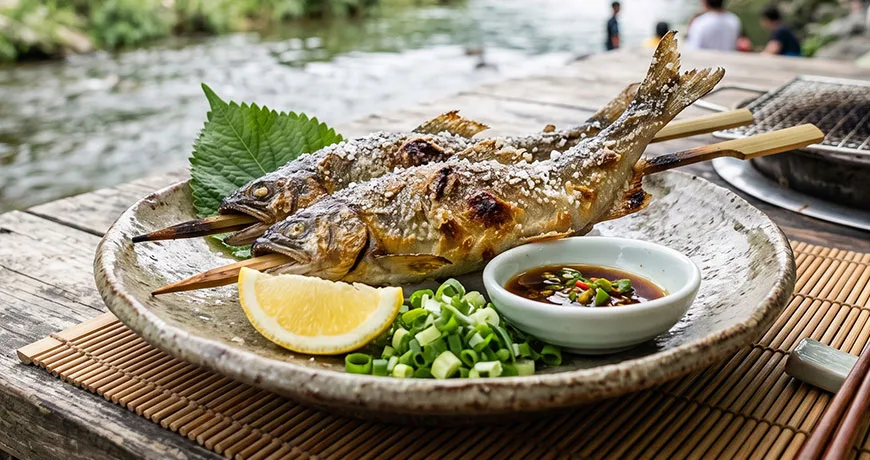
Euneogui is the absolute pinnacle of river fish gastronomy. It is engineered to preserve the unique volatile aromatics of the sweetfish (Euneo)—specifically the cucumber- and watercress-like scent generated by its diet of freshwater diatoms and algae—while utilizing the intense radiant infrared heat of charcoal to build a shattering, golden Maillard crust over tender, juicy internal flesh. To combat the common culinary failure of skin tearing and protein sticking, the fish undergoes a pre-emptive dry brining process, utilizing osmotic pressure to purge surface moisture and tighten the myofibrillar matrix. Furthermore, heavy protective salting (“Hwajang-sogeum”) is applied to the fins and tail to prevent charring, orchestrating a thermodynamic masterpiece that allows the entire fish, from head to spine, to be enjoyed.
- ⏱️ Total: 40 mins | Prep: 25 mins (Dry brining & surface dehydration) | Cook: 15 mins
- 🍳 Difficulty: Medium-High (Charcoal radiant heat management & protective fin-salting technique)
- 🌶️ Profile: Subtle Cucumber/Watercress Aromas, Smoky Charcoal Char, and Rich Clean Fish Oils
- 🍚 Focus: Dry Brining, Surface Moisture Stripping, & Infrared Radiant Maillard Crust Sealing
Ingredients (2–3 servings)
- Myofibrillar Protein Matrix: 4–6 Fresh Live Sweetfish (Euneo – Rinse carefully, optionally leaving the mineral-rich, slightly bitter organs intact via gill extraction depending on preference)
- Osmotic Dry Brining Matrix: 1.5 tbsp Fine Sea Salt (for surface moisture purging and myofibrillar protein binding)
- Thermal Protection Binder: 3 tbsp Coarse Sea Salt (Molded into a protective shield over the fins and tail to prevent burning)
- Lipid Finish Matrix: Micro-film of cooking oil or sesame oil (for conditioning the grill grate)
Allergy Information Contains: Fish (Sweetfish)
Equipment Charcoal Grill / Brazier and Wire Grate, Paper Towels, Pastry Brush
Cooking Instructions
- Dry Brining & Osmotic Dehydration: Meticulously blot dry the exterior and internal cavity of the cleaned sweetfish using paper towels. Evenly dust the fine sea salt across the skin of the fish and let rest at room temperature for 20 minutes. Osmosis will force free intracellular water out of the skin cells, binding the structural proteins together and preventing the flesh from breaking apart during grilling.
- Surface Moisture Fixing: Gently pat down the brined fish with paper towels to strip away the purged moisture and dissolved surface salt. (This step is non-negotiable to prevent the delicate skin from sticking to the grill grate.)
- Protective Salt Shield Formation: Pack coarse sea salt thickly around the tips of the tail, dorsal fin, pectoral fins, and pelvic fins. This physical barrier reflects radiant heat away from the paper-thin fins, preventing them from charring into bitter carbon.
- Infrared Radiant Maillard Grilling: Ignite lump charcoal to establish a stable radiant thermal output (approx. 200–250°C). Lightly oil the wire grate and lay the sweetfish across it. Allow them to sit undisturbed for 7–8 minutes under the gentle infrared heat, initiating the Maillard reaction between skin proteins and native fish oils.
- Thermal Symmetry & Sealing: Carefully flip the sweetfish and grill the opposing side for another 6–7 minutes. As surface moisture completely flashes off, the sweetfish’s native lipid oils—carrying the distinct watercress and cucumber aromatics—will bubble to the surface, sealing a golden, crackly shell over the fish.
💡 Professional Culinary Tips
- Preservation of Euneo Aromas (2,6-Nonadienal): The defining sensory hallmark of sweetfish is its refreshing, cucumber-like fragrance, born from the river algae it consumes. This delicate volatile compound degrades rapidly under harsh spices. Using heavy aromatics like garlic or ginger is a fatal culinary error; only salt and clean charcoal smoke should be allowed to touch the fish.
- The Physics of Protective Fin Salting: Fish fins and tails are less than 1mm thick; exposing them directly to open flame chars them instantly into bitter acrylamides. Molding a thick layer of coarse salt over these fragile zones reflects thermal energy and delays moisture flash-off, representing a master-level technique in traditional fish cookery.
- Skin Protection via Dry Brining: Grilling raw, wet fish causes the skin proteins to chemically bond with hot metal grates, tearing the flesh to pieces. Pre-emptively extracting surface moisture via salt osmosis creates a resilient, dry exterior shell, guaranteeing a pristine visual presentation.
🍶 Gastronomic Pairing
- Biochemical Palate Cleansing: When the delicate white myofibrils, the mineral-rich bitter notes of the organs, and the smoky charcoal fish oils coat your oral mucosa, pair this masterwork with a high-acidity, mineral-driven French Muscadet (Loire Valley White Wine) or a chilled glass of Dry Traditional Cheongju. The ethanol molecules and clean tartaric acid surgically shear through the fish lipids, leaving the pristine, refreshing aroma of the mountain stream lingering on your palate.
Nutrition Facts (Estimated)
Total Content : Approx. 200g (2 fish, including bones)
Calories : 240 kcal (High-protein, high-polyunsaturated fatty acid matrix)
– Sodium : 650mg (Attributed to surface dry brining and fin salt shield residue)
– Total Carbohydrate : 0.0g
– Sugar : 0.0g
– Total Fat : 14.0g (Naturally occurring high-quality unsaturated fatty acids and Omega-3s)
– Saturated Fat : 3.0g
– Cholesterol : 70.0mg
– Protein : 26.0g (Highly bioavailable fish myofibrillar protein and collagen)
– Dietary Fiber : 0.0mg
*Daily Values are based on a 2,000 calorie diet and standard Korean nutritional reference values.
**Nutritional values are calculated based on original ingredients; substitutions may alter specific macronutrients.
Origins and Food Culture of Grilled Sweetfish (Euneogui)
1. Historical Lineage: Dongui Bogam, Jasanoebo, and Royal Tribute Heritage
- Characterized by silvery scales and tiny, tightly spaced teeth, sweetfish was historically recorded in classical Hanja texts as Eungueo (銀口魚, “silver-mouthed fish”) or An-eo, prized as one of the most pristine and prestigious freshwater delicacies presented as tribute to the Joseon royal court.
- In Heo Jun’s 1613 medical compendium Dongui Bogam, sweetfish was documented as “cold in nature, sweet, and non-toxic; it eliminates internal heat within the stomach and intestines and promotes healthy digestion.” Furthermore, Jeong Yak-jeon’s 1814 marine and freshwater biology compendium Jasanoebo praised its delicate ecological habits and immaculate flavor, confirming centuries of prestigious lineage as a royal tonic and scholarly seasonal delicacy.
2. The Culinary Chemistry of Charcoal Grilling and Aromatic Preservation
- The technical mastery of authentic Euneogui relies upon precise thermal timing to achieve crisp skin while preserving delicate stream-derived aromatics. While some culinary traditions remove visceral organs, grilling sweetfish whole or with minimal cleaning allows the bitter-sweet compounds within the viscera to meld with the savory flakiness of the flesh, producing a deeply complex flavor profile.
- Subjecting the salted fish to high radiative heat (exceeding 200°C) across an open charcoal wire rack coagulates surface proteins into an impermeable crust. This precise thermal control prevents the volatile terpene aldehydes responsible for the famous “watermelon fragrance” from evaporating prematurely, locking the pure essence of the mountain stream inside the flesh.
3. The Seomjin River Festival and the Sovereign Symbol of Pristine Stream Gastronomy
- Deeply anchored along the pristine waters of the Seomjin River—spanning Gurye and Gokseong in Jeollanam-do—where local communities gather annually for vibrant seasonal sweetfish festivals celebrating the first catch of summer.
- Because sweetfish can only survive in unpolluted, oxygen-rich waters, they serve as a living ecological indicator of environmental purity. Fusing unblemished natural vitality with ancient charcoal grilling artistry, Grilled Sweetfish stands as an immortal cultural monument to Korean freshwater gastronomy, ecological respect, and restorative summer comfort.
The Pristine Watercress-Melon Volatile Aromatics of Algae-Grazing Seomjin Sweetfish, the Crispy Charcoal-Seared Skin, and the Tender White Flesh: A Refined Portrait of Euneogui
Euneogui (Grilled Sweetfish) stands as the pristine, aromatic, and biologically fascinating summit of Korea’s freshwater grilling (gui) gastronomy. Centered upon choice sweetfish (Plecoglossus altivelis or Euneo)—inhabiting the rushing, gravel-bottomed currents of pristine Class-1 mountain rivers and feeding exclusively on diatomaceous algae encrusting underwater stones, which infuses their flesh with an unmistakable, refreshing fragrance reminiscent of fresh watermelon, cucumber, and wild watercress—the preparation begins with disciplined culinary precision. Celebrated historically across East Asian riverine cultures as Hyang-eo (“the fragrant fish”), the fresh sweetfish are lightly scaled, gently eviscerated through the operculum to preserve the delicate abdominal cavity, and subjected to a precise dry-brining (geon-sik yeom-ji) protocol where fine solar sea salt is dusted across the skin and allowed to rest for twenty to thirty minutes, drawing out surface moisture and firming the myofibrillar protein matrix. Secured onto slender bamboo skewers and curved into undulating, wave-like serpentine arcs (S-line), the fish are propped vertically around a glowing bed of white-hot binchotan charcoal, harnessing radiant infrared heat rather than volatile convection. As the charcoal’s radiant energy caramelizes the thin outer skin while gently rendering the subcutaneous fats, a delicate smoky aroma merges with the fish’s natural herbal volatiles, achieving the ideal culinary thermodynamic balance of a crisp exterior encasing a moist, succulent white interior. Bypassing heavy marinades or dipping sauces, Euneogui relies solely on radiant heat and precise salinity, delivering an unmasked sensory masterpiece that evokes the cool, crystalline beauty of an undisturbed mountain stream.
Approaching the aromatic cedar tray as bamboo skewers present golden-brown, delicately charred sweetfish, lifting a single fish and gently parting its flaky flesh releases an immediate, electrifying olfactory charge: the unmistakable, refreshing aroma of 3,6-nonadien-1-ol and unsaturated aldehydes—evocative of fresh watercress and sliced watermelon—mingles seamlessly with the clean, savory wood smoke of burning charcoal. Sinking your teeth into the fish delivers an extraordinary textural revelation: the crisp outer skin shatters with a delicate crunch, giving way instantly to the tender, flaky white meat beneath, which melts across the palate with sweet, uncorrupted freshwater protein and a nuanced, sophisticated hint of bitter umami from the pristine viscera. Because the skeletal bones are exceptionally fine and soft, the entire fish—excluding the head and tail—can be consumed whole, yielding calcium-rich crunch and gelatinous marrow that deepen the overall masticatory pleasure. Pairing each delicate bite with a sip of clean white rice completes an unforgettable ritual of seasonal reflection, riverine nostalgia, and profound gastronomic catharsis.
The enduring majesty of Euneogui lies in its aristocratic dynastic pedigree—recorded in classical Joseon Dynasty compendiums such as Dongguk Sesigi (Seasonal Customs of the Eastern Kingdom) and Jeungbo Sallim Gyeongje (Augmented Farm Management) as an elite royal tribute (jinsang) and an indispensable summer luxury. Preserving the ancient, minimalist grilling philosophy of riverside fishermen who propped freshly caught sweetfish around open embers to banish summer dampness, a plate of perfectly grilled sweetfish remains an irreplaceable monument of environmental stewardship, minimalist discipline, and brilliant Korean culinary craftsmanship.
Editor’s Review
1. A Dynamic Harmony of Crisp Algal Skin Crunch, Tender Flaking White Meat, Soft Delicate Bones, and Radiant Charcoal Heat Fluidity
The structural architecture inside the dish delivers an extraordinary, three-tiered choreography between a heat-dehydrated dermal collagen shell, turgor-preserved delicate myofibrillar white meat, flexible cartilaginous bone structures, and clean radiant infrared heat. Roasted across glowing white-hot charcoal, the sweetfish’s thin skin sheds surface water to form a crisp, delicate crust, while the underlying white meat remains succulent and tender, separating under mastication into light, feathery flakes. Because the skeletal framework is juvenile and slender, the bones soften entirely during cooking, yielding a delicate, edible crunch that supplies bioavailable calcium and marrow richness without structural resistance, ensuring an impeccably balanced, non-fatiguing mouthfeel from head to tail.
2. Algae-Derived Volatile Preservation (3,6-Nonadien-1-ol), Radiant Charcoal Skin Browning Kinetics, Dry-Brining Protein Firming, and Subcutaneous Lipid Rendering
Euneogui represents an exacting study in freshwater fish histology, volatile aroma thermodynamics, and dry-salting protein chemistry. The signature fragrance of sweetfish is governed by microbially generated volatile compounds—principally 3,6-nonadien-1-ol and related unsaturated carbonyls—absorbed during selective diatom grazing; because these delicate aromatic molecules are highly thermally labile, deploying radiant infrared heat from white-hot charcoal for a rapid, controlled roast minimizes aroma degradation while locking in core freshness. The pre-cooking dry-brining protocol draws out unbound cellular water via osmotic pressure, establishing a thin salting-in gel layer across the myofibrillar surface that prevents flesh fragmentation and accelerates Maillard browning across the skin. Concurrently, radiant heat renders subcutaneous lipids just beneath the dermis, creating a self-lubricating thermal barrier that preserves high internal Water Holding Capacity (WHC) and yielding exceptional juiciness.
3. The Seomjin River Terroir, Royal Tribute Lore, and the Sovereign Apex of Minimalist Freshwater Grilling
Rooted in the pristine gravel-bed terroir of Class-1 mountain rivers and honored across centuries as an elite seasonal delicacy of the royal court, Euneogui stands as the ultimate archetype of minimalist fish cookery in Korean history. Proving that the purest expressions of terroir and flavor require neither complex spice blends nor heavy marinades, this fragrant, charcoal-kissed classic captures the untamed serenity of Korea’s crystal-clear riverways, standing as an enduring sanctuary of ecological authenticity, minimalist discipline, and brilliant culinary artistry.