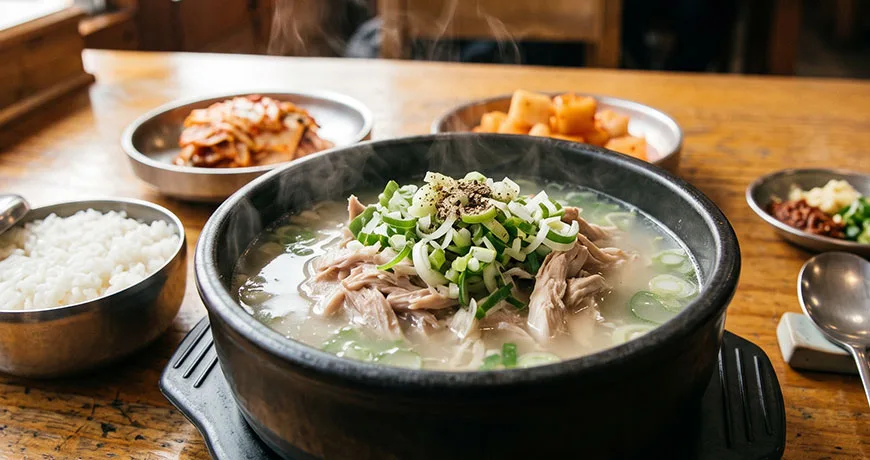
Dakgomtang is the ultimate avian consommé, engineered by subjecting the dense myofibrils and thick skeletal collagen of an active Native Korean Chicken (Tojong-dak) to precise thermal hydrolysis at a critical sub-boiling temperature (90–95°C). Unlike Samgyetang, which utilizes glutinous rice and starches to forcefully emulsify the broth into a milky suspension, Dakgomtang strictly prohibits carbohydrates. It relies on relentless lipid clarification—skimming the rendered schmaltz (chicken fat)—to extract a pure, crystalline, golden amino-acid solvent. The robust muscle fibers of the native chicken endure the prolonged thermodynamic breakdown, and after cooling to stabilize the protein structure, the meat is manually shredded. This hand-tearing maximizes the micro-porous surface area, allowing the boiling golden broth to dynamically infiltrate the meat matrix via capillary action. Crowned solely with the sharp allyl sulfides of freshly chopped scallions to cut through any oxidized avian notes, this is a masterclass in high-end culinary minimalism.
- ⏱️ Total: 2 hrs 30 mins | Prep: 30 mins (Physical purging of glands and blood) | Cook: 2 hrs
- 🍳 Difficulty: Medium-High (Requires thermodynamic convection control for consommé clarity and protein stabilization)
- 🌶️ Profile: Crystalline Avian Umami with Sharp, Crisp Scallion Aromatics
- 🍚 Focus: Native Avian Thermal Hydrolysis, Schmaltz Clarification, & Manual Myofibril Shredding
- 🍶 Pairing: Chilled, mineral-driven Traditional Cheongju or Dry White Wine
Ingredients (3–4 servings)
- Avian Protein & Skeletal Matrix: 1 whole Native Korean Chicken or Old Hen (Tojong-dak, 1.2kg+ – MUST excise the yellow tail oil gland. The dark red coagulated lung tissue and bloodlines along the inner spine must be violently scrubbed out)
- Odor Adsorption Solvent: 3.5L Purified Water, 2 white stalks of Green Onion, 1 whole Onion (skin on), 10 whole Garlic Cloves, 1 piece Ginger, 1 tbsp Whole Black Peppercorns
- Ionized Sodium: High-quality Sea Salt to taste (Added strictly at the table, NEVER during extraction)
- Allyl & Terpene Finish: 2 green stalks of Green Onion (finely chopped), Freshly Ground Black Pepper
Allergy Information Contains: Poultry (Chicken)
Equipment Massive High Thermal Mass Stainless Steel Stockpot, Fine Skimmer, Mixing Bowl, Heavy Cutting Board
Cooking Instructions
- Gland Excision & Blood Purging: Surgically remove the yellow oil gland located at the tail of the chicken (this gland is responsible for 90% of gamey avian off-odors). Split the cavity open and use your fingers under cold running water to physically excavate the dark red coagulated blood and spongy lung tissue lodged inside the spinal cage.
- Initial Coagulation (Blanching): Submerge the entire cleaned chicken in aggressively boiling water for 5 minutes. Surface impurities and residual myoglobin will thermally coagulate. Discard this water entirely and rinse the chicken again in cold water.
- Critical Temp Thermal Hydrolysis: Place the purified chicken, onion, scallion whites, garlic, ginger, and peppercorns into a large stockpot with 3.5L of water. Bring to a rapid boil, then immediately remove the lid and drop the heat to medium-low (90–95°C). Maintain a gentle simmer where only tiny bubbles break the surface. Boil for 1 hour and 30 minutes, continuously skimming the rendered schmaltz to maintain the broth’s golden optical clarity.
- Protein Stabilization & Manual Shredding: Remove the fully cooked chicken from the broth and let it rest at room temperature for 20 minutes. Shredding it while piping hot will obliterate the muscle fibers. Once the collagen cools and tightens into a bouncy state, discard the bones and meticulously tear the meat into thin strips by hand (never use a knife).
- Thermodynamic Fusion & Serving: Place the bouncy shredded meat into a pre-warmed bowl. Pour the boiling, strained golden consommé over the meat. Crown heavily with chopped green onions to release volatile allyl compounds, and calibrate the sodium ion concentration with sea salt at the table.
💡 Professional Culinary Tips
- Thermodynamic Endurance: Broiler vs. Native Chicken: Standard 35-day-old commercial broilers possess weak connective tissue. Boiling them for over an hour disintegrates the meat into a powdery mush and dissolves the brittle bones, irreparably clouding the broth. Native chickens (Tojong-dak), however, feature highly developed, cross-linked collagen. Even after 2 hours of thermal hydrolysis, their flesh refuses to disintegrate, yielding a supreme, lobster-like viscoelastic chew that defines the gastronomic value of Dakgomtang.
- Convection Control for Clarity: Closing the lid and applying a 100°C rolling boil forces the calcium and rendered lipids to violently emulsify with the water, creating a milky, opaque broth (Paitan style, like Samgyetang). Dakgomtang demands a crystalline golden solvent (Chintan style). Therefore, maintaining a gentle 90–95°C simmer is the absolute thermodynamic law.
- Hydrodynamics of Manual Shredding: Slicing the boiled chicken with a knife shears the meat, leaving a smooth surface that repels liquid. Tearing the meat by hand along the myofibrillar grains creates millions of microscopic jagged edges (maximizing porous surface area). Through capillary action, the clear broth is violently sucked into these crevices, ensuring every bite is an explosion of hydrated umami.
🍶 Gastronomic Pairing
- Biochemical Palate Cleansing: When the pristine, refined avian inosinate and the bouncy collagen of the native chicken completely coat your oral mucosa, pair this minimalist dish with a highly chilled, mineral-driven Traditional Cheongju or a Dry White Wine (like Chablis). The refined ethanol and tartaric acid molecules act as a precise surgical wash, cleanly slicing through the delicate lipid barrier on your tongue, geometrically magnifying the crystalline umami of the very next spoonful.
Nutrition Facts (Estimated)
Total Content : Approx. 650g (1 serving)
Calories : 320 kcal (Excluding rice)
– Sodium : 1,100mg (Dependent entirely on table salt calibration)
– Total Carbohydrate : 0.0g (Pure 0% carb matrix)
– Sugar : 0.0g
– Total Fat : 8.0g (High-quality natural avian lipids remaining after skimming)
– Saturated Fat : 2.5g
– Cholesterol : 85.0mg
– Protein : 48.0g (Highly bioavailable avian myofibrillar protein and collagen)
– Dietary Fiber : 0.0g
*Daily Values are based on a 2,000 calorie diet and standard Korean nutritional reference values.
**Nutritional values are calculated based on original ingredients; substitutions may alter specific macronutrients.
Origins and Food Culture of Chicken Soup (Dakgomtang)
1. Historical Lineage: Joseon Treatises (Dongui Bogam), Everyday Stamina vs. Medicinal Samgyetang
- While Samgyetang evolved as an elaborate summer tonic stuffed with precious oriental roots (ginseng, astragalus, jujubes) for the three sweltering dog days (Sambok), Dakgomtang has historically served as Korea’s beloved, year-round domestic chicken soup, simmered across all four seasons to nourish working families.
- Documented in Heo Jun’s 1613 Dongui Bogam, chicken meat (Gye-yuk) was lauded as “warm in nature, sweet, and non-toxic; it tonifies bodily deficiency (補虛), replenishes bone marrow, warms the core, and invigorates vital qi (益氣力).” Furthermore, 17th-century aristocratic records such as Lady Jang’s Eumsik Dimibang and the late Joseon compendium Siuijeonso detail clear soups made by simmering whole chickens, shredding the seasoned flesh, and infusing the broth, confirming centuries of therapeutic culinary heritage.
2. The Double-Boil Culinary Science: Meat Shredding, Pre-seasoning, and Bone Decoction
- Unlike ordinary stews where meat is boiled continuously until fibers turn dry and stringy, authentic Dakgomtang adheres to a meticulous two-stage thermodynamic technique (Double-simmering).
- The whole chicken is poached just until the meat reaches optimal tenderness; it is then removed from the cauldron and hand-shredded along the grain before being lightly tossed with salt, pepper, and sesame oil to lock in intracellular moisture. The skeletal frame and cartilage are returned to the pot to boil further over low heat, extracting every nuance of collagen and marrow into the broth. Chilling and skimming off the top chicken fat yields a broth of crystalline amber clarity paired with meat of supreme suppleness.
3. Namdaemun Market Alleys and the Universal Working-Class Soul Comfort
- During the post-war industrial era of the 1960s and 1970s, the bustling poultry alleys of Seoul’s Namdaemun Market (anchored by legendary institutions like Dakjinmi Gangwonjib) popularized Dakgomtang as the ultimate urban working-class solace.
- Immense cast-iron cauldrons boiling dozens of chickens from dawn provided affordable, highly nutritious meals for market peddlers, dock laborers, and office workers alike. Offering single-portion Dakgomtang, sliced meat platters (Gogi-baekban), and spicy hand-torn chicken salads alongside modest bowls of rice and soju, it remains an immortal monument to Korean urban camaraderie, maternal thrift, and restorative comfort dining.
The Amber Clarity of Simmered Avian Bone Marrow, the Silk-Torn Delicacy of Hand-Shredded Fowl, and the Crisp Solace of Fresh Scallion Alliums: A Refined Portrait of Dakgomtang
Dakgomtang (Clear Simmered Chicken Soup) stands as the pristine, comforting, and biologically elegant summit of Korea’s avian clear-broth (cheongtang) gastronomy. Centered upon mature, structurally developed whole birds—traditionally indigenous Korean fowl (tojongdak) or spent hens (nogye), prized for their dense skeletal mineralization and deep intramuscular flavor—the carcass undergoes prolonged cold-water soaking to leach residual hemoglobin and vascular impurities. Subjected to an initial rolling blanch alongside fresh ginger, whole garlic, scallions, and refined rice wine to purge coagulated surface albumins, the bird is gently transferred into a heavy iron cauldron filled with fresh spring water alongside sweet winter radish, onions, and allium roots. Kept within a disciplined, convective simmering window until the flesh becomes tender, the chicken is lifted, cooled, and meticulously hand-shredded along its natural muscular grain before being lightly dressed with artisanal soup soy sauce, crushed garlic, toasted sesame oil, and black pepper. The extracted bones, joints, and cartilage are promptly returned to the bubbling stock to undergo hours of further hydrothermal simmering, releasing deep marrow essence and structural gelatin before the liquid is chilled to remove the solidified golden poultry tallow (gyeji). Ladled into heavy earthenware (ttukbaegi) or glistening bronzeware (bangjja yugi) over a bed of warm white rice tempered through the ritual of to-ryeom (repeated ladle-scalding), the soup is mounded with shredded seasoned chicken, crowned with chopped fresh scallions, and seasoned transparently with solar salt and cracked peppercorns. Rejecting the heavy medicinal load of Samgyetang and the rustic informality of whole-boiled Baeksuk, Dakgomtang extracts the pure, unmasked essence of avian muscle and bone through absolute thermodynamic minimalism, delivering an austere masterclass that soothes the body with incandescent clarity.
Confronting the gleaming vessel as delicate amber steam ascends to reveal ivory mounds of hand-torn chicken breast, springy thigh ribbons, and emerald scallions, lifting a deep spoonful of the broth releases an immediate, deeply calming olfactory charge: the clean, roasted perfume of slow-simmered chicken marrow mingles seamlessly with the nutty warmth of toasted sesame oil, the brisk sulfurous brightness of fresh scallions, and the woody pungency of cracked black peppercorns. Taking the first sip delivers an unadorned revelation across the oral mucosa: devoid of greasy surface tension, the clarified amino acid broth floods the tongue with silk-like softness, gliding effortlessly down the esophagus to soothe fatigued tissues and awaken dormant metabolic warmth. Sinking your teeth into the hand-torn chicken reveals an extraordinary structural tenderness: having relaxed along natural perimysial boundaries, the lean meat retains abundant internal moisture, parting under minimal tooth pressure to release concentrated sweet poultry juices. In lively textural contrast, thin ribbons of poached chicken skin supply a buoyant, viscoelastic chew dense with bioavailable gelatin. The ladle-scalded rice grains, having absorbed the savory stock without releasing cloudy surface starches, deliver a frictionless oral transit that pairs impeccably with a crisp cube of aged radish kimchi (kkakdugi), completing an unforgettable ritual of physical rejuvenation, domestic comfort, and quiet gastronomic transcendence.
The enduring majesty of Dakgomtang lies in its socio-economic lineage—rooted in historical royal dietary therapy (sikchi) for the convalescent, and reborn in the post-war tavern alleys of Seoul’s Euljiro, Namdaemun, and Dongdaemun markets. In these bustling commercial arteries, cooks confronted tough, mature laying hens that were too stringy for roasting or braising; through patient, multi-stage simmering and labor-intensive hand-shredding, they transformed inexpensive fowl into an accessible, deeply restorative broth for market porters, tailors, and factory workers. By turning anatomical toughness into liquid gold and utilizing every bone, muscle fiber, and ribbon of skin, a steaming bowl of clear chicken soup remains an irreplaceable monument of working-class resourcefulness, maternal comfort, and brilliant Korean culinary craftsmanship.
Editor’s Review
1. A Dynamic Harmony of Hand-Torn Muscle Flaking, Viscoelastic Skin Elasticity, Scalded Rice Fluidity, and Frictionless Broth Lubrication
The structural architecture inside the vessel delivers an extraordinary, four-tiered choreography between shredded avian skeletal muscle fibers, heat-denatured dermal connective tissue, gelatinized cereal starch matrices, and an ultra-low-viscosity aqueous matrix. Hand-pulling the simmered chicken along natural fascicle lines prevents mechanical fiber crushing, allowing the breast and thigh meat to separate under mastication with tender, juicy ease. Framing this lean chew, thinly sliced ribbons of simmered chicken skin exhibit a supple, viscoelastic chew (elasticity) that supplies luxurious oral resistance without greasy heaviness. The traditional to-ryeom process washes away loose amylose starches from the rice surface, preventing soup cloudiness while allowing each grain to swell internally with hot broth, ensuring a frictionless glide across oral tissues. Finally, fresh scallions maintain rigid cellular turgor, introducing a brisk, auditory snap that balances the comforting textures from the first steaming sip to the last.
2. Gentle Convective Simmering (85-90°C) for Avian Actomyosin Syneresis Mitigation, Type I Collagen Hydrolysis, IMP-Glutamate Nucleotide Synergy, and Tallow Defatting Rheology
Dakgomtang represents an exacting study in avian muscle thermodynamics, connective tissue histology, and flavor volatile extraction. Avian white muscle (pectoralis major) possesses low intramuscular lipid reserves and minimal connective tissue; exposure to aggressive rolling boils (>100°C) triggers rapid, irreversible contraction of myofibrillar actomyosin, causing extensive moisture expulsion (syneresis) that leaves the breast dry, stringy, and chalky. Maintaining a gentle convective simmering window between 85°C and 90°C gently sets myofibrillar proteins while preserving high Water Holding Capacity (WHC). Removing the meat once cooked and returning only the skeletal frame to the cauldron enables exhaustive extraction of bone minerals and insoluble Type I collagen, which hydrolyzes into water-soluble gelatin polypeptides, endowing the broth with a subtle, lip-clinging dynamic viscosity. Broth savor is driven by a powerful biochemical synergy: muscle-derived inosine monophosphate (5′-IMP) converges with natural free glutamates leached from the simmered radish, onions, and alliums, triggering an exponential activation across human oral T1R1/T1R3 umami heterodimers. Furthermore, poultry fat (gyeji) is uniquely rich in unsaturated fatty acids (oleic and linoleic acids) with a low melting point; violent boiling would emulsify these lipids into a murky broth. Post-cook chilling solidifies the lipid cap for mechanical removal (defatting), preserving pristine consommé clarity. Active allyl sulfides from scallions, gingerols from ginger, and piperine from black pepper chemically sequester and mask lipid oxidation aldehydes (principally hexanal), securing an immaculate, pure poultry aromatic profile.
3. Urban Market (Euljiro-Namdaemun) Heritage, Mature Fowl Reinterpretation, and the Sovereign Summit of Avian Tangban
Subverting the elite paradigm of young, tender whole birds stuffed with costly botanicals, Dakgomtang represents the ultimate triumph of culinary ingenuity over tough poultry. By utilizing the physical chemistry of phased simmering, defatting, and hand-shredding to extract profound flavor from mature hens, this unpretentious, golden centerpiece captures the very soul of mid-century urban Korean nourishment. Standing as an enduring sanctuary of domestic comfort, democratic sustenance, and brilliant Korean culinary artistry, Dakgomtang remains one of the greatest clear broths in the national gastronomic canon.