
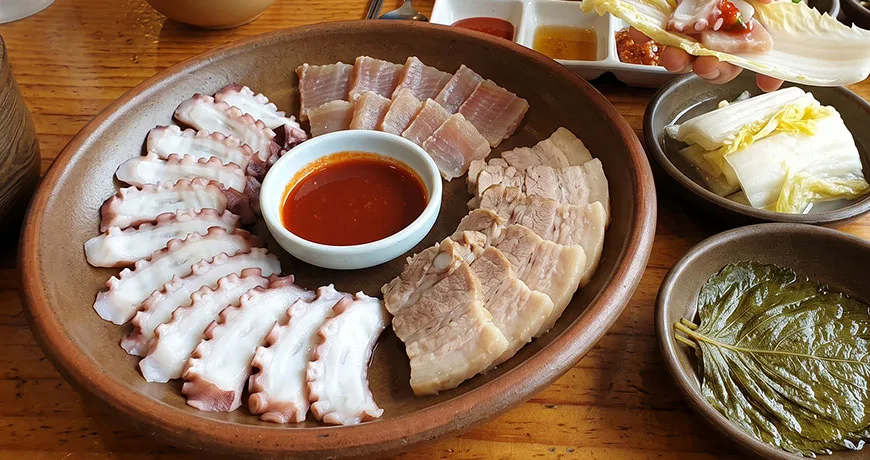
Muneo-samhap is an advanced biochemical triumph of Korean gastronomy, uniting three distinct protein states: the highly alkaline ammonia of fermented skate, the rich, lipid-heavy gelatin of boiled pork belly, and the tightly coiled, lightly blanched myofibrils of octopus. When consumed together, the pungent alkalinity of the skate slices through the pork’s heavy fats, creating a cheese-like umami resonance. This intense reaction is expertly balanced and cleansed by the lactic acid of mild white kimchi or the volatile aromatics of pickled perilla leaves.
⏱️ Total: 60 mins | Prep: 20 mins | Cook: 40 mins | 🍳 Difficulty: High (Managing distinct thermodynamic processes) | 🌶️ Profile: Pungent, Rich, and Refreshingly Tangy | 🍚 Focus: Alkaline Fermentation & Collagen Hydrolysis
Ingredients (3–4 servings)
- Main Ingredients: 1 fresh octopus (approx. 500g), 200g sliced fermented skate (hongeo), 500g pork belly or shoulder (in a solid block), 1/4 head white kimchi (baek-kimchi) or 15 pickled perilla leaves
- Pork Boiling Broth: 6 cups water, 1.5 tbsp doenjang, 1 scallion, 5 cloves garlic, 1/2 onion, 1 tsp whole black peppercorns
- Octopus Blanching Bath: 5 cups water, 1 block radish (approx. 100g), 1 tbsp coarse salt, 2 tbsp refined rice wine (cheongju), 2 tbsp wheat flour (for mechanical scrubbing)
Allergy Information Contains: Seafood (Octopus), Fish (Skate), Pork, Soy, Wheat (from doenjang, flour)
Equipment Cutting Board, Knife, 2 Deep Pots, Mixing Bowl, Tongs, Absorbent Food-grade Paper (Haedongji)
Cooking Instructions
- Thermodynamic Pork Tenderization: In a deep pot, combine the pork broth ingredients and bring to a rolling boil. Add the block of pork. Reduce the heat to medium-low and simmer for 40–45 minutes. This prolonged heat exposure hydrolyzes the tough connective collagen into soft gelatin and renders out excess lipids.
- Mechanical Scrubbing of Octopus: Remove the innards, eyes, and beak from the octopus. Vigorously massage the octopus with wheat flour to physically scrub away the foul-tasting mucilage and strip off the tough, slimy outer membrane (skin). Rinse thoroughly under clean, cold water.
- Precision Blanching (Thermal Control): Bring a pot of water to a boil with the radish, salt, and rice wine. Dip the octopus legs in and out 3 times to curl them beautifully, then submerge the entire body. Blanch rapidly for only 5–7 minutes to prevent the proteins from seizing. Immediately plunge into an ice bath (thermal shock) to halt the cooking process, then dry completely.
- Structural Slicing & Resting: Remove the boiled pork and let it rest for 5 minutes at room temperature to allow the juices to redistribute, then slice into 0.5cm thick pieces. Thinly slice the chilled octopus on a diagonal bias (sogisseolgi) to maximize tenderness. Keep the fermented skate chilled.
- Plating & Consumption Synergy: Arrange the pork, octopus, and skate neatly on a large platter alongside lightly squeezed white kimchi. To experience the biochemical synergy, lay a piece of white kimchi as the base, stack the pork, skate, and octopus on top, and eat it in a single bite.
💡 Professional Culinary Tips
- Acid-Base Neutralization & Lipid Emulsion: Fermented skate produces ammonia, a highly alkaline compound (pH ~9) that sharply attacks the olfactory senses. However, when masticated alongside the heavy animal lipids of the pork belly, the alkalinity acts as a solvent, emulsifying the fats and transforming the sharp pungency into a profound, savory richness akin to aged blue cheese.
- Thermodynamic Limits of Cephalopods: If an octopus is boiled for more than 10 minutes, its myofibrillar proteins aggressively contract, expelling their internal moisture (syneresis) and turning the meat into unchewable rubber. The diastase enzyme released from the boiling radish aids in tenderization, and the immediate ice bath is structurally critical to lock in a snappy, tender bite.
- The Role of Lactic Palate Cleansers: The sheer intensity of skate and pork requires an acidic reset. The lactic acid present in the white kimchi cuts through the lipid-ammonia emulsion coating the tongue, while providing a necessary mechanical crunch, perfectly preparing the palate for the next bite.
Nutrition Facts (Estimated)
Total Content : Approx. 350g (1 mixed serving)
Calories : 580 kcal
– Sodium : 1,150mg
– Total Carbohydrate : 10.0g
– Sugar : 4.0g
– Total Fat : 38.0g
– Saturated Fat : 14.0g
– Cholesterol : 145.0mg
– Protein : 48.0g
– Calcium : 210.0mg
*Daily Values are based on a 2,000 calorie diet and standard Korean nutritional reference values
**Nutritional values are calculated based on original ingredients; substitutions may alter specific macronutrients.
The Triad of Oceanic Resilience, Fermented Complexity, and Terrestrial Richness: A Majestic Symphony of Muneo Samhap
Muneo Samhap stands as the bold, sophisticated, and dramatic pinnacle of Korean regional gastronomy, where tenderly blanched octopus (sukhoe)—peeled and flash-cooked to achieve a snappy yet yielding bounce—meets deeply fermented skate (hongeo), renowned for its pungent, complex aging profile, and perfectly boiled pork slices across a single serving platter. Merging ocean bounty, deep fermentation wisdom, and terrestrial richness within the crisp embrace of clean white kimchi or an aromatic perilla leaf pickle, this magnificent triad bridges land, sea, and time into a single, multi-dimensional bite.
Arranged with pristine precision over chilled surfaces, the crimson and ivory ribbons of octopus, pork, and skate form a visual masterpiece of culinary contrast. The first bite delivers an exhilarating interplay of textures and flavors: the playful, springy chew of the octopus is swiftly met by the sharp, invigorating punch of the fermented skate, which is then gracefully mellowed by the rich, unctuous umami of the warm pork belly, achieving absolute harmony.
True gastronomy does not rely on simple flavor profiles; it flourishes in the ancestral wisdom of weaving together contrasting natural states to awaken the body and restore inner equilibrium. Savoring a thoughtfully assembled wrap of Muneo Samhap today is an honest and majestic ritual—clearing away the rush of modern life and filling the spirit with unpretentious warmth, bold vitality, and timeless solace.
Editor’s Review
1. An Exhilarating Cadence of Snappy Octopus Resilience, Piquant Skate Fermentation Depth, and Unctuous Pork Richness
The moment a carefully layered wrap of blanched octopus, fermented skate, pork belly, and white kimchi touches the palate, an immediate wave of contrasting textures and punchy flavors envelops the senses. The springy bounce of the octopus and the sharp, ammonia-rich kick of the aged skate awaken the palate with invigorating intensity, while the rich pork juices and the refreshing acidity of the baechu kimchi smooth out the edges, orchestrating an endlessly fascinating sensory thrill.
2. Octopus Taurine/Glycine Protein Mechanics, Skate Urea Fermentation Kinetics, and Terrestrial-Marine Synergy
Muneo Samhap represents an exacting study in multi-ingredient culinary physics and biochemical synergy. The high-protein, taurine-rich matrix of the blanched octopus provides structural chew and systemic fatigue recovery, while the prolonged fermentation of the skate breaks down urea into complex amines and organic acids that drive deep umami and antimicrobial stability. Concurrently, the savory amino acids of the pork unify these disparate elements, establishing an optimal nutritional matrix optimized for metabolic stimulation and digestive depth.
3. The Grand Hospitality of Southern Feasts and the Grounding Sanctuary of Bold Culinary Heritage
Found gracing celebratory tables and gatherings across the southern provinces as the ultimate expression of bold culinary hospitality, a modest plate of Muneo Samhap serves as an enduring emotional haven against daily weariness. Revered for generations as an essential restorative feast that challenges the palate while warming the core, enjoying this honest, dramatic dish washes away modern stress, granting a timeless sanctuary of stillness, cultural heritage, and grounded culinary happiness.