
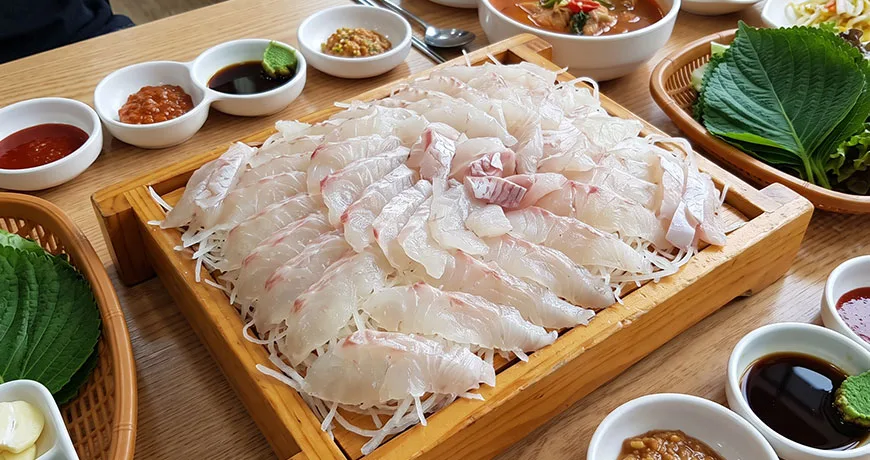
Gwang-eo-hoe highlights the pristine, delicate umami of olive flounder by executing flawless moisture extraction and precise mechanical tenderization. Flatfish possess a dense, resilient collagen matrix that requires diagonal slicing (sogisseolgi) to physically shorten the muscle fibers, ensuring a firm yet melt-in-the-mouth texture. Boasting an ultra-low lipid content and exceptionally high levels of lysine (an essential amino acid for growth), this dish is highly digestible and a nutritional powerhouse.
⏱️ Total: 20 mins | Prep: 20 mins | Cook: 0 mins (Raw) | 🍳 Difficulty: High (Requires strict sanitation, moisture control, and knife skills) | 🌶️ Profile: Clean, Delicate, and Bouncy | 🍚 Focus: High Protein, Low Fat, and Lysine
Ingredients (2 servings)
- Main Ingredients: 300g sashimi-grade olive flounder (gwang-eo) fillet (skin and bones removed), 10 lettuce leaves, 10 perilla leaves, 3 cloves garlic, 2 Cheongyang chilies
- Accompaniment Sauce (Cho-gochujang): 2 tbsp gochujang, 2 tbsp vinegar, 1 tbsp sugar (or agave syrup), 0.5 tbsp minced garlic, 0.5 tbsp sesame oil, a pinch of sesame seeds
- (Optional: Wasabi and soy sauce, or ssamjang based on preference)
Allergy Information Contains: Fish (Flounder), Soy, Wheat (from gochujang)
Equipment Highly sharpened Sashimi or Chef’s Knife, Sanitized Cutting Board, Absorbent Food-grade Paper (Haedongji) or Clean Cloth
Cooking Instructions
- Sanitation & Thermal Control: Ensure all tools and the cutting board are sanitized and chilled. White-fleshed fish degrades rapidly and loses its bouncy texture as its temperature rises. Maintain a near-freezing environment during preparation. (If using a pre-filleted sashimi-grade block, do not wash it under tap water.)
- Osmotic Moisture Extraction: Wrap the flounder fillet tightly in absorbent food-grade paper. Apply gentle pressure to extract microscopic surface and interstitial moisture via capillary action. This critical step firms the flesh and concentrates the natural flavors.
- Myofibrillar Slicing (Sogisseolgi): Place the dried fillet on the cutting board. Tilt your knife to a 30–40 degree angle against the board and slice diagonally against the grain into thin pieces (approx. 3–4mm thick).
- Acidic Sauce Formulation: In a small bowl, whisk together the gochujang, vinegar, sugar (or agave syrup), and minced garlic to create the vibrant, acidic cho-gochujang.
- Plating & Serving: Arrange the diagonally sliced flounder in a single, slightly overlapping layer on a chilled plate. Serve immediately with thinly sliced raw garlic, chilies, leafy greens, and the cho-gochujang.
💡 Professional Culinary Tips
- The Physics of Diagonal Slicing: As bottom-dwelling flatfish, flounders have an incredibly tight, tough collagen network to support their horizontal posture. Cutting straight down yields a rubbery, unchewable piece of fish. Tilting the blade to slice diagonally (sogisseolgi) dramatically increases the surface area and physically severs the resilient collagen bands, resulting in the perfect balance of snap and tenderness.
- Rigor Mortis & Inosinic Acid (Umami): Freshly dispatched flounder (live sashimi) is stiff due to retained ATP, providing maximum crunch. However, if the moisture-extracted fillet is cold-aged (3–5°C) for 3–6 hours, enzymes break down the ATP into inosinic acid (IMP). This relaxes the muscle slightly while exponentially amplifying the deep, savory umami on the palate.
- Lysine & Digestive Mechanics: Olive flounder contains less than 2% fat, making it a benchmark for ultra-lean protein. This low lipid profile vastly reduces the workload on digestive enzymes, making it perfectly digestible for children or the elderly. Furthermore, it is exceptionally rich in lysine—an essential amino acid lacking in grain-heavy diets—which is critical for calcium absorption and pediatric muscle/bone development.
Nutrition Facts (Estimated)
Total Content : Approx. 150g (1 serving, fish only)
Calories : 155 kcal
– Sodium : 80mg
– Total Carbohydrate : 0.0g
– Sugar : 0.0g
– Total Fat : 2.5g
– Saturated Fat : 0.5g
– Cholesterol : 70.0mg
– Protein : 31.0g
– Calcium : 30.0mg
*Daily Values are based on a 2,000 calorie diet and standard Korean nutritional reference values
**Nutritional values are calculated based on original ingredients; substitutions may alter specific macronutrients.
The Translucent White Elegance of the Pure Sea: A Lyrical Masterpiece of Clean, Chewy Flatfish Sashimi
Gwang-eo-hoe (Raw Flatfish/Halibut Sashimi) stands as the beloved, refined, and enduring pinnacle of Korean seafood gastronomy, where pristine flatfish fillets—meticulously stripped of skin and bone and sliced diagonally into delicate, translucent ribbons—capture the pure essence of the ocean upon a chilled serving plate. Eschewing the heavy, oily presence of dark-fleshed fish in favor of a clean, snow-white chewiness, this quintessential sashimi achieves absolute harmony when dipped into tangy chogochujang or zesty wasabi soy sauce.
As a delicate, ribbon-like slice of flatfish touches the palate, it offers a delightful, springy resistance that yields smoothly to the tooth, releasing a subtle, natural sweetness and pristine umami that refreshes the senses. Naturally low in fat and exceptionally rich in lysine—an essential amino acid crucial for children’s growth and physical development—flatfish provides a nourishing, easily digestible meal suitable for all ages.
True gastronomy does not rely on heavy artifice; it flourishes in the ancestral wisdom of honoring the pure, natural physical properties of pristine ingredients and restoring internal balance through nature’s bounty. Savoring a pristine plate of translucent flatfish sashimi today is an elegant and sacred ritual—clearing away the rush of modern life and filling the spirit with unpretentious warmth, clean oceanic vitality, and timeless solace.
Editor’s Review
1. An Exhilarating Cadence of Springy Flatfish Elasticity, Odor-Free Cleanth, and Zesty Dipping Harmony
The moment a meticulously sliced ribbon of flatfish sashimi—dipped lightly in chogochujang or wasabi soy sauce—touches the palate, an immediate wave of springy, resilient texture and absolute culinary cleanliness refreshes the senses. This satisfying structural chew is swiftly followed by a subtle, natural sweetness and a clean finish that orchestrates an endlessly refreshing, multi-layered sensory thrill.
2. Lysine-Rich High-Protein/Low-Fat Profile and Collagen-Dense Fin Meat (Engawa) Nutrition Mechanics
Gwang-eo-hoe represents an exacting study in marine nutritional biochemistry. Naturally lean and high in quality protein, flatfish meat is exceptionally rich in lysine, an essential amino acid that supports childhood growth, skeletal development, and immune function. Furthermore, its low-fat profile ensures rapid digestibility, while specialized cuts like the fin meat (engawa) concentrate abundant unsaturated fatty acids and collagen, establishing an optimal nutritional matrix for joint health and skin elasticity.
3. The Evergreen Staple of Korean Sashimi Tables and the Grounding Sanctuary of Reliable Comfort
Found gracing seaside ports and neighborhood dining tables alike as the undisputed favorite of Korean sashimi culture, a modest plate of flatfish sashimi serves as an enduring emotional haven against daily weariness. Revered for generations as an essential restorative anchor offering clean, digestible nourishment for all ages, enjoying this honest, reliable dish washes away modern stress, granting a timeless sanctuary of stillness, coastal heritage, and grounded culinary happiness.