
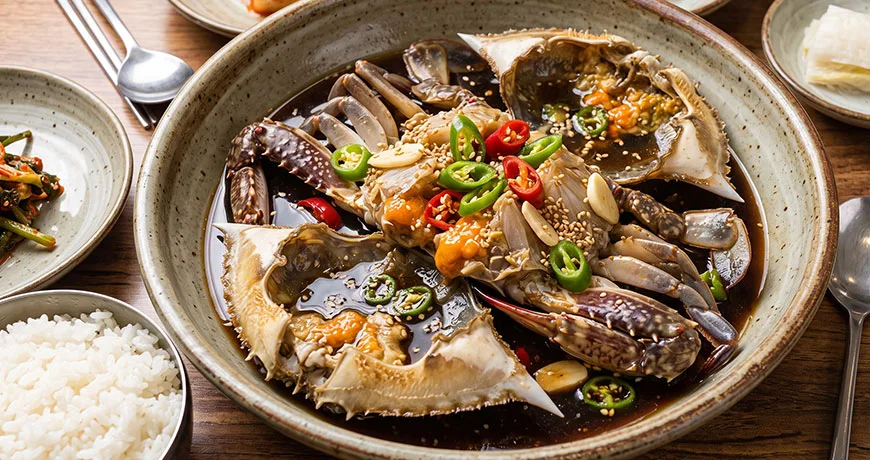
Ganjanggejang is the indisputable zenith of Korean seafood dining. Plump, female blue crabs, brimming with vibrant orange roe from the chilly spring seas, undergo a quiet, transformative slumber submerged in a slow-simmered, amber-hued soy broth. Yielding a translucent, jelly-like flesh that melts on the tongue, this exquisite preserve is a masterpiece forged entirely by patience and time, completely untouched by the heat of a flame. By gently mellowing the sharp salinity of the soy sauce with the natural sweetness of apples, onions, and aromatics, the chef creates a deeply resonant umami matrix that elevates the pristine, cold sweetness of the raw crab into an unforgettable gastronomic experience.
- ⏱️ Total Time: 3–4 Days | Prep: 40 Mins (Ice water cleansing and slow-simmering broth) | Cook & Ferment: Cold infusion, followed by secondary broth simmering on day 3
- 🍳 Difficulty: Extreme (Requires masterful preservation of crustacean freshness, absolute temperature control of the broth, and precise aging timing)
- 🌶️ Profile: A profound, elegant, and non-aggressive soy umami that gives way to the icy, refreshing sweetness of raw marine protein
- 🍚 Core Process: Cold Cleansing, Slow-simmering Broth, Cold Infusion, Secondary Simmering
- 🍶 Pairing: Steaming hot white rice, toasted premium seaweed (Gim), clear clam soup, a glass of aromatic Cheongju (rice wine)
Physicochemical & Sensory Matrix
- Baseline Salinity: 5.5% ~ 6.5% (A golden ratio delicately tuned to harmonize with unseasoned white rice without overwhelming the palate)
- pH Equilibrium: 5.5 ~ 6.0 (A soft, gentle zone where plum extract neutralizes fishiness without introducing sharp acidity)
- Textural Crunch Index: [■■□□□] (A smooth, luxurious, jelly-like flesh that extrudes effortlessly from a rigid exoskeleton)
- Umami Density: 10 / 10 (The absolute pinnacle of marine umami, born from the synergy of raw crab sweetness and fermented soy amino acids)
- Shelf Stability: Peaks on day 3; for longer storage, the flesh must be separated from the soy sauce and frozen to prevent the meat from dissolving
- Aroma Profile: Fresh Marine Iodine | Clear, Fruity Brewed Soy | Subtle Hints of Ginger and Garlic
Ingredients (Yields 1 Large Airtight Glass Container)
- Primary Marine Matrix: 1kg Premium Spring Female Blue Crabs with Roe (Approx. 3-4 crabs, blast-frozen at sea recommended)
- Aromatic Broth Matrix: 3 Cups Brewed Soy Sauce, 4 Cups Purified Water, 1 Cup Cheongju (Clear Rice Wine) or Mirin, 0.5 Cup Plum Extract (Maesil-cheong)
- Aromatic Catalyst: 0.5 Apple, 1 Onion, 1 Scallion, 10 Cloves Garlic, 1 Knob Ginger (sliced), 1 Sheet Dried Kelp (10x10cm), 3 Dried Red Chilies, 1 tsp Whole Black Peppercorns
Allergy Information
- Contains: Crustacean (Crab), Soy, Wheat (inherent in brewed soy sauce)
Equipment Large Stainless Steel Pot, Kitchen Shears, Clean Toothbrush (for scrubbing), Large Ice Water Bowl, Large Airtight Container, Wire Mesh Strainer
Cooking Instructions
- Cold Cleansing: The delicate flesh of raw crab degrades rapidly at room temperature. Keep the crabs submerged in an ice water bath throughout the cleaning process. Using a dedicated toothbrush, meticulously scrub the shell, the belly, and between the legs. Lift the abdominal flap (apron) to gently squeeze out any waste, rinse thoroughly, and place them belly-down on a strainer to drain excess water. (Do not remove the top carapace/shell).
- Slow-simmering the Broth: In a large pot, combine the water, soy sauce, rice wine, apple, onion, scallion, garlic, ginger, chilies, and peppercorns. Bring to a boil over medium heat. Add the kelp, boil for 5 minutes, and then remove it. Reduce the heat to low and simmer gently for 30 minutes to extract the profound, sweet aromas of the fruits and vegetables.
- Absolute Cooling: Turn off the heat, stir in the plum extract to refine the aroma, and strain the liquid to discard all solid ingredients. This clear soy broth must be chilled completely in an ice bath or a very cool place until absolutely no trace of warmth remains.
- Cold Infusion: Carefully arrange the drained crabs in the airtight container with their white bellies facing upward. (This crucial orientation prevents the precious roe and tomalley from spilling out during aging). Pour the completely cold soy broth over the crabs until they are fully submerged. Cover and begin the aging process in the refrigerator.
- Secondary Simmering & Aging: After 3 days in the refrigerator, carefully pour only the soy broth back into a pot. The broth will have been diluted by the crabs’ natural juices. Bring it to a boil to skim off any impurities and restore its preservative strength. Allow the broth to chill completely once more, pour it back over the crabs, and age for one final day before serving.
💡 Professional Culinary Tips
- 1. The Aesthetics of Temperature Control: The fragile proteins of the crab are incredibly sensitive to heat. Executing the entire cleaning process in ice water and ensuring the simmered broth is bone-chillingly cold before infusion are non-negotiable mandates. If even a whisper of heat remains in the broth, the crab meat will partially cook, resulting in a cloudy texture, a foul fishy odor, and the loss of its signature translucent, jelly-like mouthfeel.
- 2. Upward Placement for Flavor Retention: When stacking the crabs in the container, the top carapace must rest on the bottom, with the white belly facing the sky. If placed belly-down, gravity and osmosis will drain the highly prized orange roe, rich tomalley, and sweet juices directly into the broth, leaving you with a hollow, flavorless crab and a muddy marinade.
- 3. Purification via Secondary Simmering: Re-boiling the diluted soy broth on the third day is a vital purification ritual in professional kitchens. It recalibrates the salinity, sanitizes the liquid, and prevents the crab meat from turning to mush. Returning this purified, ice-cold broth to the crabs ensures a deeply complex, structurally sound, and masterful presentation of Ganjanggejang.
🍶 Gastronomic Pairing
- A Luscious Fusion with Carbohydrates: Carefully pry open the top carapace and use your chopsticks to gently scrape the corners, freeing the vibrant orange roe and rich tomalley. Place a generous scoop of steaming hot white rice directly into the shell. Add a single drop of premium sesame oil and mix gently. The stark contrast between the icy, deeply savory marine umami and the hot, sweet starch of the rice is the pinnacle of culinary luxury. Wrapping a spoonful of this mixture in a sheet of lightly toasted, unseasoned seaweed (Gim) completes an elegant, unforgettable dining experience.
Nutrition Facts (Estimated)
Total Content : Approx. 150g (Meat and roe of 1 crab, plus a small amount of soy broth)
Calories : 120 kcal (High-protein marine matrix and infused broth polysaccharides)
– Sodium : 850mg (Traditional aging salinity; varies based on broth consumption)
– Total Carbohydrate : 8.0g
– Sugar : 4.5g
– Total Fat : 1.5g
– Saturated Fat : 0.3g
– Cholesterol : 110mg (Crab roe and inherent marine sterols)
– Protein : 18.5g (Ultra-dense crustacean muscle proteins)
– Dietary Fiber : 0.2g
*Daily Values are based on a 2,000 calorie diet and standard Korean nutritional reference values.
**Nutritional values are calculated based on original ingredients; substitutions may alter specific macronutrients.
Origins and Food Culture of Soy Sauce Marinated Crab (Ganjanggejang)
1. Historical Lineage: “Haejang” (蟹醬) in Classical Joseon Manuals
- The tradition of preserving fresh crabs in seasoned soy sauce and wine dates back over a millennium on the Korean peninsula, emerging during the Joseon Dynasty as an esteemed delicacy for noble lineage estates and the royal court. Classical Hanja manuscripts documented the preserve as Haejang (蟹醬), with salt-cured variations termed Haeyeom (蟹鹽) and wine-lees ferments recorded as Johae (糟蟹) or Juhae (酒蟹).
- Yu Jung-im’s Jeungbo Sallim Gyeongje (1766), Lady Yi’s 1809 encyclopedia Gyuhap Chongseo, and the late 19th-century manuscript Siuijeonso documented standardized recipes for boiling spiced soy sauce to submerge fresh crabs. Notably, the Gyuhap Chongseo recorded an elite practice known as Yukpohae (肉脯蟹), in which live crabs were kept in jars and briefly nourished with seasoned beef broth before pickling, illustrating the sophisticated gastronomic philosophy ancestral cooks employed to enrich crab flesh before curing.
2. The Royal Tragedy of King Gyeongjong: The Medical Taboo of Crab and Persimmon
- Ganjanggejang is inextricably linked with one of the most famous political controversies of the Joseon Dynasty. King Gyeongjong, the 20th monarch of Joseon, suffered from frail health throughout his reign. In August 1724, after consuming a royal meal featuring marinated crab and fresh soft persimmons (yeonsi) presented by his brother, the Crown Prince (later King Yeongjo), the king developed severe gastrointestinal distress and died days later.
- Traditional Korean medical treatises, including Heo Jun’s Dongui Bogam and the Ming Dynasty’s Bencao Gangmu, explicitly classified crab (a “cold-natured” food) and persimmon (rich in cold-natured astringent tannins) as incompatible foods (sanggeuk 相剋) that induce coagulative indigestion and toxic shock when consumed together. This tragedy fueled poisoning allegations that shadowed Yeongjo’s succession, underscoring the deep historical importance placed on food temperature energetics and ingredient compatibility in royal Joseon gastronomy.
3. From Yellow Sea Tideline Terroirs to the Global Pinnacle of “Rice Thieves”
- The premier terroir for blue crabs centers on the mudflats of the Yellow Sea—notably surrounding Taean, Seosan, Gunsan, and Yeonpyeong Island. Crabs feeding on rich coastal plankton in these high-tidal waters develop sweet, tender muscle and thin carapaces, yielding the highest-grade crab for pickling.
- Celebrated nationwide under the affectionate title “Rice Thief” (Bab-doduk) for its ability to compel diners to finish bowl after bowl of rice, Ganjanggejang has gained international acclaim as a sophisticated expression of Korean non-thermal fermentation. Preserving raw coastal harvests within earthenware jars of aged soy sauce, Soy Sauce Marinated Crab stands as a timeless monument to peninsular preservation science, culinary balance, and gastronomic depth.
The Impenetrable Chitin of Spring Blue Swimming Crabs Harvested from Cold Yellow Sea Tides, Submerging Saffron Ovaries and Translucent Muscle into a Chilled Abyss of Boiled-and-Cooled Herb-Soy Liquor to Yield an Unctuous, Gelatinous Sea: A Refined Portrait of Traditional Ganjanggejang
Ganjanggejang (Raw Blue Swimming Crab Marinated in Aged Soy Sauce) stands as an astonishing, intellectually sophisticated summit within Korea’s heritage of marine preservation. Centered on female blue swimming crabs (Portunus trituberculatus) plucked from the icy depths of Yeonpyeong Island during late spring—when their bodies are densely swollen with brilliant vermilion roe and sweet meat—this revered delicacy is cured without a flicker of flame. Cleaned live crabs are submerged beneath an ice-cold, boiled-and-cooled marinade infused with brewed soy sauce, kelp broth, milkvetch root (astragalus), licorice, refined rice wine, garlic, ginger, and dried red chilies, followed by days of patient cellar aging. Crustaceans present an acute biological challenge: immediately upon expiration, the aggressive digestive proteases housed in their hepatopancreas trigger intense autolysis, rapidly turning delicate muscle fibers into watery mush. Ancestral cooks overcame this structural collapse not by boiling the crab—which would coagulate the meat into dry, fibrous white flakes—but by employing hypertonic soy osmosis and alcohol. The marinade is poured entirely cold, decanted after several days, reboiled to sterilize surface exudates, cooled again to freezing temperatures, and returned to the crocks. Through this discipline, the crab meat preserves its crystalline translucence, its cells drinking in savory peptides to achieve a supple, gel-like state.
Prying open the dorsal carapace of an aged crab reveals an opulent oceanic feast. Bordered by the translucent, iridescent white meat of the walking segments lie thick ribbons of creamy, crimson-orange roe (mature ovaries) and deep olive-green hepatopancreas, weeping tears of amber soy glaze. Grasping a quartered body segment and pressing it firmly between the fingers causes the plump meat to erupt from the chitinous channels like cool custard. Sucking the raw meat directly from the shell delivers a startling tactile revelation: entirely distinct from the fibrous shred of steamed crab or the firm snap of cured shrimp, the meat dissolves across the tongue like a savory ocean jelly, yielding a silken, luxurious mouthfeel. The intrinsic, sugary sweetness of crustacean proteins harmonizes with the deep, savory umami of fermented soy amino acids, while the rich, butter-like fat of the roe and the complex bitterness of the tomalley create explosive flavor layers. Scooping mounds of steaming white rice directly into the emptied crab carapace (ge-ttakji) and folding the grains into the savory paste with a drop of toasted sesame oil triggers an undeniable gastronomic awakening, sweeping away all table fatigue in a wave of unadulterated comfort.
The cultural identity of Ganjanggejang lies in the audacious mastery that turned extreme biological perishability into a textural masterpiece. By taming raw, wild ocean bounty beneath the cold, measured equilibrium of brewed soy, this raw marinated crab remains a celebrated icon of Korean gastronomy—justly anointed as the ultimate “rice thief” (bap-doduk) whose savory depth commands complete devotion at the table.
Editor’s Review
1. Regulated Proteolytic Autolysis and Non-Thermal Sol-Gel Rheology
Ganjanggejang occupies a singular textural space characterized by non-denatured, velvety fluidity:
- Controlled Actomyosin Hydrolysis: The myofibrillar proteins of crustacean muscle, predominantly actomyosin, undergo endogenous post-mortem proteolysis mediated by calpains and cathepsins located within muscle and adjacent hepatopancreatic tissues. Submerged under refrigerated conditions (0–4°C) in a saline medium, this enzymatic cleavage is kept within strict bounds. The rigid protein bundles relax into an elastic, multi-porous sol-gel matrix, yielding a decadent, melt-in-the-mouth texture rather than a stringy, coagulated chew.
- Structural Hydration Retention: In the absence of thermal cooking, structural water within the myofibrils is not violently expelled. Although osmotic gradients draw out surplus vacuolar free water, bound hydration remains shielded within the peptide-soy complex, preserving the meat’s glassy translucence.
2. Marine Osmolytes, Nucleotide Potentiation, and Endogenous Lipid Emulsification
The profound savor and rounded finish of Ganjanggejang are governed by multi-modal amino acid networks and biological lipids:
- Free Amino Acid Hyper-Synergy: Fresh swimming crab concentrates substantial levels of intracellular osmolytes, including glycine, alanine, proline, arginine, and betaine, which provide a rich, sweet, and oceanic sensory baseline. When paired with high titers of free L-glutamate from aged soy sauce and purine nucleotides (AMP and inosine derivatives), they trigger an allosteric potentiation of lingual T1R1/T1R3 umami receptors, magnifying perceived savor far beyond solitary seasonings.
- Hepatopancreatic Phospholipid Emulsification: The tomalley and roe are packed with triacylglycerols and surface-active phospholipids (such as phosphatidylcholine). As these lipophilic compounds contact the aqueous soy marinade during mastication, they form a spontaneous micro-emulsion that carpets the oral tissues, rounding off harsh salt edges and leaving a rich, buttery finish.
3. Boil-and-Chill Thermal Cycles, Volatile Nitrogen Control, and Water Activity (Aw)
The preservation and safety of raw crab rely on deliberate thermodynamic intervention and volatile amine suppression:
- Enzyme and Microbial Inactivation via Decanting: Siphoning the brine after 48 to 72 hours for a rolling boil serves a dual purpose: it pasteurizes surface bacteria leached from the shell and denatures excessive digestive proteases that would otherwise liquefy the muscle over extended storage.
- Strict Cold Pouring Kinetics: Cooling the boiled brine to refrigeration temperatures before re-immersion is imperative. Introducing warm marinade would induce irreversible thermal opacification and par-cooking of surface muscle, destroying the raw translucence.
- Volatile Amine Suppression: Fishy off-odors driven by trimethylamine (TMA) and ammonia compounds are volatilized through ethanol azeotrope formation (via rice wine) and masked by the polyphenol networks of licorice and astragalus alongside allium organosulfurs from garlic and ginger.
- Depression of Water Activity (Aw): High dissolved sodium chloride and complex sugars lower internal water activity (Aw) to approximately 0.85, arresting the proliferative pathways of common foodborne pathogens during anaerobic storage.