
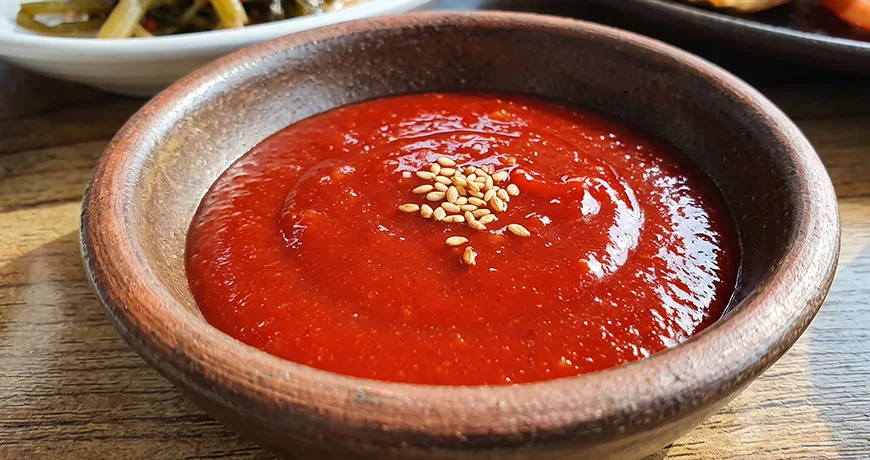
Chogochujang is a uniquely vibrant Korean hybrid dipping sauce created by combining the heavy, amino acid-rich matrix of fermented Gochujang with the sharp acetic acid of vinegar and the sweetness of natural sugars. The highly acidic environment (low pH) instantly neutralizes the fishy odors (trimethylamine, TMA) of seafood by converting them into non-volatile salts, while the sweet syrups buffer the sharp, acidic bite. Prepared entirely without heat via precise agitation, this sauce is the ultimate culinary solution to elevate the chewy texture and clean flavors of sliced raw fish or blanched seafood.
- ⏱️ Total: 10 mins | Prep: 10 mins | Cook & Ferment: None (Unheated acid-base agitation and stabilization)
- 🍳 Difficulty: Very Low (Requires precise solute dissolution and organic acid buffering)
- 🌶️ Profile: An explosive burst of sweet, sour, and spicy notes that provides a refreshing punch and perfectly masks any oceanic funk
- 🍚 Focus: Heterogeneous Paste Fusion, Acetic Acid-Sugar Buffering, Unheated Agitation
- 🍶 Pairing: Sliced Raw Fish (Hoe), Blanched Seafood (Octopus, Squid), Raw Oysters, Blanched Broccoli and Seaweed
Physicochemical & Sensory Matrix
- Baseline Salinity: 5.5% ~ 7.0% (Optimized dipping salinity, diluted from raw Gochujang by liquid acids and syrups)
- pH Equilibrium: 3.8 ~ 4.2 (Acidic buffer matrix driven by vinegar’s acetic acid and plum extract’s citric acid)
- Viscosity Index: [■■□□□] (Smooth, flowable sauce, significantly looser than raw Gochujang)
- Umami Density (T1R1/T1R3 Synergy): 8.8 / 10 (Flavor amplification between Gochujang peptides and garlic allicin)
- Shelf Stability: 1~2 Weeks (Though vinegar acts as an antimicrobial, the oxidation of fresh raw garlic limits long-term storage)
- Aroma Profile: Sharp Acetic Punch | Fermented Soybean Pyrazines | Volatile Allium Aromatics (Garlic)
Ingredients (Yields 1 Medium Sauce Bowl)
- Base Fermented Matrix: 3 tbsp Traditional Gochujang (Korean Red Chili Paste)
- Organic Acid Matrix: 2 tbsp Naturally Fermented Vinegar (Brown rice or apple cider vinegar)
- Sweetener & Buffer Matrix: 1 tbsp Unrefined Sugar, 1 tbsp Plum Extract (Maesil-cheong) or Oligosaccharide
- Aromatic Catalyst: 0.5 tbsp Finely Minced Garlic, 1 tsp Ground Toasted Sesame Seeds (Sesame oil is typically omitted when pairing with seafood to preserve the sharp acidity)
Allergy Information
- Contains: Soy, Wheat (inherent in Gochujang ingredients)
Equipment Small Mixing Bowl, Whisk (or small silicone spatula), Airtight Container
Cooking Instructions
- Sweetener & Organic Acid Dissolution: In a mixing bowl, combine the vinegar, sugar, and plum extract. Whisk vigorously until the sugar crystals are completely dissolved in the acidic liquid, creating a transparent liquid buffer solution.
- Base Paste Agitation: Add the traditional Gochujang to the dissolved sugar-vinegar solution. Use a spatula to mash and fold the paste gently until no lumps remain, achieving a silky, fluid emulsion.
- Aromatic Particulate Infusion: Stir in the finely minced garlic to evenly distribute it, trapping the highly volatile allicin compounds within the paste matrix.
- Viscosity Control & Aging: Fold in the ground toasted sesame seeds to provide physical texture. While Chogochujang can be consumed immediately, storing it in an airtight container in the refrigerator for 1 to 2 days for aging allows the starchy heaviness of the Gochujang to subside, resulting in a perfect molecular fusion of tartness and sweetness.
💡 Professional Culinary Tips
- Biochemistry of Mixing Order: If you dump vinegar and sugar directly into the thick Gochujang all at once, the starches will resist hydration, resulting in a lumpy, separated mess. The biochemical key to a silky emulsion is completely dissolving the crystalline sugar into the liquid vinegar first, and then gently incorporating the thick paste into that liquid solution.
- Masking Dynamics for Seafood: The highly acidic environment (pH 3.8-4.2) of Chogochujang chemically reacts with trimethylamine (TMA)—the basic compound responsible for the “fishy” smell on seafood surfaces—converting it into a non-volatile, odorless salt. Furthermore, the citric acid from the plum extract rounds out the harsh, stinging finish of the vinegar, drastically elevating the sensory quality of the dip.
🍶 Gastronomic Pairing
- The Masterpiece for Seafood Dipping: Generously dip slices of raw fish, or perfectly blanched, chewy octopus and squid (Sukhoe) into this sauce. The cold, marine proteins collide aggressively with the sweet-and-sour acidic matrix of the Chogochujang, instantly tightening the texture in the mouth and delivering an explosive culinary thrill. It also provides a stunning flavor contrast against slightly bitter blanched vegetables like broccoli or fatsia shoots.
Nutrition Facts (Estimated)
Total Content : Approx. 20g (1 tbsp)
Calories : 35 kcal (Fermented carbohydrate and organic acid matrix)
– Sodium : 250mg (Controlled salinity diluted by vinegar and syrups)
– Total Carbohydrate : 7.0g (Natural sugars and Gochujang grain starches)
– Sugar : 4.5g (Dissolved sugars and plum extract)
– Total Fat : 0.5g (Trace lipids derived from sesame seeds)
– Saturated Fat : 0.1g
– Cholesterol : 0.0mg (100% Vegan matrix)
– Protein : 0.5g (Soybean peptides)
– Dietary Fiber : 0.4g
*Daily Values are based on a 2,000 calorie diet and standard Korean nutritional reference values.
**Nutritional values are calculated based on original ingredients; substitutions may alter specific macronutrients.
Origins and Food Culture of Sweet and Sour Red Chili Paste (Chogochujang)
1. Historical Lineage: Agrarian Treatises, Siuijeonso, and the Heritage of Peninsular Raw Fish Gastronomy
- Documented across classical Joseon manuscripts under names like Chojang (醋醬/椒醬) or Chogochujang, the condiment evolved from ancient dipping customs that blended vinegar with pungent botanicals such as wild Sichuan pepper (sancho) and ginger prior to the introduction of red chilies.
- By the 18th and 19th centuries, Yu Jung-im’s Jeungbo Sallim Gyeongje (1766) and the culinary compilation Siuijeonso documented standardized recipes blending fermented red chili paste with artisanal vinegar, honey, and pine nut powder to accompany raw fish (eohwe), parboiled beef (yukhoe), and tied water parsley bundles (minari-ganghoe). This pairing balanced the cold, delicate nature of raw marine foods with the warm, invigorating properties of fermented chili.
2. The Culinary Science of Trimethylamine (TMA) Neutralization and Rheological Viscosity Control
- The technical mastery of Chogochujang lies in acid-base neutralization of seafood off-notes and precision rheological formulation for optimal dipping adhesion.
- As harvested seafood undergoes surface oxidation, basic amine compounds like trimethylamine release a characteristic fishy odor. The acetic acid molecules in Chogochujang rapidly react with these volatile alkaline amines, converting them into odorless salts and cleansing the palate. Simultaneously, balancing gochujang’s gelatinized rice starches with liquid vinegar and natural syrups creates an ideal viscoelastic texture that coats slippery raw seafood slices evenly without pooling or sliding off.
3. The Sovereign Icon of Korean Fish Markets and the Communal Culture of K-Dipping Sauces
- While neighboring Japanese sashimi traditions rely predominantly on clear soy sauce and wasabi to emphasize subtle fattiness, Korean raw fish gastronomy developed an intimate cultural bond with the bold, sweet-and-sour punch of Chogochujang.
- From casual dockside fish markets serving rustic sliced fish (makhwe) to celebratory banquet platters of blanched octopus and seasonal spring greens, Chogochujang represents the spirited, dynamic warmth of Korean culinary culture. Celebrated today as an indispensable global K-Food dipping sauce, it remains an immortal cultural monument to peninsular fermentation ingenuity, microbial balance, and convivial dining.
The Dense Capsaicin and Rice Maltose of Aged Chili Paste Meeting the Piercing Acetic Clarity of Vinegar and Refreshing Sweetness: A Refined Portrait of Chogochujang
Chogochujang (Sweet and Sour Red Chili Paste) stands as the dynamic, highly kinetic dipping glaze of the Korean coastal and parboiled seafood table. Built upon a foundational matrix of traditional fermented red chili paste (gochujang), this all-purpose dipping condiment is mixed with clear brewed grain or fruit vinegar, sugar or starch syrup, minced garlic, a sprinkle of toasted sesame seeds, and a finishing drop of fresh lemon juice. Its preparation represents a study in fluid rheology: the dense, starch-heavy network of gochujang is gently unfolded as the aqueous vinegar solution lowers its viscosity. Whisked steadily with a spoon, the entangled amylopectin chains hydrate and loosen, while added sugars round off the sharp pain of raw capsaicin, transforming a stiff paste into a glossy, pourable dipping emulsion. Stationed beside freshly parboiled squid (ojingeo-sukhoe), tender octopus, tender brown seaweed, or chilled ribbons of raw whitefish, Chogochujang exhibits superior wetting and coating capacity, clinging stubbornly to wet, slippery marine surfaces to deliver a sharp, colorful punch of sweet heat from the very first contact.
Tilting a shallow porcelain saucer of vibrant, glossy Chogochujang releases an immediate, exhilarating olfactory bloom: the stinging, volatile vapor of acetic acid slices through the warm, roasted perfume of sun-dried chili flakes and the pungent allicin of crushed garlic. Dipping a thick baton of warm, blanched squid into the crimson emulsion and bringing it to the mouth triggers an instantaneous physical transformation: the velvety sauce coats the oral mucosa with fluid precision, flooding the palate with a sweet and tart surge. As the sharp vinegar acidity stimulates the salivary glands, the underlying amino acid umami of the fermented bean paste and the warm bloom of chili heat emerge to dismantle any lingering oceanic fishiness. While the firm, muscular fibers of the squid yield with a satisfying snap under tooth pressure, the sweet-spicy sauce is cleanly washed away by stimulated salivation, leaving behind a clean, refreshed palate that immediately demands another bite.
The historical identity of Chogochujang traces back through late-Joseon dynasty culinary compendiums such as Siuijeonseo, where it was documented under the classic preparations of chojang for royal and domestic banquets. Unlike Japanese sashimi traditions that prioritize the subtle, minimalist pairing of clear soy sauce and wasabi, Korean seafood culture has long embraced the bold protection of this crimson vinegar glaze. Valued for its natural acidity and microbial defense when handling raw or briefly parboiled catches, a saucer of Chogochujang remains an enduring symbol of coastal dining, transforming the plain bounty of the sea into an accessible, high-energy culinary celebration.
Editor’s Review
1. Viscoelastic Gel Relaxation, Hydrophilic Wetting Dynamics, and Micro-Particulate Crunch in a Three-Tiered Glaze Texture
Chogochujang delivers a refined non-Newtonian pseudoplastic fluid texture, operating between a stiff paste and a thin broth:
- Rheological Viscosity Modulation: Introducing vinegar and liquid saccharides into the tight starch-protein gel of gochujang relaxes its internal polymer tangles, allowing the paste to drop smoothly from a spoon in a continuous ribbon while retaining enough body to avoid watery pooling.
- Surface Wetting & Clinging Capacity: Smooth marine ingredients—often coated in slippery moisture or natural mucilage—cause thin soy sauces to run off immediately. Chogochujang harnesses the surface tension and cohesion of dissolved sugars and dextrins to spread evenly across wet tissues, creating a durable coating layer that stays put during oral transfer.
- Tactile Masticatory Friction: Suspended whole toasted sesame seeds provide micro-particulate crunch between the teeth, creating an engaging textural contrast against the tender, uniform chew of parboiled mollusks and sashimi.
2. Acetic Acid (pH 3.5–3.8) Microbial Inhibition, Saccharide Capsaicin Suppression, and Salivary Transduction Dynamics
The balance and protective performance of Chogochujang are governed by precise acid-base chemistry and sensory neurobiology:
- Acidic Barrier and Pathogen Control: The introduction of acetic acid drives the sauce’s pH down into an antimicrobial window of 3.5 to 3.8. This acidic threshold disrupts cell membrane proton gradients in common marine foodborne pathogens, notably Vibrio parahaemolyticus, functioning as an active biological safeguard for raw seafood.
- Cross-Modal Capsaicin Suppression: Sucrose and fructose molecules from added sugars structurally mitigate capsaicin’s binding efficiency to oral TRPV1 pain receptors. This converts the sharp, burning sensation of raw chili into a rounded, accessible warmth suitable for repeated dipping.
- Proton-Driven Salivary Transduction: Dissociated hydrogen ions (H+) activate proton channels on taste receptor cells, triggering extensive salivation. This accelerated flow of saliva dissolves hydrophobic lipid residues on chilled seafood proteins and rapidly disperses the free glutamic acid of the paste across the entire tongue.
- Water Activity (Aw) Stabilization: High concentrations of dissolved sugars, sea salt, and organic acids depress water activity (Aw), establishing an osmotic barrier that maintains freshness and quality at ambient temperatures.
3. The Volatile Deodorizer and Caloric Linker of Korean Marine Dining
Far from being a passive dip, Chogochujang functions as an active culinary solution designed to conquer raw seafood’s vulnerabilities. Its volatile acetic acid chemically protonates and neutralizes volatile basic amines (trimethylamine), converting fishy aromas into non-volatile salts that cannot reach the olfactory bulb. Simultaneously, it supplies readily available carbohydrates to lean, protein-dense catches like whitefish and squid. By bridging sharp fruit-and-grain acidity with the steady warmth of fermented peppers, Chogochujang remains the premier functional emblem of Korean seafood gastronomy.