
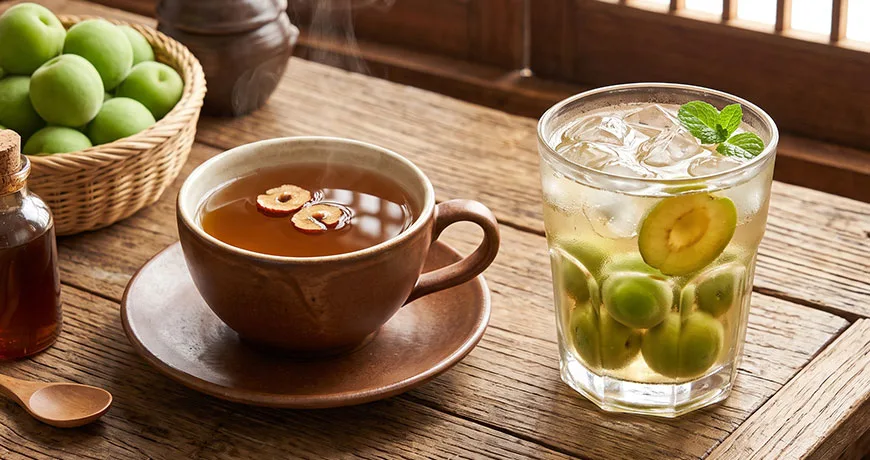
A remarkably refreshing and therapeutic traditional Korean fermented tea made from fresh green plums (Maesil). The plums are carefully layered with sugar and aged to extract a rich, tart, and intensely fruity syrup (Maesil-cheong). Packed with natural organic acids like citric and malic acid, it is an absolute powerhouse for breaking down lactic acid, relieving fatigue, and detoxifying the liver. Most famously, its natural antibacterial properties and ability to stimulate digestive enzymes make it Korea’s most trusted home remedy for indigestion. Enjoy it hot for comforting warmth or iced for a brilliant summer thirst-quencher.
⏱️ Total: 30 mins (plus 100 days fermenting) | Prep: 30 mins | Cook: 0 mins | 🍳 Moderate | 🍏 Tart, Sweet & Refreshing | 🥤 Natural Digestive Cure
Ingredients (Yields approx. 1 liter of syrup, 20-25 servings)
- Main Ingredients: 1kg fresh green plums (Maesil), 1kg sugar (1:1 ratio by weight to the plums)
- For Cleaning: Baking soda or vinegar
- For Serving: Hot or cold water, ice cubes (optional)
💡 Substitutes & Notes
- Sugar ➔ Brown sugar or raw cane sugar (Avoid liquid syrups like honey or agave for the fermentation process, as they contain moisture that can disrupt the aging and cause mold).
Allergy Information
(Fully Vegan & Vegetarian-friendly)
Equipment
- Large Sterilized Glass Jar with an airtight lid, Colander, Toothpicks
Cooking Instructions
- Washing & Drying: Soak the green plums briefly in water with a little baking soda or vinegar, then rinse them thoroughly under cold running water. Spread them out on a colander and let them air-dry completely. (This is crucial: any leftover moisture on the skin can cause mold during fermentation).
- Removing the Stems: Using a toothpick, gently pick out and discard the tiny black stem bits attached to the top of each plum.
- Bottling: In your completely dry, sterilized glass jar, alternate layers of the dried plums and sugar until the jar is almost full.
- Sealing & Fermenting: Pour the remaining sugar over the very top to create a thick “blanket” that completely covers the plums. This seals out oxygen and prevents spoiling. Close the lid tightly and store the jar in a cool, dark place for exactly 100 days. (Occasionally stir the bottom with a clean, dry wooden spoon to help dissolve the settled sugar).
- Serving: After 100 days, the plums will look shriveled. Strain out the solid plums and discard them. Keep the beautifully clear, golden syrup in the fridge. To enjoy, mix 3–4 tablespoons of the syrup into a mug of hot water to soothe an upset stomach, or cold water with ice for a vibrant, fruity drink.
💡 Cooking & Pairing Tips / Health Benefits
- Why Remove the Stems?: It might seem tedious, but picking off the tiny stems is the secret to a perfectly clean-tasting tea. If left on, they can impart an unwanted bitter and astringent taste to the syrup.
- The 100-Day Rule: Raw green plum pits contain a trace amount of a natural compound called amygdalin. However, fermenting them in sugar for about 100 days naturally breaks down and neutralizes this compound. Always strain the syrup and discard the shriveled plums after this 100-day mark to ensure safety and the best flavor.
- The Ultimate Digestion Aid: The tartness of the plums naturally stimulates the production of saliva and gastric juices. Drinking a warm cup of Maesil-cha after a heavy, greasy meal or when experiencing an upset stomach is a cherished and highly effective Korean home remedy.
- The Golden 1:1 Ratio: Strictly adhering to a 1:1 ratio of fruit to sugar by weight is absolutely essential. If you use less sugar, the mixture may turn into plum vinegar or spoil entirely instead of becoming a sweet, stable syrup.
Nutrition Facts (Estimated)
Total Content : Approx. 250ml (1 serving, mixed with 3 tbsp Maesil-cheong)
Calories : 75 kcal
– Sodium : 1mg
– Total Carbohydrate : 19.0g
– Sugar : 17.0g
– Total Fat : 0.0g
– Saturated Fat : 0.0g
– Cholesterol : 0.0mg
– Protein : 0.1g
– Calcium : 5.0mg
*Daily Values are based on a 2,000 calorie diet and standard Korean nutritional reference values
**Nutritional values are calculated based on the original ingredients, not substitutes
The Amber Elixir of Hundred-Day Fermentation: A Masterpiece of Green Plum and Sugar Osmosis
Maesilcha (Green Plum Tea) represents the radiant zenith of traditional Korean fermented beverage gastronomy (Eumcheongnyu), where vibrant green plums—harvested at their seasonal peak under early summer skies—endure a patient hundred-day slumber within the sweet embrace of raw sugar. The raw fruit’s fiercely tart and astringent vitality undergoes high-osmotic maceration, shedding its unpolished bite to emerge as an opulent, translucent amber syrup (Maesil-cheong).
When this golden nectar dissolves seamlessly into cold or warm water, the uplifting, sweet-and-sour aroma clears the senses long before the liquid reaches the lips. The initial sip delivers an electrifying burst of pure natural citric and malic acids that instantly awakens the palate, smoothly enveloped by the velvety roundness of fermented simple sugars. As it glides down the throat, it effortlessly purges lingering oils from a heavy meal, leaving the digestive tract pristine and revitalized.
True gastronomy does not rely on superficial indulgence; it thrives in ancestral wisdom that harnesses organic acids and the patient alchemy of fermentation to re-energize the body and restore internal balance. Whether enjoyed ice-cold to banish summer heat or sipped steaming hot to comfort the stomach in winter, partaking in a cup of Maesilcha is a gentle healing ritual—clearing away physical sluggishness and infusing the soul with crisp, sun-kissed vitality.
Editor’s Review
1. An Electric Cadence of Razor-Sharp Organic Acidity and Velvety Fermented Nectar
The moment the chilled tea coats the palate, a magnificent surge of crisp citric and malic acids awakens the salivary glands with electrifying precision. This vibrant tartness is immediately balanced by the rich, mellow sweetness of fermented sugars, which coats the tongue in pure silk. The resulting harmony softens the sharp acidic edges, orchestrating an endlessly refreshing, multi-dimensional sensory thrill from start to finish.
2. Hyper-Osmotic Maceration Kinetics and Picric Acid Metabolic Activation Mechanics
Maesilcha represents an exacting study in non-thermal biochemical extraction. High-osmotic pressure systematically draws out water-soluble organic acids from the dense cellular structure of the green plum without heat damage. During the extended aging phase, active compounds such as picric acid and succinic acid are liberated, supporting hepatic detoxification pathways and accelerating cellular lactate breakdown via the citric acid (TCA) cycle. Simultaneously, the low intrinsic pH acts as a natural antimicrobial shield, optimizing digestive enzyme secretion while maintaining biological stability.
3. The Maternal Remedy of the Home Pantry and the Grounding Sanctuary of Digestive Solace
Encountering a cup of green plum tea whenever the stomach feels weighed down evokes the cherished warmth of traditional home care passed down through generations. Revered as an indispensable natural digestif following rich banquets or long, exhausting days, savoring this translucent golden elixir washes away bodily fatigue, granting a timeless sanctuary of stillness, maternal comfort, and restorative lightness.