
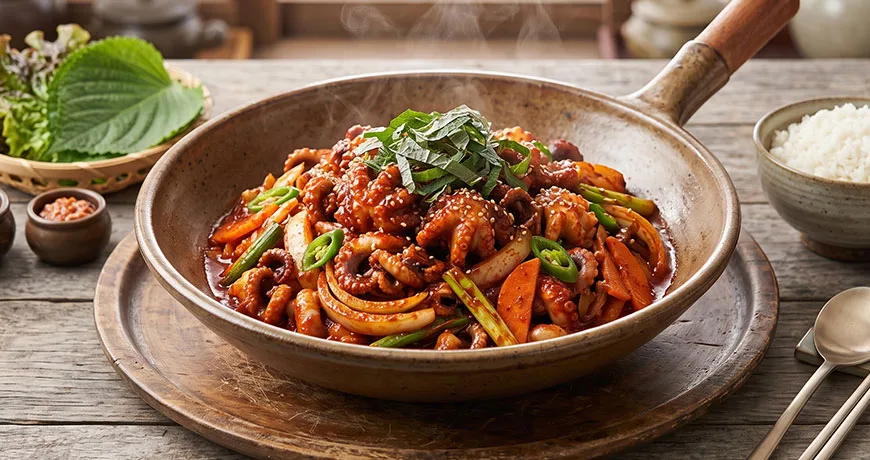
Jjukkumi-bokkeum is a dish that relies on extreme thermal control to minimize syneresis—the rapid expulsion of water from contracting cephalopod muscle fibers. By executing a high-heat, short-duration flash fry, the octopus remains remarkably tender while absorbing the smoky, spicy gochujang glaze. The mechanical abrasion of the octopus using wheat flour guarantees a pristine exterior, allowing the marinade to adhere perfectly without creating a watery sauce.
⏱️ Total: 25 mins | Prep: 15 mins | Cook: 10 mins | 🍳 Difficulty: Moderate | 🌶️ Profile: Spicy, Sweet, and Snappy | 🍚 Focus: Taurine Retention & Syneresis Control
Ingredients (2 servings)
- Main Ingredients: 300g cleaned webfoot octopus (jjukkumi), 1/2 onion, 1 scallion, 1–2 Cheongyang chilies, 50g cabbage (optional), 1 tbsp wheat flour (for mechanical washing)
- Seasoning Paste: 2 tbsp gochujang, 2 tbsp gochugaru, 1.5 tbsp soy sauce, 1 tbsp minced garlic, 1 tbsp sugar (or agave syrup), 1 tbsp mirin, 1 tbsp plum extract (maesil-cheong), 1 tbsp sesame oil (for finishing), a pinch of black pepper, a pinch of crushed sesame seeds
Allergy Information Contains: Seafood (Webfoot Octopus), Soy, Wheat (from gochujang, soy sauce, flour)
Equipment Cutting Board, Knife, Mixing Bowl, Heavy-bottomed Wok or Skillet, Spatula
Cooking Instructions
- Mechanical Absorbent Washing: After removing the innards, eyes, and beak, place the octopus in a bowl with 1 tbsp of wheat flour. Vigorously massage the seafood. The fine particulate matrix of the flour physically scrubs away the foul-tasting mucilage and grit trapped in the suction cups. Rinse thoroughly under running water, drain completely, and cut into bite-sized pieces.
- Vegetable Prep & Paste Formulation: Thickly slice the onion and cabbage. Diagonally slice the scallion and chilies. The thick cuts help delay the release of cellular water. Mix all the seasoning ingredients in a bowl, setting aside the sesame oil and sesame seeds for the final step.
- High-Heat Vegetable Searing: Heat a heavy skillet until smoking. Add a touch of cooking oil and aggressively stir-fry the onion and cabbage. Flash-searing the exterior prevents osmotic weeping, keeping the vegetables crunchy.
- Octopus Integration & Thermodynamic Control: Once the vegetables are slightly softened, introduce the octopus and the seasoning paste simultaneously. Maintain maximum heat and toss furiously for only 1 to 2 minutes—just until the octopus turns opaque and its legs curl inward.
- Residual Heat Coating: Turn off the heat immediately to prevent the proteins from seizing. Add the scallion, chilies, sesame oil, and sesame seeds. Toss gently using the residual heat to bind the volatile aromatics and the nutty lipids without evaporating them.
💡 Professional Culinary Tips
- Controlling Syneresis (Moisture Expulsion): The absolute core of this dish is speed. If cooked for more than 3 minutes, the cephalopod myofibrils will violently contract, squeezing their internal moisture into the pan. This washes away the marinade, turning a dry, glazed stir-fry into a watery, rubbery stew.
- The Chemistry of Flour Scrubbing: The slimy mucilage coating the octopus contains water-soluble proteins that trap fishy odors and cannot be rinsed off with water alone. The gluten and starch in wheat flour create a mechanical friction net that absorbs and completely strips away this layer, ensuring a clean flavor profile.
- Timing the Marinade: Unlike beef or pork, do not pre-marinate the octopus. The osmotic pressure of the salty gochujang paste will instantly draw out moisture before it even hits the pan. Mixing the paste and the seafood directly in the screaming hot wok is crucial for textural integrity.
Nutrition Facts (Estimated)
Total Content : Approx. 300g (1 serving)
Calories : 260 kcal
– Sodium : 890mg
– Total Carbohydrate : 24.0g
– Sugar : 12.0g
– Total Fat : 6.0g
– Saturated Fat : 1.0g
– Cholesterol : 150.0mg
– Protein : 28.0g
– Calcium : 60.0mg
*Daily Values are based on a 2,000 calorie diet and standard Korean nutritional reference values
**Nutritional values are calculated based on original ingredients; substitutions may alter specific macronutrients.
The Origins and Culture of Jukkumibokkeum (Stir-fried Webfoot Octopus)
1. A Cherished Spring Delicacy from the West Coast
- Jjuggumi-bokkeum (stir-fried webfoot octopus) is rooted in the coastal culinary traditions of South Korea’s West and South Seas (such as Seocheon and Boryeong in Chungcheong Province), where local fishermen harvested plump, seasonal webfoot octopus during spring.
- Traditionally harvested between March and May before spawning, spring jjuggumi is prized for its rice-like roe (“jjuggumi rice”) and supreme tenderness, serving as a classic seasonal tonic to shake off winter lethargy.
2. Fiery Spice and High-Heat Textural Mastery
- The soul of Jjuggumi-bokkeum lies in its addictively fiery, robust sauce crafted from gochujang, gochugaru, fiery chili peppers, and an abundance of minced garlic.
- It is flash-stir-fried over high heat—often on a hot iron griddle or directly over charcoal—to infuse a delightful smoky aroma. Because overcooking turns the octopus rubbery, mastering the short cooking time is essential to preserve its snappy, tender texture.
3. The Joy of Wraps and the Ultimate Fried Rice Finale
- Eating the spicy octopus wrapped in fragrant perilla leaves with pickled radish and a dollop of mayonnaise creates a harmonious balance of flavors that cuts through the heat.
- In Korean dining culture, the meal culminates gloriously when leftover savory sauce is stir-fried directly on the pan with rice, toasted seaweed, and sesame oil to create the ultimate fried rice finale (bokkeum-bap).
The Fleeting Flash of High Heat: A Lyrical Masterpiece of Maritime Bounce and Restorative Vitality
Jjuggumi Bokkeum (Spicy Stir-fried Webfoot Octopus) stands as the dynamic and meticulous masterpiece of Korean coastal gastronomy, where fresh webfoot octopus—harvested at the height of spring—meets the blistering heat of a searing skillet for only a few fleeting moments. Grounded in the ancestral wisdom that prolonged cooking leaches moisture and toughens delicate cephalopod flesh, the art of flash-frying the octopus over high heat alongside bold seasonings achieves an astonishing level of tenderness that captivates the palate.
As the seasoned octopus sizzles vigorously in the heavy iron pan, it rapidly curls into plump, glossy rosettes, capturing the rich gochujang glaze within its textured folds and commanding the dining room with an intoxicating aroma. The first bite delivers a delightfully springy bounce that yields effortlessly to the tooth, releasing a torrent of sweet, oceanic moisture. Crowned by the nutty resonance of a final drizzle of sesame oil, the dish weaves a bold, balanced tapestry of spice and savory depth.
True gastronomy does not rely solely on prolonged simmering; it flourishes in the precise culinary physics of capturing an ingredient’s peak texture under intense flame to revitalize depleted vitality and restore internal balance. Savoring a steaming, glossy morsel of spicy stir-fried octopus today is an exhilarating and comforting ritual—banishing daily exhaustion and replenishing the spirit with unyielding maritime energy and heartwarming solace.
Editor’s Review
1. A Dynamic Sensory Rhythm of Sweet-and-Spicy Gochujang Glaze and Snappy Cephalopod Elasticity
The moment a sauce-drenched morsel of webfoot octopus touches the palate, the vibrant kick of gochujang depth and sharp chili spice delivers an electric awakening to the senses. This initial spark is swiftly followed by the playful, snappy resilience of the flash-fried octopus, which yields tenderly without a trace of toughness. As the natural umami of the seafood blends with the nutty richness of finishing sesame oil, it creates an endlessly refreshing, multi-layered rhythm of comfort and culinary satisfaction.
2. High-Heat Flash-Frying Thermodynamics, Moisture Retention, and Taurine Preservation Kinetics
Jjuggumi Bokkeum represents an exacting study in high-heat culinary physics and seafood biochemistry. Rapidly searing the delicate cephalopod over high heat sets surface proteins instantly, locking internal moisture within the cellular matrix and preventing the dreaded toughness caused by overcooking. This optimized thermal window preserves vital, water-soluble taurine and free amino acids while suppressing excessive water release, securing a pristine, clinging glaze across every piece.
3. The Seasonal Spring Bounty of Coastal Vitality and the Grounding Sanctuary of Evening Solace
Encountering a sizzling platter of spicy stir-fried webfoot octopus amidst the cheerful clatter of an evening table serves as an intimate emotional sanctuary against modern exhaustion. Celebrated for generations as a premier seasonal restorative to invigorate metabolism and banish fatigue, enjoying this honest, savory seafood dish washes away daily stress, granting a timeless refuge of physical replenishment, culinary joy, and grounded vitality.