
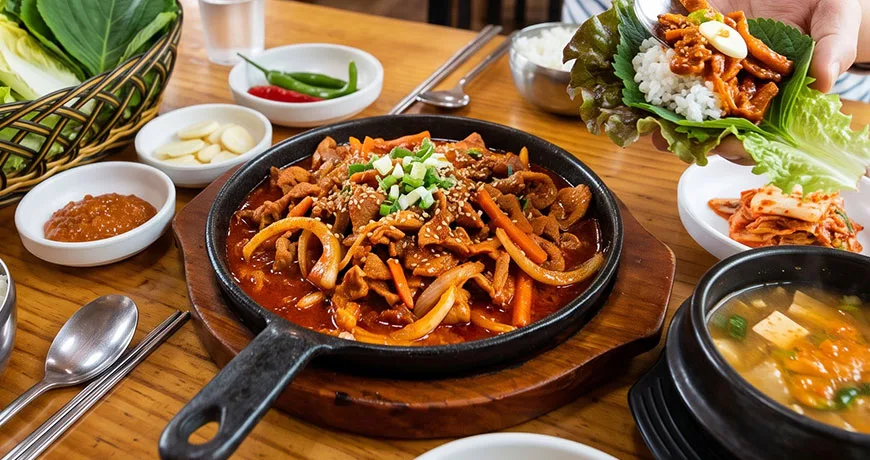
Jeyuk-ssambap is a highly rheological, single-bite culinary construct. It centers around forcing the thermodynamic rendering of pork fat heavily saturated with a hypertonic gochujang emulsion, inducing severe caramelization. As the liquid lard rapidly renders out, it meets the reducing sugars in the marinade to ignite an explosive Maillard reaction. This moisture-evaporated, intensely spicy pork is then enclosed within a physical fiber matrix (fresh lettuce/perilla leaves) alongside warm rice. Just like the witty linguistic pun “na eopseumyeon mot ssam” (you simply cannot wrap without me) dictates, the structural bite is incomplete without raw garlic and fermented Ssamjang. The allicin and complex amino acids chemically cleanse the heavy animal lipids from your palate, ensuring an exceptionally dynamic sensory experience in every bite.
⏱️ Total: 35 mins (includes marination) | Prep: 15 mins | Cook: 5 mins | 🍳 Difficulty: Moderate (Requires strict flash-evaporation and lipid emulsification control) | 🌶️ Profile: Fiery, Sweet, Savory, and Refreshing | 🍚 Focus: Lipid Rendering, Flash Evaporation, & Palate Cleansing
Ingredients (2–3 servings)
- Protein & Lipid Matrix: 400g thinly sliced Pork (shoulder or picnic cut, 2-3mm thick)
- Hypertonic Emulsion Marinade: 3 tbsp Gochujang, 2 tbsp Gochugaru (chili flakes), 2 tbsp soy sauce, 1.5 tbsp sugar, 1 tbsp corn syrup, 2 tbsp minced garlic, 2 tbsp rice wine, 1 tbsp sesame oil
- Structural Fiber & Aromatics: 1/2 onion, 1/4 carrot, 1 scallion (thickly julienned)
- Ssam Matrix & Chemical Cleansers: Plenty of fresh lettuce and perilla leaves, Ssamjang (seasoned soy paste), sliced raw garlic, sliced green chilies
- Starch Matrix: 2 bowls of warm cooked white rice
Allergy Information Contains: Pork, Soy, Wheat (from Gochujang, soy sauce, and Ssamjang)
Equipment High Thermal Mass Wok or Wide Skillet, Mixing Bowl, Knife, Cutting Board
Cooking Instructions
- Osmotic Marination: In a mixing bowl, aggressively knead the thinly sliced pork with the hypertonic marinade. The high salinity and sugar content generate osmotic pressure, forcing the aromatic molecules deep into the muscle fibers. Marinate for at least 15 minutes.
- Flash Evaporation: Heat a wide wok over extreme high heat. Add the marinated pork. Initially, the moisture expelled from the meat and marinade will boil. You must maintain maximum heat to flash-evaporate this excess water instantly.
- Rendering & Caramelization: Once the water completely evaporates, the temperature breaks past 100°C, transitioning into the frying phase. The pork’s subcutaneous fat liquefies (renders). The sugars in the marinade fry in this pure liquid lard, undergoing aggressive caramelization and creating a thick, lacquer-like emulsion over the meat.
- Aromatic Integration: When the pork is 80% cooked and possesses a dark crust, toss in the julienned onion, carrot, and scallions. Stir-fry rapidly over high heat so the vegetables maintain their cellular turgor pressure (crunch) without leaching water that would make the dish soggy.
- Assembly & Biochemical Cleansing: Layer a perilla leaf over a lettuce leaf. Add a spoonful of warm rice and a generous piece of the spicy pork. Finish with a slice of raw garlic and a dab of Ssamjang. Wrap it tightly and consume in one bite to experience the ultimate rheological contrast and biochemical palate cleanse.
💡 Professional Culinary Tips
- The Thermodynamic Boundary (Boiling vs. Frying): The most frequent failure when making Jeyuk-bokkeum is overcrowding a pan lacking thermal mass. This traps moisture, boiling the meat into a gray, mushy texture. You must use high heat and a wide surface area to violently evaporate the water, guaranteeing the meat actually fries in its own rendered lard to trigger the Maillard reaction.
- Pork Lard Emulsification: Thinly sliced pork shoulder expels a high volume of liquid fat. Under intense heat and mechanical friction, this fluid lipid matrix binds perfectly with the starches and soy proteins of the Gochujang, generating a seamless, creamy emulsion that coats the meat tightly instead of splitting into a greasy puddle.
- Palate Cleansing via the Ssam Matrix: The heavy pork fat and intense sugars quickly fatigue the taste receptors. The Ssam matrix—combining the sharp allicin of raw garlic, the fermented amino acids of Ssamjang, and the crisp turgor pressure of the raw leaves—acts as a physicochemical astringent. It completely strips the lipid film from the tongue, resetting your palate for the next bite.
Nutrition Facts (Estimated)
Total Content : Approx. 300g (1 serving, including pork and leafy greens, excluding rice)
Calories : 480 kcal
– Sodium : 820mg
– Total Carbohydrate : 22.0g
– Sugar : 12.0g
– Total Fat : 28.0g
– Saturated Fat : 9.0g
– Cholesterol : 85.0mg
– Protein : 35.0g
– Dietary Fiber : 6.0g
*Daily Values are based on a 2,000 calorie diet and standard Korean nutritional reference values.
**Nutritional values are calculated based on original ingredients; substitutions may alter specific macronutrients.
Origins and Food Culture of Spicy Stir-fried Pork, Leaf Wraps and Rice (Jeyukssambap)
1. Heritage Lineage: From Ancient Ssam Traditions to Modern Tabletop Classics
- Tracing its linguistic and culinary ancestry to the historic term jeoyuk (猪肉, pork in classical Joseon texts) and the ancient Korean tradition of bokssam (literally “wrapping fortune”), a custom dating back to the Goryeo and Joseon eras of wrapping rice in greens to invite auspicious blessings.
- With the nationwide popularization of gochujang-marinated pork stir-fry (jeyuk-bokkeum) and modern commercial agriculture, pairing spicy wok-seared pork with abundant fresh garden leaves evolved into a definitive Korean high-energy staple.
2. The Culinary Science of High-Heat Wok Searing and Botanical Diversity
- The hallmark of authentic preparation lies in flash-cooking marinated pork over intense heat with onions and scallions, achieving an appetizing sear and rich smoky aroma (bulhyang) that caramelizes the marinade without losing succulent juices.
- The feast is defined by an abundant assortment of crisp botanicals—including perilla leaves, red leaf lettuce, angelica (dang-gwi), mustard greens, and steamed cabbage—paired with rich dipping pastes like mud-snail soybean paste (ureong-ssamjang) or nut-infused ssamjang.
3. Generous Tabletop Hospitality and the Iconic “Full-Mouth” Wrap Ritual
- Piling warm rice, sizzling spicy pork, raw garlic, and savory ssamjang into an oversized leafy envelope and eating the parcel whole—filling the mouth completely (bol-i mieojige)—embodies the generous, unpretentious spirit of Korean communal dining.
- An indispensable lunchtime anchor at neighborhood drivers’ diners (kisa-sikdang) and traditional home-style eateries (baekban), Jeyukssambap remains an enduring comfort food that fuels daily life with warmth, vigor, and culinary camaraderie.
The Sizzling Crescendo of Wok-Seared Pork and the Crisp Embrace of Garden Greens: A Refined Portrait of Jeyukssambap
Jeyukssambap (Spicy Stir-fried Pork with Leaf Wraps and Rice) stands as the dynamic, texture-rich pinnacle of Korean wrap-and-rice (ssam) gastronomy. Tender slices of pork shoulder or belly, marbled with rich ribbons of intramuscular fat, are steeped in a robust marinade of sun-dried chili paste (gochujang), coarse chili flakes, naturally brewed soy sauce, minced garlic, ginger, and onion puree, then tossed across a blistering wok with sweet onions, scallions, and carrots. Elevating an everyday stir-fry into an interactive, multi-layered banquet, this dish masterfully bridges the fiery, caramelized savoriness of wok-charred protein with the crisp, hydrating purity of fresh garden leaves.
Laying a broad, ruffled lettuce leaf across the palm, crowning it with a serrated perilla leaf, a spoonful of warm white rice, a glistening piece of spicy pork, and a dab of savory ssamjang, one folds the bundle into a generous mouthful. The initial contact introduces the loud, auditory crunch of crisp leaf cells bursting with cool, refreshing moisture. Sinking deeper reveals the succulent, springy chew of the pork, releasing an explosion of concentrated amino acids and sweet-spicy chili glaze. The gentle sweetness of swollen starch tempers the fiery piquancy, while the herbal, anise-like aroma of perilla leaves and the savory depth of fermented soybean paste cut cleanly through the rich pork lipids, orchestrating an exquisitely balanced sensory cadence.
The enduring essence of Jeyukssambap lies in the ancient Korean philosophy of ssam—literally wrapping good fortune (bok) and wholesome nutrition into a single cohesive parcel. Evolving from traditional spring feast rituals into Korea’s foremost midday energy tonic and convivial evening comfort food, a vibrant platter of sizzling pork and fresh greens offers an energizing sanctuary of restorative vitality, dietary balance, and heartfelt culinary warmth.
Editor’s Review
1. A Dynamic Interplay of Crisp Leaf Cell Turgor, Springy Wok-Charred Pork Chew, and Soothing Starch Equilibrium
The tactile and oral rhythm of the leaf-wrapped parcel delivers immediate gastronomic satisfaction. The crisp, juicy snap of raw botanicals contrasts beautifully with the tender, elastic resistance of the spiced pork slices. As you chew, the warm, soft rice absorbs the spicy-sweet glaze, harmonizing with the savory punch of ssamjang to ensure an endlessly appetizing, grease-free finish.
2. High-Heat Wok Maillard Kinetics, Leaf Cell Turgor Moisture Dynamics, and Capsaicin-Lipid Emulsification
Jeyukssambap represents an exacting study in high-heat surface chemistry and botanical moisture mechanics. Flashing the marinated pork over intense wok heat rapidly triggers Maillard browning and caramelization above 150°C, locking in savory juices while infusing smoky volatile pyrazines. Concurrently, the high intracellular turgor pressure of fresh lettuce and perilla leaves releases a flood of cool water upon mastication, physically attenuating capsaicin’s thermal burn, while rendered pork lipids and sesame oil naturally emulsify the hydrophobic chili compounds for a rounded, smooth piquancy.
3. The Ancient Auspicious Heritage of Wrapping Fortune (Ssam) and the Grounding Solace of Modern Everyday Sustenance
Rooted in centuries-old traditions of wrapping greens to invite prosperity and revitalized by the energetic mid-20th-century popularity of spicy pork stir-fry, Jeyukssambap captures the hardworking soul of Korean dining. Folding fire-kissed meat into fresh earth-grown leaves transforms a simple meal into an invigorating ritual of communal warmth, physical nourishment, and enduring culinary craftsmanship.
질고개쌈밥
#백년가게