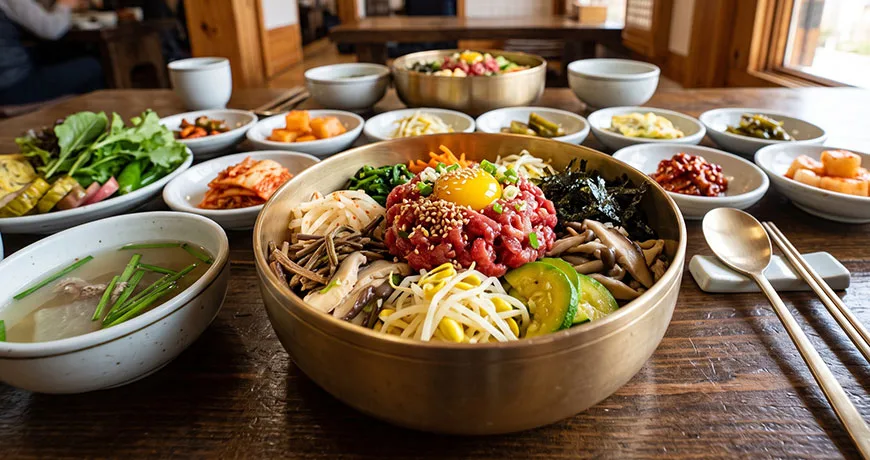
Jeonjubibimbap is a highly sophisticated feat of molecular gastronomy where biochemical manipulation begins at the rice-cooking phase. Instead of water, the rice is boiled in rich beef broth. As the starch gelatinizes, the water-soluble animal peptides and lipids are forcefully absorbed into the expanding amylopectin matrix, transforming the rice grains into individual umami capsules. This base is topped with Jeonju-style soybean sprouts (retaining crisp turgor pressure and rich in aspartic acid), vibrant yellow Hwangpomuk (a mung-bean starch colloidal gel dyed with gardenia crocin), and uncoagulated raw beef (Yukhoe). The entire dish is assembled in a traditional bronzeware bowl (Yugi) pre-heated to precisely 60°C. This specific thermodynamic threshold provides enough radiant heat to liquefy the beef tallow for optimal emulsification, but stays below the 70°C mark to prevent the raw myosin from thermo-coagulating, resulting in a perfect rheological balance.
⏱️ Total: 1 hr 10 mins | Prep: 40 mins | Cook: 30 mins | 🍳 Difficulty: Expert (Requires broth-gelatinization control and thermodynamic vessel management) | 🌶️ Profile: Profoundly Savory, Complex, and Luxuriously Smooth | 🍚 Focus: Broth Hydration, Uncoagulated Myosin, & Thermodynamic Plating
Ingredients (2 servings)
- Amino-infused Starch Matrix: 2 bowls worth of short-grain white rice (soaked), Beef Broth (brisket or bone broth, used in a 1:1 ratio with the rice instead of water)
- Uncoagulated Protein Matrix: 150g fresh Beef for Yukhoe (Lean cut like rump, coated with 1 tsp soy sauce, 1 tsp sesame oil, and minced garlic)
- Fiber & Gel Matrix: 100g soybean sprouts (Kongnamul), 50g Hwangpomuk (yellow mung bean jelly), 50g spinach, 50g bracken (Gosari), 1/4 carrot
- Hypertonic Binder: 3 tbsp Jeonju-style stir-fried Gochujang (Gochujang stir-fried with minced beef, plum extract, and sesame oil to reduce moisture and increase viscosity)
- Thermodynamic Equipment: 2 Yugi (Korean traditional bronzeware bowls)
Allergy Information Contains: Beef, Soy, Wheat (from Gochujang and soy sauce)
Equipment Rice Cooker or Heavy Pot, Knife, Cutting Board, Mixing Bowls, Yugi (Bronzeware bowls)
Cooking Instructions
- Broth Gelatinization (Rice Cooking): Cook the soaked rice using the chilled beef broth instead of water. During the thermal expansion of the rice grains, the animal proteins and lipids from the broth are forcefully drawn into the starch matrix. This not only injects massive umami but also coats each grain in a microscopic lipid barrier.
- Turgor Pressure Control: Flash-blanch the soybean sprouts in boiling water and shock them in cold water to maximize their crisp turgor pressure. Squeeze out 80% of the moisture. Slice the Hwangpomuk into neat 5cm strips.
- Protein Lipid Coating: Slice the chilled raw beef thinly and toss with sesame oil and soy sauce. The unsaturated fats create a physical barrier against oxygen, halting enzymatic browning and locking in the meat’s kinetic moisture.
- Thermodynamic Vessel Prep: Submerge the Yugi (bronzeware bowls) in hot water or place them in a warm oven until they reach approximately 60°C (140°F). Unlike the screaming-hot stone pot (Dolsot), the bronze bowl should only be pleasantly warm to the touch.
- Assembly & Emulsification: Lay the broth-infused rice at the bottom of the warm Yugi. Arrange the colored vegetables and Hwangpomuk in a circular pattern. Place the raw beef and stir-fried Gochujang in the center. As you mix, the gentle 60°C heat melts the beef fat, allowing it to seamlessly emulsify with the Gochujang and coat the rice grains without cooking the raw protein.
💡 Professional Culinary Tips
- Biochemistry of Broth-Cooked Rice: The most significant technical divide between standard bibimbap and authentic Jeonjubibimbap lies in the rice. Cooking with beef broth creates a hydrophobic lipid membrane around every single grain. When you mix the dish, this microscopic fat barrier prevents the moisture from the vegetables from penetrating the starch, ensuring the rice remains perfectly separated and never turns into a soggy paste.
- The Thermodynamic Dilemma of Yugi: Why not use a sizzling hot stone pot? Because of the raw beef (Yukhoe). If the vessel exceeds 70°C (158°F), the delicate raw myosin proteins will violently thermo-coagulate, turning the premium raw beef into tough, gray, cooked meat. Pre-heating the bronze bowl to exactly 60°C hits the critical thermodynamic sweet spot: it is warm enough to melt the beef tallow (which melts around 40–50°C) for a luxurious mouthfeel, yet cool enough to keep the meat entirely raw and viscoelastic.
- Rheological Function of Hwangpomuk: The iconic yellow jelly (Hwangpomuk) is a colloidal gel formed by gelatinizing mung bean starch. Amidst the crunchy vegetables and the chewy meat, this gel provides a unique viscoelastic contrast. It significantly lowers the mechanical fatigue of mastication (chewing) and acts as a textural lubricant, allowing the diverse ingredients to bind together smoothly on the palate.
Nutrition Facts (Estimated)
Total Content : Approx. 500g (1 serving)
Calories : 560 kcal
– Sodium : 850mg
– Total Carbohydrate : 78.0g
– Sugar : 6.0g
– Total Fat : 14.0g
– Saturated Fat : 3.5g
– Cholesterol : 65.0mg
– Protein : 32.0g
– Dietary Fiber : 7.0g
*Daily Values are based on a 2,000 calorie diet and standard Korean nutritional reference values.
**Nutritional values are calculated based on original ingredients; substitutions may alter specific macronutrients.
Origins and Food Culture of Jeonju Bibimbap (Jeonjubibimbap)
1. Royal Joseon Heritage and the Legendary “Eight Flavors of Jeonju”
- Tracing its roots back to Joseon Dynasty royal court dishes such as Goldongban and Hwaban, the dish flourished in Jeonju due to the fertile agricultural wealth of the surrounding Honam plains.
- Historically celebrated as one of the “Three Great Delicacies of the Joseon Era” (alongside Pyongyang Naengmyeon and Gaeseong Tangban), it incorporates prized regional ingredients from the renowned “Eight Flavors of Jeonju” (Jeonju Palmi), most notably soft-water soybean sprouts and yellow gardenia jelly (hwangpomuk).
2. The Culinary Art of Beef Broth Rice and Five-Color (Obangsaek) Brassware
- The hallmark of authentic preparation lies in cooking the rice in rich beef bone broth (sagol-yuksu) and folding in fresh soybean sprouts during the final steaming stage, ensuring every individual grain is rich, nutty, and savory.
- Arranged meticulously according to the Eastern philosophy of Eumyang-Ohaeng (the Five Elements), it showcases the five cosmic colors—blue/green (spinach), red (beef tartare/gochujang), yellow (egg yolk/hwangpomuk), white (sprouts/radish), and black (fernbrake/mushrooms)—served in heavy hand-forged brass bowls (bangjja yugi) to retain ideal serving temperatures.
3. Refreshing Bean Sprout Broth Companion and Global UNESCO Culinary Symbol
- The bowl is traditionally accompanied by a soothing bowl of clear, chilled or warm bean sprout soup (kongnamul-guk), perfectly balancing the spicy-savory profile while aiding smooth digestion.
- Serving as the crown jewel of Jeonju’s designation as a UNESCO Creative City of Gastronomy, Jeonju Bibimbap remains an enduring global ambassador for Korean food culture, embodying harmony, artistic elegance, and nutritional balance.
The Symphonic Bloom of the Five Elemental Colors in Golden Brass and the Lustrous Richness of Bone-Broth Grains: A Refined Portrait of Jeonjubibimbap
Jeonjubibimbap (Jeonju Traditional Mixed Rice with Beef Tartare) stands as the majestic, aesthetically peerless zenith of Korean culinary arts. Plump short-grain white rice is uniquely steamed in a rich, slow-simmered beef bone broth (sagol-yuksu) and infused with crisp local soybean sprouts during the resting stage, ensuring every single grain is coated in savory luster and gentle humidity. Arranged over this comforting foundation is a breathtaking kaleidoscope of toppings adhering to the ancient Five Elemental Colors (obang-saek): sun-yellow gardenia-tinted mung bean jelly (hwangpomuk), earthy wild bracken (gosari), bellflower root (doraji), sweet zucchini, shiitake mushrooms, and fragrant water dropwort. Crowned with ruby-red Hanwoo beef tartare (yukhoe), sweet-savory medicinal chili paste (yak-gochujang), and a golden egg yolk, this regional icon represents the ultimate expression of artistic harmony, holistic balance, and gastronomic refinement.
Gently folding the vibrant toppings, tender beef, and seasoned rice together with long chopsticks releases an intoxicating perfume of cold-pressed sesame oil, toasted seeds, and the caramelized warmth of stir-fried chili paste. Sinking your teeth into the first generous mouthful delivers an exhilarating textural cadence: the bone-broth-glazed rice grains remain supple, plump, and distinct, gliding effortlessly across the tongue without starchy stickiness. Sinking deeper reveals the loud, juicy snap of Jeonju bean sprouts, the silky yield of delicate mung bean jelly, and the melt-in-the-mouth tenderness of fresh beef tartare bursting with clean, iron-rich protein juices. The gentle sweetness of sautéed mountain roots tempers the piquant depth of the fermented chili sauce, while an accompanying bowl of clear, warm bean sprout soup cleanses the palate, leaving an enduring impression of aristocratic elegance and comforting abundance.
The enduring brilliance of Jeonjubibimbap lies in its philosophical integrity—applying the ancient cosmological harmony of Eum-Yang-O-Haeng (Yin-Yang and the Five Elements) to achieve absolute nutritional completeness and aesthetic splendor within a single vessel. Celebrated alongside Pyongyang Naengmyeon as one of the preeminent delicacies of the Joseon Dynasty, and refined through the historic banquet hospitality of Jeonju’s regional governors, this radiant bowl in golden brass remains a timeless cultural monument that transforms generational agricultural wealth and artisanal care into pure, heartwarming culinary comfort.
Editor’s Review
1. A Dynamic Harmony of Bone-Broth Glazed Grains, Snappy Sprout Resilience, Silken Tartare, and Velvety Jelly Elasticity
The sensory progression within the heavy brass bowl delivers an exquisite interplay of contrasting textures. Cooking the rice in bone broth ensures that each kernel maintains structural integrity without turning mushy during mixing. The crisp, auditory crunch of thin-stemmed Jeonju soybean sprouts contrasts gracefully with the slippery, cooling gelatin of hwangpomuk and the velvety, tender chew of fresh raw beef, while the varied fibrous textures of sautéed mountain roots keep every mouthful dynamic and endlessly engaging.
2. Bone-Broth Lipid-Peptide Starch Coating, Inosinate-Glutamate Umami Synergism, and Bangjja Brass Thermal Dynamics
Jeonjubibimbap represents an exacting study in starch rheology, nucleotide synergy, and artisanal metallurgical thermodynamics. Steaming rice in beef bone broth allows rendered micro-lipids and soluble collagen peptides to form a thin, hydrophobic protective barrier over the swelling amylose granules, physically preventing cohesive clumping and preserving individual grain separation. Concurrently, muscle-bound inosinate (IMP) from the raw beef synergizes exponentially with free glutamates in the fermented chili paste and soy-seasoned greens to amplify baseline savoriness. Furthermore, the traditional Bangjja bronzeware (hand-forged 78:22 copper-to-tin alloy) utilizes high thermal mass to keep the meal within the optimal flavor-release temperature window (55–65°C), preventing lipid congealing and preserving aromatic volatility.
3. The Aristocratic Heritage of Joseon Goldongban and the Cultural Eminence of Jeollabuk-do Gastronomy
Originating from the courtly tradition of goldongban (poetically arranged mixed rice) and enriched by the immense agricultural bounty of the fertile Honam plains, Jeonjubibimbap embodies the crowning achievement of Korean hospitality. Bringing together the patient gifts of land, seasonal cultivation, and centuries of culinary philosophy into a unified golden vessel, this celebrated dish serves as an enduring sanctuary of national pride, aesthetic elegance, and heartwarming gastronomic warmth.
가족회관
#백년가게
성미당
#백년가게
한국집
#백년가게