
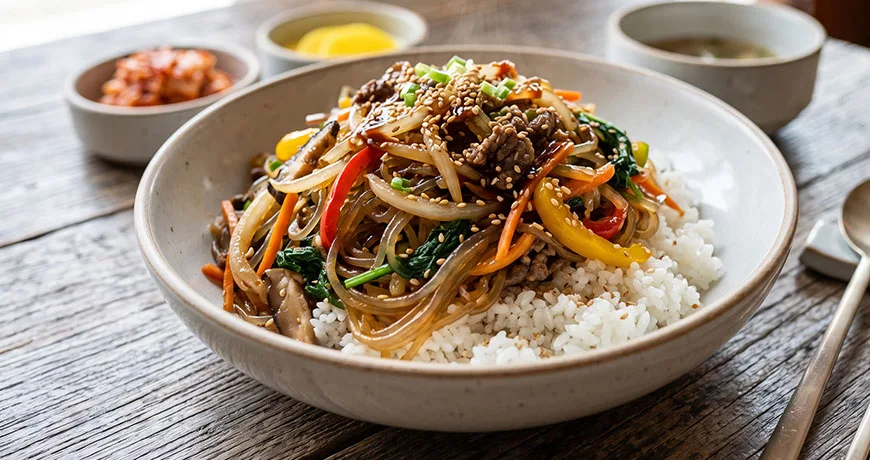
Japchaedeopbap is a multiphase carbohydrate dish that relies on the precise structural gelatinization and lipid coating of 100% sweet potato starch noodles (dangmyeon). Because different vegetables and proteins possess varying turgor pressures and moisture contents, they must be thermo-coagulated individually in a pan to strictly control moisture release. Once the components are prepped, a hypertonic soy sauce marinade uses osmotic pressure to forcefully inject umami compounds into the starch matrix of the noodles. When served over hot rice, the microscopic lipid barrier on the glass noodles prevents them from absorbing the rice’s moisture, allowing the two distinct amylopectin structures (sweet potato and rice) to seamlessly interlock without turning into a mushy paste.
⏱️ Total: 45 mins | Prep: 25 mins | Cook: 20 mins | 🍳 Difficulty: High (Requires individual moisture control and prevention of starch retrogradation) | 🌶️ Profile: Sweet, Savory, and Nutty | 🍚 Focus: Starch Gelatinization, Lipid Coating, & Osmotic Infusion
Ingredients (2 servings)
- Starch Matrix: 100g sweet potato glass noodles (dangmyeon), 2 bowls cooked white rice (cooked with slightly less water for firmness)
- Protein & Lipid Matrix: 100g pork (loin or shoulder, julienned—marinated with 1 tsp soy sauce and a pinch of black pepper)
- Fiber Matrix: 50g spinach, 1/4 carrot, 1/2 onion, 2 rehydrated shiitake mushrooms (all julienned to a uniform thickness)
- Hypertonic Emulsion: 4 tbsp soy sauce, 2 tbsp sugar, 1 tbsp corn syrup, 1 tbsp minced garlic, 2 tbsp toasted sesame oil, a pinch of black pepper
- Cooking Medium: Cooking oil (for individual sautéing)
Allergy Information Contains: Pork, Soy, Wheat (from soy sauce)
Equipment Frying Pan or Wok, Pot, Strainer, Multiple Mixing Bowls
Cooking Instructions
- Starch Gelatinization & Hydration: Boil the glass noodles for 6 minutes to hydrate and loosen the dense amylose bonds. Rinse under cold water to wash away surface starches, then drain completely. Immediately toss with 1 tbsp of sesame oil. This lipid coating traps the kinetic moisture inside, physically preventing the starch from retrograding (hardening) or becoming soggy.
- Turgor Pressure Control: Julienne the onion, carrot, and mushrooms. Flash-blanch the spinach in boiling water for 10 seconds, then squeeze out 80% of its water. Because each vegetable releases water at a different rate, you must sauté them individually in a hot oiled pan with a pinch of salt. This preserves their unique cellular turgor pressure (crunch).
- Thermal Coagulation: Sauté the marinated pork over high heat. Induce rapid Maillard browning to lock in the juices and fully thermo-coagulate the surface proteins.
- Osmotic Infusion: In a large pan, add the lipid-coated noodles and the hypertonic marinade. Sauté over medium-low heat. As the moisture in the sauce evaporates, osmotic pressure forces the amino acids and reducing sugars deep into the starch matrix of the noodles.
- Assembly & Emulsification: Once the noodles have absorbed the sauce, turn off the heat. Fold in all the individually cooked vegetables and pork, using the residual heat to emulsify the flavors. Serve a generous portion directly over warm white rice.
💡 Professional Culinary Tips
- Thermodynamics of Individual Sautéing: Throwing all the vegetables into the wok at once will cause a massive drop in temperature, turning a fry into a boil. The vegetables will lose their turgor pressure, become limp, and leach massive amounts of water that will ruin the noodles. Flash-evaporating the moisture of each vegetable individually is the scientific secret to restaurant-quality Japchae.
- Rheology of the Lipid Coat: Glass noodles are highly hygroscopic. If left uncoated, they will absorb moisture from the surrounding air and vegetables, expanding into a bloated, gelatinous mess. The immediate application of sesame oil creates a hydrophobic barrier, ensuring the noodles remain pleasantly chewy and distinct even when placed over steaming hot rice.
- Amylopectin Synergy: This dish forces two different starches to interact. The soy sauce and sesame oil coating the glass noodles drip down and act as a mechanical lubricant for the rice grains. This ensures that the sticky amylopectin of the rice and the bouncy amylopectin of the sweet potato starch glide smoothly over the palate instead of clumping together.
Nutrition Facts (Estimated)
Total Content : Approx. 450g (1 serving)
Calories : 540 kcal
– Sodium : 890mg
– Total Carbohydrate : 86.0g
– Sugar : 9.0g
– Total Fat : 14.0g
– Saturated Fat : 3.0g
– Cholesterol : 35.0mg
– Protein : 16.0g
– Dietary Fiber : 6.0g
*Daily Values are based on a 2,000 calorie diet and standard Korean nutritional reference values.
**Nutritional values are calculated based on original ingredients; substitutions may alter specific macronutrients.
Origins and Food Culture of Stir-fried Glass Noodles and Vegetables with Rice (Japchaedeopbap)
1. Royal Joseon Origins and the Enduring Symbol of Festive Harmony
- Originating in the early 17th century during the reign of King Gwanghaegun, courtier Yi Chung gained royal favor by presenting a delicate dish of finely julienned, stir-fried vegetables—coining the literal name Japchae (“mixed vegetables”).
- With the establishment of Korea’s first sweet potato starch noodle factory in Sariwon in 1919, chewy glass noodles (dangmyeon) became the beloved foundation of modern Japchae, establishing the dish as the quintessential centerpiece of festive banquets, birthdays, and holidays to symbolize harmony (hwahap) and longevity.
2. The Artisanal Technique of Separate Sautéing and Glossy Emulsion
- The hallmark of authentic preparation lies in sautéing each vegetable, mushroom, and meat ribbon separately to respect their distinct cooking times and moisture levels before tossing them together with translucent noodles in seasoned soy sauce, sugar, and toasted sesame oil.
- Serving this glistening festive noodle medley over warm steamed rice allows the savory juices to soak into the rice, creating a luxurious one-bowl dining experience that seamlessly bridges chewiness and comforting tenderness.
3. Korean-Chinese Culinary Fusion and Classic Savory Broth Pairings
- Evolving from a home banquet specialty into a beloved menu staple across Korean-Chinese restaurants and casual diners (bunsik), it is often tossed over high heat to impart a subtle smoky breath of the wok (bulhyang).
- The meal is traditionally accompanied by a side bowl of fiery seafood jjamppong broth or delicate, soothing egg drop soup (gyeran-guk), perfectly balancing the noodles’ rich, sweet-savory profile while completing an iconic comforting meal.
The Translucent Luster of Sweet Potato Glass Noodles and the Harmonious Flourish of Garden Botanicals: A Refined Portrait of Japchaedeopbap
Japchaedeopbap (Stir-Fried Glass Noodles and Vegetables with Rice) stands as an opulent, beautifully balanced triumph of modern Korean one-bowl gastronomy. Chewy, translucent glass noodles made from sweet potato starch (dangmyeon) are boiled to tender resilience, tossed with a colorful kaleidoscope of individually sautéed julienned carrots, sweet onions, earthy shiitake and wood ear mushrooms, fresh spinach, and seasoned beef, then coated in aged soy sauce, toasted sesame oil, and gentle natural syrups before being generously draped over a steaming bed of freshly cooked white rice. Expanding the noble ceremonial heritage of japchae—the quintessential symbol of harmony and celebration on Korean banquet tables—into a comforting, accessible rice bowl, this creation delivers a complete nutritional and textural balance within a single vessel.
Savoring a hearty spoonful lifted after folding the seasoned noodles and garden toppings into the warm rice awakens the senses with the rich perfume of cold-pressed sesame oil and savory wok aromatics. The initial bite introduces the delightfully slippery, springy chew of the cellophane noodles, which contrasts effortlessly against the tender, yielding softness of the rice grains. As you chew, the natural sweetness of the swollen starch harmonizes with the savory-sweet soy glaze, punctuated by the vibrant crunch of garden vegetables and the spongy, gelatinous snap of wood ear mushrooms, orchestrating a dynamic and deeply satisfying culinary rhythm across the palate.
The culinary essence of this dish lies in its inclusive philosophy—bringing together disparate botanicals and proteins, each cooked to its peak individual state, and uniting them under the savory embrace of fermented soy and roasted sesame. Bringing the generous warmth of festive banquets directly to everyday dining, a nourishing bowl of Japchaedeopbap provides modern diners with a deeply grounding sanctuary of wholesome nourishment, textural delight, and heartfelt culinary warmth.
Editor’s Review
1. A Dynamic Interplay of Slippery Glass Noodle Elasticity, Tender Rice Grains, and Crisp Botanical Diversity
The combination of chewy noodles and fluffy steamed rice provides an engaging textural progression. The translucent sweet potato noodles glide effortlessly across the palate, blending with the soft starch grains while the crisp crunch of carrots, tender spinach, and springy mushrooms adds a vibrant rhythm to every mouthful. A delicate sheen of seasoned soy and sesame oil knits the elements into a cohesive, velvety mouthfeel that satisfies without heaviness.
2. Sweet Potato Starch Amylose Gelation Resilience, Hydrophobic Lipid Moisture Retention, and Osmotic Flavor Binding
Japchaedeopbap represents an exacting study in starch rheology and lipid barrier chemistry. Sweet potato starch noodles form a dense, retrogradation-resistant three-dimensional amylose gel network upon boiling, retaining high elasticity and tensile strength under heat. Tossing the cooked noodles in toasted sesame oil establishes a micro-thin hydrophobic lipid barrier that physically inhibits excessive moisture transfer and staling when plated over hot rice, while the dissolved amino acids in the soy marinade penetrate the noodle pores via capillary osmosis to secure deep, savory flavor retention.
3. The Courtly Banquet Heritage of “Harmonious Greens” and the Comforting Generosity of Everyday One-Bowl Gastronomy
Originating during the Joseon Dynasty as a prized court dish symbolizing harmony through a medley of diverse vegetables, and later redefined with the introduction of glass noodles in the early 20th century, japchae has long stood as the emotional centerpiece of family celebrations. Transforming this festive staple into a practical, nourishing rice bowl honors a generational tradition of generous hospitality, dietary balance, and unpretentious culinary comfort.