
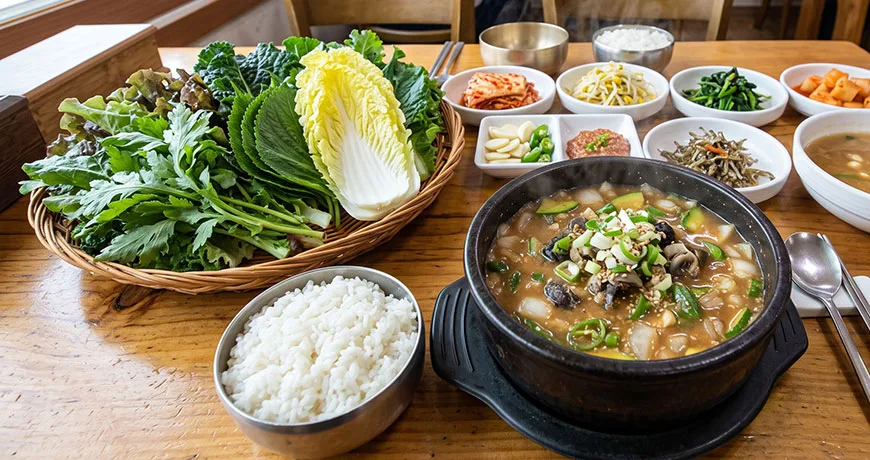
Ureongssambap revolves around a hypertonic, highly reduced soybean paste emulsion known as Gang-doenjang, which serves as a viscous binder for the viscoelastic collagen matrix of freshwater snails (Ureong). Unlike typical soups, Gang-doenjang is engineered by aggressively evaporating the vegetable moisture and binding the fermented glutamates with mashed tofu proteins to create a thick, concentrated umami paste. The freshwater snails are first subjected to a physicochemical scrubbing process using flour starch particles to aggressively adsorb their sticky mucin and geosmin (earthy odor) compounds. To prevent the dense collagen of the snails from violently contracting into rubber, they are introduced only at the final thermodynamic stage of cooking. This concentrated, chewy savory paste is then wrapped in fresh, turgid leaves with warm rice. The structural crunch and astringent sap of the leaves chemically cleanse the heavy fermented lipids from the palate, offering a brilliant rheological contrast.
⏱️ Total: 30 mins | Prep: 15 mins | Cook: 15 mins | 🍳 Difficulty: Low (Requires mucin adsorption and emulsion viscosity control) | 🌶️ Profile: Deeply Earthy, Salty-Savory, and Snappy | 🍚 Focus: Emulsion Reduction, Mucin Adsorption, & Thermal Coagulation Control
Ingredients (2–3 servings)
- Viscoelastic Protein Matrix: 150g Freshwater Snails (Ureong – shelled)
- Hypertonic Emulsion Base: 3 tbsp Doenjang (traditional fermented soybean paste), 1 tbsp Gochujang (chili paste), 1 tbsp Gochugaru (chili flakes), 1 tbsp minced garlic, 1 tbsp plum extract (or oligosaccharide)
- Colloidal Stabilizer & Salinity Neutralizer: 1/2 block firm Tofu (mashed to dilute the salt and thicken the emulsion)
- Moisture & Aromatics: 1/2 onion, 1/4 zucchini, 2 shiitake mushrooms, 1 stalk green onion, 2 green chilies (all uniformly diced into 0.5cm cubes)
- Structural Ssam Matrix: Plenty of fresh lettuce, perilla leaves, and/or steamed cabbage leaves (high turgor pressure)
- Starch Matrix: 2 bowls of warm, cooked white rice
- Cleaning Agents: 2 tbsp all-purpose flour, 1 tbsp coarse salt (for scrubbing the snails)
Allergy Information Contains: Soy, Wheat (from Doenjang, Gochujang, and flour), Shellfish (Snails)
Equipment Ttukbaegi (Korean earthenware pot) or small heavy-bottomed saucepan, Mixing Bowl, Cutting Board, Knife
Cooking Instructions
- Physicochemical Scrubbing (Mucin Removal): Place the snails in a bowl with the flour and coarse salt. Knead them aggressively with your hands. The large amylose starch particles in the flour act as microscopic sponges, physically adsorbing the sticky mucin and trapping the geosmin molecules responsible for the muddy odor. Rinse thoroughly under cold running water and drain.
- Mechanical Cleavage: Dice the onion, zucchini, and mushrooms into uniform 0.5cm cubes. This structural cleavage breaks the cellular walls, ensuring the intracellular water leaches out rapidly to help thin out the thick Doenjang during the initial boil.
- Colloidal Reduction (Gang-doenjang): Lightly oil a heated Ttukbaegi and sauté the diced vegetables. As they release their cellular sap, add the Doenjang, Gochujang base, and the mashed tofu. Simmer uncovered over medium heat. The goal is rapid flash-evaporation; as the water boils off, the soy proteins from the tofu bind the mixture into a highly viscous, thick paste.
- Thermal Coagulation Control: Once the Gang-doenjang is thick and sputtering, add the cleaned snails, green onions, and chilies during the last 2–3 minutes of cooking. Limiting the kinetic heat exposure prevents the snail’s collagen from seizing up, ensuring they remain perfectly snappy and tender.
- Assembly: Place a spoonful of warm rice onto a fresh, turgid lettuce or perilla leaf. Top it with a generous dollop of the bubbling snail Gang-doenjang. Wrap tightly and consume in one bite to experience the textural integration.
💡 Professional Culinary Tips
- The Chemistry of Flour Scrubbing: Freshwater snails secrete mucin, a hydrophilic glycoprotein that holds onto muddy odors and resists plain water. If you only wash them with water, the mucin simply swells. Flour provides dry particulate friction; its starch binds chemically to the glycoproteins, literally ripping the slime and the foul-smelling geosmin compounds off the surface of the meat so they can be washed down the drain.
- Mashed Tofu as a Salinity Buffer: Because Gang-doenjang is heavily reduced (water evaporated), its sodium concentration skyrockets. Adding more water ruins its function as a wrap binder. Mashed tofu is the perfect rheological solution: its proteins physically dilute the sodium chloride concentration without adding moisture, while simultaneously thickening the paste into a scoopable colloidal emulsion.
- Thermodynamics of Snail Collagen: Snail muscle is almost entirely composed of densely packed collagen fibers. Exposing them to 100°C boiling paste for 15 minutes will violently contract these fibers, turning the meat into unchewable rubber. Throwing them in at the very end acts like a gentle blanch, thermo-coagulating the proteins just enough to be safe to eat while maintaining their prized viscoelastic crunch.
Nutrition Facts (Estimated)
Total Content : Approx. 350g (1 serving, including leafy greens, excluding rice)
Calories : 240 kcal
– Sodium : 890mg
– Total Carbohydrate : 18.0g
– Sugar : 8.0g
– Total Fat : 8.0g
– Saturated Fat : 1.5g
– Cholesterol : 45.0mg
– Protein : 24.0g
– Dietary Fiber : 7.0g
*Daily Values are based on a 2,000 calorie diet and standard Korean nutritional reference values.
**Nutritional values are calculated based on original ingredients; substitutions may alter specific macronutrients.
Origins and Food Culture of Freshwater Snail Leaf Wraps and Rice (Ureongssambap)
1. Heritage of Rice Paddy Snails and Ancient Agrarian Foraging
- Tracing its roots back to the ancient rice-farming heritage of the Korean peninsula, where freshwater mud snails (jeon-ra in classical texts) thriving in clean rice paddies and streams served as an indispensable source of lean protein and calcium.
- Classical Korean medical texts such as Dongui Bogam (1613) praised freshwater snails for their cooling properties, ability to quench thirst, and capacity to detoxify the liver, establishing them as a time-honored therapeutic restorative staple.
2. The Culinary Science of Thick Gangdoenjang Simmering and Textural Chew
- The hallmark of authentic preparation lies in slow-reducing fermented soybean paste with anchovy-kelp broth, crushed tofu, mushrooms, and diced vegetables into a thick, concentrated paste (gangdoenjang), gently folding in the blanched snails at the end to preserve their signature bouncy, tender-chewy texture without toughening.
- The concentrated umami of the aged doenjang infuses deeply into each snail, neutralizing any river aroma while yielding an intensely savory, layered flavor profile.
3. The Auspicious “Wrapping Fortune” Ritual and Eco-Friendly Wellness
- Embodying Korea’s ancient bokssam (“wrapping fortune”) tradition, diners cradle fresh, oversized leafy greens in hand, piling in rice, glistening snails, and savory gangdoenjang before eating the parcel whole as an auspicious gesture of health and prosperity.
- In modern times, the dish is celebrated alongside organic “snail-assisted rice farming” (ureongi nongbeop), standing as an iconic, eco-friendly slow-food staple that connects diners directly to the pure vitality of nature.
The Springy Resilience of Wetland Mud Snails and the Concentrated Earthiness of Bubbling Gangdoenjang: A Refined Portrait of Ureongssambap
Ureongssambap (Freshwater Snail Leaf Wraps with Thick Soybean Paste and Rice) stands as an authentic, ecologically harmonious masterpiece of Korean farm-to-table wrap (ssam) gastronomy. Plump, mineral-rich freshwater mud snails (ureong-i—Cipangopaludina chinensis) harvested from pristine rice paddy wetlands are parboiled to retain their tender resilience, then folded into gangdoenjang—a deeply reduced, thick stew of fermented soybean paste, minced summer squash, onions, mushrooms, and crushed tofu bubbling in an earthenware pot. Far transcending simple dipping condiments, this dish elevates humble freshwater gastropods into the savory centerpiece of a vibrant tabletop feast, pairing their dense elasticity with steaming white rice and a lush bouquet of freshly picked garden leaves.
Laying a broad leaf of crisp green-leaf lettuce across your palm, layering it with a fragrant perilla leaf and a sprig of peppery angelica herb, and topping it with a spoonful of warm rice and a generous dollop of bubbling snail-studded bean paste creates a magnificent culinary parcel. Folding the bundle into a single hearty mouthful delivers an instant rush of cool, hydrating cellular moisture bursting from the crisp greens. Sinking your teeth into the core reveals the comforting melt of tofu-thickened soybean paste, instantly followed by the delightfully toothsome, springy chew of the freshwater snails releasing concentrated bursts of clean, sweet marine protein. The natural sweetness of the swollen rice grains tempers the rich, fermented salinity of the doenjang, while the herbal perfume of perilla leaves cuts cleanly through the paste’s rustic weight, orchestrating an impeccably balanced, deeply grounded culinary rhythm.
The enduring majesty of Ureongssambap lies in its agrarian wisdom—uniting the natural protein abundance of rice paddy ecosystems with the ancient microbial depth of fermented soybeans to create a self-contained tonic of clean vitality. Originating as a restorative fieldside sustenance shared by farmers during the planting and harvest seasons, a vibrant spread of snails, bubbling paste, and fresh greens remains an enduring monument of ecological harmony, mindful wellness, and heartwarming Korean hospitality.
Editor’s Review
1. A Dynamic Interplay of Snappy Snail Elasticity, Crisp Leaf Cell Turgor, and Viscous Soybean Paste Softness
The textural landscape within the wrapped parcel offers exceptional contrast and harmony. The firm, springy bite of blanched mud snails provides an engaging tactile resistance that pairs beautifully with the audible, juicy snap of raw botanicals. The thick, tofu-enriched gangdoenjang coats the warm rice grains in a luscious, velvety emulsion, creating a deeply comforting mouthfeel that satisfies completely without lingering heaviness or grease.
2. Gastropod Paramyosin Thermal Control, Succinate-Glutamate Umami Synergism, and Osmotic Moisture Buffering
Ureongssambap represents an exacting study in invertebrate muscle mechanics, microbial fermentation chemistry, and plant cell physiology. The pedal retractor muscle of freshwater mud snails is densely packed with paramyosin structural proteins, which can toughen under excessive boiling; brief parboiling followed by gentle folding into the hot paste preserves optimal myofibrillar elasticity. Concurrently, free glutamates from the long-fermented soybean paste synergize exponentially with natural succinic acids concentrated within the snail tissue, yielding an intense, multi-dimensional umami baseline. Furthermore, the high intracellular turgor pressure of raw leafy greens instantly releases water upon mastication, effectively buffering the paste’s salinity and high osmotic pressure across oral receptors.
3. The Eco-Friendly Heritage of Paddy Wetland Agriculture and the Communal Solace of Korean Ssam Gastronomy
Deeply tied to traditional organic rice farming where snails naturally control aquatic weeds while nourishing the soil, Ureongssambap captures the sustainable, symbiotic spirit of Korean food culture. Folding the wholesome gifts of water and earth into crisp green leaves transforms an unpretentious meal into a deeply nourishing ritual of seasonal gratitude, holistic wellness, and heartwarming culinary craftsmanship.
신신식당
#식객허영만의백반기행 #식신로드1