
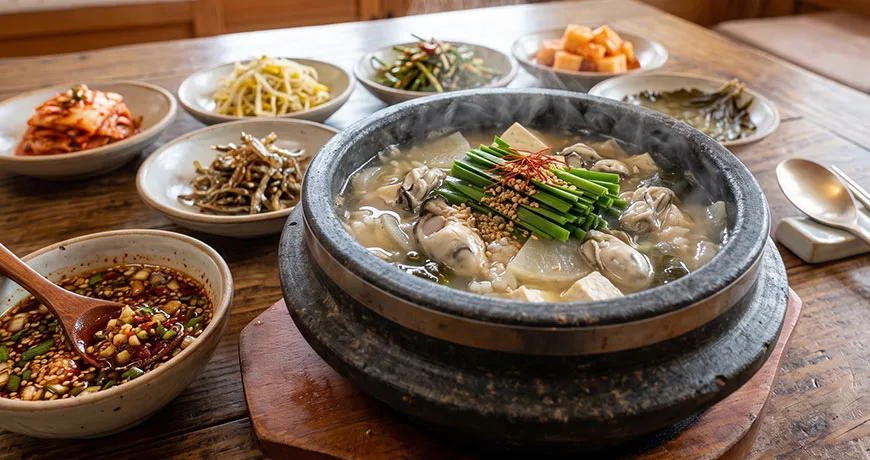
Gulgukbap is an intense thermodynamic recovery soup engineered to rapidly extract the highly concentrated succinic acid and glycogen locked inside the shells of bivalves (oysters) into a boiling aqueous solvent. The artisan’s delicate touch is crucial here: gently swirling the fragile oysters in an ice-cold, isotonic saltwater bath prevents their thin cellular membranes from rupturing, securing the pristine clarity and explosive umami of the broth. Introducing cold, cooked rice directly into the rolling boil within the earthenware pot (Ttukbaegi) forces the amylopectin on the surface of the rice grains to gelatinize. This transforms the rheological viscosity of the broth, allowing the piercing, savory succinic acid to perfectly coat the tongue. By timing the addition of the oysters perfectly to prevent irreversible thermal contraction of the proteins, and finishing with volatile allyl sulfides from fresh chives to biochemically mask any marine odor, this soup becomes the ultimate marine matrix designed to instantly elevate core body temperature during a freezing winter.
⏱️ Total: 20 mins | Prep: 10 mins | Cook: 10 mins | 🍳 Difficulty: Low (Requires strict bivalve thermal coagulation and isotonic washing control) | 🌶️ Profile: Briny, Deeply Refreshing, Umami-rich, and Aromatic | 🍚 Focus: Glycogen Extraction, Amylopectin Gelatinization, & Isotonic Purging | 🍶 Pairing: Chilled, fruit-forward traditional clear Cheongju (Rice Wine)
Ingredients (2 servings)
- Succinic Acid & Glycogen Matrix: 300g Fresh Oysters (delicately washed in a 3% isotonic saltwater bath to purge impurities)
- Amylopectin Matrix: 2 bowls cold, cooked White Rice (low moisture activity allows maximum broth absorption)
- Aqueous Umami Solvent: 1L Anchovy-Kelp Broth
- Pectin & Reducing Sugar Matrix: 100g Daikon Radish (thinly squared), 50g Rehydrated Seaweed (Miyeok – chopped)
- Aromatic & Allyl Sulfide Catalyst: 1 handful Asian Chives (Buchu – cut into 5cm lengths), 1/2 stalk Green Onion (diagonally sliced), 0.5 tbsp minced garlic, 1.5 tbsp Soup Soy Sauce (Guk-ganjang), salt and black pepper to taste
Allergy Information Contains: Molluscan Shellfish (Oyster), Soy, Wheat (from soy sauce), Fish (Anchovy broth)
Equipment High Thermal Mass Earthenware Pot (Ttukbaegi) or heavy pot, Mixing Bowl, Colander, Cutting Board, Knife
Cooking Instructions
- Osmotic Purging (Isotonic Wash): Submerge the oysters in a 3% saltwater solution (mimicking seawater) and agitate very gently with your fingertips to dislodge grit. If you aggressively scrub them under plain tap water (a hypotonic solution), osmotic pressure will force water into the cells, bursting the oysters and washing all the precious glycogen down the drain.
- Pectin Hydrolysis: In the Ttukbaegi, combine the anchovy broth, sliced radish, and rehydrated seaweed. Heat over high heat. The rigid pectin structure of the radish undergoes thermal hydrolysis, leaching cooling, sweet reducing sugars into the clear solvent.
- Amylopectin Gelatinization: Once the broth reaches a violent boil and the radish turns translucent, drop the cold rice directly into the pot. Season the baseline osmotic pressure with soup soy sauce and minced garlic. The intense heat gelatinizes the surface starches of the rice, converting the thin broth into a pleasantly viscous, colloidal liquid.
- Critical Thermal Coagulation: When the rice has softened, introduce the cleaned oysters. Bivalve proteins undergo rapid thermal contraction above 85°C. The moment the oysters puff up and turn a milky opaque white (about 1–2 minutes), you must immediately kill the heat or lower it to a bare simmer to protect their melt-in-the-mouth texture.
- Aromatic Flash Finish: Right before removing from the stove, pile the chives and green onions high on top. The massive radiant heat of the Ttukbaegi forces the chives to release their volatile allyl sulfides, perfectly masking any residual fishiness and maximizing a refreshing, herbaceous finish.
💡 Professional Culinary Tips
- Biochemistry of Isotonic Washing: Washing delicate bivalves under running tap water is a catastrophic biochemical error. The high concentration of salts inside the oyster pulls the fresh water in, rupturing the cell walls. The artisan’s analogue touch of gently swirling them in an isotonic 3% saltwater bath is not just about cleaning; it is fundamental food science to maintain osmotic balance and lock the flavorful amino acids and glycogen inside the meat.
- Gelatinization of Amylopectin: Boiling the rice directly in the soup rather than serving it on the side serves a distinct fluid-dynamic purpose. The starches melt into the boiling solvent, transforming the clear broth into a thicker, colloidal state. This viscosity acts as a flavor amplifier, holding the sharp, briny umami of the succinic acid on your taste buds much longer than a watery broth could.
- Preserving Allyl Sulfides: Introducing chives early in the boiling process obliterates their fragile cellulose structure and completely vaporizes their fresh, garlicky allyl compounds. Adding them at the very last second and letting them wilt strictly via residual radiant heat guarantees a snappy turgor (crunch) and an explosive aromatic delivery.
🍶 Gastronomic Pairing
- Biochemical Palate Cleansing: When the heavy marine glycogen and the sticky amylopectin of the rice fully coat your mouth, pair this soup with a sip of chilled, traditional Cheongju (Clear Rice Wine). The highly refined ethanol molecules and delicate organic acids of the wine slice effortlessly through the dense marine umami, brilliantly resetting your mucosal membranes and prepping your palate perfectly for the next rich bite.
Nutrition Facts (Estimated)
Total Content : Approx. 650g (1 serving, including rice)
Calories : 390 kcal – Sodium : 1,050mg (Variable depending on natural oyster salinity and soy sauce usage)
– Total Carbohydrate : 62.0g (Primarily amylopectin from white rice)
– Sugar : 4.0g
– Total Fat : 4.5g
– Saturated Fat : 1.0g
– Cholesterol : 75.0mg (From fresh oysters)
– Protein : 18.0g (Rich in taurine and essential amino acids)
– Dietary Fiber : 5.0g
*Daily Values are based on a 2,000 calorie diet and standard Korean nutritional reference values.
**Nutritional values are calculated based on original ingredients; substitutions may alter specific macronutrients.
Origins and Food Culture of Oyster and Rice Soup (Gulgukbap)
1. Historical Lineage: The Jasanoebo, Dongui Bogam, and Southern Coastal Oystering
- Documented extensively in Joseon historical records, including Jeong Yak-jeon’s 1814 marine encyclopedia Jasanoebo under the Hanja name Moryeo (牡蠣), where it was praised as the sweetest, plumpest, and most exquisite of edible sea treasures, while Heo Jun’s Dongui Bogam lauded it as the most beneficial sea food for nourishing vital qi and improving skin radiance.
- Deeply rooted in the coastal lifestyle of the southern shores—notably Tongyeong, Geoje, and Yeosu—where shallow-water bamboo-hanging oyster cultivation developed alongside ancient stone-laying methods, providing local fishermen with an abundant winter harvest that was naturally simmered into hearty rice soups on chilly coastal mornings.
2. The Culinary Science of Osmotic Washing and Flash Simmering
- The hallmark of authentic preparation lies in an ingenious washing process: rinsing delicate raw oysters in mild saltwater or grated radish pulp (mujeup) rather than plain tap water, which prevents cellular osmotic rupture and allows the fine radish fibers to gently lift away trapped shell grit and tidal sediment without bursting the oysters’ nutrient-rich outer membranes.
- Because oyster proteins toughen and shrink rapidly under prolonged thermal exposure, the seasoned rice, broth, and sprouts are brought to a rolling boil first; the raw oysters are folded into the pot at the final moment, gently poaching in the earthenware’s retained latent heat to preserve their plump, springy tenderness and milky internal juices.
3. The Culture of “White Hangover Relief” and 24-Hour Winter Comfort Dining
- Counterbalancing the aggressive, fiery red hangover broths typical of metropolitan street corners, Gulgukbap spearheaded a major culinary shift during the late 1990s as dedicated Tongyeong oyster franchises popularized clear, non-irritating “white hangover recovery” soups (malk-eun haejangguk).
- Served piping-hot in individualized earthenware pots, Gulgukbap perfectly embodies the paradoxical Korean culinary sentiment of siwonhada—describing a steaming broth that brings an internal, clarifying coolness—remaining an enduring cultural icon of winter rejuvenation, maternal warmth, and coastal nourishment.
The Concentrated Glycogen of Winter-Harvested Ocean Oysters and the Verdant Vitality of Young Garlic Chives: A Refined Portrait of Gulgukbap
Gulgukbap (Simmered Oyster and Rice Soup) stands as the pristine, revitalizing, and intensely warming summit of Korea’s winter marine (tangban) gastronomy. Plump, milky oysters (gul—Crassostrea gigas) harvested at their biological zenith from the cold, nutrient-rich currents of the southern coastline (such as Tongyeong and Yeosu) are delicately rinsed in sea-salted water to preserve their delicate outer membranes. Steeped in a crystal-clear stock brewed from sun-dried anchovies, wild kelp, and sweet radish, the soup is combined with pre-tempered white rice, tender tofu cubes, bean sprouts or brown seaweed, and seasoned transparently with enzymatic salted fermented shrimp (saeujeot). Brought to a rolling simmer inside an earthenware pot (ttukbaegi) and topped at the final moment with generous handfuls of freshly chopped Asian chives (buchu) and an optional raw egg, this dish avoids fiery red pepper pastes and heavy masking spices. Instead, it unites the razor-sharp succinic acidity of wild bivalves and the sweet, bioavailable glycogen of winter seafood in absolute thermodynamic harmony.
Presented inside a volcanic earthenware bowl bubbling with white steam, drawing a deep ceramic spoon overflowing with cloudy marine broth, a swollen, plump oyster, and tender green chives awakens the senses instantly. The clean, bracing aroma of winter tideflats mingles seamlessly with the sharp, sulfurous freshness of raw chives and the delicate, toasted perfume of cold-pressed sesame oil. The first sip glides effortlessly across the tongue with zero resistance: unencumbered by heavy fats, the mineral-rich broth releases a surge of deep, restorative marine umami that washes over the esophagus, bringing immediate soothing comfort to an exhausted digestive tract. Sinking your teeth into the poached oyster delivers an exhilarating tactile sensation: the delicate membrane yields with a soft, succulent pop, flooding the oral cavity with a velvety, cream-like rush of oceanic liquor and sweet amino acids. The crisp, auditory snap of fresh chives cleanses lingering sea notes, while the softened starch of the steeped rice and the gentle richness of the melting egg yolk frame the finish, culminating in an unforgettable, fatigue-banishing ritual of total bodily renewal.
The enduring brilliance of Gulgukbap lies in its seasonal functionalism—harnessing the abundant stores of zinc, restorative taurine, and glycogen concentrated within winter oysters to support cellular regeneration and accelerate hepatic recovery. Rooted in the oyster-shucking huts and maritime inns of the southern archipelago where it revived chilled fishermen after grueling pre-dawn harvests, a bubbling bowl of oyster and rice soup remains an irreplaceable monument of coastal resilience, maternal tenderness, and deeply soothing Korean gastronomic craftsmanship.
Editor’s Review
1. A Dynamic Harmony of Poached Oyster Plumpness, Crisp Chive Snap, Silken Tofu Cushioning, and Broth-Saturated Grains
The textural landscape inside the bowl delivers extraordinary structural lightness, contrast, and effortless digestion. Precise, short-duration thermal exposure keeps the oysters plump, allowing them to rupture smoothly against the palate without rubbery toughness, releasing their rich, milky core. This silken yield is dynamically counterbalanced by the brisk, auditory crunch of flash-wilted garlic chives and tender bean sprouts. The pre-tempered rice grains (toryeom), softened by the rolling broth, absorb the marine stock like micro-sponges, ensuring an impeccably balanced, non-fatiguing mouthfeel from the first sip to the last.
2. Triple Umami Synergism (Oyster Succinate + Anchovy IMP + Saeujeot Glutamate), Paramyosin Thermal Syneresis Control (80–85°C), and Allium Allyl Sulfide Volatilization
Gulgukbap represents an exacting study in marine invertebrate histology, nucleotide receptor biophysics, and plant organosulfur chemistry. The primary organic acid responsible for the oyster’s clean savor, succinic acid (succinate), bonds synergistically with nucleotide inosine monophosphate (IMP) from the anchovy stock and free glutamates from enzymatically cured shrimp, exponentially stimulating human oral T1R1/T1R3 umami receptors without heavy sodium additions. Structurally, the oyster’s mantle and visceral mass are highly sensitive to thermal degradation; boiling past 90°C triggers rapid actomyosin denaturation, causing severe myofibrillar shrinkage and extensive moisture loss (syneresis). Introducing the oysters at the rolling climax and allowing them to finish in the residual 80–85°C heat preserves cellular turgor and velvety texture. Concurrently, volatile allyl sulfides released from the fresh chives bind with and mask trace marine aldehydes and trimethylamines, while high concentrations of bioavailable zinc and taurine accelerate hepatic alcohol dehydrogenase pathways to deliver profound physiological detoxification.
3. Southern Intertidal Oyster Terroir and the Living Summit of Korean Winter Marine Gastronomy
Reflecting the singular maritime terroir of the southern rias coasts, where tidal currents foster exceptionally sweet, mineral-dense bivalves, Gulgukbap captures the harmonious essence of Korean seasonal eating. Elevating freshly shucked winter seafood, garden alliums, and hearthside grains into a restorative tonic through minimalist thermal balance, this unadorned classic stands as an enduring sanctuary of domestic comfort, physical vitality, and brilliant culinary restraint.