
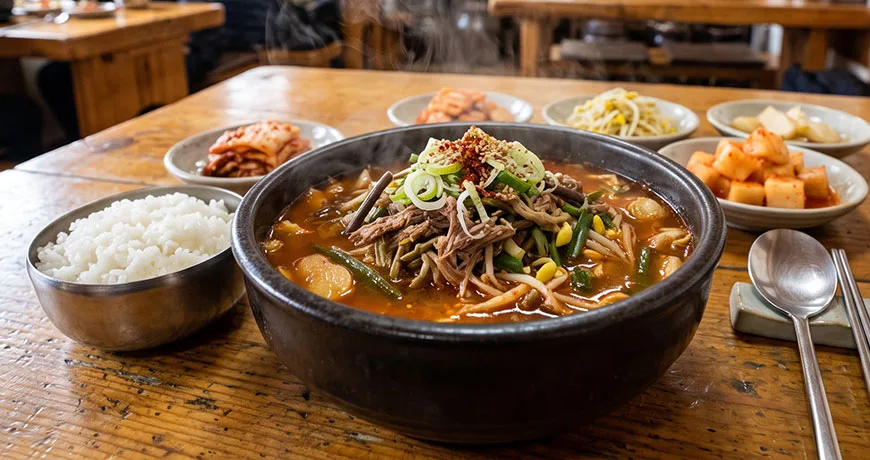
A high-intensity thermodynamic soup that focuses on the profound gelatinization of beef connective tissues and the osmotic infusion of a fiery gochujang-based marinade. The intense mechanical scrubbing of the beef tripe and intestines using flour perfectly eradicates impurities, while the brief blanching of scallions neutralizes their mucilage, ensuring a broth that is both deeply rich and impeccably clean.
⏱️ Total: 2 hrs 30 mins | Prep: 30 mins | Cook: 2 hrs | 🍳 Difficulty: High | 🌶️ Profile: Deeply Savory and Fiery | 🍚 Focus: Collagen Hydrolysis & Texture Control
Ingredients (2–3 servings)
- Main Ingredients (Meat & Offal): 200g beef brisket, 300g beef small intestines (gopchang), 200g beef tripe (yang), 1 cup wheat flour (for mechanical scrubbing)
- Vegetables & Aromatics: 100g water dropwort (minari), 100g scallion, 1/2 onion, 5 cloves garlic
- Meat Marinade: 3 tbsp gochujang, 3 tbsp gochugaru, 1 tbsp soy sauce, 2 tbsp minced garlic, 1 tbsp minced scallion, 1 tbsp ginger juice, 1/2 tbsp sugar (or agave syrup), a splash of sesame oil
- Seasoning: A splash of soup soy sauce (cheongjang), a pinch of salt, a pinch of black pepper, a pinch of crushed sesame seeds
Allergy Information Contains: Beef (including offal), Soy, Wheat (from flour, gochujang, soy sauce)
Equipment Cutting Board, Knife, Large Mixing Bowl, Heavy-bottomed Deep Pot, Fine Strainer, Ladle
Cooking Instructions
- Mechanical Scrubbing (Odor Removal): Vigorously massage the beef intestines and tripe with coarse salt and wheat flour. The fine particulate structure of the flour acts as a physical abrasive and absorbent, stripping away the surface mucilage and volatile odor compounds completely. Rinse thoroughly under running water.
- Offal Pre-treatment: Briefly blanch the beef tripe in boiling water, then scrape off the dark outer membrane using a spoon or shell. Gently peel away the thin, tough transparent membrane on the exterior of the intestines to ensure a tender final texture.
- Protein Hydrolysis & Broth Extraction: In a large pot, bring a generous amount of water to a boil. Add the cleaned tripe, intestines, brisket, whole onion, and garlic. Simmer over low heat for an extended period until the tough collagen bonds break down into tender gelatin.
- Broth Refinement & Osmotic Marination: Once the meats are tender, remove them to cool slightly. Shred the brisket by hand and cut the offal into bite-sized pieces. Strain the broth through a fine mesh to remove impurities and rendered fat. In a bowl, aggressively massage the meat and offal with the gochujang marinade, forcing the savory and spicy compounds deep into the muscle fibers.
- Vegetable Prep & Boiling: Briefly blanch the scallions in boiling water to neutralize their slimy mucilage. Wash and cut the water dropwort into 5cm lengths. Bring the refined broth back to a boil, then introduce the marinated meat mixture to infuse the liquid with intense flavor.
- Final Integration: Once the broth and meats have harmonized, add the blanched scallions and water dropwort. Boil briefly to preserve their structural integrity. Adjust the final salinity with soup soy sauce, salt, and black pepper.
💡 Professional Culinary Tips
- Mechanism of Flour Scrubbing: Complex mucous and malodorous compounds on the surface of offal cannot be removed by water alone. Massaging them with flour creates a mechanical friction matrix using starch and gluten, effectively latching onto and pulling away the foul-tasting impurities.
- Thermodynamic Control of Scallion Mucilage: Adding raw scallions directly into a boiling stew releases alginate-like mucilage, resulting in a murky, slimy broth. Blanching them quickly beforehand coagulates this mucilage, ensuring the soup remains texturally clean and pleasantly sweet.
- Gelatinization of Connective Tissue: Brisket and offal are structurally formidable. Only prolonged, gentle thermal exposure (over 90 minutes) can hydrolyze the tough collagen networks into smooth, unctuous gelatin, giving the broth its signature heavy, lip-smacking body.
Nutrition Facts (Estimated)
Total Content : Approx. 500g (1 serving)
Calories : 480 kcal
– Sodium : 1,100mg
– Total Carbohydrate : 16.0g
– Sugar : 4.0g
– Total Fat : 28.0g
– Saturated Fat : 11.0g
– Cholesterol : 150.0mg
– Protein : 38.0g
– Calcium : 45.0mg
*Daily Values are based on a 2,000 calorie diet and standard Korean nutritional reference values
**Nutritional values are calculated based on original ingredients; substitutions may alter specific macronutrients.
The Fiery Crimson Symphony of Tender Brisket and Earthy Botanicals: A Majestic Masterpiece of Korean Restorative Soup
Yukgaejang stands as the most robust, powerful, and majestic pinnacle of traditional Korean soup gastronomy, where tender beef brisket and sweet radish are simmered patiently for hours into a rich, savory broth before embracing a bountiful medley of thick green leeks, earthy taro stems, and tender bracken fern, all unified under a fiery crimson chili broth. Eschewing delicate subtlety in favor of deep, invigorating warmth, this iconic restorative soup transforms humble, nutrient-dense ingredients into a deeply restorative elixir that warms the core and clears the spirit from the very first spoonful.
As the soup simmers vigorously in the earthenware pot, the piquant, aromatic perfume of chili flakes and garlic calms the mind and awakens a robust, unadulterated appetite. The tender, hand-shredded brisket yields effortlessly to the bite, blending seamlessly with the fiber-rich vegetables that have absorbed the rich, spicy broth to coat every grain of white rice in luscious moisture, fulfilling the ancient ancestral wisdom of iyeolchiyeol—defeating summer heat with inner warmth.
True gastronomy does not rely on artificial artifice; it flourishes in the ancestral wisdom of harnessing intense, sustained heat and robust aromatics to restore internal equilibrium and revitalize a weary body. Savoring a steaming, fiery bowl of Yukgaejang today is a majestic and empowering ritual—clearing away the rush of modern life and filling the spirit with unpretentious warmth, spicy vitality, and timeless solace.
Editor’s Review
1. An Exhilarating Cadence of Fiery Chili Heat, Rich Brisket Umami, and Tender Shredded Meat Textures
The moment a warm spoonful of the crimson, spicy broth touches the palate, an immediate wave of clean chili heat and deep, emulsified beef umami envelops the senses with invigorating depth. This is swiftly followed by the soft, hand-shredded strands of brisket and the fiber-rich chew of simmered leeks and bracken fern, orchestrating an intensely satisfying, multi-layered culinary experience that brings absolute strength to the senses.
2. Prolonged Brisket Decoction Kinetics, Purine-Glutamate Umami Synergy, and Porous Fibrous Absorption Mechanics
Yukgaejang represents an exacting study in traditional culinary physics and nutritional biochemistry. Sustained hours of simmering extract high concentrations of bioavailable inosine monophosphate (IMP) and soluble proteins from the beef brisket, forming a rich, velvety broth body. Concurrently, the porous cellular matrix of the leeks, taro stems, and bracken acts as an active sponge, absorbing savory compounds from the spicy broth to create an intensely flavorful chew while capsaicin stimulates systemic circulation.
3. The Traditional Summer Revitalization of Iyeolchiyeol and the Grounding Sanctuary of Deep Core Warmth
Found gracing dining tables across the nation as a cherished seasonal anchor to restore stamina and warm the core against fatigue, a modest bowl of spicy beef soup serves as an enduring emotional haven against daily weariness. Revered for generations as an essential restorative tonic to combat lethargy, enjoying this honest, reliable soup washes away modern stress, granting a timeless sanctuary of stillness, core warmth, and grounded culinary happiness.