
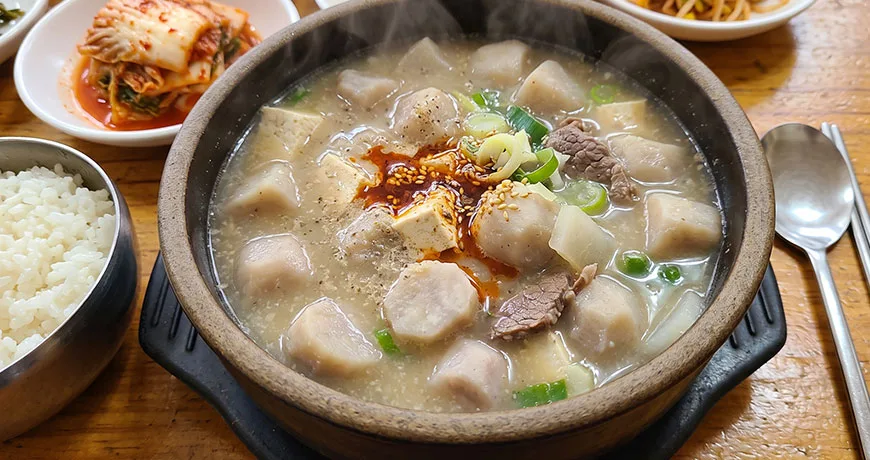
A traditional Korean holiday soup requiring advanced ingredient preparation to chemically neutralize the natural toxins and mucilage found in raw taro. By parboiling the taro in starchy rice water, the acrid calcium oxalate is safely removed, and the tuber’s structural integrity is preserved. Combined with an umami-rich broth extracted from kelp and sautéed marinated beef, this clear soup demonstrates perfect thermodynamic and colloidal balance.
⏱️ Total: 40 mins | Prep: 15 mins | Cook: 25 mins | 🍳 Difficulty: Moderate | 🌶️ Profile: Clean, Earthy, and Deeply Savory | 🍚 Focus: Dietary Fiber & Potassium Extraction
Ingredients (2 servings)
- Main Ingredients: 400g taro (toran), 100g beef (soup cut, e.g., brisket or chuck), 30g dried kelp (dashima), 30g thread scallion (silpa), ample rice water (for parboiling)
- Beef Marinade: 1 tbsp soup soy sauce (or tuna extract), 0.5 tbsp minced garlic, a pinch of black pepper, 0.5 tbsp sesame oil
- Broth & Seasoning: 5 cups water (approx. 1L), salt to taste, black pepper to taste
Allergy Information Contains: Beef, Soy, Wheat (from soup soy sauce)
Equipment Food-Safe Gloves (mandatory for handling raw taro), Cutting Board, Knife, 2 Pots (one for parboiling, one for the main soup), Ladle
Cooking Instructions
- Chemical Toxin Control (Taro Prep): Put on food-safe gloves to protect your skin. Peel and wash the taro thoroughly. Bring a pot of rice water to a boil, then parboil the peeled taro. This vital step neutralizes the acrid compounds and removes the slimy mucilage. Drain and set aside.
- Glutamic Acid Extraction (Kelp Broth): Lightly wipe the white powder off the kelp with a damp cloth and cut it into 4–5cm squares. In a separate pot, bring 5 cups of water and the kelp to a boil over medium heat to extract its rich umami base.
- Protein Marination & Maillard Reaction: Toss the thinly sliced beef with soup soy sauce, minced garlic, black pepper, and sesame oil. In the main cooking pot, sauté the marinated beef to render the fat and initiate a light Maillard browning. Once the meat is cooked, pour in the prepared kelp broth.
- Taro Integration & Thermodynamic Tenderization: Once the broth reaches a rolling boil, add the parboiled taro. Simmer steadily until the thermal energy penetrates the center, rendering the taro soft and creamy. Continually skim off any foam or scum that rises to the surface to ensure a crystal-clear broth.
- Final Finishing: When the taro is fully cooked, add the thread scallions (cut into 4cm lengths) and boil for one final minute. Adjust the seasoning with salt and black pepper before the volatile aromatics evaporate, then remove from heat.
💡 Professional Culinary Tips
- Mechanism of Calcium Oxalate Control: Raw taro contains needle-like crystals of calcium oxalate just beneath the skin. Handling it bare-handed causes microscopic abrasions and severe itching. Wearing gloves is mandatory. Alternatively, coating your hands with cooking oil (a physical barrier) or vinegar (an acidifier) can mitigate the irritation.
- Colloidal Adsorption via Rice Water: Parboiling taro in rice water rather than plain water is a precise culinary science. The water-soluble starches in the rice water adsorb the bitter, acrid compounds of the taro. Simultaneously, the starch forms a thin protective barrier around the tuber, preventing it from dissolving into mush and keeping the final clear soup pristine.
- Gastronomic Engineering of Skimming Scum: The foam that rises when boiling meat consists of coagulated water-soluble proteins and residual myoglobin. Failing to skim this denatured matter results in an astringent, muddy flavor, compromising the signature clean profile of a traditional clear soup.
Nutrition Facts (Estimated)
Total Content : Approx. 400g (1 serving)
Calories : 240 kcal
– Sodium : 750mg
– Total Carbohydrate : 35.0g
– Sugar : 2.0g
– Total Fat : 5.0g
– Saturated Fat : 1.5g
– Cholesterol : 35.0mg
– Protein : 14.0g
– Calcium : 45.0mg
*Daily Values are based on a 2,000 calorie diet and standard Korean nutritional reference values
**Nutritional values are calculated based on original ingredients; substitutions may alter specific macronutrients.
The Pure, Velvety Elegance of Autumn Harvest: A Lyrical Masterpiece of Chuseok Taro Soup and Ancestral Devotion
Toranguk (Traditional Taro Soup) stands as the most refined, sacred, and poetic pinnacle of Korean holiday gastronomy, traditionally gracing the Chuseok (Korean Thanksgiving) table to celebrate autumnal abundance while honoring ancestral grace. Eschewing heavy spices in favor of pristine clarity, raw taro roots undergo the meticulous traditional preparation of boiling in salted rice-washing water to neutralize their natural acridity and stickiness, before simmering gently in a crystal-clear, soy-seasoned broth crafted from tender beef brisket and sweet white radish.
The moment a warm spoonful of the translucent broth touches the palate, the deep umami of the beef and the refreshing sweetness of the radish envelop the senses with comforting warmth. This is swiftly followed by the taro’s signature melt-in-the-mouth, buttery texture, which dissolves effortlessly to coat every grain of white rice in soothing moisture, evoking a profound sense of peace and familial connection.
True holiday gastronomy does not rely on ostentatious luxuries; it flourishes in the ancestral wisdom of patiently transforming raw, wild ingredients through meticulous care to nurture the family’s health and well-being. Cupping a steaming bowl of clear taro soup during Chuseok is an honest and sacred ritual—clearing away the rush of modern life and filling the spirit with unpretentious warmth, seasonal gratitude, and timeless solace.
Editor’s Review
1. A Velvety Cadence of Clear Beef-Radish Umami and the Buttery, Pillow-Like Texture of Simmered Taro
The moment a warm spoonful of the translucent broth touches the palate, an immediate wave of clean beef umami and sweet radish depth envelops the senses with comforting clarity. This is swiftly followed by the velvety, pillow-like bite of the tender taro, which dissolves effortlessly across the tongue to orchestrate an endlessly soothing, multi-layered culinary experience that brings absolute peace to the senses.
2. Salted Rice-Washing Water Osmotic Neutralization of Calcium Oxalate and Beef Inosine Monophosphate (IMP) Extraction Kinetics
Toranguk represents an exacting study in traditional culinary physics and nutritional biochemistry. Boiling raw taro in salted rice-washing water prior to soup assembly induces osmotic pressure and starch adsorption, effectively eliminating irritating calcium oxalate crystals and mucilaginous slime to ensure a smooth, acrid-free mouthfeel. Concurrently, sustained simmering extracts bioavailable inosine monophosphate (IMP) from the beef brisket, establishing a clean, highly digestible nutritional matrix optimized for systemic wellness.
3. The Festive Warmth of Chuseok Family Gatherings and the Grounding Ancestral Sanctuary of Holiday Devotion
Found gracing the sacred Chuseok holiday table as a cherished seasonal anchor to celebrate harvest gratitude and family unity, a modest bowl of clear taro soup serves as an enduring emotional haven against daily weariness. Revered for generations as an essential ritualistic staple to honor ancestors and warm the core, enjoying this honest, reliable soup washes away modern stress, granting a timeless sanctuary of stillness, maternal care, and grounded culinary happiness.