
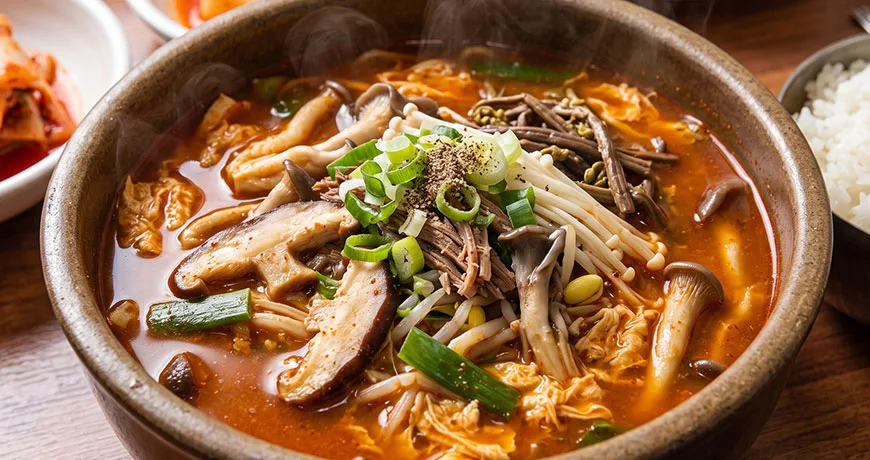
Beoseotyukgaejang is an advanced biochemical soup that maximizes umami amplification by merging the water-soluble inosinate of terrestrial animal proteins (beef brisket) with the highly concentrated guanylate of fungal fruiting bodies (mushrooms) within a single aqueous solvent. The dense, cross-linked collagen of the beef brisket undergoes prolonged thermal hydrolysis until it collapses into tender gelatin. The meat is then mechanically cleaved (shredded by hand) to radically expand its surface area. The fundamental technique of this dish is heavily coating this shredded beef, along with the porous matrix of various mushrooms and the degraded cellulose of bracken, in a hypertonic, fat-soluble capsaicin emulsion (chili oil paste) before boiling. When plunged into the rolling beef broth, the deep cellular sap of massive amounts of green onions releases reducing sugars to biochemically mask the sharp burn of the capsaicin, while the spongy mushrooms act as capillary networks, absorbing the heavy, spicy lipid broth to deliver an explosive sensory release upon mastication.
⏱️ Total: 2 hrs | Prep: 20 mins | Cook: 1 hr 40 mins | 🍳 Difficulty: High (Requires thermal hydrolysis and pre-emulsion coating control) | 🌶️ Profile: Fiery, Deeply Savory, Earthy, and Robust | 🍚 Focus: Thermal Hydrolysis, Umami Synergy, & Capillary Action Absorption
Ingredients (3–4 servings)
- Collagen & Inosinate Matrix: 300g Beef Brisket (Yangji), 2L Water (for broth extraction)
- Fungal Guanylate Matrix: 100g Oyster Mushrooms (torn), 3 Shiitake Mushrooms (sliced), 1/2 bunch Enoki Mushrooms (To protect the mycelium, minimize washing and mechanically tear into clusters)
- Cellulose & Reducing Sugar Matrix: 100g boiled Bracken (Gosari), 100g boiled Taro Stems (Torandae), 3 stalks Asian Leeks/Green Onions (cut into 7cm lengths and split lengthwise)
- Fat-soluble Capsaicin Binder (Seasoning Paste): 4 tbsp Gochugaru (Korean chili flakes), 3 tbsp Soup Soy Sauce (Guk-ganjang), 2 tbsp minced garlic, 2 tbsp toasted sesame oil (or cooking oil), salt and black pepper to taste
Allergy Information Contains: Beef, Soy, Wheat (from soy sauce)
Equipment High Thermal Mass Large Pot or Stockpot, Mixing Bowls, Strainer, Cutting Board, Knife
Cooking Instructions
- Thermal Hydrolysis (Broth Extraction): Place the blood-purged brisket into 2 liters of boiling water. Reduce to medium-low and simmer continuously for 1.5 hours. The intense kinetic energy forces the rigid collagen bonds to absorb water and melt into gelatin, yielding a pristine, high-inosinate beef broth. Remove the beef to cool and reserve the liquid.
- Mechanical Cleavage (Surface Area Maximization): Once the beef is cool enough to handle, do not use a knife. Hand-shred the meat strictly along the muscle fibers. This exposes millions of microscopic fissures and wildly increases the surface area, perfectly prepping the protein to bind with the spicy emulsion. Tear the bracken, taro stems, and oyster mushrooms into similar bite-sized strips.
- Lipid Coating & Osmotic Saturation: In a large mixing bowl, combine the shredded beef, bracken, taro stems, shiitake, and oyster mushrooms. Add the Gochugaru, soy sauce, garlic, and sesame oil. Knead aggressively with your hands. The hypertonic salinity forces the flavors deep into the cellular structures, while the sesame lipids create a hydrophobic coating that locks the capsaicin onto the proteins.
- Cellular Degradation & Fluid Integration: Drop the entire coated matrix into the boiling, reserved beef broth. Add the massive volume of prepared green onions and boil vigorously for 20 minutes. The sustained heat degrades the tough pectin of the green onions, extracting their sweet, soothing cellular sap into the broth to chemically balance the aggressive chili heat.
- Capillary Action & Finish: Add the enoki mushrooms exactly 2 minutes before finishing. Their microscopic, spongy cellular structure uses capillary action to instantly absorb the heavy, fiery lipid broth. Adjust the final salinity with salt and serve immediately alongside warm rice.
💡 Professional Culinary Tips
- Mechanism of Umami Amplification: In molecular gastronomy, when the inosinate extracted from the beef broth collides with the guanylate leached from the shiitake and oyster mushrooms, the binding affinity on the human tongue’s taste receptors increases geometrically. This “Umami Synergy” is the scientific reason why Mushroom Yukgaejang tastes exponentially richer and deeper than standard beef stews.
- The Physics of Hand-Shredding: Slicing boiled brisket with a knife creates a smooth, sheared surface that causes oils and marinades to slide right off. Shredding by hand along the natural muscle grain pulls the fibers apart, creating a highly textured, frayed surface. This allows the fat-soluble capsaicin emulsion to physically anchor itself to the meat, guaranteeing that every chew releases a burst of spicy broth.
- The Pre-Coating Mechanism: Disolving the seasoning directly into the water is a structural error that results in a watery broth and flavorless meat. Vigorously kneading the seasoning into the dry ingredients beforehand utilizes osmotic pressure to inject the salt and umami into the core of the vegetables and meat. The oil acts as a sealant, ensuring the ingredients do not lose their distinct flavors when subjected to the boiling solvent.
Nutrition Facts (Estimated)
Total Content : Approx. 600g (1 serving, excluding rice)
Calories : 320 kcal
– Sodium : 1,150mg (Variable depending on final salting)
– Total Carbohydrate : 22.0g
– Sugar : 5.0g
– Total Fat : 14.0g (Rendered beef tallow and sesame lipids)
– Saturated Fat : 4.5g
– Cholesterol : 45.0mg
– Protein : 28.0g
– Dietary Fiber : 8.0g
*Daily Values are based on a 2,000 calorie diet and standard Korean nutritional reference values.
**Nutritional values are calculated based on original ingredients; substitutions may alter specific macronutrients.
Origins and Food Culture of Spicy Mushroom and Beef Soup (Beoseotyukgaejang)
1. Historical Lineage: From Sambok Gaejangguk to Courtly Beef Yukgaejang and Mushroom Fusion
- Tracing its roots back to the Joseon Dynasty custom of consuming dog-meat stew (gaejangguk / gu-jang) during the sweltering dog days of summer (Sambok), which royal and noble households adapted by replacing dog meat with prized beef (sogogi / u-yuk), giving rise to the classic Yukgaejang (beef stew).
- Recorded in historic late Joseon manuals such as the 19th-century Siui-jeonseo, the dish evolved modern wellness dimensions as domestic cultivation of mushrooms flourished, integrating bountiful assortments of shiitake, oyster, and enoki mushrooms to balance the rich beef base with lighter, immune-enhancing forest nutrition.
2. The Culinary Science of Hand-Shredded Brisket and Layered Mushroom Textures
- The hallmark of authentic preparation lies in boiling the whole brisket until tender and pulling it apart by hand along its natural muscle grain, then thoroughly kneading it with chili powder, toasted sesame oil, garlic, and soup soy sauce to lock deep seasoning into the meat fibers.
- While tough field greens like taro stems and fiddlehead ferns are stewed early to infuse the broth with earthy depth, delicate fresh mushrooms are introduced in the final cooking stages to preserve their individual elastic snaps, cellular hydration, and delicate woody aromas.
3. The Ritual of Mourning Hospitality, Warding Off Misfortune (Byeoksa), and Modern Comfort
- Culturally indispensable in traditional Korean funeral rituals (sangga-jip), where boiling cauldrons of vibrant red Yukgaejang are served to weary mourners through the night; the brilliant crimson color was historically believed to ward off malevolent spirits (byeoksa) while providing dense, fortifying nourishment to grieving families.
- Today, enhanced with an abundance of wholesome mushrooms, Beoseotyukgaejang has transcended its ritual roots to become a beloved nationwide comfort tonic, cherished across all seasons for its restorative warmth, bold spice, and revitalizing culinary spirit.
The Incandescent Fire of Chili-Lacquered Beef Tallow and the Deep Forest Resonance of Braised Fungal Umami: A Refined Portrait of Beoseotyukgaejang
Beoseotyukgaejang (Spicy Mushroom and Shredded Beef Soup) stands as the colossal, palate-igniting, and profoundly restorative summit of Korea’s forest-and-meadow (tangban) gastronomy. Dense, deeply marbled beef brisket and shank are simmered patiently in a deep cauldron until tender, then hand-shredded along their natural fibrous grain and seasoned with coarse chili flakes, aged soup soy sauce, and fragrant sesame oil. Returned to the boiling beef broth, this foundation is generously layered with an abundant harvest of forest fungi—including the earthy, smoky cap of shiitake (pyogo), the tender, springy plumes of oyster mushrooms (neutari), and the crisp, thread-like clusters of enoki (paengi)—alongside wild bracken, rehydrated taro stems, Korean radish, and massive cuts of Welsh onions (daepa). Evolving from the royal court and aristocratic tradition of substituting native beef into the historic canine-based tonic (gaejangguk) during dog days of summer (sambok), this dish integrates the explosive, nucleotide-driven savor of cultivated mushrooms into the fiery architecture of traditional red chili broth, achieving an extraordinarily deep, multifaceted culinary equilibrium.
Lifting a ceramic spoon overflowing with fiery crimson broth, shredded brisket strands, tender mushroom caps, and melting scallions delivers an immediate, electrifying charge to the senses. The robust, smoky perfume of wok-seared chili oil and roasted beef tallow mingles effortlessly with the deep, moisture-rich earthiness of braised mushrooms and the caramelized nectar of simmered alliums. The first sip coats the palate in a luxurious, velvety emulsion: vibrant capsaicin heat surges across the tongue, immediately followed by the deep, soothing warmth of slow-extracted bovine marrow and gelatin. Sinking your teeth into the ingredients reveals an exhilarating textural progression: the shredded brisket yields with a toothsome, savory chew, releasing streams of concentrated amino acids, while the braised oyster and shiitake mushrooms collapse with a dense, succulent elasticity that floods the mouth with savory forest juices. The playful crunch of enoki mushrooms and the silken melt of slow-cooked scallions balance the chili’s searing intensity, transforming a bowl of steeped white rice into an unforgettable, sweat-inducing ritual of complete physical rejuvenation.
The enduring brilliance of Beoseotyukgaejang lies in its restorative functionalism—uniting the high-protein revitalization of native beef with the immune-supporting beta-glucans, dietary fiber, and trace minerals of wild and cultivated mushrooms. Originating from the grand cauldrons of historic marketplace inns and the aristocratic dining halls of Daegu, this fiery, mushroom-laden soup remains a timeless cultural monument of agrarian resilience, maternal generosity, and deeply satisfying gastronomic comfort.
Editor’s Review
1. A Dynamic Harmony of Shredded Brisket Chew, Multi-Fungal Elasticity, Yielding Allium Tenderness, and Broth Viscosity
The textural landscape inside the bowl delivers extraordinary structural diversity and palate engagement. Prolonged boiling followed by manual grain-shredding grants the beef brisket a tender yet distinct fibrous chew that absorbs the fiery stock without turning mushy. This pairs impeccably with the triple-fungal architecture: the meaty resilience of thick shiitake caps, the tender, tear-resistant chew of oyster mushrooms, and the brisk, auditory crunch of enoki stalks. The slow-simmered Welsh onions and rehydrated taro stems provide a silken, melting cushion that buffers the fiery heat, ensuring an impeccably balanced, non-fatiguing mouthfeel from the first spoonful to the last.
2. Triple Umami Synergism (GMP + IMP + Glutamate), Fungal Chitin Thermal Resilience, and Bovine Tallow-Capsaicinoid Emulsification
Beoseotyukgaejang represents an exacting study in fungal biochemistry, nucleotide synergy, and lipid thermodynamics. Shiitake and oyster mushrooms are extraordinarily dense in guanosine 5′-monophosphate (GMP), an umami-active nucleotide that remains structurally stable even under sustained boiling. When this fungal guanylate merges with muscle-derived inosine monophosphate (IMP) from the simmered brisket and free glutamates from naturally brewed soy sauce and alliums, it triggers an exponential triple synergy across human T1R1/T1R3 umami receptors, multiplying perceived savoriness far beyond the sum of its individual parts. Furthermore, the structural cell walls of mushrooms are formed from complex chitin and beta-glucan polymers, which resist thermal degradation at 100°C and preserve their characteristic springy elasticity throughout prolonged cooking. Concurrently, the hydrophobic medium of rendered bovine tallow dissolves and encapsulates the chili powder’s lipophilic capsaicinoids, moderating mucosal irritation and generating a rich, clinging emulsion that extends aromatic persistence.
3. The Royal Lineage of Joseon Yukgaejang and the Vanguard of Modern Korean Restorative Gastronomy
Bridging the noble lineage of aristocratic beef tonics with the abundant agricultural resources of modern mushroom cultivation, Beoseotyukgaejang captures the dynamic evolution of Korean soup culture. By channeling the searing warmth of red chilies, the earthy vitality of forest fungi, and the deep sustenance of native beef into a single harmonious cauldron, this monumental staple stands as an enduring sanctuary of physical rejuvenation, ancestral ingenuity, and brilliant culinary craftsmanship.