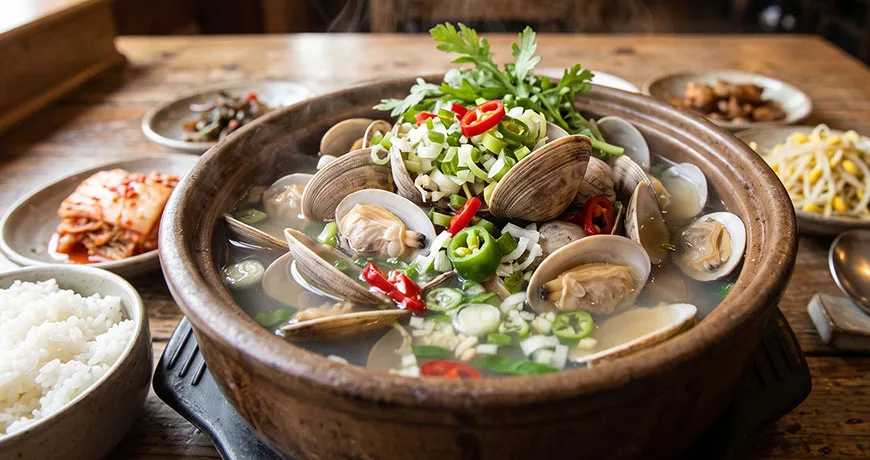
Bajirakjogaetguk is a marine biochemical soup engineered to aggressively extract succinic acid and stored glycogen from bivalve mollusks (Manila clams) into an aqueous solvent balanced by a light colloidal suspension of fermented soybean paste (Doenjang). Bivalve proteins are exceptionally vulnerable to heat; once temperatures exceed 85°C, their muscle fibers undergo severe, irreversible thermal contraction, expelling bound moisture and transforming tender flesh into tough rubber. Therefore, the cooking process strictly sequences the thermal hydrolysis of radish pectin to release reducing sugars first, withholding the clams until the very end. The moment the heat forces the adductor muscles to denature and the shells pop open, the heat is severed. Paired with the porous matrix of tofu—which absorbs the briny, hypertonic broth like a sponge—and the thermal kick of fresh chili capsaicin, this soup achieves a pristine, razor-sharp level of refreshing savory depth (Siwonhada).
⏱️ Total: 25 mins (excluding purging) | Prep: 10 mins | Cook: 15 mins | 🍳 Difficulty: Low (Requires strict adductor thermal coagulation and shell opening timing) | 🌶️ Profile: Briny, Deeply Refreshing, Earthy-Sweet, and Mildly Spicy | 🍚 Focus: Succinic Acid Extraction, Bivalve Dehiscence Kinetics, & Pectin Hydrolysis
Ingredients (2 servings)
- Succinic Acid & Bivalve Matrix: 300g Fresh Manila Clams (Bajirak – thoroughly purged in an isotonic saltwater solution)
- Pectin & Reducing Sugar Matrix: 150g Daikon Radish (sliced into thin 2.5cm squares, 0.3cm thick)
- Porous Protein Gel Matrix: 1/2 block Tofu (firm/soup style, diced into 1.5cm cubes)
- Colloidal Umami Binder: 1.5 tbsp Doenjang (Korean fermented soybean paste, diluted finely through a mesh)
- TRPV1 Catalyst & Aromatics: 1 Cheongyang green chili (thinly sliced), 1/2 stalk Green Onion (diagonally sliced), 0.5 tbsp minced garlic
- Solvent: 1L Water (or light dried anchovy-kelp broth)
Allergy Information Contains: Molluscan Shellfish (Clams), Soy, Wheat (from Doenjang)
Equipment High Thermal Mass Pot or Ttukbaegi, Fine Mesh Strainer, Cutting Board, Sharp Knife
Cooking Instructions
- Osmotic Purging & Surface Descaling: Submerge the clams in a 3.5% salt solution (mimicking natural seawater salinity) in a dark, cool environment for at least 1–2 hours. The clams will osmotically expel grit and sand. Rub the outer shells forcefully against each other under cold running water to eliminate micro-particulates.
- Solvent Preparation & Pectin Hydrolysis: Pour the water into the pot. Suspend the Doenjang through a fine mesh strainer into the liquid to establish a subtle colloidal suspension without sandy soybean solids. Add the sliced radish and bring to a boil. Lower to medium heat and simmer for 8–10 minutes to hydrolyze the radish’s tough pectin walls, releasing its natural reducing sugars into the solvent.
- Protein Gel Absorption: Once the radish turns translucent, add the cubed tofu and minced garlic. Simmer for 2 minutes. The porous soybean curd absorbs the hypertonic broth through osmotic migration, seasoning the gel from within.
- Critical Thermal Opening (Bivalve Dehiscence): Crank the heat to high. As the broth reaches a rolling boil, drop in all the cleaned clams at once. In about 1 to 2 minutes, the intense convective heat will denature the clam’s adductor muscles, forcing the shells to spring open. Concentrated reservoirs of oceanic succinic acid and free amino acids immediately flush into the soup.
- Aromatic Flash & Thermal Cutoff: The exact second the clams open, toss in the green chili and sliced green onions, and immediately kill the heat. The residual steam will bloom the fat-soluble capsaicin and volatile sulfur aromatics without overcooking the delicate clam meat. Serve piping hot.
💡 Professional Culinary Tips
- The Unique Biochemistry of Succinic Acid: The sharp, refreshing savory sensation characteristic of shellfishes is driven biochemically by succinic acid. Unlike terrestrial meat dominated by inosinic acid, shellfish succinate acts aggressively on oral receptors. When combined with the glutamates in a light Doenjang broth, it triggers an explosive umami multiplication effect.
- Thermodynamics of Shell Opening: Overcooking clams is a fundamental structural error. The opening of the shell is a biological indicator that the adductor muscle has fully coagulated and lost its structural tension. Keeping the clams at a violent boil past this point squeezes out all intracellular moisture, shrinking the meat into small, rubbery pellets. The heat must be shut down the instant the valves pop open.
- Subtle Doenjang Metering: In clam soups, Doenjang must serve strictly as a background catalyst rather than a dominating paste. Restricting the concentration to roughly half that of a standard stew (1.5 tablespoons per liter) maintains a light, translucent suspension. This prevents the dense, fermented soybean solids from masking the pristine, mineral-rich briny top notes of the clams.
Nutrition Facts (Estimated)
Total Content : Approx. 500g (1 serving)
Calories : 135 kcal
– Sodium : 790mg (Variable based on Doenjang salinity and natural clam brine)
– Total Carbohydrate : 10.0g
– Sugar : 2.5g
– Total Fat : 3.0g (Tofu lipids)
– Saturated Fat : 0.5g
– Cholesterol : 45.0mg (From clams)
– Protein : 17.0g
– Dietary Fiber : 3.0g
*Daily Values are based on a 2,000 calorie diet and standard Korean nutritional reference values.
**Nutritional values are calculated based on original ingredients; substitutions may alter specific macronutrients.
Origins and Food Culture of Clam Soup (Bajirakjogaetguk)
1. Historical Lineage: West Coast Mudflat Harvesting and Jasanoebo Chronicles
- Documented in Jeong Yak-jeon’s landmark 1814 marine encyclopedia Jasanoebo under the Hanja name Pajilhap (波疾蛤) alongside its native Korean moniker Bajirak, where it was praised for its thin shell, abundant plump meat, and naturally sweet, clean flavor.
- For centuries, coastal fishing communities across the expansive tidal mudflats of the Yellow Sea (Taean, Seosan, and Gochang) and the southern coast gathered clams using hand hoes (homi), creating an accessible, nutrient-dense staple that sustained everyday Korean households.
2. The Culinary Science of Sea-Salt Purging and Succinic Acid Extraction
- The hallmark of authentic preparation lies in the rigorous purging process (haegam), steeping live clams in dark, cold saltwater matching ocean salinity to allow the shellfish to naturally expel all ingested sand and tidal sediment.
- Cooking the clams in gently simmering broth and reducing the heat the exact moment their shells pop open prevents the delicate protein fibers from toughening, capturing the milky, succinic-acid-rich liquor within the soup without clouding its pristine flavor.
3. The Aesthetic of “Siwonhada” and Korea’s Quintessential Hangover Comfort
- Perfectly embodying the paradoxical Korean concept of siwonhada—describing a steaming-hot broth that feels remarkably cooling, crisp, and restorative to the internal organs—it represents the gold standard of natural morning recovery soups (haejang-guk).
- Especially celebrated in early spring when clams fatten before spawning, Bajirakjogaetguk remains an enduring cultural emblem of coastal Korean hospitality, turning humble mudflat shellfish into a timeless, heart-warming bowl of healing comfort.
The Oceanic Purity of Tidal-Flat Manila Clams and the Gentle Veil of Fermented Soybean Broth: A Refined Portrait of Bajirakjogaetguk
Bajirakjogaetguk (Manila Clam Soup with Radish and Soybean Paste) stands as the pristine, mineral-rich, and deeply restorative summit of Korea’s bivalve (tangban) gastronomy. Plump Manila clams (bajirak—Ruditapes philippinarum), harvested from mineral-dense intertidal flats where crashing tides foster sweet, muscular vitality, are meticulously purged in sea-salted water to release all sediment. Brought to a rapid boil with sweet matchsticks of Korean radish in pure water, the stock is gently seasoned with a delicate, strained veil of artisanal fermented soybean paste (doenjang). Enriched with soft tofu, sliced scallions, and fresh green chilies just as the shells pop open, this dish bypasses heavy, tongue-numbing spices and thick animal fats. Instead, it extracts the razor-sharp, invigorating clarity of shellfish succinic acid balanced against the earthy, fermented background of aged legumes in absolute thermodynamic harmony.
Lifting a warm ceramic bowl filled with fragrant, ivory-tinted steam and drawing a generous spoonful overflowing with open clams, tender radish batons, and silken tofu awakens the senses immediately. The crisp, clean aroma of tidal mineral flats mingles effortlessly with the warm, nutty perfume of aged doenjang and the refreshing brightness of alliums. The first sip glides across the tongue with zero friction, releasing a wave of sharp, restorative oceanic savor (siwonhan mat) that instantly revives a taxed digestive tract. Sinking your teeth into the shucked clam meat yields an auditory, springy chew (taenggeul), bursting with sweet marine liquor packed with natural taurine and glycogen. The delicate, custard-like yield of tofu and the sweet, cooling collapse of simmered radish cushion the briny punch, while the subtle spark of green chili cleanses lingering lipids, leaving an impeccably balanced, deeply soothing finish.
The enduring majesty of Bajirakjogaetguk lies in its therapeutic functionalism—harnessing the abundant stores of hepatic-protective taurine, betaine, and essential minerals concentrated within tidal bivalves to accelerate cellular detoxification and clear metabolic fatigue. Rooted in the humble, sun-drenched lives of coastal shore-gatherers who walked the mudflats with bamboo baskets to nourish their families, a steaming bowl of clam soup remains an irreplaceable monument of coastal wisdom, maternal tenderness, and comforting everyday nourishment.
Editor’s Review
1. A Dynamic Harmony of Springy Clam Resilience, Yielding Radish Sweetness, Silken Tofu Cushioning, and Broth Fluidity
The textural landscape inside the bowl delivers extraordinary lightness, structural contrast, and effortless digestion. Precise, short-duration cooking preserves the tender, muscular bounce of the clam flesh without inducing the rubbery toughness caused by overboiling. The translucent radish matchsticks yield softly upon mastication, releasing bursts of sweet vegetable hydration. Blocks of tender tofu introduce a pillowy, melting smoothness that cushions the mouth, while the clean, low-viscosity broth permeates every spoonful effortlessly, ensuring complete refreshment without palate fatigue from the first sip to the last.
2. Bivalve Succinic Acid and Soy Glutamate Synergism, Paramyosin Denaturation Control, and Hepatic Taurine-Betaine Biochemistry
Bajirakjogaetguk represents an exacting study in marine invertebrate physiology, muscle thermodynamics, and multi-compound umami kinetics. The primary organic acid responsible for the clam’s clean savory profile, succinic acid (succinate), binds synergistically with free glutamates released from fermented soybean paste, exponentially lowering the sensory threshold of human umami receptors (T1R1/T1R3) to create deep savory amplitude without heavy sodium. The clam’s adductor and foot muscles are rich in dense paramyosin and actomyosin filaments; limiting the cooking time to the precise moment the valves decouple (80–85°C) prevents excessive myofibrillar shrinkage and water loss (syneresis). Furthermore, abundant endogenous osmolytes—specifically taurine and trimethylglycine (betaine)—stimulate bile acid conjugation and upregulate hepatic aldehyde dehydrogenases, rapidly mitigating metabolic stress and promoting systemic revitalization.
3. The Intertidal Foraging Heritage and the Timeless Zenith of Korean Clear Shellfish Gastronomy
Harvested abundantly across the sweeping tidal mudflats of the Yellow and South Seas to provide accessible protein and vital minerals for generations of coastal and inland communities alike, Manila clams represent the grounding soul of Korean seafood culture. Elevating freshly purged bivalves and cellar-stored root vegetables into a life-affirming restorative elixir through brief, precise thermal control and biological fermentation, this pristine classic serves as an enduring sanctuary of restorative wellness, domestic warmth, and brilliant culinary restraint.