
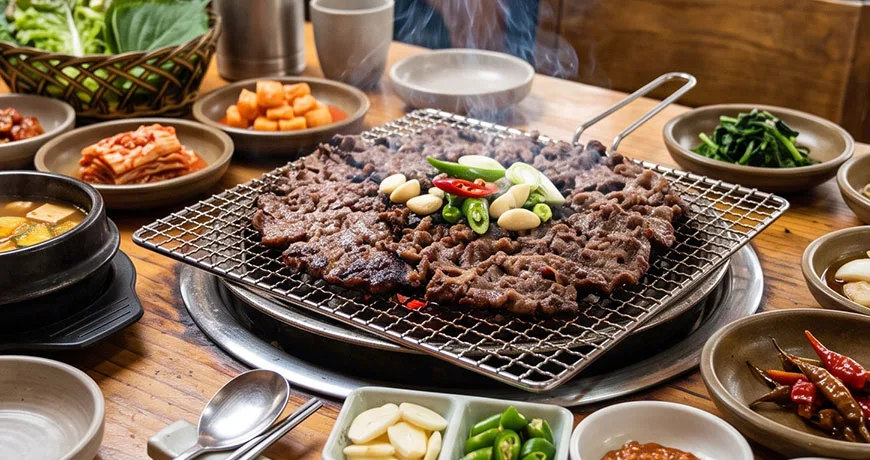
Eonyang-bulgogi is a product of sophisticated meat processing engineering. Thinly sliced beef is rigorously kneaded to extract myosin, a salt-soluble protein that acts as a natural biological binder, allowing the meat to be shaped into a wide, cohesive patty. Unlike Seoul-style bulgogi, which is cooked in its own hydrating broth, Eonyang-bulgogi is grilled over the intense infrared radiant heat of charcoal using a gridiron. This rapidly flash-evaporates the surface moisture. Once the water is vaporized, the surface temperature breaks past 150°C, forcing the hypertonic soy marinade into aggressive Maillard reactions and sugar caramelization. The result is a deeply savory, crisp exterior (bark) with a tightly bound, juicy interior, saturated with pyrolyzed smoke aerosols.
⏱️ Total: 40 mins (includes resting) | Prep: 30 mins | Cook: 10 mins | 🍳 Difficulty: Moderate (Requires extraction of myosin and control of flash evaporation) | 🌶️ Profile: Sweet, Savory, and Intensely Smoky | 🍚 Focus: Myosin Extraction, Flash Evaporation, & Radiant Heat
Ingredients (2–3 servings)
- Protein Matrix: 600g thinly sliced Beef (mix of chuck, brisket, or sirloin)
- Hypertonic Emulsion Marinade: 4 tbsp soy sauce, 2 tbsp sugar, 1 tbsp corn syrup (or oligosaccharide), 2 tbsp minced garlic, 3 tbsp minced scallion, 2 tbsp sesame oil, a pinch of black pepper
- Enzymatic Modifiers: 3 tbsp Asian pear juice, 2 tbsp onion juice (provides protease enzymes and natural sugars)
- Garnish: 1 tbsp coarsely crushed pine nuts, 1 tbsp toasted sesame seeds
Allergy Information Contains: Beef, Soy, Wheat (from soy sauce), Pine Nuts (Tree nuts)
Equipment Mixing Bowl, Charcoal Grill, Double-sided Gridiron (Grill Basket), Cutting Board, Knife
Cooking Instructions
- Mechanical Cleavage: Place the thinly sliced beef on a cutting board and lightly chop/score it with a heavy knife. Do not mince it completely into a paste; the goal is to physically sever the long muscle fibers while retaining a distinct meaty texture.
- Myosin Extraction & Osmosis: Transfer the beef to a mixing bowl. Add the fruit juices and the hypertonic marinade ingredients. Using your hands, vigorously knead and massage the meat. The friction and the salt from the soy sauce will chemically draw out a sticky protein called myosin. Refrigerate for 30 minutes to let the enzymes tenderize the meat.
- Structural Assembly: Spread the sticky, kneaded beef evenly across a double-sided gridiron, pressing it into a wide, uniform disc (about 0.5–1cm thick). The extracted myosin acts as a natural glue, ensuring the meat doesn’t fall apart during grilling.
- Radiant Heat Evaporation: Place the gridiron over white-hot charcoal. The infrared radiant heat will instantly flash-evaporate the moisture from the meat. This evaporation is chemically necessary for the Maillard reaction to occur.
- Pyrolysis & Caramelization: As the beef fat and marinade drip onto the coals, they undergo pyrolysis, creating thick, aromatic smoke that physically coats the meat. Flip the gridiron frequently to prevent the sugars from carbonizing (burning). Grill until the exterior is deeply browned and slightly crispy. Garnish heavily with crushed pine nuts and sesame seeds before serving.
💡 Professional Culinary Tips
- The Physics of Myosin Binding: Unlike western hamburger patties that often require eggs or breadcrumbs to hold together, Eonyang-bulgogi relies entirely on the beef itself. Vigorous kneading in the presence of salt breaks down the muscle cells and extracts myosin. When exposed to heat, this sticky myosin gel undergoes thermal coagulation, locking the meat tightly into its signature patty shape.
- Evaporation and the Maillard Threshold: Meat boiled in broth cannot exceed 100°C (the boiling point of water), resulting in grey, steamed meat. By grilling on an open gridiron to completely evaporate the surface water, the temperature of the meat spikes to over 150°C. This crosses the thermodynamic threshold required for the amino acids and reducing sugars to undergo the Maillard reaction, generating hundreds of new flavor compounds.
- The Chemistry of “Fire Flavor” (Pyrolysis): The highly sought-after smoky flavor does not come from the charcoal itself, but from the animal’s own rendered lipids (tallow) and sugars dripping onto the 700°C coals. The resulting chemical decomposition (pyrolysis) creates aromatic aerosols that rise and physically adsorb back into the microscopic crevices of the meat.
Nutrition Facts (Estimated)
Total Content : Approx. 200g (1 serving, reflecting moisture evaporation and fat rendering)
Calories : 480 kcal
– Sodium : 790mg
– Total Carbohydrate : 12.0g
– Sugar : 9.0g
– Total Fat : 32.0g
– Saturated Fat : 14.0g
– Cholesterol : 85.0mg
– Protein : 34.0g
– Dietary Fiber : 1.0g
*Daily Values are based on a 2,000 calorie diet and standard Korean nutritional reference values.
**Nutritional values are calculated based on original ingredients; substitutions may alter specific macronutrients.
Origins and Food Culture of Eonyang Bulgogi
1. Heritage of the Yeongnam Alps and the Historic Eonyang Cattle Market
- Rooted in the rich pastoral tradition of the Yeongnam Alps, where cattle grazed on fertile mountain highlands, and supported by the historic Eonyang Cattle Market—one of Korea’s most prominent livestock trading centers since the early 20th century.
- Utilizing ultra-fresh Hanwoo heifer beef allowed local cooks to pioneer a minimalist seasoning approach, letting the clean, rich umami of the native beef take center stage.
2. Fueling Modern Industry: The 1960s Expressway and Mining Boom
- The dish surged in national popularity during the late 1960s and 1970s as an indispensable high-protein stamina food for construction workers building the Gyeongbu Expressway and laborers at the nearby Eonyang amethyst mines.
- Following the expressway’s opening, Eonyang became a celebrated culinary stopover for cross-country travelers and truckers commuting between Seoul and Busan, cementing its status as a premier regional specialty.
3. The Culinary Art of Dry Charcoal-Mesh Grilling (Bajjuk Bulgogi)
- Unlike broth-based Seoul-style bulgogi cooked in a shallow dome pot, Eonyang Bulgogi is shaped into a flat, cohesive patty and clamped inside a dual-handled wire mesh grill, cooked over blazing oak coals until free of excess liquid.
- Attentively flipping the wire mesh over direct radiant heat locks in succulent meat juices while scorching a tantalizing, smoky crust, achieving the signature textural contrast of a lightly crisp surface and a tender, melt-in-the-mouth interior.
The Concentrated Essence of Charred Hanwoo and the Delicate Bloom of Dry-Grilled Embers: A Refined Portrait of Eonyang Bulgogi
Eonyang Bulgogi stands as the distinguished, texture-focused pinnacle of Korean beef gastronomy, originating from Eonyang-eup in Ulsan. Unlike the broth-simmered Seoul variation, this regional specialty takes prime Korean native beef (Hanwoo), finely minces and scores the fibers, lightly seasons the meat with soy sauce, sugar, garlic, and sesame oil, and presses it into a thin, uniform sheet between wire grates to be dry-seared (bajjak-bulgogi) directly over incandescent hardwood charcoal. By allowing all excess liquid and grease to render away freely through the mesh, the beef develops an expansive surface caramelization, crowned with a delicate sprinkle of whole toasted sesame seeds that release a warm, nutty fragrance the moment the sizzling platter reaches the table.
Separating a piece of the grill-marked beef reveals an immediate, intoxicating aroma of natural oakwood smoke. The first bite delivers a delicate, crisp crackle from the flame-kissed outer edges, which gives way effortlessly to the tender, cohesive texture of the finely minced beef beneath. Because the seasoning remains restrained, the meat relies entirely on its intrinsic savoriness and clean, succulent juices rather than heavy sugar or thick sauces. The subtle, popping crunch of toasted sesame seeds punctuates each chew, orchestrating an impeccably balanced and refreshing culinary harmony that pairs seamlessly with steamed white rice.
The true elegance of Eonyang Bulgogi lies in its culinary discipline—stripping away excessive garnishes and watery marinades to celebrate the natural quality of pasture-raised beef through pure, dry live-fire heat. Rooted in the market heritage of the Yeongnam Alps, where generational cooks perfected the craft of charcoal gridiron searing, this iconic regional dish continues to provide timeless comfort, restoring vitality and warmth with unvarnished, authentic craftsmanship.
Editor’s Review
1. A Delicate Balance of Crisp Charcoal Char, Finely Minced Tender Chew, and Nutty Sesame Accents
The dry-seared texture immediately sets Eonyang Bulgogi apart from conventional saucy beef dishes. Lifting a piece from the platter reveals a fine, golden-brown crust formed by direct contact with the glowing coals, followed by the yielding, velvety softness of the hand-worked beef matrix. The understated savory-sweet marinade allows the beef’s natural richness to shine, while whole toasted sesame seeds provide a delightful tactile pop that enlivens the entire sensory experience.
2. Mechanical Myosin Gel Network Binding and High-Heat Dry Searing Maillard Kinetics
Eonyang Bulgogi represents an exacting study in myofibrillar protein mechanics and radiant thermodynamics. Finely mincing and kneading the beef in a hypertonic seasoning environment extracts salt-soluble myosin proteins, creating a self-binding gel network that holds the patty firmly together on the wire grate without egg or flour binders. Furthermore, the absence of liquid marinade accelerates moisture evaporation, allowing surface temperatures to rapidly exceed 150°C for comprehensive Maillard browning, while far-infrared radiation from the hardwood embers penetrates the core to preserve succulent intracellular tenderness.
3. The Alpine Livestock Heritage of the Yeongnam Alps and the Historical Comfort of Highway Tabletop Feasts
Originating around the historic livestock markets and pastures of Eonyang and gaining widespread renown as a vital restorative staple for workers during the construction of the Gyeongbu Expressway in the 1960s and 1970s, Eonyang Bulgogi serves as an enduring cultural touchstone. Transforming humble, honest cuts into an exquisite dry-grilled delicacy over open embers, this celebrated regional craft continues to offer diners a deeply grounding sanctuary of heritage, generous hospitality, and culinary clarity.
언양기와집불고기
#배틀트립 #생생정보통 #수요미식회
언양한우불고기
#백년가게