
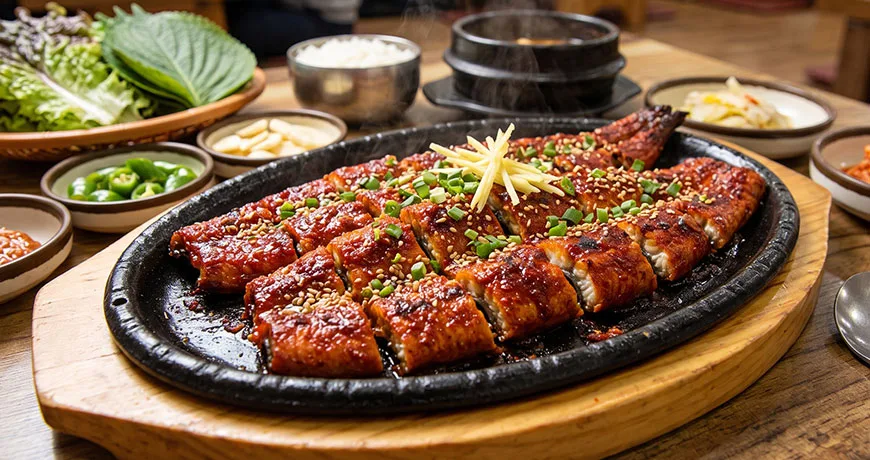
Yangnyeom-jangeo-gui is a sophisticated thermodynamic cooking process requiring the physical removal of the eel’s thick mucin layer and the precise rendering of its high-density unsaturated fats. Applying the marinade to raw eel is a culinary error; the meat must undergo a primary bare grill (Shirayaki style) to evaporate moisture and liquefy the subcutaneous fat. Only then is the hypertonic gochujang emulsion applied in multiple thin layers. This sequential layering allows the sugars to undergo aggressive caramelization, building a sticky, perfectly adhered crust without carbonizing. Finally, pairing the rich, fatty meat with raw ginger juliennes introduces gingerol, which chemically resets the palate and masks any residual muddy notes (geosmin) from the freshwater eel.
⏱️ Total: 35 mins | Prep: 15 mins | Cook: 20 mins | 🍳 Difficulty: High (Requires mucin removal and layered thermodynamic glazing) | 🌶️ Profile: Sweet, Spicy, Intensely Rich, and Fatty | 🍚 Focus: Lipid Rendering, Caramelization Layering, & Geosmin Masking
Ingredients (2 servings)
- Protein & Lipid Matrix: 2 cleaned Freshwater Eels (approx. 600g)
- Hypertonic Emulsion Glaze: 3 tbsp Gochujang (Korean chili paste), 2 tbsp soy sauce, 3 tbsp rice wine (or mirin), 2 tbsp corn syrup, 1 tbsp sugar, 1 tbsp minced garlic, 0.5 tsp minced ginger, a pinch of black pepper
- Palate Cleanser & Masking Agent: 1 knob of fresh ginger (julienned extremely thin and soaked in cold water for 10 minutes to remove excess starch and harshness)
Allergy Information Contains: Fish (Eel), Soy, Wheat (from soy sauce and Gochujang)
Equipment Knife, Cutting Board, Silicone Pastry Brush, Charcoal Grill or Non-stick Skillet, Paper Towels
Cooking Instructions
- Physical Mucin Removal: The slimy white mucin on the eel’s skin is the primary source of fishy odors. Vigorously scrape the skin with the back of a knife to physically remove this layer. Wipe the eel completely dry with paper towels. Do not wash it with water, as this will drive the fishy compounds deep into the flesh.
- Primary Rendering & Skin Control: Place the eel on a hot grill, skin-side down first. The collagen in the skin will attempt to violently contract; press down gently with tongs to keep the fillet flat. Grill until the skin is crispy and the thick layer of subcutaneous fat begins to bubble and render out. Cook to about 70% doneness.
- Layered Glazing: Once the fat has rendered and the surface structure is firm, use a silicone brush to apply a thin layer of the hypertonic gochujang glaze. Reduce the heat to prevent the sugars from burning instantly.
- Multiple Caramelization: As the heat evaporates the moisture in the glaze and it becomes sticky, flip the eel and apply another layer. Repeat this 2–3 times. This multiple-coating technique ensures the glaze transforms into a thick, caramelized bark that is unified with the meat, rather than just a superficial sauce.
- Thermal Coagulation & Plating: Once the proteins are fully coagulated and the glaze is glossy and bubbling, cut the eel into bite-sized strips. Grill the cross-sections briefly. Serve immediately with a generous mound of the julienned ginger.
💡 Professional Culinary Tips
- The Thermodynamic Error of Raw Glazing: If you apply a hypertonic glaze to raw eel, osmotic pressure will pull water out of the meat, washing the sauce right off into the grill. Furthermore, the high sugar content will carbonize (burn to ash) long before the dense thermal energy can render the thick fat. A primary bare grill is non-negotiable.
- Masking Geosmin with Gingerol: Freshwater eels inherently contain geosmin, a chemical compound responsible for a muddy, earthy flavor. Heat alone cannot destroy geosmin. The pungent compound gingerol in raw ginger acts as a chemical masking agent, competitively binding to your olfactory receptors to neutralize the muddy scent while cutting through the heavy lipid mouthfeel.
- Fat-Soluble Vitamin Absorption: Eel is highly prized for its immense levels of Vitamin A (retinol) and Vitamin E. Because these are fat-soluble vitamins, the eel’s own rich, rendered unsaturated fats act as the perfect biological solvent, maximizing your body’s absorption rate without the need for additional cooking oils.
Nutrition Facts (Estimated)
Total Content : Approx. 200g (1 serving, reflecting weight loss from lipid rendering)
Calories : 580 kcal
– Sodium : 720mg
– Total Carbohydrate : 12.0g
– Sugar : 8.0g
– Total Fat : 45.0g (Rich in Omega-3, EPA, and DHA)
– Saturated Fat : 11.0g
– Cholesterol : 180.0mg
– Protein : 32.0g
– Dietary Fiber : 1.0g
*Daily Values are based on a 2,000 calorie diet and standard Korean nutritional reference values.
**Nutritional values are calculated based on original ingredients; substitutions may alter specific macronutrients.
Origins and Food Culture of Seasoned Grilled Eel (Yangnyeom Jangeo Gui)
1. A Storied Heritage: Korea’s Ultimate Summer Stamina Tonic
- Documented in seminal historical manuscripts such as Jasaneobo and Dongui Bogam as an invaluable restorative food that tonifies weakened constitutions and replenishes vital energy (qi), eel has long been revered across Korea.
- It has firmly established itself as an indispensable stamina delicacy during Sambok (the hottest dog days of summer), cherished by generations seeking to recover energy lost to intense heat.
2. The Culinary Science of Pre-Crisping and Multi-Layer Glazing
- The hallmark of authentic preparation begins with chobeol-gui (initial plain searing) to render away excess surface fats and firm up the tender meat structure.
- Skilled chefs then brush multiple delicate layers of the aromatic gochujang reduction onto the eel over gentle indirect coals, building a glossy, deeply caramelized lacquer that locks in natural juices without scorching the sugars.
3. The Indispensable Ginger Pairing and Festive Tabletop Culture
- Guided by traditional Korean food therapy, eel is invariably served with mounds of razor-thin julienned ginger (saenggang-chae) and fragrant perilla leaves to warm the digestive system and balance the richness.
- Wrapping a piping-hot, glazed morsel of eel with fresh ginger and pairing it with a glass of rich black raspberry wine (bokbunjaju) encapsulates an iconic social dining ritual celebrated for restoration and camaraderie.
The Ruby-Lacquered Glaze of Spiced Gochujang and the Silken Richness of Charred Eel: A Refined Portrait of Yangnyeom Jangeo-gui
Yangnyeom Jangeo-gui (Gochujang-Glazed Grilled Eel) stands as a celebrated pinnacle of Korean restorative barbecue gastronomy, centering on freshly dressed freshwater or sea eel that is lightly par-grilled over charcoal before being layered with multiple coats of a lustrous, spicy-sweet gochujang reduction. As the unctuous, nutrient-dense fish meets radiant embers, excess fat renders out smoothly, creating the perfect foundation for the rich chili-soy glaze to caramelize into a glossy, fragrant lacquer that immediately fills the dining space with an appetizing aroma of sweet smoke.
Sampling a freshly charred, amber-tinted morsel alongside needle-thin strands of fresh ginger reveals an extraordinary textural contrast. The outer surface delivers a delicate, sticky glaze kissed by subtle fire-char, yielding effortlessly to the tender, melt-in-the-mouth flakiness of the eel’s rich white meat. The natural, savory richness of the fish fat merges seamlessly with the deep, piquant character of the aged chili paste, while the refreshing, clean bite of raw ginger cuts cleanly through the richness, leaving a remarkably crisp and invigorating finish on the palate.
The enduring legacy of seasoned grilled eel lies in its exceptional balance of high-potency micronutrients—such as Vitamin A and essential omega-3 fatty acids—and traditional fermented seasoning craft. Revered for generations as an indispensable stamina tonic (boyangsik) during the sweltering dog days of summer or periods of physical weariness, a sizzling platter of glazed grilled eel remains a deeply comforting ritual that restores bodily vigor and provides timeless culinary comfort.
Editor’s Review
1. A Harmonious Interplay of Caramelized Gochujang Glaze, Silken Flaky Meat, and Crisp Ginger Piquancy
The visual allure of the glossy, deep-crimson glaze immediately sets a refined tone. Multiple brushings of sauce over steady heat create a delicate, caramelized exterior that seals in the rich moisture of the eel. The meat flakes gently upon the palate with a luxurious, velvety texture, while the crisp, peppery freshness of julienned ginger counterbalances the unctuous fish oil, orchestrating a clean, endlessly satisfying sensory finish.
2. Par-Grilling Lipid Rendering Kinetics, Retinol Bioavailability, and Gingerol Digestive Synergy
Yangnyeom Jangeo-gui represents an exacting study in seafood lipid management and micronutrient absorption. The initial par-grilling stage coagulates surface gelatin and drains excess surface grease, ensuring the glaze adheres tightly to the muscle fibers during secondary grilling. Concurrently, the eel’s high concentrations of fat-soluble Vitamin A (retinol) and unsaturated fatty acids (EPA/DHA) are efficiently assimilated within the warm lipid matrix, while the gingerol and shogaol compounds in fresh ginger stimulate gastric acid and bile secretion for effortless digestion.
3. The Riverbank Heritage of Natural Stamina Lore and the Sustaining Comfort of Tabletop Restorative Feasts
Rooted in regional riverbank traditions where communities gathered to replenish vitality with seasonal freshwater catches, glazed grilled eel serves as a time-honored emotional and physical haven against exhaustion. Savoring each meticulously turned, fire-kissed piece celebrates an artisanal commitment to hearthside grilling, delivering a deeply revitalizing experience that nourishes both body and spirit.
금수장장어구이
#백년가게
향옥정
#백년가게