
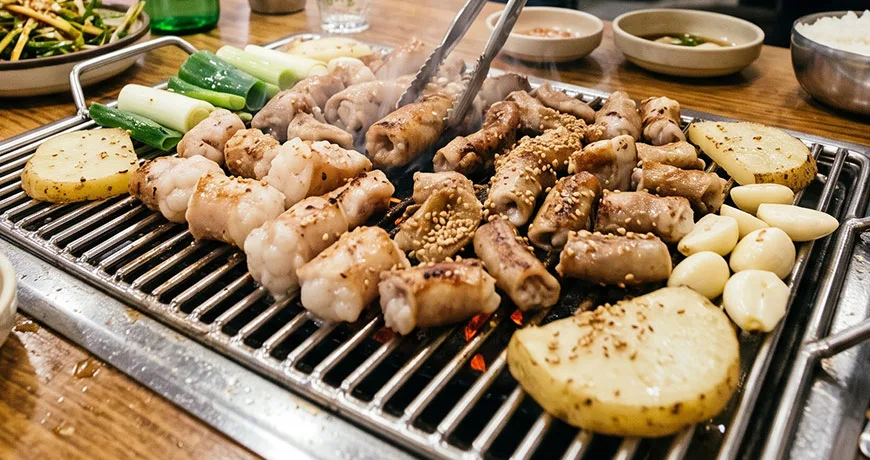
Yang-gopchang-gui is a sophisticated dish relying on the thermodynamic control of two highly distinct bovine offal textures: the dense muscle fibers of the rumen (Yang) and the lipid-rich small intestine (Gopchang). The critical first step is physical cleansing—using the mechanical friction of wheat flour to strongly adsorb and strip away mucus and ammonia-based odor molecules. Once the dark outer membrane of the rumen is peeled away, the pure protein matrix violently contracts under high heat, creating a uniquely crunchy yet highly viscoelastic chew. Simultaneously, the small intestine undergoes intense lipid rendering, deploying heavy Maillard browning and unleashing an explosion of concentrated amino-acid umami as you chew.
⏱️ Total: 1.5 hrs (includes prep/marinade) | Prep: 40 mins | Cook: 20 mins | 🍳 Difficulty: Expert (Requires intense physical cleaning and thermal coagulation control) | 🌶️ Profile: Savory, Rich, Crunchy, and Chewy | 🍚 Focus: Physical Adsorption, Lipid Rendering, & Enzymatic Tenderizing
Ingredients (2–3 servings)
- Protein & Lipid Matrix: 300g Beef Rumen (Yang), 300g Beef Small Intestine (Gopchang)
- Physical Cleanser: 1/2 cup wheat flour, 2 tbsp coarse sea salt
- Enzymatic Marinade: 3 tbsp soy sauce, 2 tbsp minced garlic, 2 tbsp sesame oil, 1 tbsp sugar, 1 tbsp plum extract, 1 tsp black pepper, 2 tbsp grated kiwi or pear (provides protease enzymes)
Allergy Information Contains: Beef, Wheat (used for cleaning), Soy (from soy sauce)
Equipment Mixing Bowl, Rubber Gloves, Cutting Board, Knife, High Thermal Mass Grill Pan or Grate
Cooking Instructions
- Physical Cleansing (Adsorption): Place the rumen and intestines in a bowl. Cover generously with flour and coarse salt. Put on rubber gloves and vigorously scrub and knead the offal. The fine flour particles physically adsorb and bind to the sticky, odor-causing mucus on the cellular walls. Rinse thoroughly under running water until completely clean.
- Membrane Removal: Scrape off the rough, dark membrane from the outside of the rumen using a knife, or blanch it for 10 seconds in boiling water to peel it off, leaving only the white muscle layer. Score the rumen deeply in a tight crosshatch pattern to sever the tough muscle fibers.
- Enzymatic Tenderizing: Toss the cleaned offal with the marinade. Refrigerate for 30 minutes. The protease enzymes from the fruit juices chemically cleave the tough connective tissues, softening the meat into a pleasant, chewy texture.
- Thermodynamic Rendering: Place the offal on a screaming-hot grill (over 150°C/300°F). The subcutaneous fat of the intestines will render, shallow-frying the exterior. The collagen in the rumen will contract rapidly under the heat, locking in moisture and building its signature “crunchy” texture.
- Thermal Coagulation & Cutting: Once the exterior is deeply browned and the internal amino-acid paste (“gop”) of the intestines has fully coagulated, use scissors to cut the meat into bite-sized pieces. Serve immediately while hot and crispy.
💡 Professional Culinary Tips
- The Physics of Flour Adsorption: Washing offal with plain water is chemically inefficient against lipid-soluble odor compounds. The micro-particles and gluten proteins in wheat flour act as a physical sponge, penetrating microscopic crevices in the mucosal walls to trap and drag away foul-smelling organic compounds in a gel-like state.
- Thermal Denaturation of the Rumen: The rumen is almost 100% muscle and connective tissue with zero fat. Under intense heat, these fibers contract and attempt to turn rubbery. However, thanks to the mechanical scoring and the biochemical cleavage by the fruit enzymes, this contraction results in a highly prized “crunchy yet chewy” texture that cleanly snaps when bitten.
- Preventing the Steaming Effect: Offal contains a massive amount of water. If the grill is not hot enough, this water will pool, causing the meat to steam rather than sear. Steamed offal becomes impossibly rubbery and releases a foul, gamey odor. You must maintain intense heat to flash-evaporate moisture and force lipid rendering.
Nutrition Facts (Estimated)
Total Content : Approx. 250g (1 serving, reflecting moisture and fat loss during cooking)
Calories : 420 kcal
– Sodium : 750mg
– Total Carbohydrate : 8.0g
– Sugar : 4.0g
– Total Fat : 28.0g
– Saturated Fat : 12.0g
– Cholesterol : 160.0mg
– Protein : 31.0g
– Dietary Fiber : 0.5g
*Daily Values are based on a 2,000 calorie diet and standard Korean nutritional reference values.
**Nutritional values are calculated based on original ingredients; substitutions may alter specific macronutrients.
Origins and Food Culture of Grilled Beef Tripe and Intestines (Yang-Gopchang Gui)
1. A Storied Heritage: From Royal Aristocratic Delicacy to Urban Dining Icon
- Documented in seminal Joseon Dynasty culinary manuscripts such as Eumsik Dimibang and Siuijeonseo as yang-gui, beef mountain tripe has historically been revered as a prized, restorative delicacy fit for royal banquets and aristocratic tables.
- Over the decades, it transitioned into an iconic urban specialty, giving rise to celebrated culinary hubs like the historic Jagalchi Market Yang-Gopchang alleys in Busan and renowned barbecue centers across Seoul and Daegu.
2. The Artisanal Mastery of Flour-Washing and Membrane Peeling
- The cornerstone of its preparation lies in the rigorous traditional technique of kneading the tripe with flour and coarse salt to completely eliminate residual odors, followed by meticulously peeling the tough outer sheath to yield pristine white meat.
- This meticulous craft creates a remarkably clean flavor profile and unlocks the dish’s signature seogeok-seogeok texture—a delightfully firm, snappy crunch unlike any standard cut of meat.
3. Tabletop Grilling Camaraderie and the Coveted “Yang-Bap” Finale
- Gathering around glowing charcoal braziers or heavy iron pans, often with skilled grill masters tending the meats table-side, captures the warm, vibrant essence of Korean social dining accompanied by chilled soju.
- The meal traditionally culminates in a flavorful finale: yang-bap, where minced tripe is stir-fried over the seasoned hot pan with rice, diced radish kimchi (kkakdugi), and crushed seaweed to form an irresistible, crispy-scorched crust.
The Pristine Purity of Skinned Muscle and the Crisp Snap of Elastic Texture: The Minimalist Poetics of Yang-Gopchang-gui
Yang-Gopchang-gui (Grilled Beef Tripe and Rumen) represents the refined, texture-driven pinnacle of Korean offal gastronomy, centering on the dense, muscular wall of the bovine first stomach (yang or yanggitmeori). Unlike ordinary cuts of marbled beef that offer tender, melting richness, the rumen is an exercise in meticulous manual craftsmanship: vigorously scrubbed with flour to physically strip away impurities and odors, then carefully peeled of its tough outer serosa to expose pristine, ivory-white muscle fibers.
The moment a lightly marinated piece of grilled rumen meets the palate, it delivers a textural revelation found nowhere else. Sinking your teeth into the seared meat produces a distinct, crisp “snap”—reminiscent of the firm bite of fresh abalone or scallops—before yielding to a clean, subtle sweetness intrinsic to the dense smooth muscle.
Free from greasy heaviness and seasoned lightly with garlic, sesame oil, and mild spices, the pristine elasticity of the meat deepens with every chew. Stripping away all gaminess through labor-intensive preparation to showcase pure structural crunch, grilled beef rumen proves that offal, when treated with precision, can deliver one of the most sophisticated and honest sensory experiences on the grill.
Editor’s Review
1. The Snapping, Crisp Resilience of Beef Rumen and the Clean Fragrance of Light Marinades
A striking textural departure from conventional tender steak cuts. Lightly kissed by the open grill, the rumen delivers an immediate, crisp tactile snap upon mastication. The dense muscle fibers remain remarkably springy without toughness, releasing a subtle, clean sweetness that melds seamlessly with the fragrant warmth of roasted garlic and toasted sesame oil.
2. Flour Starch Adsorption Mechanics and Smooth Muscle Thermal Rheology
Rubbing the raw rumen with wheat flour leverages the porous micro-structure of starch granules to physically capture and strip away mucosal impurities and off-flavor volatiles. Once the tough outer membrane is peeled, the exposed dense smooth muscle fibers undergo controlled thermal contraction under direct heat, preserving intracellular moisture and maintaining its signature crisp elasticity without turning leathery.
3. The Artisanal Trimming Legacy of Busan’s Alleys and the Elevated Elevation of Offal Gastronomy
Rooted in the dedicated craft of traditional market taverns—such as Busan’s historic Jagalchi alleys—where cooks mastered the exacting labor of washing and trimming offal, grilled beef rumen has evolved from humble origins into a celebrated culinary delicacy. Savoring each carefully turned piece over glowing heat pays homage to the manual dedication that transforms an uncompromising cut into an extraordinary gastronomic craft.