
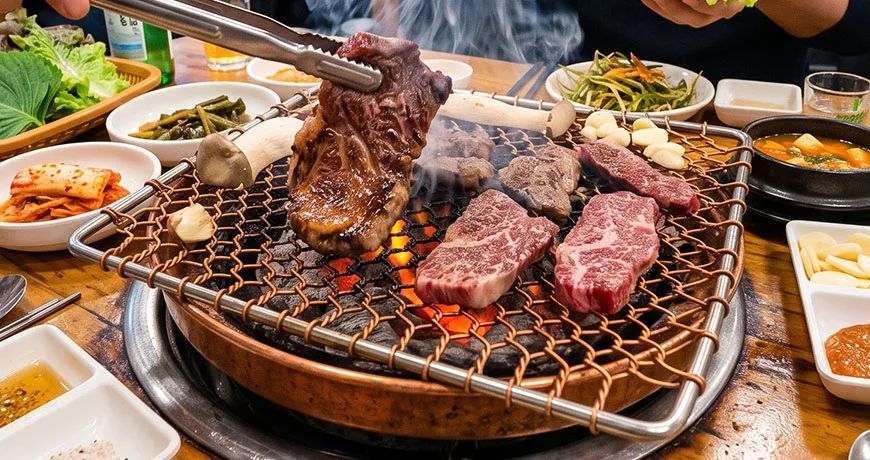
So-gogi-gui relies on an unmarinated, pure thermodynamic grilling process where the intrinsic intramuscular fat (marbling) and dense muscle fibers of high-quality beef are exposed to the extreme 700°C+ infrared radiant heat of hardwood charcoal. This intense thermal energy instantly flash-evaporates surface moisture, triggering an aggressive Maillard reaction. As the dense saturated fats liquefy and drip onto the white-hot coals, they undergo lipid pyrolysis. This chemical decomposition produces an aerosolized smoke packed with aromatic compounds that heavily coat the meat, imparting an authentic “fire flavor.” Paired with a toasted sesame oil and salt dip, the unsaturated oils chemically cleanse the heavy beef tallow from your palate, perfecting the sensory experience.
⏱️ Total: 20 mins (includes resting) | Prep: 15 mins | Cook: 5 mins | 🍳 Difficulty: High (Requires strict radiant heat and core temperature control) | 🌶️ Profile: Deeply Savory, Rich, and Smoky | 🍚 Focus: Infrared Radiant Heat, Thermal Stabilization, & Lipid Rendering
Ingredients (2 servings)
- Protein & Lipid Matrix: 500g high-quality Beef for grilling (Sirloin, Ribeye, Tenderloin, or Short Rib with rich marbling)
- Osmotic Seasoning: 0.5 tbsp coarse sea salt, a pinch of coarsely ground black pepper
- Chemical Cleansers: Sesame oil dip (2 tbsp toasted sesame oil, 0.5 tsp salt), raw garlic, green chilies, Ssamjang
- Essential Equipment: Hardwood Charcoal (Baektan/White Charcoal), BBQ Grill Grate
Allergy Information Contains: Beef, Sesame (from sesame oil)
Equipment Meat Knife, Cutting Board, Charcoal Grill, Grill Grate, Tongs, Meat Scissors
Cooking Instructions
- Thermal Stabilization & Osmosis: Remove the beef from the refrigerator and let it sit at room temperature for 15–20 minutes to raise its core temperature. Right before grilling, season the surface with coarse sea salt to draw out a microscopic layer of moisture via osmosis, which accelerates the Maillard browning.
- Radiant Heat Control: Ignite the charcoal and wait until the coals are covered in a layer of white ash (white-hot). Grilling over active, dancing flames will deposit bitter soot. You must cook using pure, invisible infrared radiant heat.
- Thermal Coagulation & Searing: Place the beef on the hot grate. The radiant heat instantly coagulates the surface proteins, locking in the kinetic moisture while rendering the intramuscular fat to fry the exterior into a crispy crust.
- Pyrolysis & Smoke Coating: As the rendered beef tallow drips onto the coals, it creates an aromatic smoke aerosol. Avoid flipping the meat excessively. Let one side develop a deep, perfect crust so the pyrolyzed smoke can fully adhere to the meat before flipping it.
- Resting & Cutting: Once the beef reaches your desired doneness (medium-rare to medium), move it to the cooler edge of the grill or a cutting board and let it rest for 1–2 minutes. This allows the kinetically excited moisture and lipids to redistribute evenly throughout the muscle matrix before cutting and serving.
💡 Professional Culinary Tips
- Thermodynamics of Resting (Before Cooking): Throwing refrigerator-cold meat onto a screaming-hot grill causes the exterior to burn while the core remains raw. Furthermore, the massive temperature shock forces the muscle fibers to violently contract, squeezing out massive amounts of kinetic moisture. Letting the meat stabilize at room temperature ensures even thermal conduction and a much juicier steak.
- Melting Point of Beef Marbling: Beef fat has a significantly higher melting point (approx. 40–50°C) than pork or duck fat. You must sear the exterior heavily using intense radiant heat so the internal marbling liquefies completely. If cooked at too low a temperature, the intramuscular fat remains waxy and coats the mouth unpleasantly.
- Biochemical Palate Cleansing (Sesame Oil Dip): Because beef tallow has a high melting point, it solidifies easily inside the mouth, leaving a heavy lipid film that dulls your taste buds. The unsaturated fatty acids in toasted sesame oil physically cut through and dissolve this saturated animal fat. Dipping the beef in salted sesame oil acts as a chemical palate cleanser, resetting your receptors for the next bite.
Nutrition Facts (Estimated)
Total Content : Approx. 200g (1 serving, reflecting weight loss from lipid rendering and moisture evaporation)
Calories : 520 kcal
– Sodium : 350mg
– Total Carbohydrate : 0.0g
– Sugar : 0.0g
– Total Fat : 38.0g
– Saturated Fat : 15.0g
– Cholesterol : 90.0mg
– Protein : 42.0g
– Dietary Fiber : 0.0g
*Daily Values are based on a 2,000 calorie diet and standard Korean nutritional reference values.
**Nutritional values are calculated based on original ingredients; substitutions may alter specific macronutrients.
Origins and Food Culture of Korean Grilled Beef (Sogogi Gui)
1. A Millennia-Old Lineage: From Ancient Maekjeok and Seolyameok to Modern K-BBQ
- Tracing its culinary ancestry to ancient Goguryeo’s skewered maekjeok and the romantic Joseon Dynasty tradition of seolyameok (marinated beef grilled over charcoal on snowy winter nights), this dish embodies centuries of refined fire-cooking heritage.
- Evolving through modern urbanization and advancements in indigenous Hanwoo cattle husbandry, tabletop charcoal-grilled beef has become the foundational centerpiece of global Korean barbecue culture.
2. The Culinary Science of Radiant Charcoal Heat and Hanwoo Anatomy
- Renowned for having one of the world’s most intricate butchery traditions—dividing beef into over 120 specialized cuts such as sirloin (deungsim), tenderloin (ansim), short rib (galbi), and chuck flap tail (salchisal)—each cut is celebrated for its unique texture and marbling.
- High radiant heat from natural oak charcoal quickly sears the meat fibers, triggering intense Maillard browning while locking in succulent natural juices and infusing a delicate woodsy aroma.
3. Tabletop Hospitality, Communal Bonding, and the Classic Post-Meal Ritual
- Gathering around a central brazier to grill, slice, and share hot morsels of beef embodies the quintessential warmth, generosity, and camaraderie of Korean social dining.
- The meal traditionally culminates in seon-yuk-hu-sik (“meat first, carbs after”)—following the rich barbecue with a comforting pot of fermented soybean paste stew (doenjang jjigae) or chilled buckwheat noodles (naengmyeon) to cleanse the palate and complete a balanced dining experience.
The Searing Radiance of Charcoal Embers and the Silken Bloom of Marbled Beef: A Refined Portrait of Sogogi-gui
Sogogi-gui (Korean Tabletop Charcoal-Grilled Beef) stands as the quintessential, unadorned pinnacle of Korean meat gastronomy, where thick, freshly carved cuts of marbled beef—such as ribeye, striploin, and tenderloin—are seared directly over incandescent hardwood charcoal with little more than a sprinkle of coarse mineral salt. Stripping away heavy marinades or broth-braising techniques, this cooking style embraces pure transparency, relying entirely on the pristine freshness of the native beef (Hanwoo), its intricate intramuscular marbling, and the dry, radiant power of live embers.
The moment a slice meets the blistering iron grate, an immediate sizzle marks the rapid thermal contraction of surface proteins, locking within it a reservoir of precious, savory juices. Cooked swiftly to a pristine medium-rare, the first bite yields a delicate, flame-kissed crust that gives way effortlessly to the tender, velvety chew of the interior. Rich, oleic-acid-dominant fat gently liquefies at body temperature, coating the palate in clean, natural nuttiness rather than greasy heaviness. A single grain of coarse sea salt or a touch of fresh wasabi brings the intrinsic umami of the meat into sharp, luminous focus.
The enduring elegance of simply grilled beef lies in its interactive culinary rhythm—carefully grilling and turning each piece one by one to capture the exact peak of doneness. Revered as the ultimate celebratory meal for commemorating milestones, family reunions, and shared triumphs, gathering around a smoking charcoal hearth of fresh beef remains a timeless tradition that nourishes the body with vital energy and provides deeply grounding camaraderie.
Editor’s Review
1. A Harmonious Balance of Delicate Maillard Crust, Silken Muscle Elasticity, and Pure Oleic-Rich Savory Juices
With no heavy seasonings to mask the ingredient, the natural quality of the beef takes center stage. High-intensity dry heat creates a fine, savory surface crust while preserving a succulent, rose-hued core beneath. The meat yields with effortless tenderness upon mastication, releasing a wave of clean, concentrated beef umami that finishes with refined clarity when paired with mineral salt.
2. Radiative Far-Infrared Surface Searing Kinetics, Intracellular Moisture Retention, and Oleic Acid Melting Thermodynamics
Sogogi-gui represents an exacting study in radiative heat transfer and lipid thermodynamics. High-energy far-infrared radiation from hardwood charcoal triggers rapid surface dehydration, accelerating the Maillard reaction above 150°C while preventing excessive actomyosin contraction inside the muscle fibers, effectively sealing in natural glutamates and inosinates. Furthermore, the high concentration of oleic acid in Korean native beef lowers the fat melting threshold to 25–30°C, allowing the marbling to melt instantaneously upon the warm palate for a silky, light mouthfeel.
3. The Celebratory Ritual of Tabletop Hearthside Dining and the Enduring Cultural Prestige of Fresh Beef Gastronomy
Rooted in a historic reverence for cattle and evolved into Korea’s premier dining ritual for celebrations and milestones, tabletop grilled beef serves as an enduring emotional anchor. The thoughtful act of tending each piece over open coals and serving it at the ideal temperature transforms a simple meal into an engaging communal performance of warmth, mutual respect, and pure gastronomic joy.
우시야
#수요미식회
뜨락
#수요미식회 #신상출시편스토랑