
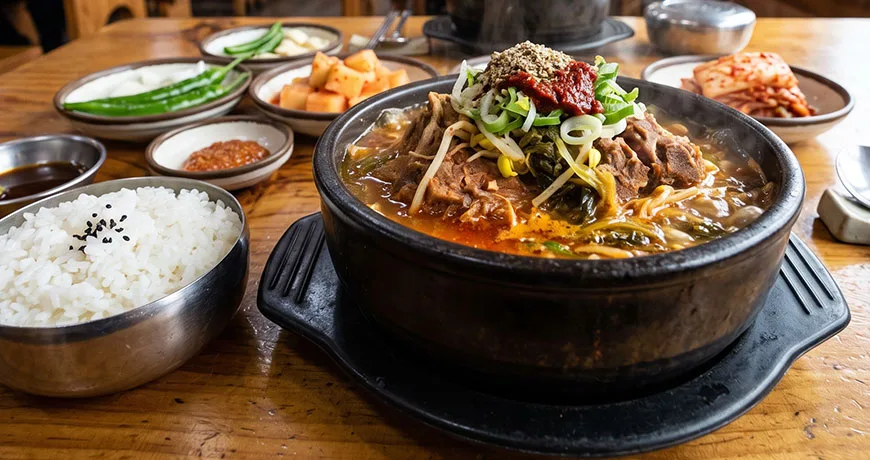
Ppyeodagui Haejangguk is a heavy, biochemical extraction dish engineered to completely break down the massive collagen connective tissues of a vertebrate’s spine via prolonged thermal hydrolysis, transforming them into a sticky, unctuous gelatin matrix. Standing before a roaring cauldron, the artisan intuitively skims off excess lipids and coagulated impurities—a labor-intensive process that eventually forces the meat to yield effortlessly from the bone while maintaining flawless viscoelasticity. While the amino acids and beneficial microbes in the fermented soybean paste (Doenjang) chemically mask the innate gaminess of the pork, the introduction of perilla seed powder in the final moments acts as a critical emulsifier. It creates a colloidal suspension that drastically thickens the broth’s rheological viscosity. After a night of drinking intensely carbonated Terra-based Somaek, this soup acts as the ultimate biological recovery matrix, replenishing a fatigued liver and coating an empty stomach with a heavy dose of deep aminos and gelatinous umami.
⏱️ Total: 3 hrs 30 mins | Prep: 1 hr (Osmotic purging) | Cook: 2 hrs 30 mins | 🍳 Difficulty: High (Requires collagen breakdown and lipid emulsion control) | 🌶️ Profile: Deeply Earthy, Fiery, and Viscous | 🍚 Focus: Thermal Hydrolysis, Collagen-to-Gelatin Conversion, & Colloidal Suspension | 🍶 Pairing: Ice-cold, highly carbonated Terra Somaek (Hair of the dog)
Ingredients (3–4 servings)
- Protein & Collagen Matrix: 1.5kg Pork Spine/Neck Bones (submerged in cold water for 1 hour to purge blood proteins via osmotic pressure)
- Umami & Lipid Binder: 2 tbsp Doenjang (soybean paste), 4 tbsp Gochugaru (chili flakes), 2 tbsp Soup Soy Sauce, 2 tbsp minced garlic, 0.5 tbsp minced ginger
- Colloidal Suspension Matrix: 4 tbsp Hulled Perilla Seed Powder (Deulkkae-garu)
- Cellulose Matrix: 300g Boiled Napa Cabbage Outer Leaves (Ugeoji – torn lengthwise)
- Aromatics & Deodorizer: 10 Perilla Leaves (thickly julienned), 2 stalks Green Onion (chopped), 2 Cheongyang green chilies, 1/2 cup Soju (for the initial boil)
Allergy Information Contains: Pork, Soy, Wheat (from Doenjang and Soy Sauce)
Equipment High Thermal Mass Large Cauldron or Stockpot, Skimmer/Strainer,
Cutting Board, Knife
Cooking Instructions
- Thermal Coagulation & Deodorization: Place the blood-purged pork bones in a pot, cover with water, add the Soju, and boil violently for 10 minutes. The water-soluble blood proteins in the marrow and on the bone surface will thermo-coagulate into dark, foamy scum. Discard this liquid and physically scrub the bones under cold running water to completely wash away bone dust and coagulated impurities.
- Thermal Hydrolysis: Place the cleaned bones into a large pot with 3 liters of fresh water and dissolve 2 tbsp of Doenjang. Cover and simmer over medium heat for at least 2 hours. The rigid collagen locked within the joints undergoes thermodynamic breakdown, converting into a rich, water-soluble gelatin. The artisan must periodically skim the surface to remove excessive rendered pork fat, meticulously controlling the broth’s purity.
- Osmotic Integration: Once the meat begins to gently fall away from the bone, mix the Ugeoji (cabbage leaves) with the Gochugaru, soy sauce, garlic, and ginger. Introduce this hypertonic cellulose matrix into the boiling broth. As the pectin in the cabbage degrades, it absorbs the marrow-infused broth like a sponge.
- Rheological Finish: 10 minutes before finishing, add the green onions and green chilies. Right before killing the heat, heavily top the soup with perilla seed powder and fresh perilla leaves. The plant lipids in the powder violently emulsify with the broth, establishing a thick, opaque colloidal suspension.
- Radiant Heat Serve: Transfer portions to individual Ttukbaegi (earthenware pots) and boil rapidly for 1 minute before serving.
💡 Professional Culinary Tips
- Chemistry of Collagen Breakdown in Bone Broths: The lip-smacking, sticky mouthfeel of a proper bone broth does not come from the meat. It is the result of highly cross-linked collagen in the cartilage and tendons absorbing sustained thermal energy (90–100°C) and unwinding into soluble gelatin chains. Failing to cross the 2-hour thermodynamic threshold results in tough, rubbery meat and a thin, watery solvent.
- Colloidal Mechanism of Perilla Powder: If you boil perilla seed powder from the beginning, its delicate unsaturated fatty acids oxidize, rendering the broth muddy and greasy. It must be introduced in the final moments. Dispersing it briefly in the kinetic convective currents guarantees the perfect rheological balance of turbidity and nutty flavor.
- Buffering Action of Ugeoji Pectin: In a chaotic broth where fiery capsaicin clashes with heavy pork lipids, the thoroughly degraded Ugeoji (cabbage) acts as a crucial biochemical buffer. As its cellular cellulose collapses, the subtle reducing sugars released chemically mask and round out the extreme sharp edges of the salt and spice.
🍶 Gastronomic Pairing
- Biochemical Palate Cleansing: When the heavy, gelatinous pork marrow and the thick perilla emulsion forcefully coat your palate, employ a “hair of the dog” pairing with an ice-cold Terra-based Somaek. The aggressively sharp carbonation and crisp ethanol molecules of the Terra beer physically slice through the dense animal lipids coating your mucosal membranes, brilliantly resetting your taste receptors and offering an extreme contrast of rich warmth and biting refreshment.
Nutrition Facts (Estimated)
Total Content : Approx. 700g (1 serving, excluding bone weight)
Calories : 450 kcal
– Sodium : 1,250mg (Variable depending on Doenjang and soy sauce usage)
– Total Carbohydrate : 15.0g
– Sugar : 3.0g
– Total Fat : 28.0g (Pork marrow lipids and unsaturated perilla fats)
– Saturated Fat : 8.5g
– Cholesterol : 85.0mg
– Protein : 35.0g (Rich in highly bioavailable collagen peptides)
– Dietary Fiber : 7.0g
*Daily Values are based on a 2,000 calorie diet and standard Korean nutritional reference values
**Nutritional values are calculated based on original ingredients; substitutions may alter specific macronutrients.
Origins and Food Culture of Pork Bone Hangover Soup (Ppyedagui Haejangguk)
1. Modern Industrial Roots: Port Dockworkers and the Gyeongin Railway Era
- Tracing its historical roots back to the late 19th century during the construction of Incheon Port and Korea’s first railway line, the Gyeongin Line (1899), when thousands of manual laborers and railway workers converged on the port city.
- To feed exhausted workers hearty, high-calorie nourishment at minimal cost, local cooks took inexpensive discarded pork spine and neck bones from slaughterhouses and stewed them with cheap cabbage leaves and fermented bean paste, giving birth to a democratic working-class culinary staple.
2. The Culinary Science of Desanguination, Blanching, and Collagen Gelatinization
- The hallmark of authentic preparation lies in soaking raw pork bones in cold water for several hours to extract residual heme iron and myoglobin (desanguination), followed by an initial parboil (blanching) with aromatics to skim off denatured proteins and impurities.
- Simmering the cleaned bones over low, steady heat for over two hours hydrolyzes tough fibrous collagen into soluble gelatin; this transforms the meat into an impossibly soft, fall-off-the-bone texture while extracting silky lipids and mineral-rich bone broth without any greasy aftertaste.
3. The Evolution from Communal Gamjatang to 24-Hour Earthenware Comfort
- Evolving from Gamjatang—a larger communal hot pot dish shared among groups with whole potatoes and noodles—into an individualized, single-portion soup (ttukbaegi) tailored for fast, solo dining.
- During the rapid urban industrialization of the 1980s and 1990s, round-the-clock “24-Hour Haejangguk” eateries became a nationwide cultural phenomenon, serving as a warm, comforting haven for late-night factory workers, early-morning transit drivers, and tired revelers seeking restorative recovery, establishing Ppyedagui Haejangguk as an iconic monument of Korean culinary resilience and working-class comfort.
The Colossal Extraction of Bone Marrow Gelatin and the Earthy Union of Braised Greens and Toasted Perilla: A Refined Portrait of Ppyedagwi Haejangguk
Ppyedagwi Haejangguk (Spicy Pork Spine and Neck Bone Hangover Soup) stands as the colossal, unapologetically primal, and deeply restorative summit of Korea’s everyday therapeutic (tangban) gastronomy. Meaty pork vertebrae and cervical spine segments—rich with pockets of crimson flesh clinging tightly to bone crevices—are soaked in running water to completely leach out residual myoglobin, blanched with fermented soybean paste, ginger, and rice wine to purge volatile odors, and then simmered for hours in a cauldron filled with an assertive broth of red chili flakes, aged doenjang, crushed garlic, and scallions until the joints effortlessly decouple. Generously layered with frost-tenderized dried radish greens (siraegi) or Napa cabbage leaves (ugeoji), and crowned at the rolling boil with a generous mound of coarsely ground toasted perilla seeds (deulkkae-garu), torn wild perilla leaves, and Welsh onions in a sizzling earthenware vessel (ttukbaegi), this dish represents a masterful union of deep mammalian marrow umami and rustic botanical earthiness.
Confronting the bubbling, lava-like crimson broth crowned with golden perilla foam and drawing out a massive bone segment releases an immediate, intoxicating sensory charge: the intensely nutty, roasted perfume of cracked perilla seeds mingles with the rich, primal savor of slow-extracted pork marrow and the bright, herbal sharpness of fresh perilla leaves. The first sip coats the palate in a luxurious, gelatin-heavy emulsion that surges down the throat, delivering deep, thermal comfort to an exhausted digestive tract while the vibrant capsaicin heat immediately stimulates the circulatory system and induces restorative perspiration. Sinking a fork or chopsticks into the bone crevices, the succulent meat separates along its grain with zero resistance, bursting with captured savory juices. The braised radish greens, having drunk deeply of the bone stock, melt across the tongue with a tender, velvety chew, offsetting the broth’s density with sweet vegetable hydration. Steeping a bowl of warm cooked rice into the remaining soup alongside crisp cubed radish kimchi (kkakdugi) completes an unforgettable, fatigue-banishing ritual of total gastronomic rejuvenation.
The enduring brilliance of Ppyedagwi Haejangguk lies in its industrial heritage—born during the rapid modernization era alongside the Gyeongin railway construction and the bustling docks of Incheon Port, where it delivered affordable, high-calorie animal protein and vital hydration to laborers enduring grueling physical toil. Transforming discarded bones into an iconic, 24-hour urban staple that revives weary workers and night owls across the nation, a steaming bowl of pork spine soup remains an indispensable monument of working-class resilience, maternal abundance, and deeply satisfying culinary power.
Editor’s Review
1. A Dynamic Harmony of Fall-Apart Pork Tenderness, Melting Braised Greens, and Coarse Perilla Seed Friction
The textural architecture inside the bowl delivers extraordinary structural diversity, physical satisfaction, and effortless mastication. Hours of convective extraction melt the collagenous connective tissues binding meat to bone, allowing the pork to pull away in tender, succulent ribbons that yield completely without dry fibrousness. The slow-braised radish greens act as a soft, fibrous cushion that releases sweet vegetable moisture with every chew, balancing the meat’s density. Concurrently, the coarsely ground perilla seeds introduce a tactile, nutty crunch that cuts through the soup’s viscosity, ensuring a cohesive, non-fatiguing mouthfeel from the first bite to the last.
2. Bone Collagen Hydrothermal Gelatinization, Marrow Lipid O/W Emulsification, IMP-Glutamate Synergy, and Rosmarinic Acid Lipid Protection
Ppyedagwi Haejangguk represents an exacting study in mammalian bone histology, colloidal interfacial mechanics, and natural antioxidant chemistry. The dense, insoluble Type I and Type II collagen triple-helix fibrils within the porcine vertebrae and articular cartilage denature and undergo irreversible hydrothermal cleavage into water-soluble gelatin polypeptides at sustained temperatures above 90°C. The dissolved gelatin acts as a high-performance amphiphilic surfactant, encapsulating the non-polar marrow lipids released from the cancellous bone into a stable, microscopic oil-in-water (O/W) emulsion that imparts the broth’s signature milky, clingy body. Free inosine monophosphate (IMP) derived from the bone-clinging muscle tissue interfaces synergistically with abundant free glutamates from fermented soybean paste, garlic, and braised greens, triggering an exponential response across human oral T1R1/T1R3 umami receptors. Furthermore, abundant polyphenolic rosmarinic acid and perillaldehyde within the toasted perilla seeds and leaves strongly inhibit the thermal oxidation of polyunsaturated fatty acids, halting the formation of warmed-over flavor (hexanal) and preserving clean, aromatic longevity.
3. The Industrial Labor Heritage of Incheon Port and the Living Vanguard of Korean 24-Hour Gastronomy
Originating as an indispensable energy source for dockworkers and railway laborers who required nutrient-dense sustenance to withstand harsh conditions, Ppyedagwi Haejangguk exemplifies the resourceful brilliance of Korean culinary identity. Elevating humble, marrow-rich skeletal cuts into a monumental restorative tonic through patient thermal extraction and balanced botanical seasoning, this iconic classic stands as an enduring sanctuary of restorative wellness, urban vitality, and brilliant culinary craftsmanship.