
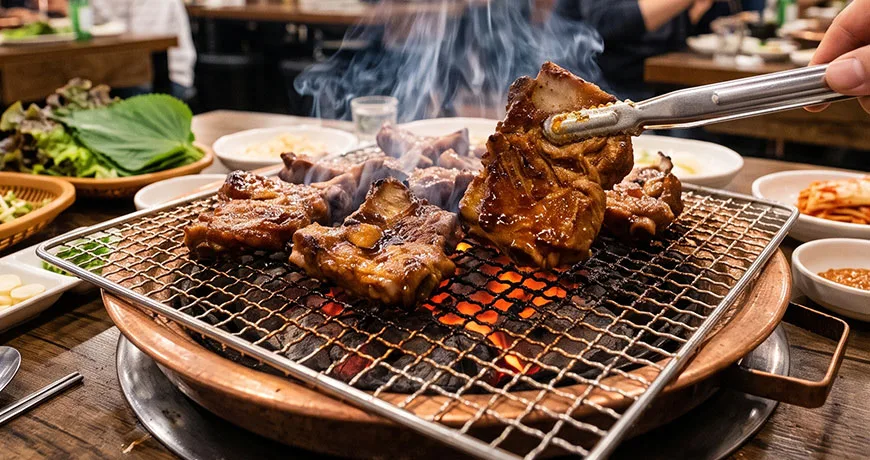
Dwaeji-yangnyeom-galbi is an advanced biochemical process designed to completely tenderize the dense connective tissues of pork ribs using mechanical scoring and enzymatic hydrolysis. A hypertonic soy marinade packed with reducing sugars and natural proteases is driven deep into the muscle fibers via osmosis during a 24-hour resting phase. When subjected to the extreme 700°C+ infrared radiant heat of hardwood charcoal, the surface sugars rapidly undergo caramelization and Maillard browning. Simultaneously, the low-melting-point pork fat (lard) liquefies and drips onto the coals, triggering immense lipid pyrolysis. This creates a dense, aromatic aerosol that heavily coats the exterior, yielding the iconic sweet, savory, and intensely smoky “fire flavor” while locking the kinetic moisture inside a fully coagulated (well-done) protein matrix.
⏱️ Total: 24.5 hrs (includes 24 hr marination) | Prep: 20 mins | Cook: 10 mins | 🍳 Difficulty: High (Requires strict carbonization control and full thermal coagulation of pork) | 🌶️ Profile: Intensely Sweet, Savory, and Smoky | 🍚 Focus: Enzymatic Cleavage, Pyrolysis, & Full Thermal Coagulation
Ingredients (2–3 servings)
- Protein & Lipid Matrix: 600g Bone-in Pork Ribs, 200g Pork Collar/Shoulder (Boston butt) for added meat and marbling (butterflied into thin, wide strips)
- Enzymatic Hypertonic Marinade: 5 tbsp soy sauce, 4 tbsp water, 3 tbsp sugar, 1 tbsp corn syrup, 2 tbsp minced garlic, 1 tbsp sesame oil, 1 tsp black pepper, 3 tbsp minced scallions
- Protease & Natural Sugar Source: 4 tbsp apple juice (or pear juice), 2 tbsp onion juice (The malic acid in apples perfectly complements pork)
Allergy Information Contains: Pork, Soy, Wheat (from soy sauce)
Equipment Cutting Board, Sharp Knife, Mixing Bowl, Charcoal Grill, BBQ Gridiron, Meat Scissors, Tongs
Cooking Instructions
- Mechanical Cleavage: Butterfly the meat off the rib bones to create long, thin strips. Include slices of pork collar to supplement the ribs. Score both sides heavily in a diamond crosshatch pattern. This severs the tough connective tissue, prevents violent thermal contraction, and maximizes the surface area for thermodynamic heat transfer.
- Enzymatic Hydrolysis & Osmosis: In a bowl, combine all marinade ingredients and fruit juices. Massage the marinade thoroughly into the scored pork. Refrigerate for 24 hours. The protease enzymes will biochemically cleave the peptide bonds, while the high sugar concentration binds with the internal moisture, creating a gel-like internal matrix.
- Radiant Heat Rendering: Place the marinated pork over white-hot charcoal. The infrared radiant heat instantly flash-evaporates surface moisture and begins to liquefy (render) the subcutaneous lard.
- Carbonization Control (Flipping): Pork marinades generally have a higher sugar content than beef marinades, crossing the carbonization (burning) threshold very quickly at 150°C. Flip the meat continuously every 15 seconds. This acts as a thermodynamic pump—cooling the surface to prevent bitter ash formation while driving kinetic heat deeper into the core.
- Pyrolysis Coating & Full Coagulation: As the rendered lard hits the coals, ensure the meat is engulfed in the resulting pyrolyzed smoke. Because pork must be cooked to a core temperature of 71°C (160°F) to ensure food safety (full protein thermal coagulation), cut the meat into bite-sized pieces once the exterior is seared, and continually toss the cross-sections over the heat until fully cooked.
💡 Professional Culinary Tips
- Lard Thermodynamics vs. Beef Tallow: Pork fat (lard) has a significantly lower melting point (30–40°C) compared to beef tallow (40–50°C). When exposed to intense radiant heat, it liquefies much faster and in greater volume. This rapid rendering fuels a highly dense pyrolytic reaction on the coals, generating the overwhelmingly powerful smoky aroma unique to charcoal-grilled pork ribs.
- Biochemical Synergy of Malic Acid: Pork can sometimes possess a faint gamey odor (boar taint). The malic and organic acids found in apple juice chemically neutralize these alkaline aromatic compounds. The acidity also gently denatures the protein structures on the surface, allowing for deeper penetration of the hypertonic soy emulsion.
- The Well-Done Dilemma: Pork must be fully thermo-coagulated (well-done), which inherently causes massive moisture evaporation. The solution lies in the 24-hour marination. The heavy concentration of sugars and amino acids alters the water-binding capacity of the muscle cells. Even when the proteins fully contract under high heat, this biochemical matrix traps the water molecules, resulting in meat that bursts with juices despite being completely cooked through.
Nutrition Facts (Estimated)
Total Content : Approx. 250g (1 serving, reflecting weight loss from rendering and excluding bone weight)
Calories : 540 kcal – Sodium : 850mg – Total Carbohydrate : 16.0g – Sugar : 12.0g – Total Fat : 34.0g – Saturated Fat : 12.0g – Cholesterol : 85.0mg – Protein : 32.0g – Dietary Fiber : 0.5g
*Daily Values are based on a 2,000 calorie diet and standard Korean nutritional reference values.
**Nutritional values are calculated based on original ingredients; substitutions may alter specific macronutrients.
Origins and Food Culture of Seasoned Pork Ribs (Dwaeji-Yangnyeom-Galbi)
1. Heritage Lineage: From Ancient Royal Grilling to the Historic Mapo Rib District
- Tracing its roots back to ancient Korean seasoned direct-fire grilling traditions such as maekjeok and royal gari-gui, seasoned pork ribs emerged in the modern era as an accessible, high-protein celebration food.
- In the 1950s and 1960s, the bustling taverns around Seoul’s Mapo tram terminus popularized grilling sweet-soy marinated pork ribs over glowing charcoal briquettes on round drum-can tables, sparking a nationwide barbecue phenomenon.
2. The Culinary Science of Diamond Scoring, Fruit Tenderization, and Charcoal Caramelization
- The hallmark of authentic preparation lies in meticulously scoring the pork meat across the grain to sever tough connective tissues, allowing the pureed pear and onion soy marinade to penetrate deeply into every fiber.
- Attentively flipping the ribs over intense radiant charcoal heat caramelizes the natural marinade sugars into a golden-brown glaze without scorching, locking in natural juices while imparting an irresistible smoky aroma (bulhyang).
3. The Icon of Everyday Family Celebrations and the Beloved “Yukssam” Dining Ritual
- Synonymous with paydays, graduations, family birthdays, and after-work camaraderie, gathering around the tabletop grill captures the warmest traditions of Korean social dining.
- The feast traditionally culminates in the beloved pairing known as Yukssam Naengmyeon—wrapping a hot, savory piece of grilled pork rib around a mouthful of chilled, tangy buckwheat noodles (naengmyeon)—creating an invigorating contrast of temperature, texture, and flavor that completes a balanced meal.
The Sizzling Radiance of Sweet Soy Glaze and the Comforting Embrace of Charcoal Smoke: A Refined Portrait of Dwaeji-Yangnyeom-Galbi
Dwaeji-Yangnyeom-Galbi (Marinated Charcoal-Grilled Pork Ribs) stands as the quintessential, beloved heart of Korean barbecue gastronomy. Generous cuts of bone-in pork ribs and tender shoulder are meticulously cross-hatched along the grain, then immersed in a balanced marinade of naturally brewed soy sauce, Asian pear, apple, minced garlic, ginger, and toasted sesame oil before being seared over glowing hardwood charcoal. Unlike unmarinated cuts where the fat is crisped away, the seasoned glaze meets the intense radiant heat of the embers, caramelizing into a glistening, mahogany lacquer that immediately envelops the dining space in an irresistible perfume of sweet, savory woodsmoke.
Tending the grate with steady, attentive turns yields a beautifully glazed morsel kissed by gentle flame-char. Sinking your teeth into a freshly grilled piece reveals a tender textural revelation—gently softened by natural fruit enzymes, the pork yields effortlessly with a juicy, springy resilience rather than mushiness. Each chew releases a burst of concentrated savory-sweet seasonings harmonized with the intrinsic richness of the pork, while gnawing the springy, collagen-rich meat clinging tightly to the bone delivers an additional tactile joy that completes a thoroughly engaging dining experience.
The ultimate pleasure of seasoned pork ribs is realized when wrapped inside crisp lettuce leaves with a dollop of savory ssamjang and garlic, or draped hot over a chilled bowl of icy naengmyeon noodles. Originating as an accessible celebration meal for hard-working families and friends gathering around the glowing hearth, a generous platter of marinated pork ribs remains a timeless emblem of generosity, communal warmth, and culinary abundance.
Editor’s Review
1. A Harmonious Interplay of Caramelized Soy Glaze Char, Tender Pork Elasticity, and Springy Bone-Clinging Cartilage
The visual appeal of the glistening, mahogany-tinted crust sets an inviting sensory tone. The intricate surface scoring allows radiant heat to penetrate quickly, forming a delicate, savory-sweet caramel crust while locking natural moisture within the muscle fibers. The tender, springy chew of the meat pairs seamlessly with the concentrated glaze, while the chewy, collagenous meat around the bone offers a satisfying textural contrast.
2. Fruit-Derived Proteolytic Tenderization, Rapid Radiative Maillard Kinetics, and Aerosolized Smoke Infusion
Dwaeji-Yangnyeom-Galbi represents an exacting study in natural enzyme mechanics and direct-heat surface chemistry. Dense collagenous connective tissues and myofibrillar proteins are gently relaxed by active plant proteases and organic acids found in pureed pears and apples, achieving uniform tenderness without structural degradation. Under direct charcoal radiation, reducing sugars and pork amino acids undergo rapid Maillard browning above 150°C to form a protective glaze, while droplets of rendered fat striking the embers vaporize into aromatic aerosols that season the meat with authentic woodsmoke character.
3. The Post-War Tavern Heritage of Seoul’s Mapo Alleys and the Enduring Solace of Communal Barbecue Feasts
Evolving from the bustling 1960s taverns of Seoul’s Mapo district into Korea’s premier casual family-dining tradition, marinated pork ribs serve as an enduring cultural touchstone of celebration and togetherness. Gathering around the smoky tabletop hearth to turn and share each caramelized rib honors a time-tested legacy of generous hospitality, comforting abundance, and unpretentious culinary excellence.