
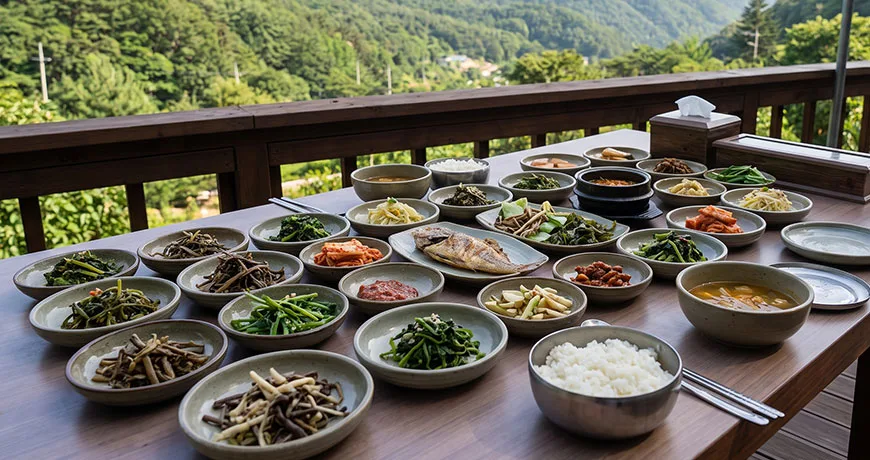
A traditional, restorative Korean meal set (jeongsik) featuring a bountiful spread of wild mountain vegetables (san-namul), herbs, mushrooms, and roots such as bracken fern (gosari), aster greens (chwinamul), bellflower root (doraji), deodeok, and angelica shoots (dureup). Delicately seasoned without heavy spices, it highlights the earthy, authentic aromas and natural flavors of pristine mountain harvests.
⏱️ Prep: 30 mins | Cook: 30 mins | 🍳 Moderate | 🌿 Vegan Friendly / High Fiber | 🍱 Full Set Meal
Ingredients (2 servings)
- Staple & Stew: 2 bowls warm multi-grain or white rice, 1 pot earthy soybean paste stew (Doenjang-jjigae or Cheonggukjang)
- Assorted Mountain Greens (San-namul): Bracken fern (gosari), aster greens (chwinamul), dropwort (mi-nari), bellflower root (doraji), seasoned wild mushrooms, and grilled or seasoned deodeok (mountain herb root)
- Pancake & Main Sides: Assorted wild vegetable pancakes (namul-jeon), grilled seasoned tofu, seasonal kimchi, and pickled wild roots (jangajji)
- Seasoning & Condiments: Toasted sesame oil, roasted sesame seeds, light soy sauce, minced garlic, scallions, and mild sea salt (deliberately light to preserve natural flavors)
Allergy Information
- Contains: Soy (Doenjang, Tofu), Sesame, Wheat (Soy sauce)
Equipment
- Large Pot, Multiple Mixing Bowls, Frying Pan, Rice Cooker, Earthenware Pot (Ttukbaegi), Serving Platters
Cooking Instructions
- Rehydrating & Blanching Wild Greens: If using dried mountain herbs (geon-namul like bracken and aster), soak in water overnight, then boil until tender. Blanch fresh wild greens briefly in boiling salted water, shock in cold water, and squeeze out excess moisture.
- Seasoning the Namul Individually: Gently toss each wild green in separate bowls with a touch of light soy sauce (or salt), minced garlic, scallions, and fragrant sesame oil, ensuring each herb’s unique aroma shines.
- Preparing Deodeok & Mushrooms: Peel and gently smash the deodeok roots, brush with a light gochujang or soy glaze, and pan-grill until tender. Sauté wild mushrooms with garlic and sesame oil.
- Simmering Earthy Stew: Prepare a rustic soybean paste stew (doenjang-jjigae) using aged homemade soybean paste, tofu, and root vegetables to complement the earthy flavors of the greens.
- Assembling the Feast: Arrange the colorful array of seasoned mountain greens across multiple small dishes (banchan). Serve alongside warm multi-grain rice, boiling soybean paste stew, and grilled deodeok.
💡 Cooking & Pairing Tips
- Low-Sodium Seasoning: The core philosophy of Sanchaejeongsik is minimalism—avoid heavy garlic, chili paste, or excessive salt so diners can savor the distinct, subtle bitterness and herbal fragrance of each wild vegetable.
- Make It a Bibimbap: Place a portion of the wild mountain greens over warm rice in a wide bowl, add a splash of sesame oil and soy sauce (or a dab of gochujang), and mix into a fragrant mountain herb bibimbap.
- Perfect Food & Beverage Pairing: Complements rustic fermented dishes and grilled proteins. Enjoy with warm roasted herbal teas like Solomon’s seal tea (dungulle-cha) or chilled traditional grain wine (makgeolli).
Storage Instructions
- Seasoned mountain greens (namul) can be stored in airtight containers in the refrigerator for 2–3 days. For longer storage, freeze blanched unseasoned wild greens in airtight bags for up to 3 months.
Nutrition Facts (Estimated)
- Total Content : Full Mountain Meal Set (per 1 serving set)
- Calories : 540 kcal per 1 serving set
– Sodium : 890mg (45%)
– Total Carbohydrate : 92g (28%)
– Sugar : 8g (8%)
– Total Fat : 10g (18%)
– Trans Fat : 0g
– Saturated Fat : 1.5g (10%)
– Cholesterol : 0mg (0%)
– Protein : 18g (33%)
– Fiber : 22g (88%)
1. A Sensual Symphony of Mountain Aromas and Delicate Botanical Crispness
The moment wild mountain greens—bracken, chwinamul, deodeok, and angelica shoots—grace the table, a subtle yet profound fragrance of lush greenery softly envelops the senses. Free from heavy, aggressive seasonings, every bite reveals the natural, gentle bitterness and subtle sweetness of wild herbs, pairing diverse crisp textures to deliver an extraordinarily refined and satisfying gastronomic experience.
2. Mastery of Culinary Restraint Preserving the Raw Vitality of Wild Herbs
Sanchaejeongsik stands as an exemplar of Korean minimalist dining, designed to safeguard the intrinsic moisture and delicate aromas of wild flora. Seasoning lightly with toasted perilla oil and minimal salt rather than heavy sauces serves as essential culinary science, protecting structural crunch while preserving vital nutrients. Achieving a balanced, holistic feast through the unadorned essence of nature demonstrates an extraordinary mastery of restraint.
3. Pure Earthly Solace Restoring Soul and Body through Pristine Nature
Harvested from wild mountain slopes where they endured the seasons, these pristine greens converge onto a warm table to softly soothe a weary spirit. Sitting before this peaceful feast after facing an overstimulated world, slowly savoring the clean vitality of the earth acts as a serene, purifying ritual that cleanses away fatigue. Unpretentious yet deeply invigorating, this humble wild herb table offers a steadfast sanctuary of restoration.
경복궁식당
#백년가게
부일산채식당
#백년가게
지리산식당
#백년가게