
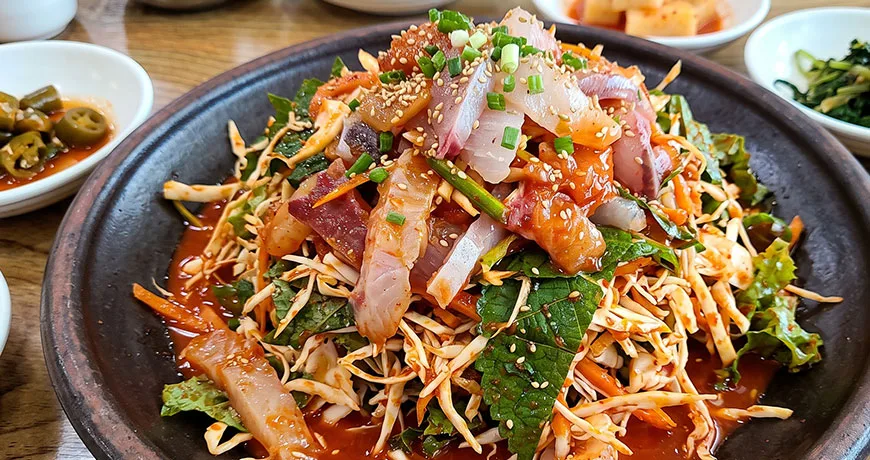
Hoe-muchim is a biochemical salad that utilizes acid-base neutralization and osmotic pressure to tightly control the texture of raw fish and crisp vegetables. Typically made with white-fleshed fish or cephalopods (like silver pomfret, flounder, or squid) that have minimal trimethylamine (TMA) levels, the dish relies on the highly acidic cho-gochujang to slightly denature the surface proteins—creating a bouncy, ceviche-like bite. The absolute culinary rule for this dish is strict timing: it must be tossed immediately before consumption to prevent osmotic pressure from drawing out cellular water and diluting the vibrant dressing.
⏱️ Total: 20 mins | Prep: 20 mins | Cook: 0 mins (Raw) | 🍳 Difficulty: Easy (Requires swift knife work and osmotic timing) | 🌶️ Profile: Sweet, Tart, Spicy, and Refreshingly Crunchy | 🍚 Focus: Lean Protein, Acidic Denaturation, & Hydration
Ingredients (2–3 servings)
- Main Ingredients: 300g sashimi-grade white fish or cephalopods (e.g., silver pomfret, flounder, squid, or swordtip squid)
- Vegetables for Crunch & Hydration: 1/2 cucumber, 50g cabbage, 1/4 onion, 5 perilla leaves, 30g carrot, 30g water dropwort (minari, optional)
- Hypertonic Cho-gochujang Paste: 3 tbsp gochujang, 1 tbsp gochugaru, 3–4 tbsp vinegar, 2 tbsp sugar (or agave syrup), 1 tbsp minced garlic, 1 tbsp plum extract (maesil-cheong), 1.5 tbsp sesame oil, 1 tbsp sesame seeds
Allergy Information Contains: Seafood (Fish/Squid), Soy, Wheat (from gochujang)
Equipment Highly sharpened Sashimi or Chef’s Knife, Sanitized Cutting Board, Large Mixing Bowl, Absorbent Food-grade Paper
Cooking Instructions
- Protein Prep & Chilling: Tightly wrap the raw fish or squid in absorbent paper to extract all surface moisture. For soft-boned fish like silver pomfret, slice thinly with bones intact (sekkosi). For flounder or squid, cut into thick julienne strips. Chill the prepared seafood in the refrigerator until the exact moment of tossing.
- Vegetable Osmotic Management: Core the cucumber to remove the watery seeds, then julienne only the firm outer flesh. Uniformly julienne the cabbage, carrot, perilla leaves, and minari. Soak the julienned onion in cold water for 5 minutes to leach out the pungent allyl sulfides, then dry completely.
- Hypertonic Paste Formulation: In a large bowl, vigorously mix the gochujang, gochugaru, vinegar, sugar, garlic, and plum extract (excluding the sesame oil and seeds) to create a thick, hyper-concentrated seasoning paste.
- Assembly & Lipid Coating: Just before serving, add the chilled seafood and all vegetables to the bowl with the paste. Drizzle the sesame oil and sesame seeds over the top. Toss quickly and lightly with your fingertips. The sesame oil coats the ingredients, providing a lipid barrier that delays water extraction.
💡 Professional Culinary Tips
- Physics of Osmotic Control (Timing): The hypertonic nature of the salty, sugary gochujang paste creates a massive concentration gradient. If tossed even 10 minutes too early, osmotic pressure will forcefully extract the intracellular water from the vegetables. This leaves the vegetables limp and creates a watery puddle that ruins the dressing. Tossing just in time is non-negotiable.
- Surface Denaturation via Acetic Acid: The heavy concentration of acetic acid (vinegar) in the dressing serves a dual biochemical purpose. It chemically masks any microscopic fishy odors, and it causes the proteins on the surface of the fish to seize and coagulate (the exact mechanism behind ceviche). This grants the raw fish a delightful, firm snap.
- The Waterproofing Effect of Sesame Oil: Adding the sesame oil at the very end, rather than mixing it thoroughly into the paste beforehand, allows it to coat the vegetables and fish with a thin, hydrophobic lipid layer. This temporary waterproof barrier physically slows down the osmotic extraction of water, preserving the crunch for the duration of the meal.
Nutrition Facts (Estimated)
Total Content : Approx. 250g (1 serving, including vegetables and sauce)
Calories : 220 kcal
– Sodium : 850mg
– Total Carbohydrate : 22.0g
– Sugar : 12.0g
– Total Fat : 5.5g
– Saturated Fat : 0.8g
– Cholesterol : 70.0mg
– Protein : 24.0g
– Calcium : 45.0mg
*Daily Values are based on a 2,000 calorie diet and standard Korean nutritional reference values
**Nutritional values are calculated based on original ingredients; substitutions may alter specific macronutrients.
The Vivid Tapestry of Silken White Flesh and Tangy Radiance: A Lyrical Masterpiece of Hoe-muchim and Crisp Ocean Vitality
Hoe-muchim (Spicy Seasoned Raw Fish Salad) stands as the dynamic, vibrant, and deeply refreshing pinnacle of Korean coastal gastronomy, where mild, pristine white-fleshed fish and cephalopods—such as butterfish, squid, and spear squid—are thickly julienned and tossed alongside crisp cucumber and sweet cabbage in a sharp, sweet-and-sour chogochujang dressing. Harmonizing the clean, delicate integrity of fresh raw fish with the brisk, watery crunch of garden botanicals and the invigorating punch of red chili vinegar sauce, this captivating dish instantly dispels palate lethargy, delivering an immediate rush of clean liberation and vital energy.
The moment a vibrant, crimson-glazed morsel carrying julienned fish and crunchy vegetables touches the palate, an electrifying wave of sweet acidity and subtle chili heat awakens the taste buds with unmistakable clarity. This is swiftly followed by the springy, resilient snap of the tender white fish, which yields smoothly without a trace of heaviness or fishiness. The natural sweetness of the seafood dissolves into the cooling, watery crunch of sliced cucumber and cabbage, orchestrating a crisp, refreshing wave of savory umami that lingers cleanly across the senses.
True gastronomy does not rely exclusively on heavy, static cooking; it flourishes in the ancestral wisdom of uniting the pure vitality of the sea with fresh terrestrial produce to restore metabolic harmony and revive tired spirits. Savoring a vibrant, colorful platter of spicy seasoned raw fish salad today is an elegant and sacred ritual—clearing away everyday weariness through a wave of crisp, tangy vitality and filling the spirit with unpretentious warmth, festive energy, and timeless coastal solace.
Editor’s Review
1. An Electrifying Cadence of Sweet-and-Sour Chogochujang Acidity, Resilient White Fish Chew, and Crisp Vegetable Harmony
The moment a generous chopstickful of thickly julienned fish, fresh cucumber, and crunchy cabbage coated in spicy-sweet dressing touches the palate, an immediate burst of tangy vinegar and piquant chili awakens the senses with invigorating punch. This bold strike is swiftly balanced by the clean, snappy resilience of the mild white fish and the refreshing snap of garden vegetables, effortlessly cutting through palate fatigue and orchestrating an endlessly refreshing, multi-layered sensory thrill.
2. Lean High-Protein Marine Matrix and Acetic Acid-Driven Digestive Metabolic Kinetics
Hoe-muchim represents an exacting study in seafood biochemistry and botanical nutrition synergy. Mild white-fleshed fish such as butterfish and spear squid supply an easily digestible, low-fat protein profile rich in fatigue-banishing taurine. Concurrently, the bioavailable acetic acid from the vinegar dressing stimulates gastric enzyme secretion to optimize protein breakdown, while the high water, vitamin C, and dietary fiber content in cucumbers and cabbage assist in systemic toxin clearance and electrolyte balance, establishing an optimal biochemical equilibrium.
3. The Coastal Tavern Hearth and the Grounding Sanctuary of Shared Refreshment
Found commanding center stage at lively portside eateries and casual neighborhood tables as an indispensable staple to revive fading appetites, a modest plate of spicy seasoned raw fish salad serves as an enduring emotional haven against daily weariness. Revered for generations as an essential restorative dish that brings color and zest to the dining table, enjoying this honest, vibrant delicacy washes away modern stress, granting a timeless sanctuary of stillness, coastal heritage, and grounded culinary happiness.