
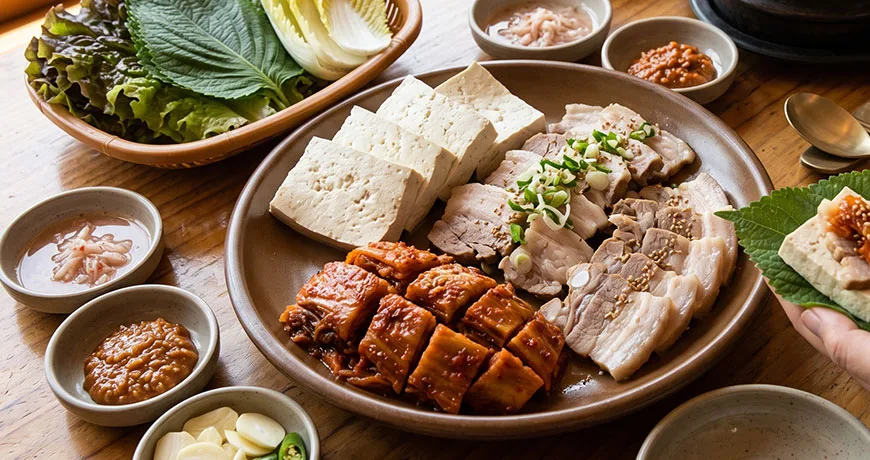
Dubu Samhap is a masterpiece of gastronomic engineering that maximizes sensory and nutritional synergy by combining plant-based Chodang tofu, tender boiled pork rich in protein and fat, and deeply aged kimchi. The core mechanism lies in its structural harmony: the vibrant acidity of low-temperature-aged kimchi cleanses the palate of the rich, oily flavors of pork whose collagen has melted through prolonged boiling, while savory, firm modubu coagulated with clean sea water anchors the overall balance of flavor and texture.
Layering savory Chodang tofu with tender pork and aged kimchi to enjoy in a single bite, Dubu Samhap offers a flawless harmony of beans, meat, and fermented kimchi. The abundant isoflavones in Chodang tofu, alongside the high-quality protein and thiamine in pork, revitalize a weary body, while the lactic acid bacteria from the aged kimchi gently soothe the stomach.
The softness of the tofu, the chewiness of the pork, and the refreshing umami of the aged kimchi create a perfect trio on the palate that instantly awakens a lagging appetite. The deep flavor and robust nutritional balance woven by these three ingredients wash away daily fatigue, offering a satisfying fullness and warm comfort as an exceptional everyday tonic dish.
⏱️ Total: 55 mins | Prep: 10 mins | Cook: 45 mins | 🍳 Difficulty: Moderate | 🌶️ Profile: Deeply Nutty, Savory, and Tangy | 🍚 Focus: Protein Synergy & Fermentation
Ingredients (2 servings)
- Main Ingredients: 1 block firm tofu (Chodang Modubu, approx. 300g), 400g pork belly (or shoulder) in one solid block, 1/4 head of aged kimchi (mugeunji)
- Pork Boiling Broth (Odor Masking): 5–6 cups water, 1 scallion, 1/2 onion, 5 cloves garlic, 1 tsp whole black peppercorns, 1 tbsp doenjang (Korean soybean paste), 1 tsp instant coffee powder (optional)
- Kimchi Seasoning (Optional): 1 tbsp perilla oil, 0.5 tbsp sugar (or agave syrup)
Allergy Information Contains: Pork, Soy, Wheat (from doenjang)
Equipment Cutting Board, Knife, 2 Deep Pots (one for pork, one for tofu), Tongs
Cooking Instructions
- Thermodynamic Tenderization (Boiling Pork): In a deep pot, combine the boiling broth ingredients (doenjang, scallion, garlic, etc.) and bring to a rolling boil. Add the block of pork belly. Once it returns to a boil, reduce the heat to medium-low and simmer gently for 40–45 minutes. This extended thermal exposure hydrolyzes the tough collagen into soft gelatin and renders out excess animal fat.
- Mugeunji Prep & Chemical Neutralization: Lightly shake the excess seasoning off the aged kimchi. If it is overwhelmingly sour, rinse it gently in cold water and squeeze dry. Toss the kimchi with a touch of perilla oil and sugar; the lipid-rich perilla oil masks any overly pungent fermented notes, while the sugar neutralizes the aggressive lactic acid.
- Tofu Thermal Stabilization: As the pork finishes cooking, bring water to a boil in a separate pot. Gently drop in the entire block of firm tofu and boil for 3–5 minutes. This ensures the tofu is heated all the way through to the core and firms up its protein matrix so it won’t crumble when sliced.
- Structural Formatting: Remove the boiled pork and let it rest at room temperature for 3–5 minutes to allow the juices to redistribute and stabilize. Slice it into 0.5cm thick pieces. Slice the warm tofu and the aged kimchi into similar bite-sized dimensions.
- Plating & Consumption Mechanism: Arrange the warm tofu, pork, and aged kimchi neatly on a platter. To experience the intended chemical synergy, stack a piece of pork and a piece of kimchi on top of a slice of tofu, and consume them together in one bite.
💡 Professional Culinary Tips
- Synergy of Plant and Animal Proteins: Combining the essential amino acids of pork with the plant proteins of soy drastically increases the overall amino acid score and protein bioavailability. It is one of the most nutritionally complete combinations in Korean cuisine.
- The Role of Lactic Acid in Aged Kimchi: Unlike freshly made kimchi, mugeunji undergoes prolonged low-temperature fermentation, yielding high levels of free amino acids (umami) and lactic acid rather than sharp, raw acidity. This acidic profile acts as a powerful palate cleanser, effortlessly cutting through the heavy lipid structure of the pork belly.
- Thermodynamics of Resting Meat: If you slice the pork immediately after taking it out of the boiling water, the superheated moisture and liquid fat will spill out, leaving the meat dry. Resting the pork allows the internal gelatin and juices to cool slightly and re-adhere to the muscle fibers, ensuring a succulent bite.
Nutrition Facts (Estimated)
Total Content : Approx. 350g (1 serving)
Calories : 680 kcal
– Sodium : 850mg
– Total Carbohydrate : 12.0g
– Sugar : 4.0g
– Total Fat : 52.0g
– Saturated Fat : 18.0g
– Cholesterol : 90.0mg
– Protein : 38.0g
– Calcium : 180.0mg
*Daily Values are based on a 2,000 calorie diet and standard Korean nutritional reference values
**Nutritional values are calculated based on original ingredients; substitutions may alter specific macronutrients.
The Lyrical Triad of Silky Tofu, Tender Pork, and Deeply Aged Kimchi: A Masterpiece of Fermentation Harmony and Comfort
Dubu Samhap stands as the sophisticated, wholesome, and profoundly comforting pinnacle of Korean regional gastronomy, where savory, velvety Chodang-style plain tofu meets tender, perfectly boiled pork slices and deeply aged mukeunji (kimchi aged at low temperatures to achieve a profound, non-sour umami complexity). Bringing together plant-based protein, succulent animal fats, and the sophisticated organic acids of slow fermentation within a single harmonious bite, this traditional triad bridges the best of land, time, and culinary wisdom.
The moment a carefully assembled wrap—topped with soft tofu, savory pork, and complex aged kimchi—graces the palate, an immediate wave of deep, mellow fermentation depth and nutty tofu creaminess envelops the senses. Rather than sharp acidity, the low-temperature-aged kimchi offers a rounded, deeply savory resonance that cuts effortlessly through the richness of the pork, while the velvety texture of the tofu binds the entire flavor profile into an exquisite, multi-dimensional masterpiece.
True gastronomy does not rely on aggressive artificial flavorings; it flourishes in the ancestral wisdom of uniting honest, patient ingredients to nourish the body and restore inner peace. Savoring a thoughtfully prepared plate of Dubu Samhap today is an honest and grounding ritual—clearing away the rush of modern life and filling the spirit with unpretentious warmth, nutritional balance, and timeless solace.
Editor’s Review
1. An Exhilarating Cadence of Nutty Tofu Velveteen, Succulent Pork Umami, and Complex Aged Kimchi Depth
The moment a bite of the expertly layered tofu, pork, and aged kimchi touches the palate, an immediate wave of comforting warmth and rich, mellow umami envelops the senses. The deep, non-sour maturity of the low-temperature-aged kimchi provides a brilliant counterbalance to the rich pork juices, while the soft, savory tofu smooths out the edges, orchestrating an endlessly soothing and perfectly balanced culinary experience from start to finish.
2. Plant-Protein/Animal-Amino Acid Synergy and Low-Temperature Lactobacillus Fermentation Kinetics
Dubu Samhap represents an exacting study in nutritional biochemistry and traditional food synergy. The combination of soybean plant protein and high-quality animal proteins from the pork establishes a complete amino acid profile, optimizing cellular repair and physical stamina. Concurrently, the beneficial lactic acid bacteria (Lactobacillus) and bioavailable organic acids developed during prolonged low-temperature kimchi aging stimulate digestive enzyme activity and enhance nutrient absorption, establishing an optimal biochemical equilibrium.
3. The Rustic Heritage of Gangwon Province and the Grounding Sanctuary of Communal Comfort
Found gracing regional dining tables and traditional gathering spots as a cherished culinary anchor celebrating the harmony of land and time, a modest plate of Dubu Samhap serves as an enduring emotional haven against daily weariness. Revered for generations as an essential restorative feast that warms the core and satisfies the soul through balanced textures and deep flavors, enjoying this honest, reliable dish washes away modern stress, granting a timeless sanctuary of stillness, maternal care, and grounded culinary happiness.