
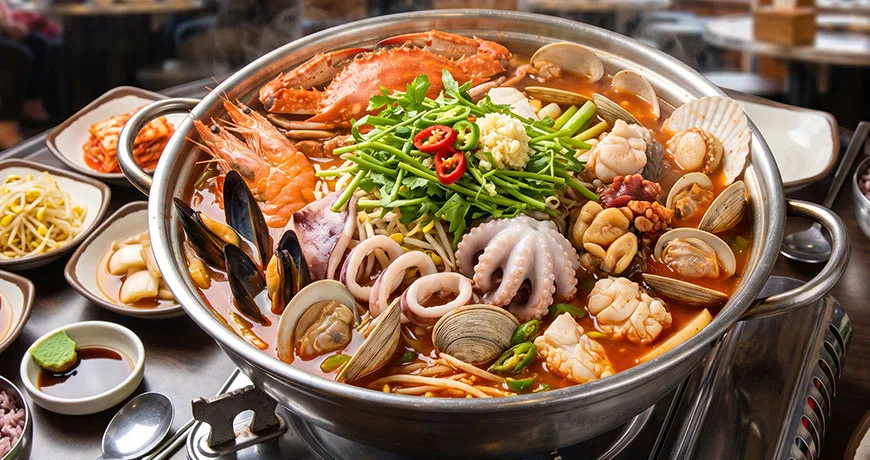
Haemultang is an extreme thermodynamic extraction matrix engineered to forcefully draw out the complex proteins and amino acids of a vast marine ecosystem into a hypertonic, capsaicin-rich solvent. As the crustaceans (blue crabs, shrimp) are subjected to the blistering kinetic heat, the crustacyanin proteins in their shells denature, violently releasing the hidden red astaxanthin pigment and staining the boiling broth a fiery crimson. Simultaneously, the opening bivalves (clams) release succinic acid, which collides with the broth’s inosinate to synthesize a geometric multiplication of umami. Preventing the irreversible thermal contraction of cephalopods (squid), which turns them to rubber, requires the artisan’s strict thermodynamic intuition and sequential timing. In the final moments, the introduction of crown daisy and water dropwort (Minari) adds a massive load of potassium ions. This initiates a biochemical antagonism within the human body, binding to the high sodium content of the hypertonic broth and facilitating its excretion, perfectly balancing the heavy electrolyte load of this overwhelming marine energy.
⏱️ Total: 45 mins | Prep: 25 mins (including purging) | Cook: 20 mins | 🍳 Difficulty: High (Requires strict sequential control of marine protein thermal contraction) | 🌶️ Profile: Explosively Savory, Fiery, and Briny | 🍚 Focus: Astaxanthin Extraction, Sequential Thermal Coagulation, & Potassium-Sodium Antagonism | 🍶 Pairing: Ice-cold, high-proof traditional Distilled Soju
Ingredients (3–4 servings)
- Astaxanthin & Chitin Matrix: 2 Blue Crabs (Kkotge – quartered, gills removed), 6 Whole Shrimp
- Succinic Acid Matrix: 300g Littleneck Clams (Bajirak – purged in a 3% isotonic saltwater bath for 2 hours)
- Viscoelastic Cephalopod Matrix: 1 Whole Squid (viscera removed, sliced into rings or kept whole)
- Pectin & Potassium Matrix: 150g Daikon Radish (thinly squared), 1 handful Water Dropwort (Minari), 1 handful Crown Daisy (Ssukgat – cut to 5cm lengths)
- Aqueous Umami Solvent: 1.2L Anchovy-Kelp Broth
- Hypertonic Capsaicin Emulsion: 4 tbsp Gochugaru (chili flakes), 1 tbsp Gochujang (chili paste), 0.5 tbsp Doenjang (soybean paste, for masking odors), 2 tbsp Soup Soy Sauce, 2 tbsp minced garlic, 0.5 tsp minced ginger, black pepper
Allergy Information Contains: Crustacean Shellfish (Crab, Shrimp), Molluscan Shellfish (Clams, Squid), Soy, Wheat (from Gochujang, Doenjang, Soy Sauce)
Equipment Wide, High Thermal Mass Shallow Pot (Jeongol-naembi), Sieve, Cutting Board, Knife
Cooking Instructions
- Solvent & Pectin Hydrolysis: Place the sliced radish and the cold anchovy broth into the wide pot and heat over high flame. Starting from cold allows the rigid pectin walls of the radish to gradually undergo thermal hydrolysis, smoothly leaching its sweet, cooling reducing sugars into the solvent.
- Astaxanthin Extraction & Chemical Masking: Once the broth reaches a rolling boil, dissolve the entire capsaicin emulsion (sauce) into the liquid and add the blue crabs. The heat triggers thermal denaturation in the crab shells, violently releasing red astaxanthin and deep glutamate into the broth. The beneficial microbes and peptides from the small addition of Doenjang biochemically mask the sharp trimethylamine (fishy odor) of the seafood.
- Succinic Acid Fusion & Viscoelastic Preservation: When the radish becomes translucent and the crabs turn bright red, add the shrimp and purged clams. The exact moment the clams pop open due to thermal expansion (releasing their succinic acid), drop the squid in last. Squid will irreversibly contract into tough rubber if exposed to 100°C convection for more than 2 minutes; controlling this critical timing threshold dictates the textural success of the stew.
- Potassium Antagonism & Aromatics: The instant the squid turns opaque white and puffs up, immediately kill the heat. Heap the Minari and Crown Daisy over the boiling matrix, allowing the massive residual radiant heat to gently wilt them.
- In-situ Fusion: Serve the bubbling pot directly at the table, enjoying the volatile terpene aromas of the greens as they wilt into the hypertonic marine broth.
💡 Professional Culinary Tips
- Kinetics of Sequential Thermal Contraction: Crabs, clams, and squid possess entirely different critical temperatures for protein contraction. Dumping them all into a boiling pot simultaneously is a textural catastrophe. Applying “sequential addition”—boiling the hard chitinous crabs first for deep extraction, the bivalves next just until they pop, and the highly vulnerable cephalopods at the absolute last minute—is the unbreakable law of multi-phase marine gastronomy.
- Biochemical Synergy of Astaxanthin & Doenjang: The profound, heavy umami of this stew cannot be achieved by capsaicin alone. When the red astaxanthin extracted from the crustaceans collides with the fermented soy peptides of the Doenjang, it creates an unparalleled rheological body in the broth, perfectly suppressing any muddy or fishy off-notes.
- Potassium-Sodium Antagonism (Biochemical Balancing): In a dish heavily loaded with hypertonic sodium and marine salts, the Minari and Crown Daisy are far more than mere aromatic garnishes. These leafy greens are exceptionally dense in potassium ions. Once ingested, they initiate a biochemical antagonism, binding to the sodium in the bloodstream to force its excretion. This acts as a natural biological buffer, perfectly balancing the extreme electrolyte load of the spicy stew within the human body.
🍶 Gastronomic Pairing
- Biochemical Palate Cleansing: When the heavy crustacean amino acids and fiery capsaicin completely dominate your mucosal membranes, pair this chaotic marine energy with an ice-cold shot of high-proof traditional Distilled Soju (40%+ ABV). The highly refined ethanol molecules act as a surgical solvent, sharply slicing through the complex marine lipids and capsaicin resin bound to your tongue. This completely resets your palate, geometrically amplifying the sharp succinic acid sweetness of your next spoonful.
Nutrition Facts (Estimated)
Total Content : Approx. 650g (1 serving)
Calories : 320 kcal (Excluding rice)
– Sodium : 1,450mg (Dietary impact heavily mitigated by potassium antagonism)
– Total Carbohydrate : 16.0g
– Sugar : 4.0g (Reducing sugars from radish)
– Total Fat : 3.5g
– Saturated Fat : 0.5g
– Cholesterol : 240.0mg (From crustaceans and squid)
– Protein : 48.0g (Ultra-high bioavailability marine protein complex)
– Dietary Fiber : 6.0g
*Daily Values are based on a 2,000 calorie diet and standard Korean nutritional reference values.
**Nutritional values are calculated based on original ingredients; substitutions may alter specific macronutrients.
Origins and Food Culture of Spicy Seafood Stew (Haemultang)
1. Peninsular Maritime Lineage: From Joseon “Jochi” to Coastal Harbor Stews
- Grounded in Korea’s unique geographic blessing as a peninsula surrounded on three sides by nutrient-rich waters, tracing its lineage to the historic Jochi (seasoned, concentrated stews) and seafood stews documented in royal court records and noble household culinary compendiums.
- Evolving along historic port hubs and fish markets during the late 19th and early 20th centuries—including Incheon, Busan, Yeosu, Gunsan, and Mokpo—where fishermen and market tavern cooks tossed unsold mixed catches, bivalves, crabs, and off-cuts into simmering cauldrons of chili-spiked broth to create a hearty, communal soup that nourished working-class coastal laborers.
2. The Culinary Science of Multi-Tiered Umami Extraction and Cooking Chronology
- The hallmark of authentic preparation lies in a strict thermodynamic cooking chronology based on the varying protein denaturing temperatures of diverse seafood species.
- Dense-shelled crustaceans (blue crabs, prawns) and sturdy bivalves (clams, scallops) are introduced alongside radish at the initial boil to fully leach their succulent succinic acids and sweet glycine into the broth; delicate cephalopods (squid, octopus, webfoot octopus) and tender abalone are added in the final minutes of simmering, poaching briefly to preserve a tender, supple chew rather than turning rubbery.
3. The Tabletop Gas Burner Revolution and the Culture of Communal Celebration
- The dish underwent a modern dining revolution during the 1980s with the widespread adoption of portable tabletop butane burners (burusta) in casual dining establishments, shifting the preparation from the kitchen onto the center of the dining table.
- Watching live octopus writhe gently over a bubbling mound of fresh shellfish created an interactive, multi-sensory spectacle that became the quintessential centerpiece for evening office gatherings (hoesik) and family celebrations; sharing the communal pot over cups of chilled soju and concluding with fried rice remains an enduring cultural monument to Korean warmth, conviviality, and maritime culinary pride.
The Torrential Synthesis of Littoral Shellfish, Crimson Carotenoids, and Verdant Aromatics: A Refined Portrait of Haemultang
Haemultang (Spicy Seafood Hot Pot) stands as the colossal, visually breathtaking, and biologically opulent summit of Korea’s coastal communal (tangban) gastronomy. A vibrant marine bounty freshly landed along the peninsula’s eastern, western, and southern shorelines—encompassing swimming blue crabs, live baby octopus, squid, jumbo prawns, abalones, Manila clams, mussels, sea squirts (mideodeok), and whelks—is mounded high in a broad, shallow earthenware pot or metal casserole. Anchored upon a refreshing vegetable bedrock of winter radish, soybean sprouts, and scallions, this seafood mountain is submerged in a crystal-clear anchovy-kelp stock infused with an assertive seasoning paste of sun-dried red chili powder (gochugaru), aged soup soy sauce, fermented soybean paste, crushed garlic, and ginger. Brought to a furious boil tableside over portable flames and crowned at the rolling climax with wild water parsley (minari) and crown daisy (ssukgat), this dish transcends the austere elegance of single-fish broths. It orchestrates a synchronized thermodynamic chain reaction among sweet crustaceans, briny bivalves, tender cephalopods, and aromatic marine tunicates, resulting in a monumental expression of marine flavor.
Confronting the wide pot bubbling fiercely as heat liberates rich, reddish-orange carotenoid pigments into the swirling broth releases an immediate, electrifying sensory charge: the spicy, roasted heat of chili and alliums mingles seamlessly with the primal, toasted aroma of crab carapace lipids and the brisk, pine-fresh perfume of wild water parsley. The first spoonful delivers an exhilarating revelation to the palate: pure, unmasked marine umami courses over the tongue, bringing profound, restorative comfort to an exhausted body while the lively capsaicin heat stimulates circulation and prompts restorative perspiration. Sinking your teeth into the opened clams reveals a plump, springy chew (taenggeul) that bursts with concentrated brine, beautifully contrasted by the sweet, melting flakes of fresh crab meat and the tender, supple give of poached octopus tentacles. The sea squirt ruptures with a sudden rush of warm, saline liquor, and the crisp auditory crunch of bean sprouts provides refreshing botanical friction, sustaining an addictive culinary momentum until the very last drop of broth is transformed into savory fried rice.
The enduring brilliance of Haemultang lies in its maritime heritage—born in the bustling, wind-swept fish markets and dockside taverns of historic port cities like Busan’s Jagalchi, Incheon’s coastal piers, Gunsan, and Mokpo. There, fishermen returning from stormy waters emptied their mixed daily catches into shared iron cauldrons to ward off the freezing chill. Evolving from an unvarnished harbor stew into an iconic, celebratory tableside feast where families and colleagues gather to witness the real-time extraction of coastal vitality, a bubbling pot of spicy seafood stew remains an irreplaceable monument of coastal resilience, maternal abundance, and dazzling Korean culinary craftsmanship.
Editor’s Review
1. A Dynamic Harmony of Bivalve Elasticity, Tender Crustacean Flakes, Turgid Tunicate Rupture, and Crisp Botanical Snap
The structural architecture inside the vessel delivers an extraordinary, multi-layered choreography between divergent aquatic phyla and crisp terrestrial greens. The clams and whelks, their muscle bundles firmly set by boiling currents, provide a buoyant, toothsome elasticity that yields with clean resistance. This is complemented by the delicate, fall-apart flakes of crab and prawn meat that dissolve smoothly across the palate. Fresh water parsley and soybean sprouts preserve their rigid cellular turgor amid the boiling stock, introducing a brisk, auditory snap. Meanwhile, the tough outer tunics of the sea squirt yield under jaw pressure to burst with scalding, savory fluids, creating a rhythmic and perpetually engaging mouthfeel from the first steaming ladle to the last.
2. Crustacyanin-Astaxanthin Thermal Cleavage, Quadruple Umami Synergism (Succinate-IMP-Glycine-Glutamate), Cephalopod Syneresis Mitigation, and Terpene-Driven TMA Sequestration
Haemultang represents an exacting study in marine invertebrate biochemistry, thermal protein kinetics, and aromatic volatility control. In living crabs and shrimp, the carotenoid astaxanthin is locked in a dark blue-green complex with the structural protein crustacyanin; boiling water denatures the apoprotein, releasing free astaxanthin into the lipid-rich broth to generate its brilliant orange-red color and roasted seafood notes. The broth’s umami architecture is governed by an exponential quadruple synergy: succinic acid from clams, sweet glycine and arginine from crustaceans, inosine monophosphate (IMP) and adenylate (AMP) from cephalopods, and free glutamates from fermented soy and dried kelp converge upon oral T1R1/T1R3 heterodimers. Crucially, cephalopod actomyosin complexes contract aggressively above 80°C, risking severe fluid syneresis and rubbery toughness; staging the octopus and squid toward the middle of the tableside simmer ensures their core temperatures cook just to tenderness. Furthermore, volatile monoterpenes (limonene, pinene) within the water parsley and crown daisy, alongside allium allyl sulfides, chemically bind and mask fishy volatile bases—principally trimethylamine (TMA) and dimethyl sulfide—preserving a bright, crisp aroma throughout the rolling boil.
3. Port Harbor Marketplace Lineage and the Living Summit of Tableside Real-Time Extraction Gastronomy
By transitioning the historic communal cauldrons of coastal fishmongers into the interactive tableside burner systems of modern dining, Haemultang captures the zenith of Korean real-time convective extraction. As cooking progresses, mineral ions, chitinous carapace essences, and concentrated cellular fluids steadily dissolve into the simmering broth, allowing the flavor profile to continuously deepen and evolve. This monumental hot pot stands as an enduring sanctuary of ecological terroir, shared camaraderie, and brilliant Korean gastronomic ingenuity.