
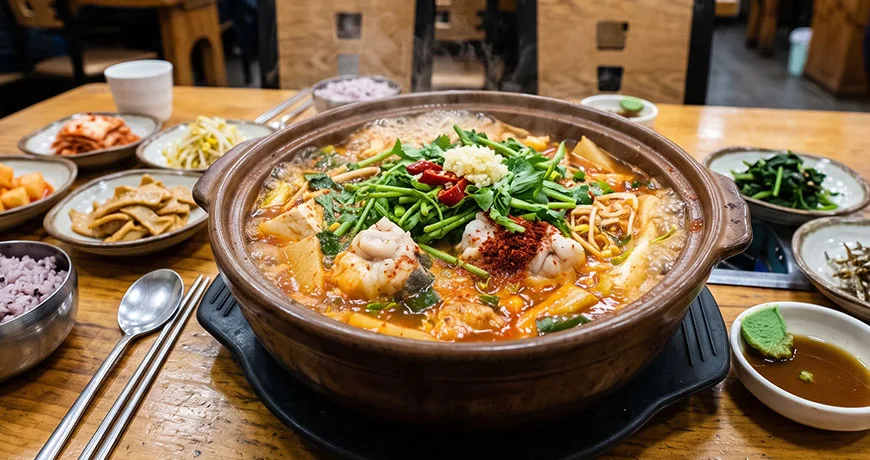
Saengtaetang is a highly precise culinary matrix that relies on the critical thermal coagulation of the highly hydrated, delicate myofibrillar proteins of fresh (never frozen) pollack within a hypertonic solvent. Unlike frozen pollack (Dongtae), where ice crystals rupture the cellular membranes resulting in a tough, dry texture, fresh pollack retains perfect structural hydration. However, this same hydration renders the white flesh extremely vulnerable to the kinetic friction of boiling water; prolonged exposure to a 100°C rolling boil will hydrodynamically disintegrate the meat into the broth. Thus, the engineering of this dish requires establishing a clear, capsaicin-driven emulsion enriched with radish reducing sugars and kelp glutamate first. The pristine fish chunks and the lipid-rich milt (sperm sac) are introduced sequentially at the very end to meticulously control their physical state and textural integrity. Omitting heavy starch-based chili paste (Gochujang) preserves the transparent, clean inosinate umami of the fresh seafood, while a final crown of volatile terpenes from crown daisy completely freshens the palate.
- ⏱️ Total: 40 mins | Prep: 15 mins (Scale & viscera removal, membrane purging) | Cook: 25 mins
- 🍳 Difficulty: Medium-High (Requires precise thermal control to prevent the physical disintegration of highly hydrated myofibrils)
- 🌶️ Profile: Deeply Refreshing, Brisk Capsaicin Heat, and Clean Marine Umami
- 🍚 Focus: Hydrated Myofibrillar Coagulation, Pectin Breakdown, & Milt Gelation
- 🍶 Pairing: Ice-cold, highly carbonated light lager mixed with Soju (Somaek) or traditional clear Yakju
Ingredients (3–4 servings)
- Hydrated White Protein Matrix: 1 whole Fresh Pollack (Saengtae – strictly never frozen, scales and gills removed, inner black peritoneal membrane thoroughly scrubbed, chopped into thick steaks), 100g Fresh Pollack Milt & Roe
- Porous Gel & Pectin Matrix: 200g Daikon Radish (sliced into squares), 1/2 block Tofu (sliced thickly)
- Aqueous Umami Solvent: 1.2L Kelp-Anchovy Broth or Purified Water
- Capsaicin & Peptide Binder: 3 tbsp Gochugaru (Chili Flakes), 2 tbsp Soup Soy Sauce, 0.5 tbsp Doenjang (Soybean Paste – for chemical masking of marine odors), 1.5 tbsp minced garlic, 0.5 tsp minced ginger
- Aromatic & Terpene Catalyst: 1 handful Crown Daisy (Ssukat), 1 stalk Green Onion (diagonally sliced), 2 Cheongyang green chilies
Allergy Information Contains: Fish (Pollack), Soy, Wheat (from Soy Sauce, Doenjang)
Equipment Wide High Thermal Mass Pot, Fine Skimmer, Cutting Board, Knife, Kitchen Shears
Cooking Instructions
- Physical Membrane Purging: The thin black peritoneal membrane lining the pollack’s abdominal cavity contains intense bitter compounds and trimethylamine (fishy odor). Submerge the fish in cold water and rigorously use your fingertips to scrape away this membrane and the dark bloodline resting against the spine.
- Solvent & Pectin Hydrolysis: Place the cold kelp broth and square-cut radish into a wide pot and heat over a high flame. Starting from cold allows the rigid pectin cellular walls of the radish to gradually undergo thermal hydrolysis, smoothly leaching cooling reducing sugars into the solvent.
- Capsaicin Emulsion & Masking: Once boiling, dissolve the chili flakes, soy sauce, garlic, ginger, and a touch of Doenjang into the liquid. The fermented peptides from the Doenjang act as a chemical masking agent against volatile marine aromatics.
- Hydrated Myofibril Thermal Coagulation: As the fiery broth hits a rolling boil, gently introduce the prepped fresh pollack steaks and tofu. Because the hydrated myofibrils are highly delicate, reduce the heat to medium and simmer for strictly 10–12 minutes. This critical timeframe ensures the meat coagulates into a bouncy, tender state without disintegrating. Stirring aggressively is prohibited.
- Milt Gelation & Terpene Finish: 3–4 minutes before cutting the heat, slide the delicate milt and roe into the broth. The soft milt requires gentle, low-temperature gelation to retain its creamy, lipid-rich core. Turn off the heat and instantly heap the green onions, chilies, and crown daisy over the top, utilizing radiant heat to activate the volatile terpenes.
💡 Professional Culinary Tips
- Thermodynamics of Fresh vs. Frozen Pollack: Frozen pollack (Dongtae) suffers from cellular rupture due to ice crystal expansion, rendering its flesh dense and dry, though physically resilient to boiling. Fresh pollack (Saengtae) retains perfect cellular hydration, literally melting in the mouth. To protect this fragile biomolecular structure, the broth must be fully constructed before introducing the fish, which is then only flash-simmered (poached) to prevent hydrodynamic disintegration.
- Low-Temp Gelation of Milt (Sperm Sac): Commonly (and incorrectly) called ‘Goni’ in Korea, the white convoluted milt is a matrix of water-soluble proteins and micro-lipids. If boiled aggressively from the start, the proteins violently contract into a rubbery mass. Introducing it at the very end in a gentle 85–90°C environment ensures a soft exterior coagulation while preserving the creamy, luxurious interior.
- Biochemistry of Gochujang Omission: The glutinous rice starch in standard chili paste creates a muddy, viscous barrier that mutes the transparent, clean umami of fresh pollack. Relying solely on chili flakes and soy sauce crafts a sharp, crystalline capsaicin emulsion that pierces through, highlighting the seafood’s natural inosinate.
🍶 Gastronomic Pairing
- Biochemical Palate Cleansing: When the hyper-tender white fish, creamy milt lipids, and sharp capsaicin thoroughly coat your oral mucosa, pair this dish with a perfectly proportioned, ice-cold Somaek (Soju and Beer bomb) utilizing a crisp, highly carbonated lager like Terra. The aggressive effervescence of the beer and the refined ethanol of the Soju act as a surgical solvent, sharply slicing through the spice and lipid barrier. This instantly resets your taste receptors for maximum impact on the next spoonful.
Nutrition Facts (Estimated)
Total Content : Approx. 650g (1 serving, excluding bone weight)
Calories : 280 kcal (Excluding rice)
– Sodium : 1,280mg
– Total Carbohydrate : 12.0g (Reducing sugars from radish and tofu polysaccharides)
– Sugar : 3.5g
– Total Fat : 5.5g (Creamy lipids native to milt and unsaturated fish fats)
– Saturated Fat : 1.2g
– Cholesterol : 115.0mg (Derived from milt and roe)
– Protein : 36.0g (Highly bioavailable hydrated myofibrils)
– Dietary Fiber : 4.0g
*Daily Values are based on a 2,000 calorie diet and standard Korean nutritional reference values.
**Nutritional values are calculated based on original ingredients; substitutions may alter specific macronutrients.
Origins and Food Culture of Fresh Pollack Soup (Saengtaetang)
1. Historical Roots: East Sea “Myeongtae” Heritage and Classical Treatises
- Deeply rooted in the maritime fishing traditions of the Korean peninsula’s East Sea coastline (such as Goseong in Gangwon-do and Myongchon in Hamgyong-do), where Alaska pollack has sustained peninsular inhabitants as a primary dietary protein staple for centuries.
- Documented in late Joseon encyclopedias such as Seo Yu-gu’s Nanho Eomok and Yi Gyu-gyeong’s Ojuyeonmunjang Jeonsango, folklore recounts that the fish was named Myeong-tae (明太) after a fisherman named Tae from Myongchon who first hauled in abundance. Depending on how it was dried or processed, it earned dozens of titles—bukeo, hwangtae, dongtae, and kodari. Among these, Saeng-tae (never-frozen, freshly caught pollack) was prized as the supreme luxury, consumed immediately for its incomparable sweetness and tenderness.
2. The Culinary Science of Water Retention (WHC) and Flash Simmering
- While freezing pollack (dongtae) creates ice crystal formations that puncture muscular cell walls—yielding a firmer, fibrous bite—fresh pollack retains its native intracellular moisture and glycoprotein matrix, imparting an ethereal, velvet softness that dissolves on the palate.
- Authentic kitchens practice precise thermodynamic timing: simmering the Korean radish, bean sprouts, and aromatics first to extract a crisp vegetable base before gently sliding in the delicate pollack steaks over rapid, sustained heat. Boiling it swiftly ensures the fish bones and roe enrich the broth without allowing the fragile meat to disintegrate into mush.
3. Seoul’s Samgakji Alley and the Urban Hangover Comfort Culture
- During the rapid industrialization of the 1970s and 1980s, bustling culinary hubs like the iconic Samgakji Saengtaetang Alley in Yongsan, Seoul, alongside taverns in Jongno and Euljiro, popularized boiling fresh pollack stews in weathered nickel-silver pots (yaneun naembi) directly at diner tables.
- Serving as the ultimate evening gathering place where tired urban workers shared glasses of soju, and the dawn sanctuary where they returned to sweat out the previous night’s fatigue over steaming bowls of soup, Saengtaetang remains an immortal monument to Korean modern working-class camaraderie, maternal warmth, and restorative dining.
The Gossamer Flakes of Fresh Pacific Pollack, the Velvety Emulsion of Ocean Liver, and the Incandescent Piquancy of Simmered Alliums: A Refined Portrait of Saengtaetang
Saengtaetang (Fresh Pollack Soup) stands as the pristine, comforting, and biologically opulent summit of Korea’s white-fleshed marine (tangban) gastronomy. Centered strictly upon unfrozen, freshly harvested Alaska pollack (Gadus chalcogrammus) brought straight from the cold swells of the northern seas, the whole carcass is meticulously trimmed: delicate fillets, mineral-rich heads, and skeletal frames are paired with precious viscera, including the soft milt (iri), plump roe sacks, and the revered, ultra-rich liver (ae—often praised as the foie gras of the ocean). Assembled inside a wide casserole or heavy earthenware pot over a bedrock of thinly sliced winter radish and de-tailed soybean sprouts, the stew is bathed in a delicate kelp-anchovy stock dissolved with an assertive seasoning paste of sun-dried red chili powder (gochugaru), aged soup soy sauce, crushed garlic, fresh ginger, and sliced green chilies. Brought to a rapid, fragrant boil over high heat and crowned at the rolling climax with wild water parsley (minari), crown daisy (ssukgat), and scallions, this dish easily eclipses the dense grain of common frozen pollack stews (dongtaetang). It preserves the untorn cellular water holding capacity of never-frozen teleost muscle while dissolving opulent marine lipids into a soul-reviving broth that purges fatigue with fiery, restorative warmth.
Confronting the boiling pot tableside as crimson chili froth bubbles around snowy segments of pollack releases an immediate, deeply comforting sensory charge: the spicy, roasted heat of sun-dried chilies and garlic mingles seamlessly with the clean, sweet perfume of poaching fresh fish and the brisk, pine-fresh aroma of wild water parsley. Taking the first sip delivers a revelation across the oral mucosa: the clarified broth, enriched by natural asparagine from the sprouts, sweet succinic acids from the braised radish, and micro-dispersed oils from the simmering pollack liver, coats the palate with zero greasy cloying. It glides effortlessly down the esophagus to soothe alcohol-inflamed tissues and awaken dormant perspiration in an exhilarating wave of what Korean gastronomy reveres as siwonhan mat—the sensation of profound, soul-cleansing lightness. Parting the fresh pollack meat with a spoon yields snowy flakes that dissolve instantly across the tongue like warm morning mist, releasing streams of clean, uncorrupted marine sweetness. In luxurious contrast, the poached fish liver collapses with buttery richness, flooding the oral cavity with velvety lipids. The translucent, broth-soaked radish yields with a succulent chew, while the crisp snap of wild water parsley provides refreshing botanical friction, transforming the meal into an unforgettable ritual of metabolic restoration, physical renewal, and profound gastronomic catharsis.
The enduring majesty of Saengtaetang lies in its historical lineage—rooted in Korea’s centuries-old devotion to Myeongtae (Alaska pollack), celebrated across historical records like the Sinjeung Dongguk Yeoji Seungram as the life-sustaining staple of the northern littoral. Historically hauled into windswept East Sea ports like Wonsan and Goseong, where fishermen tossed pristine catches straight into boiling cauldrons of chili and brine, the dish later migrated to the post-war tavern alleys of Seoul—crystallizing in the legendary dining quarters of Samgakji and Jongno. Comforting generations of laborers and city salarymen through blistering cold winters and exhausting workdays, a steaming pot of fresh pollack stew remains an irreplaceable monument of sustainable whole-fish stewardship, maternal comfort, and brilliant Korean culinary craftsmanship.
Editor’s Review
1. A Dynamic Harmony of Silken Fresh Pollack Flaking, Melting Liver Velvet, and Crisp Botanical Turgor
The structural architecture inside the vessel delivers an extraordinary, high-contrast choreography between unruptured marine muscle fibers, lipid-dense hepatic tissues, and crisp vegetable cell walls. Because fresh pollack has never undergone ice crystal expansion, its delicate myofibrillar sheets separate along natural myotome boundaries with cloud-like ease, melting across the palate without chalky dryness. This ethereal softness is framed by the opulent pollack liver, which liquefies at oral temperature into a luxurious, butter-like coating. Flash-wilted water parsley and soybean sprouts maintain rigid cellular turgor amid the boiling currents, introducing a brisk, auditory snap that provides structural friction, ensuring an impeccably balanced, non-fatiguing mouthfeel from the first steaming sip to the last.
2. Non-Frozen Actomyosin Water Holding Capacity (WHC) Retention, Hepatic Lipid O/W Micro-Emulsification, IMP-Glutamate Nucleotide Synergy, and Terpene-Allicin Volatilization Kinetics
Saengtaetang represents an exacting study in teleost fish muscle biochemistry, lipid colloid dynamics, and flavor volatile extraction. While frozen pollack (dongtae) experiences mechanical cell wall rupture and freeze-denaturation of myofibrillar proteins—resulting in severe syneresis (drip loss) and stringy textures—fresh pollack retains complete myofibrillar integrity and high Water Holding Capacity (WHC), allowing actomyosin filaments to coagulate smoothly in a gentle simmering environment of 85-90°C without expelling cellular moisture. High concentrations of polyunsaturated fatty acids (EPA and DHA) within the pollack liver break down under convective rolling boiling, while water-soluble sarcoplasmic proteins leached from the fish muscle act as natural amphiphilic surfactants, stabilizing an oil-in-water (O/W) micro-emulsion that imparts a velvety, unctuous body to the broth. Muscle-derived inosine monophosphate (IMP) converges with natural free glutamates from the sun-dried chili, radish, and alliums, triggering an exponential synergy across human oral T1R1/T1R3 umami heterodimers. Crucially, volatile basic nitrogen compounds responsible for fishy off-notes—principally trimethylamine (TMA)—are chemically neutralized and volatilized by allicin from garlic, gingerols from ginger, and volatile monoterpenes (limonene, terpinolene) from water parsley, ensuring an elevated, pristine aromatic profile.
3. The Pan-Korean Myeongtae Lineage and the Sovereign Peak of Historic Downtown Hangover Gastronomy
Consuming every anatomical element of the pollack—from head to tail, flesh, roe, and liver—Saengtaetang exemplifies the zenith of Korea’s venerated Myeongtae culinary culture in its freshest, most luxurious manifestation. Evolving from a rustic fisherman’s harbor sustenance into the celebrated savior of twentieth-century urban alleyways, this bubbling crimson classic captures the unmatched tenderness of pristine cold-water white fish, standing as an enduring sanctuary of environmental authenticity, domestic comfort, and brilliant Korean culinary artistry.