
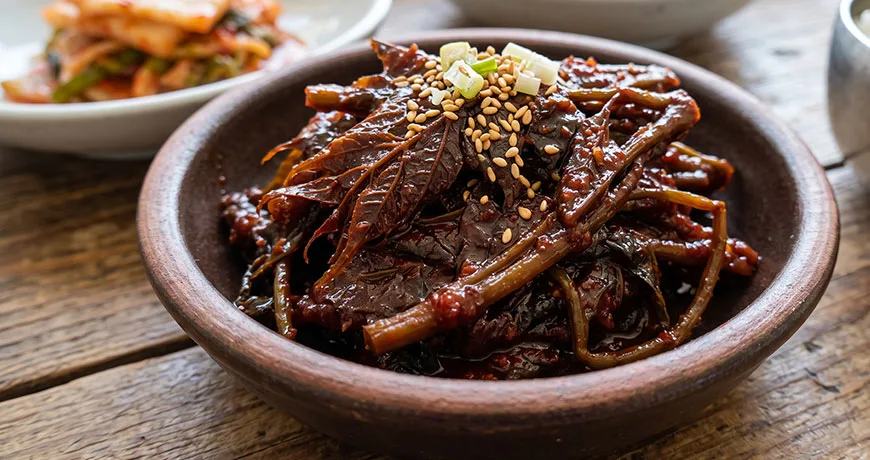
Gajukjangajji is a culinary treasure born from the tender, newly emerged shoots of the Chamjuk (Red Toon) tree. Harvested only during a fleeting moment in early spring, these precious leaves possess a deeply captivating, intense aroma that has long made them the pinnacle of Korean temple cuisine, deeply cherished by mountain monks. The wild energy of the shoots is first tamed by a brief plunge into boiling salted water. They are then laid out in the crisp spring breeze to dry until their texture becomes dense and delightfully chewy. Layer by layer, the wilted leaves are stacked in a traditional earthenware jar, generously brushed with a rich, thick paste forged from soy sauce, starch syrup, gochujang, and gochugaru. Over months of silent slumber, the sharp botanical fragrance gracefully intertwines with the heavy umami of the red paste, culminating in an elegant, transcendent delicacy unlike any other.
- ⏱️ Total Time: 1–2 Months | Prep: 1–2 Days (Blanching and spring breeze wilting) | Cook & Ferment: Layering in paste and a minimum of 1 month aging in an Onggi jar
- 🍳 Difficulty: High (Requires masterful judgment of the drying process and perfect balancing of the paste)
- 🌶️ Profile: A mysterious, lingering woodland aroma followed by the sweet, heavy, and profound umami of the red chili paste
- 🍚 Core Process: Precise Blanching, Spring Breeze Wilting, Layered Aging in Red Paste
- 🍶 Pairing: Rice steeped in warm green tea (Ochazuke), steaming white rice, lightly pan-fried firm tofu
Physicochemical & Sensory Matrix
- Baseline Salinity: 6.5% ~ 7.5% (A steadfast salinity essential for protecting the dehydrated leaves during long-term jar fermentation)
- pH Equilibrium: 4.8 ~ 5.2 (A round, gentle balance established by the fermented soy sauce and gochujang)
- Textural Crunch Index: [■■■□□] (Not a crisp crunch, but a profoundly satisfying, resilient, meat-like chew characteristic of dried mountain herbs)
- Umami Density: 9.5 / 10 (An explosive synergy between the plant-based proteins of the shoots and the fermented soybean paste)
- Shelf Stability: Peaks after 1 month; its flavor deepens beautifully for over 1 year when stored in a cool Onggi
- Aroma Profile: Mesmerizing Red Toon Aroma (Wild Allium/Herb) | Rich Fermented Gochujang Esters | Aromatic Brewed Soy
Ingredients (Yields 1 Medium Airtight Earthenware or Glass Container)
- Primary Plant Matrix: 500g Premium, tender Red Toon Shoots (Chamjuk / Gajuk) with a slight reddish hue
- Pretreatment Matrix: 2L Boiling Water, 1 tbsp Coarse Sea Salt
- Aging Paste Matrix: 2 Cups Traditional Gochujang (Red Chili Paste), 0.5 Cup Fine Red Chili Flakes (Gochugaru), 5 tbsp Brewed Soy Sauce, 1 Cup Starch Syrup (Mulyeot or Rice Syrup)
- Garnish for Serving: 1 tsp Toasted Sesame Oil, Minced Pine Nuts or Toasted Sesame Seeds
Allergy Information
- Contains: Soy, Wheat (inherent in Gochujang and brewed soy sauce)
Equipment Stainless Steel Saucepan, Large Wire Mesh Strainer, Traditional Breathable Crock (Onggi) or Airtight Glass Container, Sanitary Gloves
Cooking Instructions
- Delicate Trimming: Trim off any tough, woody stems and gently wash the shoots in clear, running water. Handle the delicate leaves with the utmost care so they do not bruise or break. Drain them lightly in a strainer.
- Precise Blanching: Dissolve the coarse sea salt in boiling water. Holding the leaves, submerge only the thick stems first for 10 seconds, then push the entire shoot into the water for another 10 seconds. This brief communion with heat is crucial to neutralize mild toxins and tame the plant’s overwhelming raw scent. Immediately plunge them into ice-cold water to halt the cooking process.
- Spring Breeze Wilting: Remove the shoots from the cold water and firmly squeeze out the excess moisture with both hands. Spread them out evenly on a wire rack in a well-ventilated, shaded area. Let them air-dry for one to two days until the surface feels leathery and semi-dried. This waiting period transforms the texture from spongy to wonderfully chewy.
- Layering the Paste: In a large bowl, whisk together the gochujang, gochugaru, soy sauce, and starch syrup to create a thick, glossy aging paste. Take handfuls of the wilted shoots and generously coat them with the paste. Pack them tightly, layer by layer, into the Onggi jar, ensuring there are no air gaps between the leaves.
- Time-honored Aging in Onggi: Seal the top with a thick, protective layer of the remaining paste to completely block out oxygen and preserve the volatile aromas. Store the jar in a cool, dark place or refrigerator to age peacefully for a minimum of 1 month. The profound, elegant delicacy once savored by mountain monks is born only after this long endurance.
💡 Professional Culinary Tips
- 1. Blanching for Aroma Control: Raw Red Toon shoots possess an aroma and astringency that are too aggressive for direct consumption. The technique of briefly blanching them in salted water vaporizes the undesirable raw smells and neutralizes trace toxins. It is the culinary wisdom of temple cuisine, leaving behind only the pleasant, appetizing essence of the forest deeply embedded in the leaves.
- 2. Texture Control via Spring Breeze: If you mix the blanched shoots with the paste while they are still wet, the residual water will leach out, diluting the marinade and inevitably causing spoilage. Wilting them in the breeze not only ensures long-term preservation by removing excess moisture but also condenses the plant fibers, resulting in a mesmerizing, chewy texture that lingers delightfully on the palate.
- 3. The Aesthetics of Layering and Viscosity: Starch syrup provides the essential viscosity that binds the depth of the soy sauce, the kick of the gochugaru, and the heaviness of the gochujang together. Brushing this highly viscous paste meticulously between every layer of the leaves perfectly seals out oxygen. This prevents oxidation and ensures that the magnificent aroma remains vividly captured inside the preserve even after years of aging.
🍶 Gastronomic Pairing
- A Perfect Communion of Aroma and Temperature: When serving, take a well-aged leaf of Gajukjangajji and tear it lengthwise along the grain. Dress it lightly with a single drop of premium sesame oil and a sprinkle of pine nut powder. Place it atop a steaming bowl of freshly cooked white rice, or enjoy it with Ochazuke (rice steeped in warm, clear tea). The warm temperature of the rice explosively awakens the mysterious forest aromas trapped within the preserve, bringing the profound elegance and tranquility of a mountain temple directly to your dining table.
Nutrition Facts (Estimated)
Total Content : Approx. 20g
Calories : 38 kcal (Plant proteins and complex paste polysaccharides)
– Sodium : 450mg (Stable, long-term aging salinity required for Onggi fermentation)
– Total Carbohydrate : 7.5g
– Sugar : 4.8g
– Total Fat : 0.2g
– Saturated Fat : 0.0g
– Cholesterol : 0.0mg
– Protein : 1.5g (Excellent source of plant-based protein from the Red Toon shoots)
– Dietary Fiber : 2.2g
*Daily Values are based on a 2,000 calorie diet and standard Korean nutritional reference values.
**Nutritional values are calculated based on original ingredients; substitutions may alter specific macronutrients.
Origins and Food Culture of Pickled Red Toon Shoot (Gajukjangajji)
1. Folk Nomenclature of “Gajuk” and Classical Records of “Chunyeop” (椿葉)
- The culinary designation Gajuk derives from the traditional dialect of Gyeongsang-do (the Yeongnam region) and southern mountain communities, where locals affectionately distinguished Toona sinensis as the “genuine, edible tree vegetable” (cham-juk / gajuk). This distinguishes it from the toxic, inedible tree-of-heaven (Ailanthus altissima / gajung-namu), cementing Gajukjangajji as the recognized nationwide name for this preserve.
- In Heo Jun’s seminal 1613 Joseon medical manual Dongui Bogam, the tree’s foliage was cataloged as Chunyeop (椿葉): “Neutral in nature and non-toxic; it arrests chronic dysentery and diarrhea, quenches thirst, and fortifies the stomach and intestines.” Historical compendiums including the 18th-century Jeungbo Sallim Gyeongje and Seo Yu-gu’s Imwon Gyeongjeji recorded methods for blanching, drying, and packing the seasonal spring shoots into jars of fermented paste, documenting an enduring tradition of culinary medicine.
2. The Food Processing Science of Salted Blanching, Drying, and Paste Layering
- Unlike ordinary pickles that rely on pouring boiled liquid brine, authentic Gajukjangajji follows a distinct three-step protocol: salted blanching semi-dehydration paste layering.
- Briefly parboiling fresh early-spring shoots in salted water and spreading them on wicker mats (chaeban) to dry until pliable stabilizes structural pectins and evaporates excess moisture. Applying a thick, blended paste of soy sauce, grain syrup, chili paste, and chili powder between the layered leaves—akin to stuffing seasonal kimchi—creates an anaerobic curing environment inside breathable earthenware jars (onggi). This allows slow lactic and enzymatic maturation to proceed without microbial spoilage, preserving the shoots’ toothsome chew throughout the year.
3. The Sovereign Sustenance of Mountain Monasteries and the Replacement of “Osinche”
- The historical heart of Gajukjangajji lies within the kitchens of remote mountain Buddhist temples. Monastic vows strictly prohibit the consumption of Osinche—the five pungent alliums (garlic, scallions, wild chives, leeks, and asafoetida) considered disruptive to meditative calm.
- Because toon shoots are botanically exempt from this prohibition while delivering an intricate allium-like depth, resinous warmth, and vegetable protein, Buddhist monks embraced them as an essential seasonal restorative. Preserved in earthenware crocks to be savored year-round alongside crispy fried chips coated in sweet rice paste (gajuk-bugak), Gajukjangajji stands as an enduring monument to Korean temple food culture, seasonal foresight, and slow-food mastery.
The Wild Crimson Shoots Crowned Atop Towering Tree Canopies, Tamed with a Scalding Salt Blanch and Air-Cured to Leathery Pliability Beneath Layered Sheets of Fermented Gochujang, Soy, and Malt Syrup: A Refined Portrait of Traditional Gajukjangajji
Gajukjangajji (Pickled Red Toon Shoots in Fermented Chili and Soy Paste) represents an aristocratic, intellectually profound milestone within Korea’s monastic temple gastronomy. Centered upon the youthful, crimson-tinted leaf shoots (gajuk) plucked in early spring from the towering crowns of the Chinese cedar or red toon tree (Toona sinensis), this revered preserve demands patient mechanical and osmotic mastery. Distinct from the toxic and foul-smelling tree of heaven (Ailanthus altissima), the true red toon shoot bursts with a complex payload of aromatic organosulfurs and resinous forest terpenes. In ancient Buddhist hermitages, where meat and the five pungent alliums (osinchae)—including garlic and onions—were strictly forbidden by monastic law, mountain monks celebrated gajuk shoots as a miraculous, permitted gift that delivered the unctuous savory depth, roasted allium richness, and restorative vigor typically associated with meat banquets. The technique hinges upon a delicate two-stage preparation: plunging the newly gathered fronds into lightly salted boiling water to purge harsh tannins and grassy astringency, followed by slow air-drying across woven wicker trays under spring breezes. Shedding its brittle cell moisture, the foliage consolidates into a pliable, leather-like weave. Interleaved layer by layer with a thick, crimson marinade of brewed soy sauce, barley malt syrup, gochujang, and sun-dried chili flakes inside earthenware crocks, the resting leaves drink in fermented peptides, transforming wild tree forage into an enduring table treasure.
Lifting a glossy, crimson-glazed frond of Gajukjangajji with chopsticks reveals the intricate, feather-like venation of the pinnate leaf, radiant under a thick mantle of fermented paste. Approaching the nose, the deep, caramel-malty grain perfume of aged gochujang and soy sauce is instantly lifted by an astonishingly complex aromatic bouquet: the savory, caramelized allium notes of roasted shallots and garlic, intertwined with charred timber, damp earth, and the resinous freshness of mountain pine sap. Draped over a steaming spoonful of white rice and pressed between the molars, it delivers an extraordinary mouthfeel: entirely removed from the fragile yield of leafy salads or the tough bite of dried greens, an authoritative, chewy resistance (jjolgit-jjolgit) pushes back with supple elasticity before shearing cleanly along the leaf grain. The dense, compacted tissue releases trapped reserves of savory umami, followed by the rounded sweetness of malt syrup, the bright prick of red chili flakes, and the aristocratic, lingering bitterness of wild mountain foliage. Stationed on a tranquil temple tray, beside a bowl of plain rice porridge, or accompanying crispy pan-fried pancakes, it provides profound savor and physical warmth, leaving the palate clean, awakened, and invigorated.
The cultural identity of Gajukjangajji lies in the meditative foresight that captured the fleeting flush of towering forest treetops, disciplining wild botanical intensity through boiling water, wind, and hypertonic paste fermentation to sustain monastic life across the year. By preserving the supple tensile grace of tree foliage while elevating bold terpenes into an enduring, multi-layered savory preserve, this glistening saucer remains an unblemished monument to forestry wildcraft, cellular preservation, and the timeless culinary wisdom of the Korean hearth.
Editor’s Review
1. Pinnate Rachis Vascular Preservation, Thermal Salt Blanching, and Dehydration-Induced Lamellar Tensile Mechanics
Gajukjangajji showcases a dense, non-collapsing chew rooted in the unique structural morphology of woody tree leaves:
- Cell-Wall Stabilization via Saline Blanching: A brief immersion in boiling salted water denatures surface pectolytic enzymes and prevents excessive solubilization of middle-lamella pectins. Concurrently, sodium ions stabilize the cell-wall matrix, preventing waterlogged sogginess while preserving the architectural integrity of the leaflets.
- Lamellar Densification via Air-Curing: Spreading the blanched shoots in spring air purges over 40% of intracellular vacuolar water. The emptied parenchymal cell walls collapse and pack tightly together into laminated sheets. This transformation turns potentially stringy vascular bundles into a supple, leather-like structural network that pushes back resiliently against dental shear along the natural grain.
- Capillary Matrix Entrapment: The tiny spaces between the dehydrated veins act as microscopic fluid reservoirs, drawing in the high-viscosity paste through capillary action and releasing savory seasoning gradually during mastication.
2. Volatile Polysulfide-Sesquiterpene Synergy, Meat-Like Aromatics, and Matrix Tannin Attenuation
The savory aroma profile and balanced palate of Gajukjangajji are governed by precise sulfur chemistry and macromolecular masking:
- Non-Allium Roasted Meat Volatiles: The signature perfume of Toona sinensis is driven by a complex synergy of polysulfides—principally dimethyl trisulfide (DMTS) and diallyl disulfide—alongside sesquiterpenes. These volatile compounds chemically parallel the sulfur-containing volatiles generated during the Maillard browning of roasted meats and alliums, providing monastic diets with deep, meat-like savor without violating vegetarian taboos.
- Tannin Leaching and Polymeric Complexation: Harsh mouth-puckering condensed tannins are significantly leached into the boiling water during the initial blanch. Remaining tannins form stable hydrophobic complexes with soy peptides, gochujang proteins, and maltose oligosaccharides, preventing lingual salivary protein precipitation and transforming raw astringency into an appetizing, tonic bitterness.
- Arrest of Enzymatic Browning: Scalding water permanently denatures polyphenol oxidase (PPO), halting oxidative browning and locking in an appealing, translucent reddish-amber hue.
3. Hypertonic Multi-Solute Matrix, Water Activity (Aw) Depression, and Monastic Gastro-Physiology
Gajukjangajji served as an essential nutritional and metabolic anchor within traditional Buddhist temple communities:
- Colloidal Osmotic Stability: The multi-component marinade—combining sodium chloride from soy sauce, concentrated maltose from barley syrup, and gelatinized starch from fermented gochujang—forms a high-viscosity hydrocolloid that depresses system water activity (Aw) to 0.75–0.78. This suppresses bacterial and fungal proliferation, securing stable room-temperature preservation inside earthenware jars.
- Metabolic Support for Monastic Asceticism: In the absence of the five pungent roots (osinchae), the organosulfur compounds and bioflavonoids in gajuk shoots stimulate gastrointestinal motility and support peripheral blood circulation. This delivers sustained physical warmth and digestive vitality, counterbalancing the cold, quiet rigor of meditative temple life.