
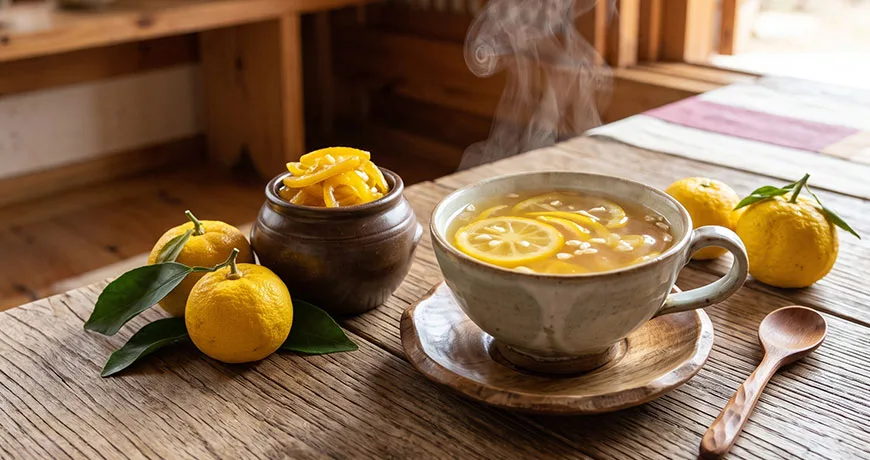
A quintessential Korean fruit tea made by thinly slicing fragrant, golden Yuja (Korean citron) and carefully macerating it in sugar or honey to create a thick, marmalade-like syrup (cheong). Mixed with hot or cold water, it yields a vibrantly sweet, tart, and highly aromatic beverage. Packed with citric acid and hesperidin (Vitamin P) from the peels, it is an absolute powerhouse for boosting immunity, preventing colds, and improving blood circulation. Its refreshing citrus aroma serves as a fantastic stress-reliever and a natural digestive aid to settle the stomach after a heavy meal.
⏱️ Total: 30 mins (plus 1-2 days fermenting) | Prep: 30 mins | Cook: 0 mins | 🍳 Easy | 🍋 Sweet, Tart & Citrusy | 🥤 Immunity-Boosting Tonic
Ingredients (Yields approx. one 500ml jar, 10-15 servings)
- Main Ingredients: 500g fresh Yuja (Korean citron), 500g sugar or honey (1:1 ratio by weight to the fruit)
- For Cleaning: Baking soda or coarse salt
- For Serving: Hot or cold water, ice cubes (optional)
💡 Substitutes & Notes
- Fresh Yuja ➔ Meyer lemons or a mix of lemons and oranges (Though Yuja has a distinctively floral aroma, this is the closest flavor profile).
- Sugar ➔ Agave nectar, maple syrup, or honey.
Allergy Information
- Warning: If using honey for the marmalade, do not serve the resulting tea to infants under 1 year old due to the risk of botulism. (Fully Vegan & Vegetarian-friendly if using sugar/syrup)
Equipment
- Sterilized Glass Jar with an airtight lid, Knife, Cutting Board, Mixing Bowl
Cooking Instructions
- Washing the Fruit: Since the peel is consumed, cleaning is the most important step. Vigorously scrub the Yuja skin with baking soda or coarse salt under running water to remove any wax or dirt. Dry them completely with a paper towel (any leftover moisture can cause mold).
- Slicing & De-seeding: Halve the fruit and meticulously pick out all the seeds using a fork or a toothpick. Slice the rind and flesh very thinly into matchsticks (about 2–3mm).
- Mixing: In a large bowl, toss the sliced Yuja with the sugar (or honey) until well coated. (Reserve about 3–4 tablespoons of sugar to top the jar later).
- Bottling & Fermenting: Tightly pack the sugar-coated Yuja into the completely dry, sterilized glass jar. Pour the reserved sugar over the very top to create a thick barrier. This seals out oxygen and prevents mold. Close the lid tightly and let it sit at room temperature in a cool, dark place for 1–2 days until the sugar completely dissolves into a syrup. Afterward, keep it refrigerated.
- Serving: To enjoy, simply scoop 2–3 generous tablespoons of the Yuja marmalade into a mug and stir in hot water to warm up, or cold water and ice for a refreshing summer cooler.
💡 Cooking & Pairing Tips / Health Benefits
- Mind the Seeds: It is highly important to remove every single seed! Yuja seeds contain compounds that are extremely bitter. If you leave them in to steep, the entire jar of marmalade will take on a harsh, unpalatable bitterness after a few days.
- Nature’s Vitamin C Bomb: Yuja contains up to three times more Vitamin C than regular lemons. This makes the hot tea Korea’s ultimate favorite natural remedy for fighting off winter colds, boosting energy, and soothing sore throats.
- The Golden 1:1 Ratio: Sticking strictly to a 1:1 ratio of fruit to sugar is the traditional method for safe preservation without artificial additives. If you reduce the sugar too much, the marmalade may spoil quickly or ferment into alcohol instead of a sweet syrup.
Nutrition Facts (Estimated)
Total Content : Approx. 250ml (1 serving, mixed with 2 tbsp Yuja-cheong)
Calories : 80 kcal
– Sodium : 2mg
– Total Carbohydrate : 21.0g
– Sugar : 19.0g
– Total Fat : 0.0g
– Saturated Fat : 0.0g
– Cholesterol : 0.0mg
– Protein : 0.1g
– Calcium : 10.0mg
*Daily Values are based on a 2,000 calorie diet and standard Korean nutritional reference values
**Nutritional values are calculated based on the original ingredients, not substitutes
The Sun-Kissed Vitality of Golden Citron: A Translucent Elixir of Honeyed Radiance
Yujacha (Citron Tea) stands as the radiant zenith of Korean traditional fruit tea gastronomy (Eumcheongnyu), where golden-yellow yuzu—ripened under coastal winds and generous southern sunshine—blossoms through patient sugar maceration into a luminous, amber nectar. Concealing intense fruit acids and precious essential oils within its rugged, pebbled rind, thinly slicing the citron and curing it in raw honey and sugar is an exacting culinary alchemy that refines raw tartness into an elegant, sun-drenched preserve (Cheong).
Billowing gentle citrus steam from a warm teacup, the translucent golden brew floods the surrounding air with an uplifting, perfume-like citrus bouquet long before the first sip. The electric brightness of natural citric acid instantly awakens the senses, smoothly enveloped by the velvety sweetness of honey to hydrate dry airways and deliver immediate cellular revitalization. Chewing the candied ribbons of zest resting at the bottom releases a delicate bitter edge, securing a multi-dimensional equilibrium that transcends ordinary sweetness.
True gastronomy does not rely on artificial extravagance; it thrives in ancestral wisdom that captures the pure essence and nutrients of the harvest to realign the body and spirit. Whether sipped steaming hot to melt winter chills or served over ice to dispel summer exhaustion, partaking in a cup of Yujacha is a fragrant healing ritual—purifying the weary mind and infusing the soul with vibrant, sun-kissed vitality.
Editor’s Review
1. An Electric Sensory Cadence of Limonene Aromatics, Crisp Citric Acidity, and Chewy Rind Textures
The moment the teacup nears the lips, an explosion of volatile limonene terpenes instantly clears the respiratory senses, setting the stage for an invigorating tasting experience. Taking a sip releases a dynamic contrast between razor-sharp citric acidity and the smooth, nectar-like glide of honey. The tender, candied shreds of rind provide a playful chew and a sophisticated bitter undertone, orchestrating an endlessly refreshing, multi-layered sensory thrill from start to finish.
2. Hyper-Osmotic Maceration Thermodynamics and Flavedo-Pectin Colloidal Mechanics
Yujacha is an exacting study in low-temperature botanical extraction, utilizing high-osmotic sugar curing to systematically leach water-soluble ascorbic acid (Vitamin C) and citric acids from the fruit cells without thermal degradation. During this aging phase, essential oil glands within the flavedo layer release limonene and bioflavonoids like hesperidin (Vitamin P) directly into the sugar matrix, preserving delicate top notes against oxidation. When infused in hot water, the dissolved natural pectins form a delicate colloidal suspension, optimizing fluid viscosity and ensuring flavor compounds linger gracefully across the palate.
3. Warm Solace Against Frosty Gales and the Restorative Haven of Ancestral Citrus Care
Holding a steaming mug of citron tea with both hands as chilly winds rattle the windowpane serves as an intimate sanctuary for physical and emotional recovery. Revered for centuries as a natural remedy to ward off seasonal chills, soothe the throat, and restore active circulation, savoring this golden nectar clears away modern fatigue, granting a timeless sanctuary of stillness, maternal warmth, and luminous well-being.