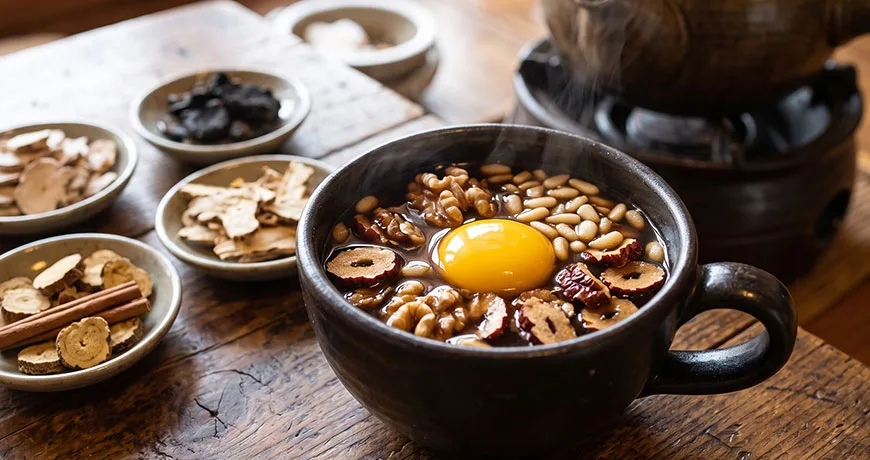
A deeply restorative and robust traditional Korean medicinal tea. It is slowly simmered for hours using a rich blend of herbal roots and barks—such as white peony root, rehmannia root, angelica root, cinnamon, and licorice. Celebrated for its ability to warm the body, restore energy, and fight off winter fatigue, it is the ultimate wellness tonic. Following a beloved old-school teahouse tradition, it is often served with a generous topping of pine nuts and walnuts, and optionally, a fresh raw egg yolk floating in the center for an extra boost of nutrition.
⏱️ Total: 2 hrs | Prep: 10 mins | Cook: 1 hr 50 mins | 🍳 Moderate | ☕ Deep, Earthy & Bittersweet | 🌿 Restorative Herbal Tonic
Ingredients (4-5 servings)
- Main Ingredients: 50g Ssanghwa herbal tea mix (a pre-packaged mix of dried medicinal roots/barks usually found in Korean markets), 2.5 liters water
- Sweetener: Honey or dark brown sugar to taste
- Garnish (Optional): 1 fresh raw egg yolk (per cup), 1 tbsp pine nuts, 1 tbsp chopped walnuts
💡 Substitutes & Notes
- Honey ➔ Agave nectar, maple syrup, or regular sugar for a fully vegan option.
Allergy Information
- Contains: Egg (if using yolk), Tree Nuts (Walnuts, Pine nuts)
- Warning: Consuming raw eggs may increase your risk of foodborne illness. If using honey, do not serve to infants under 1 year old due to the risk of botulism. (Fully Vegan & Vegetarian-friendly if omitting the egg and using sugar/syrup)
Equipment
- Glass, Ceramic, or Stainless Steel Pot (Strictly avoid cast iron or aluminum), Fine-mesh Strainer or Cheesecloth, Ladle
Cooking Instructions
- Rinsing the Herbs: Place the dried Ssanghwa herbal mix in a strainer and rinse gently under cold running water to remove any surface dust.
- Boiling: In a glass or ceramic pot, combine the rinsed herbs and 2.5 liters of water. Bring to a rolling boil over high heat.
- Simmering (Extracting): Once boiling, reduce the heat to low. Let it simmer gently for 1.5 to 2 hours until the liquid reduces by half and turns a very dark, rich brownish-black color.
- Straining: Turn off the heat. Using a fine-mesh strainer or cheesecloth, carefully strain out and discard all the solid herbs.
- Serving & Garnishing: Pour the hot, dark tea into warm mugs and stir in honey to your liking. Top generously with pine nuts and chopped walnuts. For the ultimate traditional experience, carefully slide a fresh raw egg yolk into the center of the cup, ensuring it doesn’t break.
💡 Cooking & Pairing Tips / Health Benefits
- The Rule of the Pot: When brewing traditional medicinal herbs, always use glass, ceramic, or well-coated stainless steel pots. Iron or aluminum pots can cause a chemical reaction with the active compounds in the herbs, which may reduce their effectiveness and alter the taste.
- How to Eat the Egg Yolk: If you decide to try the traditional floating yolk, the secret is not to mix it into the tea! Stirring the raw yolk into the broth will make the entire cup taste incredibly fishy and unpleasant. Instead, enjoy your tea, and at some point, gently scoop up the unbroken yolk with a spoon and swallow it whole in one bite.
- Harmony of Energy: The name Ssanghwa translates to “harmony of both,” referring to the balance of Qi (energy) and Blood in Eastern medicine. It is the perfect remedy when you are feeling run down, shivering from the cold, or recovering from a mild illness.
Nutrition Facts (Estimated)
Total Content : Approx. 250ml (1 serving, incl. 1 tbsp honey & nuts, excluding egg yolk)
Calories : 110 kcal
– Sodium : 5mg
– Total Carbohydrate : 20.0g
– Sugar : 15.0g
– Total Fat : 3.5g
– Saturated Fat : 0.4g
– Cholesterol : 0.0mg
– Protein : 1.5g
– Calcium : 25.0mg
*Daily Values are based on a 2,000 calorie diet and standard Korean nutritional reference values
**Nutritional values are calculated based on the original ingredients, not substitutes
The Symphony of Qi and Blood: A Dramatic Convergence of Obsidian Decoction and Golden Yolk
Ssanghwacha (Ssanghwa Tea) stands as the darkest, most opulent masterpiece of Korean herbal gastronomy (Eumcheongnyu), where the ancient philosophy of harmonizing Yin and Yang, Qi (vital energy), and Blood endures the patient heat of a traditional ceramic herbal pot (Yaktanggi). As rugged medicinal roots and barks—including white peony root, prepared rehmannia, angelica gigas, cnidium, cinnamon, and licorice—undergo prolonged decoction, clear water is transformed into an obsidian nectar teeming with botanical amino acids and essential oils.
The moment the ceramic lid is lifted, the rich perfume of angelica and the sweet spiciness of cinnamon surge forth, expanding the vessels and awakening the senses long before the first sip. Floating serenely atop this deep, dark abyss of herbal medicine is an astonishing assembly of crunchy walnuts, pine nuts, and the crowning theatrical touch: a whole, raw golden egg yolk. This visually striking contrast crafts a sophisticated culinary dialectic, balancing medicinal bitterness and rich, nutty lipids with extraordinary grace.
True gastronomy does not dwell in superficial sweetness; it thrives in the holistic wisdom of drawing forth the deepest medicinal energies of the earth to soothe profound exhaustion. Cupping the heavy ceramic bowl with both hands and inhaling its warmth today is a majestic healing ritual—realigning bodily equilibrium worn thin by cold winds and daily fatigue, while replenishing the spirit with unyielding vitality.
Editor’s Review
1. A Sensual Crescendo of Deep Herbal Bitterness, Velvety Egg Yolk, and Crunchy Toasted Nuts
The moment the hot ceramic rim touches the lips, the profound, grounded bitterness of rehmannia and angelica—gently tempered by the lingering sweetness of licorice—deeply commands the palate. As the velvety richness of the unbroken egg yolk and the dense, nutty crunch of floating walnuts and pine nuts coat the mouth, they gracefully buffer the sharp herbal bite. This interplay effortlessly dissolves the boundaries between tonic, tea, and culinary art into an intensely satisfying, multi-layered sensory experience.
2. Slow Decoction Thermodynamics and Lecithin-Driven Emulsion Buffering Mechanics
Ssanghwacha represents an exacting study in phytochemical extraction and thermal mechanics. The slow convective heat within the ceramic vessel systematically extracts complex bioactive compounds—such as paeoniflorin from white peony, decursin from angelica, and glycyrrhizin from licorice—alongside dense water-soluble polysaccharides without thermal degradation. The addition of the raw egg yolk introduces natural lecithin and unsaturated fatty acids, which bind with bitter tannins to form a delicate emulsion layer, effectively buffering astringency on the taste buds while enhancing the bioavailability of lipid- and water-soluble nutrients.
3. The Warmth of a Vintage Tea House and the Restorative Haven of Ancestral Nourishment
Encountering a steaming bowl of Ssanghwacha amidst the nostalgic atmosphere of a traditional Korean tea house serves as an intimate sanctuary against deep-seated exhaustion and winter chills. Celebrated for centuries as the ultimate restorative elixir to replenish vitality and fortify immunity, emptying this steaming, nutrient-dense brew washes away modern stress, granting a timeless refuge of stillness, physical revitalization, and deep emotional grounding.