
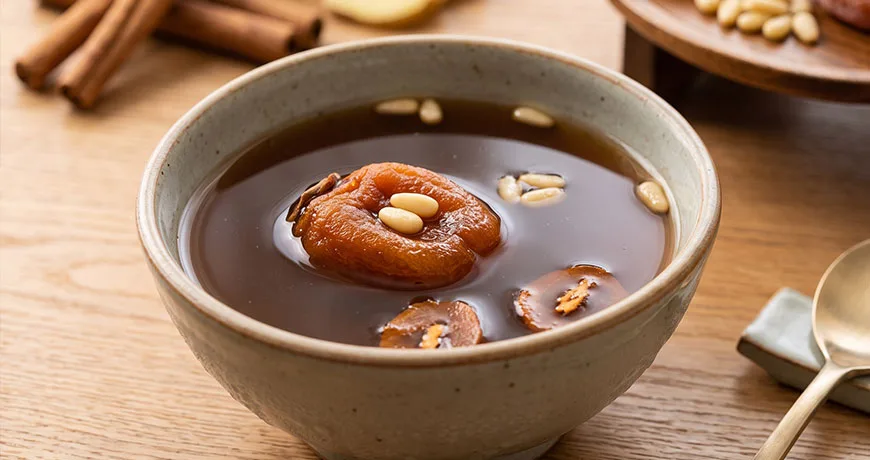
A beautifully balanced, sweet, and boldly spiced traditional Korean dessert beverage. It is made by deeply simmering cinnamon sticks and fresh ginger to extract their robust flavors, then lightly sweetening the dark broth with brown sugar or honey. Served icy cold, it is famously garnished with chewy, dried persimmons (gotgam) that plump up in the sweet broth, along with a sprinkle of floating pine nuts. Known as an excellent natural digestif, it is the perfect refreshing finale to a heavy or festive meal.
⏱️ Total: 2 hrs (incl. chilling) | Prep: 10 mins | Cook: 50 mins | 🍳 Easy | 🍂 Sweet & Spicy | 🥤 Traditional Dessert Punch
Ingredients (Yields approx. 2 liters, 8 servings)
- Main Ingredients: 2.5 liters water, 50g cinnamon sticks (cassia bark preferred), 50g fresh ginger
- Sweetener: 1 cup dark brown sugar or muscovado (for deep color and flavor), honey to taste (optional)
- Garnish: 4 dried persimmons (gotgam), 1–2 tbsp pine nuts
💡 Substitutes & Notes
- Dark brown sugar ➔ Coconut sugar or regular brown sugar.
- Honey ➔ Agave nectar or maple syrup for a fully vegan option.
Allergy Information
- Contains: Pine nuts (if using as garnish)
- Warning: If using honey, do not serve to infants under 1 year old due to the risk of botulism. (Fully Vegan & Vegetarian-friendly if using sugar/syrup)
Equipment
- Large Pot, Knife, Cutting Board, Fine-mesh Strainer or Cheesecloth, Ladle
Cooking Instructions
- Prepping the Ingredients: Wash the cinnamon sticks thoroughly under running water, using a brush to clean out any dust in the crevices. Peel the fresh ginger and slice it thinly (about 2–3mm thick) to maximize flavor extraction.
- Boiling: In a large pot, combine 2.5 liters of water, the cinnamon sticks, and the sliced ginger. Bring to a rolling boil over high heat.
- Simmering: Once boiling, reduce the heat to low. Let it simmer gently for 40–50 minutes to fully extract the spicy heat of the ginger and the aromatic warmth of the cinnamon.
- Sweetening the Broth: Turn off the heat. Using a fine-mesh strainer or cheesecloth, remove and discard all the ginger and cinnamon solids. While the broth is still hot, add the dark brown sugar and stir until completely dissolved. (Taste and add a little honey or more sugar if you prefer it sweeter).
- Chilling & Serving: Let the Sujeonggwa cool to room temperature, then transfer it to an airtight pitcher and refrigerate until icy cold. About 1–2 hours before serving, remove the stems from the dried persimmons and soak them in the cold punch to plump them up. Serve in individual cups, ensuring everyone gets a piece of persimmon, and float a few pine nuts on top.
💡 Cooking & Pairing Tips / Health Benefits
- The Pro-Tip (Separate Boiling): Boiling ginger and cinnamon together in one pot is perfectly fine for home cooking. However, for a royal-court-style crystal-clear broth and maximum flavor definition, traditional chefs boil the ginger and cinnamon in two separate pots with half the water each, combining the two liquids only at the end before adding sugar.
- The Importance of Dark Sugar: Avoid using white granulated sugar. Dark brown sugar or muscovado is essential to achieve the drink’s signature deep amber color and rich, caramel-like undertones.
- A Natural Digestif: Both ginger and cinnamon are widely celebrated in Eastern medicine for their warming properties and ability to settle the stomach. Drinking Sujeonggwa after a heavy meal aids digestion immensely.
Nutrition Facts (Estimated)
Total Content : Approx. 250ml (1 serving, incl. 1/2 dried persimmon)
Calories : 130 kcal
– Sodium : 5mg
– Total Carbohydrate : 32.0g
– Sugar : 28.0g
– Total Fat : 0.5g
– Saturated Fat : 0.0g
– Cholesterol : 0.0mg
– Protein : 0.5g
– Calcium : 20.0mg
*Daily Values are based on a 2,000 calorie diet and standard Korean nutritional reference values
** Nutritional values are calculated based on the original ingredients, not substitutes
The Icy Resonance of Warm Spice: A Dynamic Symphony of Cinnamon, Ginger, and Honeyed Persimmon
Sujeonggwa (Cinnamon Punch) is the radiant pinnacle of traditional Korean dessert beverage gastronomy (Eumcheongnyu), where the fiery heat of ginger and the woody, perfume-like warmth of cinnamon converge in clear water, only to achieve a dramatic transformation at near-freezing temperatures. After both aromatics surrender their concentrated essences to patient decoction over low heat, the amber elixir is sweetened with honey or sugar and thoroughly chilled—crafting a captivating culinary dialectic where fire and ice seamlessly coexist.
Submerged in this spiced nectar, the dried persimmon (Gotgam) slowly expands, generously imparting its dense, natural sugars to the punch while soaking up the piquant spices like a sponge to emerge with an unctuously tender, velvety texture. Crowned with ivory pine nuts floating serenely on the amber surface, the drink achieves an exquisite equilibrium—spanning minimalist visual grace, refreshing initial sips, and satisfying masticatory pleasure.
True gastronomy does not merely quench thirst; it flourishes when contrasting elements tame each other’s sharpest edges to forge absolute structural harmony. Partaking in a frosty bowl of Sujeonggwa at the conclusion of a lavish banquet or holiday feast is an elegant, centuries-old ritual—purifying weighed-down senses and replenishing the palate with pristine, sophisticated clarity.
Editor’s Review
1. A Dynamic Contrast of Chilled Cinnamic Spice, Melting Persimmon Nectar, and Nutty Pine Accents
The moment the ice-cold punch coats the palate, the sweet, intoxicating warmth of cinnamon and the crisp, biting punch of ginger instantly awaken the sensory nerves through the frosty chill. Biting into the rehydrated, jelly-soft dried persimmon releases a concentrated burst of fruit nectar, which is immediately balanced by the rich, nutty crunch of floating pine nuts. This interplay softens the sharp spices, orchestrating an endlessly engaging and multi-dimensional sensory thrill.
2. Separate Decoction Thermodynamics and Osmotic Rehydration of Persimmon Pectins
Sujeonggwa is an exacting study in volatile extraction chemistry, relying on separate decoction processes for cinnamon and ginger to prevent cinnamaldehyde and gingerol from muting each other’s distinct aromatic profiles. Once blended and sweetened, the liquid acts as an osmotic bath that slowly rehydrates the insoluble pectins of the dried persimmon, naturally deactivating astringent soluble tannins. Simultaneously, the rich unsaturated lipids leached from the pine nut garnish form a delicate surface film, stabilizing the volatility of the pungent spice compounds.
3. The Gracious Digestive Solace of the Festive Table and the Timeless Haven of Hospitality
Served ice-cold to conclude a rich holiday feast, a bowl of Sujeonggwa represents the ancestral philosophy of functional dining, effortlessly soothing the digestive tract and cutting through lingering oils. Savoring this time-honored beverage—reserved for honored guests throughout Korean history—washes away the complexities of modern life, granting a timeless sanctuary of heartfelt hospitality, refreshing serenity, and grounded restoration.