
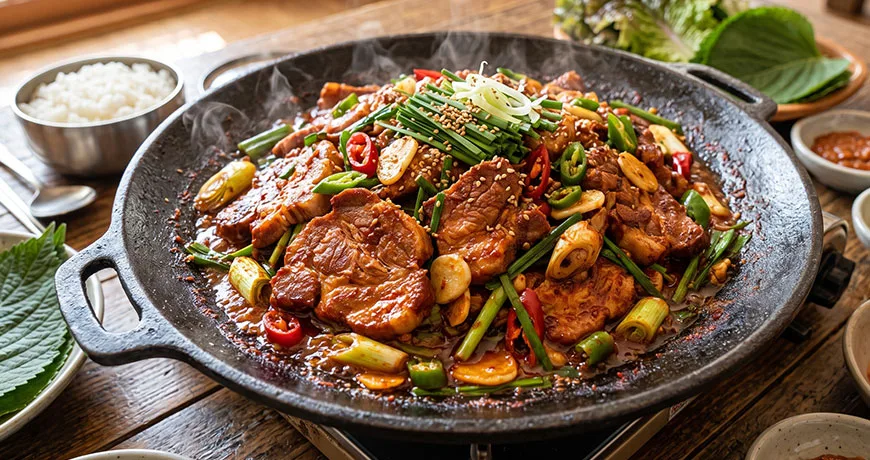
A masterclass in textural engineering and biochemical synergy. Unlike standard stir-fries, Jumulleok demands rigorous mechanical tenderization—vigorously kneading and massaging the pork by hand into a robust, spicy Gochujang paste. This physical manipulation disrupts myofibrillar structures, maximizing osmotic penetration of the marinade for an incomparably tender mouthfeel. Furthermore, introducing garlic chives (buchu) at the final thermal stage sparks a brilliant biochemical reaction: their allyl sulfides bond with the pork’s abundant thiamine (Vitamin B1) to form allithiamine, exponentially increasing energy-restoring nutrient absorption. It is a deeply restorative, scientifically profound culinary achievement.
⏱️ Total: 40 mins (incl. 20 mins resting) | Prep: 15 mins | Cook: 5 mins | 🍳 Moderate | 🌶️ Complex, Deeply Savory | 🍚 Biochemical Energy Restorative
Ingredients (2 servings)
- Main Ingredients: 400g sliced pork (shoulder or neck), 50g garlic chives (buchu), 1/2 onion, 1 scallion
- Jumulleok Marinade: 2 tbsp Gochujang (Korean red chili paste), 2 tbsp Gochugaru (Korean red chili flakes), 1.5 tbsp soy sauce, 1.5 tbsp minced garlic, 1 tbsp sugar, 1 tbsp plum extract (or corn syrup), 1 tbsp sesame oil, a pinch of black pepper
💡 Gastronomic Substitutes & Notes
- Pork ➔ Thinly sliced beef or boneless chicken thighs. (These meats can structurally withstand the rigorous physical kneading process inherent to Jumulleok).
- Garlic Chives (Buchu) ➔ Garlic scapes or wild leeks. (Maintaining a high concentration of allyl sulfides is critical for both the flavor architecture and nutritional synergy).
Allergy Information
- Contains: Pork, Soy, Wheat (from soy sauce and Gochujang) (Vegetarian/Vegan-friendly if substituting pork for tofu)
Equipment
- Large Mixing Bowl, Food-safe Gloves, Knife, Cutting Board, Heavy-bottomed Skillet or Wok, Spatula
Cooking Instructions
- Ingredient Preparation: Slice the onion uniformly and cut the scallion diagonally. To preserve their delicate cellular structure and volatile aromatics, cut the garlic chives into 5-6 cm lengths and set them aside completely separate from the other ingredients. Cut the pork into optimal bite-sized pieces to maximize surface area.
- Formulating the Marinade: In a large mixing bowl, meticulously whisk together the Gochujang, Gochugaru, soy sauce, minced garlic, sugar, plum extract, and black pepper. (Reserve the sesame oil to utilize as a finishing emulsion).
- Mechanical Tenderization (Jumulleok): Introduce the pork to the marinade. Wearing a food-safe glove, aggressively knead and massage the meat. This applied physical pressure breaks down the structural integrity of the muscle fibers. Allow the meat to rest at room temperature for 20 minutes to facilitate osmotic equilibrium.
- High-Heat Searing: Lightly oil a heavy-bottomed skillet or wok and heat it over medium-high. Add the tenderized pork. The high conduction heat will rapidly trigger Maillard browning, caramelizing the exterior and sealing in the umami compounds.
- Residual Heat Preservation: Once the pork is 80% cooked, add the onion and scallion, stir-frying rapidly to flash off excess moisture. When the pork is fully cooked, turn off the heat entirely. Immediately fold in the reserved garlic chives and sesame oil. Rely solely on the residual thermal energy to gently wilt the chives without destroying their vital compounds.
💡 Gastronomic & Engineering Insights
- Mechanism of Mechanical Tenderization: The defining characteristic of Jumulleok is the physical kneading process. This mechanical shock fractures the tough myofibrillar proteins and connective tissues of the pork. Consequently, it creates micro-fissures that allow the marinade to penetrate deeply via osmosis, resulting in a profoundly tenderized texture that cannot be achieved by passive marination alone.
- Synthesis of Allithiamine: Thiamine (Vitamin B1), highly concentrated in pork, is water-soluble and quickly excreted by the body. However, when it chemically interacts with the allyl sulfides present in garlic and garlic chives, it synthesizes into allithiamine. This fat-soluble compound possesses an absorption rate 10 to 20 times higher than regular thiamine, extending its bioavailability and maximizing its fatigue-fighting capabilities.
- Thermodynamic Preservation of Volatiles: Garlic chives are abundant in Vitamin C and volatile sulfur compounds, both of which rapidly degrade under sustained high heat. Intentionally introducing the chives post-combustion—utilizing only residual heat—is an essential thermodynamic control. This precision preserves their crisp structural integrity and ensures the pungent, aromatic profile remains intact for sensory impact.
Nutrition Facts (Estimated)
Total Content : Approx. 280g (1 serving)
Calories : 475 kcal
– Sodium : 810mg
– Total Carbohydrate : 22.0g
– Sugar : 13.0g
– Total Fat : 26.0g
– Saturated Fat : 8.5g
– Cholesterol : 82.0mg
– Protein : 37.0g
– Calcium : 50.0mg
*Daily Values are based on a 2,000 calorie diet and standard Korean nutritional reference values
**Nutritional values are calculated based on the original ingredients, not substitutes
The Origins and Culture of DoejigogiJumulleok (Spicy Stir-fried Pork)
1. Rooted in the Art of Hand-Massaging
- The term jumulleok derives from the Korean verb meaning “to massage or knead,” reflecting the traditional technique of manually working seasonings directly into the meat.
- While the style originated from early beef grilling traditions in areas like Mapo, it naturally expanded to pork, evolving into a beloved rustic staple.
2. Deeply Infused Marinades and Enhanced Tenderness
- Unlike standard stir-fries where sauce is simply poured over the ingredients, authentic jumulleok involves manually massaging soy-sauce or gochujang-based seasonings—alongside garlic and sesame oil—directly into the pork.
- This mechanical massaging tenderizes the meat while allowing the flavors to penetrate deep into the fibers, resulting in exceptional savory depth.
3. A Convivial Comfort Food for Shared Tables
- Sizzling appetizingly on a hot grill or iron pan, it fills the air with a mouthwatering aroma.
- Traditionally enjoyed wrapped in crisp lettuce or perilla leaves with garlic and ssamjang, it remains a quintessential Korean comfort food built for shared gatherings.
The Tactile Alchemy of Hand-Kneaded Marinade: A Dynamic Symphony of Seasoned Pork and Peasant Vitality
Dwaejigogi Jumulleok (Hand-Kneaded Marinated Pork) stands as the profound and dynamic masterpiece of Korean meat gastronomy, where succulent cuts of textured pork absorb sweet-and-spicy gochujang and aromatic seasonings through the warmth and physical friction of deliberate hand-kneading. Transcending simple passive soaking, the ancestral technique of massaging the meat along the grain gently releases structural tension within the muscle fibers, allowing the flavorful marinade to penetrate deeply into the core of each slice.
As the seasoned pork sizzles vigorously on a searing skillet, the pungent aroma of red pepper capsaicin, crushed garlic, scallions, and fresh garlic chives commands the surrounding air, instantly awakening the appetite. Passing through high-heat flames, the exterior caramelizes into a glossy crimson glaze while sealing in copious savory juices. Each morsel delivers a delightful springiness that yields effortlessly to the bite, releasing a dense, harmonious cosmos of umami.
True gastronomy does not dwell in the fragile minimalism of high-end delicacies; it flourishes when honest, robust ingredients unite under thoughtful human touch and intense heat to breathe immediate vitality back into a weary body. Sitting down before a steaming platter of Jumulleok over a bowl of freshly cooked white rice today is an honest and empowering ritual—banishing daily exhaustion and replenishing the spirit with unyielding, heartwarming solace.
Editor’s Review
1. A Dynamic Sensory Impact of Hand-Infused Gochujang Depth, Tender Muscle Resilience, and Piquant Chive Aromatics
The moment a sauce-glazed slice of pork coats the palate, the vibrant kick of gochujang spice paired with a rounded savory sweetness delivers an electric strike to the senses. This is immediately followed by the tender, springy resistance of hand-softened muscle and the luscious melting of rendered fat. As the fresh aromatics of green onions and chives cut through the rich meat juices, it orchestrates an intensely satisfying, multi-layered rhythm of comfort and culinary pleasure.
2. Mechanical Tenderization Kinetics, Allithiamine Synergies, and Lipid-Glaze Emulsion Thermodynamics
Dwaejigogi Jumulleok represents an exacting study in culinary physics and biochemistry, marrying tactile tenderization with high-heat stir-frying. Deliberate hand-massaging mechanically disrupts the tightly bundled myofibrillar proteins (actin and myosin), while osmotic pressure draws amino acids and reducing sugars deep into the tissue. High-heat searing induces rapid Maillard browning, while rendered pork lipids naturally emulsify with fat-soluble capsaicin to form a glossy, moisture-locking flavor barrier. Furthermore, the allicin and allyl sulfides from garlic and chives bind with the pork’s abundant vitamin B1 to synthesize allithiamine—a compound with vastly superior bioactivity that accelerates cellular recovery and systemic vitality.
3. The Steadfast Hearth of Home Cooking and the Grounding Sanctuary of Daily Rejuvenation
Encountering a sizzling platter of spicy hand-marinated pork after a grueling workday serves as an intimate emotional sanctuary against modern exhaustion. Celebrated for generations as a dependable source of stamina and metabolic warmth, enjoying this hearty, savory dish washes away daily stress, granting a timeless refuge of maternal care, physical replenishment, and grounded vitality.