
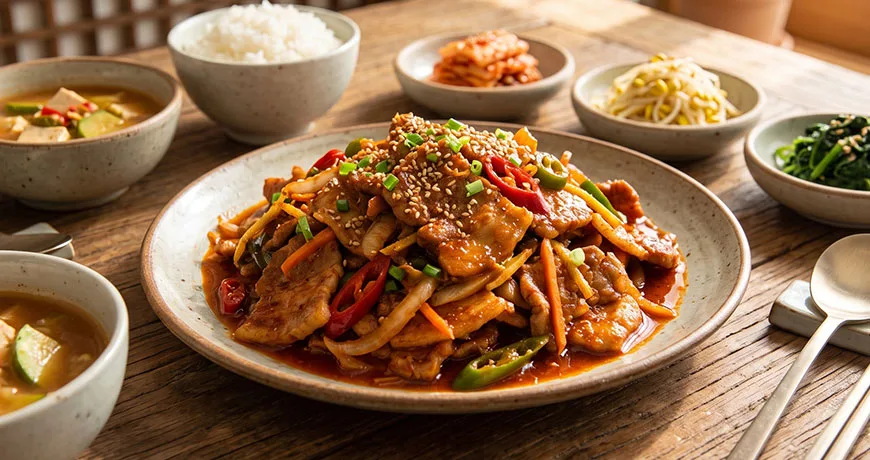
A dynamic and masterfully balanced centerpiece of everyday Korean gastronomy. This dish demands the precise interplay of high-heat cooking, proteolytic ginger juice, and a complex sweet-and-spicy Gochujang glaze. The deliberate marination process allows active natural enzymes to tenderize the meat, while the rigorous stir-frying technique induces profound Maillard browning. It is not merely a dish, but a scientifically sophisticated composition designed to replenish vitality, boost metabolic function, and deliver an exquisitely layered, sensual culinary experience.
⏱️ Total: 35 mins (incl. 20 mins marinating) | Prep: 10 mins | Cook: 5 mins | 🍳 Moderate | 🌶️ Sophisticated Sweet & Spicy | 🍚 Gastronomic Energy Restorative
Ingredients (2 servings)
- Main Ingredients: 400g thinly sliced pork (shoulder, leg, or belly), 1/2 onion, 1 scallion
- Ginger-Gochujang Marinade: 2 tbsp Gochujang (Korean red chili paste), 1 tbsp Gochugaru (Korean red chili flakes), 1.5 tbsp soy sauce, 1 tbsp freshly pressed ginger juice, 1 tbsp minced garlic, 1 tbsp sugar, 1 tbsp plum extract (or corn syrup), 1 tbsp sesame oil, a pinch of black pepper
💡 Gastronomic Substitutes & Notes
- Pork ➔ Thinly sliced beef or boneless chicken thighs. (These meats can structurally withstand high-heat stir-frying and properly render fat to emulsify with the sauce).
- Ginger Juice ➔ Finely grated fresh ginger. (Fresh extraction is imperative for the enzymatic tenderization process).
Allergy Information
- Contains: Pork, Soy, Wheat (from soy sauce and Gochujang) (Vegetarian/Vegan-friendly if substituting pork for tofu)
Equipment
- Large Mixing Bowl, Knife, Cutting Board, Heavy-bottomed Skillet or Wok, Spatula
Cooking Instructions
- Ingredient Preparation: Slice the onion evenly and cut the scallion diagonally to maximize the surface area for flavor absorption. Gently pat the thinly sliced pork with a paper towel to remove excess surface moisture; a dry surface is critical for initiating optimal Maillard browning.
- Formulating the Marinade: In a sufficiently large bowl, meticulously whisk together the Gochujang, Gochugaru, soy sauce, minced garlic, sugar, plum extract, black pepper, and the essential ginger juice. (Reserve the sesame oil for the final aromatic finish).
- Enzymatic Resting (Marination): Introduce the pork to the marinade, massaging thoroughly to ensure a uniform coating. Allow it to rest at room temperature for 20 minutes. During this phase, the proteolytic enzymes in the ginger systematically break down myofibrillar proteins, ensuring superior tenderness.
- High-Heat Searing: Lightly oil a heavy-bottomed skillet or wok and heat it over medium-high. Lay the marinated pork in a single layer if possible. Stir-fry rapidly, allowing the intense heat to trigger the Maillard reaction between the reducing sugars of the marinade and the amino acids of the meat.
- Emulsification & Finishing: Once the pork is 70% cooked and begins to render its fats, introduce the onion and scallion. Increase the heat to flash off residual moisture. This allows the rendered pork lipids to emulsify seamlessly with the fat-soluble capsaicin, forming a glossy flavor barrier. Remove from heat, fold in the sesame oil to seal the aromatics, and garnish with toasted sesame seeds.
💡 Gastronomic & Engineering Insights
- Gingerol-Driven Proteolysis: The active gingerols, shogaols, and natural proteolytic enzymes (such as zingibain) present in the freshly pressed ginger juice systematically sever the connective collagen and muscle fibers of the pork. This biochemical process ensures an exceptionally tender mouthfeel and superior digestibility.
- Maillard Reaction Kinetics & Moisture Control: Unlike simmering methods, this dry stir-fry technique requires rigorous moisture control. Exposing the marinated meat directly to high conduction heat initiates intense caramelization and Maillard browning, exponentially amplifying the savory depth and concentrating the umami profile.
- Lipid-Capsaicin Emulsion Thermodynamics: As the pork renders under high heat, its animal fats emulsify with the fat-soluble capsaicin compounds of the Gochujang. This thermodynamic fusion creates a clinging, velvety glaze that not only seals in the meat’s internal moisture but also rounds off the sharp edges of the spice, culminating in an elegant, multi-layered sensory rhythm.
Nutrition Facts (Estimated)
Total Content : Approx. 250g (1 serving)
Calories : 460 kcal
– Sodium : 780mg
– Total Carbohydrate : 20.0g
– Sugar : 12.0g
– Total Fat : 25.0g
– Saturated Fat : 8.0g
– Cholesterol : 80.0mg
– Protein : 36.0g
– Calcium : 40.0mg
*Daily Values are based on a 2,000 calorie diet and standard Korean nutritional reference values
**Nutritional values are calculated based on the original ingredients, not substitutes
The Origins and Culture of Dwaejigogibokkeum (Stir-fried Pork)
1. A Beloved Pillar of Everyday Korean Home Cooking
- Dwaejigogi-bokkeum (stir-fried pork) is a quintessential Korean comfort dish crafted by slicing pork into bite-sized pieces and stir-frying them with vegetables and seasonings.
- In a broader sense, it encompasses a diverse spectrum of styles—ranging from savory, soy-sauce-based variations ideal for all ages to fiery, gochujang-based versions (widely known as jeyuk-bokkeum).
2. Two Distinct Flavor Profiles: Savory Soy Sauce vs. Sweet and Spicy Gochujang
- Soy Sauce Base (Traditional Style): Rooted in classic Korean marinating techniques using soy sauce, garlic, sesame oil, and a touch of sweetness. It delivers a deeply comforting, non-spicy flavor that highlights the natural richness of the pork.
- Gochujang Base (Spicy Style): Popularized alongside the modern spread of chili paste culture, this style packs a punch with a robust sweet-and-spicy kick, balanced beautifully by the natural juices of crisp cabbage and onions.
3. A Versatile Staple for Every Occasion
- Thanks to pork’s accessibility and high nutritional value, stir-fried pork has long reigned as a reliable everyday side dish (banchan), a nostalgic lunchbox classic, and a welcoming pub snack (anju).
The Fiery Harmony of Searing Flames and Piquant Ginger: The Vibrant Zenith of Everyday Pork Gastronomy
Dwaejigogi Bokkeum (Spicy Stir-fried Pork) stands as the dynamic and heartwarming masterpiece of Korean everyday gastronomy, where thinly sliced, tender pork merges with piquant ginger juice and sweet-and-spicy gochujang marinade over a blistering skillet. By neutralizing the gamey undertones of the pork with the sharp, refreshing aroma of freshly pressed ginger juice, and binding the meat in a rich crimson glaze, an ordinary cut of pork transforms into a dense, flavor-packed culinary delight that instantly commands the dining table.
As the delicate ribbons of marinated pork dance across the high-heat pan, the billowing vapor of caramelized chili and aromatic ginger awakens the senses with electrifying precision. The pork’s rich marbling and high concentration of fatigue-fighting vitamin B1 (thiamine) gently cushion the fiery strike of capsaicin. Every chew yields tender, juicy resistance, releasing savory meat juices that meld seamlessly with freshly steamed white rice.
True gastronomy does not rely on rare or ostentatious luxuries; it flourishes in the ancestral wisdom of elevating everyday ingredients to restore depleted energy and realign bodily harmony. Savoring a glossy, piping-hot morsel of spicy stir-fried pork over rice today is an honest and comforting ritual—banishing daily exhaustion and replenishing the spirit with robust, revitalizing vitality.
Editor’s Review
1. A Sensual Melody of Sweet-and-Spicy Gochujang Glaze, Piquant Ginger Aromatics, and Melting Pork Tenderness The moment a sauce-drenched slice of pork touches the palate, the vibrant kick of gochujang spice and caramelized sweetness delivers an exhilarating awakening to the taste buds. This initial spark is swiftly refined by the clean, sophisticated piquancy of ginger, which effortlessly dispels heaviness. The tender meat yields gently to the bite, releasing rich, savory juices that coat the mouth in velvety warmth to create an endlessly satisfying, multi-layered rhythm of comfort.
2. Gingerol-Driven Proteolysis, Maillard Reaction Kinetics, and Lipid-Capsaicin Emulsion Thermodynamics Dwaejigogi Bokkeum represents an exacting study in biochemical tenderization and high-heat culinary physics. The active gingerols, shogaols, and natural proteolytic enzymes (such as zingibain) present in the ginger juice systematically break down myofibrillar proteins and connective collagen, ensuring an exceptionally tender mouthfeel and superior digestibility. When introduced to a hot pan, reducing sugars and amino acids in the marinade trigger intense Maillard browning, while rendered pork lipids emulsify seamlessly with fat-soluble capsaicin to form a glossy, clinging flavor barrier that seals in internal moisture.
3. The Steadfast Hearth of Home Cooking and the Grounding Sanctuary of Daily Rejuvenation Encountering a steaming platter of spicy stir-fried pork after a grueling workday serves as an intimate emotional sanctuary against modern exhaustion. Celebrated for generations as a dependable source of stamina and metabolic warmth, enjoying this hearty, savory dish washes away daily stress, granting a timeless refuge of maternal care, physical replenishment, and grounded vitality.