
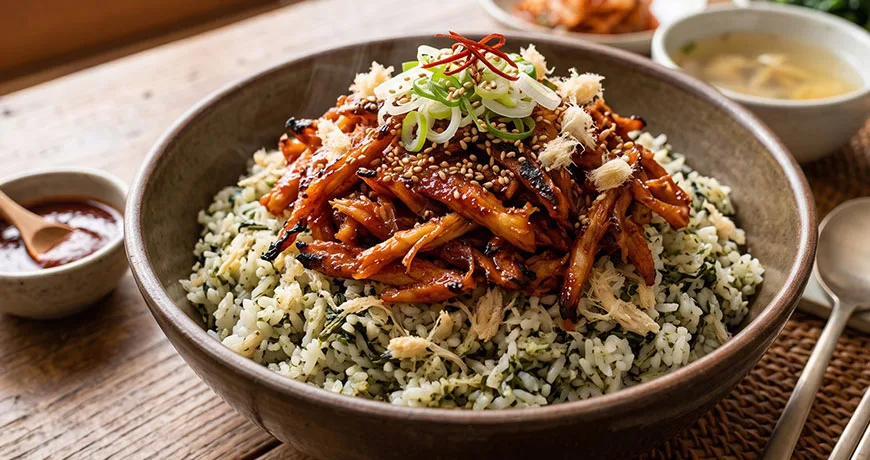
Hwangtaeguideopbap is a masterclass in rheological and thermodynamic engineering, maximizing the porous protein matrix of Hwangtae (freeze-dried pollack) created through months of natural sublimation. By cooking rice with mechanically pulverized micro-fibers of the pollack (bopuragi), the water-soluble inosinate and glutamate forcibly infuse deep into the expanding amylopectin starch matrix during gelatinization. Blanched Chwinamul (aster) provides aromatic essential oils and a slight alkaloid bitterness to balance the heavy umami. Finally, a whole hydrated Hwangtae is coated in a hypertonic gochujang emulsion and grilled, triggering aggressive Maillard browning and caramelization. Tearing the grilled fish finely and mixing it with the rice ensures the rough, coagulated protein fibers mechanically interlock with the sticky starch for an unmatched viscoelastic texture.
⏱️ Total: 45 mins | Prep: 20 mins | Cook: 25 mins | 🍳 Difficulty: Moderate (Requires precise porous hydration and starch gelatinization control) | 🌶️ Profile: Deeply Savory, Sweet, Spicy, and Earthy | 🍚 Focus: Capillary Hydration, Umami Infusion, & Maillard Browning
Ingredients (2 servings)
- Protein Matrix: 1 whole Hwangtae (Freeze-dried Pollack)
- Starch & Micro-fiber Matrix: 2 portions of soaked white rice, 1/2 cup Hwangtae Bopuragi (finely grated/pulverized dried pollack fluff)
- Structural Fiber & Aromatics: 100g blanched Chwinamul (Aster – gently squeezed and emulsified with a pinch of salt and 1 tsp sesame oil)
- Hypertonic Emulsion Marinade: 2 tbsp Gochujang, 1 tbsp soy sauce, 1 tbsp minced garlic, 1 tbsp corn syrup, 1 tbsp plum extract, 1 tbsp sesame oil, a pinch of black pepper
Allergy Information Contains: Fish (Pollack), Soy, Wheat (from Gochujang and soy sauce)
Equipment Rice Cooker or Pot, Mixing Bowl, Damp Cotton Cloth, Frying Pan or Grill, Silicone Brush
Cooking Instructions
- Gelatinization & Umami Infusion: Mix the soaked rice and the Hwangtae fluff (bopuragi) together in a rice cooker with the standard amount of water. As the water boils and the rice starch gelatinizes, the micro-fibers of the pollack rapidly hydrate, releasing their water-soluble amino acids. Convection forces this concentrated umami deep into the cellular structure of the rice grains.
- Capillary Hydration & Structural Restoration: Run the whole dried pollack under tap water for exactly 3 seconds. Immediately wrap it in a damp cotton cloth and let it rest for 15 minutes. This strict control allows the microscopic droplets of water to slowly travel through the porous protein matrix via capillary action, rehydrating the fish into a pliable sponge without washing away its water-soluble flavor compounds.
- Fiber Emulsification: Once the rice is fully cooked, gently fold in the blanched, sesame oil-coated Chwinamul. Adding the greens before cooking would violently collapse their cellular structure; folding them in afterward uses only the residual heat to release their aromatic essential oils into the starch.
- Emulsion Coating & Maillard Searing: Remove any bones/fins from the hydrated pollack and brush generously with the hypertonic gochujang marinade. Sear in a pan over medium-low heat. The reducing sugars in the marinade will caramelize aggressively, forming a thick, flavorful bark over the protein.
- Mechanical Shredding & Plating: Tear the grilled pollack into fine, bite-sized shreds by hand or with scissors. Pile the shredded fish generously over the seasoned rice. The jagged edges of the shredded protein fibers will physically interlock with the sticky rice, creating a perfectly cohesive bite.
💡 Professional Culinary Tips
- Thermodynamics of Freeze-Drying: Hwangtae is produced by repeatedly freezing and thawing pollack in sub-zero winter winds. The ice crystals skip the liquid phase and evaporate directly into a gas (sublimation). This leaves behind millions of microscopic pores within the muscle fibers. This highly porous structure acts like a biological sponge, capable of absorbing marinades far more efficiently than standard fish.
- Flavor Injection via Micro-fibers: Pulverizing the dried fish into fluff (bopuragi) exponentially increases its surface area. When cooked with rice, it negates the need for a separate seafood broth. The thermal convection of the boiling water rapidly dissolves the umami compounds from the micro-fibers, injecting them directly into the expanding starch matrix of every single grain of rice.
- Preventing Water-Soluble Flavor Loss: Soaking dried pollack in a bowl of water is a critical culinary error. Because the dense amino acids are 100% water-soluble, soaking will pull all the flavor out of the fish and into the water via osmosis, leaving you with tasteless, wet cardboard. Using a damp cloth forces the water to penetrate strictly via capillary action, keeping all the umami locked inside the flesh.
Nutrition Facts (Estimated)
Total Content : Approx. 350g (1 serving, including rice and toppings)
Calories : 460 kcal
– Sodium : 720mg
– Total Carbohydrate : 72.0g
– Sugar : 6.0g
– Total Fat : 6.0g
– Saturated Fat : 1.0g
– Cholesterol : 45.0mg
– Protein : 28.0g
– Dietary Fiber : 5.5g
*Daily Values are based on a 2,000 calorie diet and standard Korean nutritional reference values.
**Nutritional values are calculated based on original ingredients; substitutions may alter specific macronutrients.
Origins and Food Culture of Grilled Dried Pollack with Rice (Hwangtaeguideopbap)
1. Alpine Deokjang Heritage of Gangwon-do and Wild Mountain Foraging
- Tracing its roots to the historic alpine drying racks (deokjang) of Inje Yongdae-ri and Daegwallyeong in Gangwon-do, where pollack is naturally cured under harsh winter snow and mountain winds.
- Combining the refined aristocratic tradition of hwangtae bopuragi (seasoned pollack fluff) with the region’s rich heritage of foraging wild aster (chwinamul), it evolved into a sophisticated, modern one-bowl meal.
2. The Artisanal Craft of Pollack Fluff Rice and Glazed Grilling
- The hallmark of authentic preparation lies in grinding dried pollack into feather-light fluff and steeping it into the cooking water of the rice, allowing deep natural umami to infuse into every grain.
- Seasoned with a balanced reduction of gochujang, soy sauce, and aromatics, the rehydrated fish is gently seared to caramelize the sugars before being hand-shredded along the grain, achieving an ideal textural balance of a lightly crisp exterior and a tender, succulent chew.
3. A Wholesome One-Bowl Healing Ritual and Mountain Dining Tradition
- Embodying the timeless Korean philosophy of balanced bowl dining (deopbap and bibimbap), it presents a complete, harmonized spectrum of marine protein and forest botanicals in a single serving.
- Traditionally enjoyed alongside a warm bowl of milky, slow-simmered dried pollack broth (hwangtae-guk) or crisp radish water kimchi (dongchimi), it remains a celebrated healing comfort food that soothes the digestive system and restores natural vitality.
The Golden Essence of Wind-Cured Pollack and the Aromatic Whisper of Wild Mountain Greens: A Refined Portrait of Hwangtaegui-deopbap
Hwangtaegui-deopbap (Grilled Dried Pollack Rice Bowl with Wild Chwinamul) stands as a sophisticated, multidimensional masterpiece of modern Korean rice bowl gastronomy. Freshly steamed white rice is uniquely infused with finely pulverized dried pollack fluff (hwangtae-bopuragi), filling each grain with subtle seafood umami, then layered with tenderly blanched and seasoned wild aster greens (chwinamul) and crowned with shredded fillets of sweet-spicy grilled dried pollack. Far surpassing simple fish-over-rice dishes, this creation meticulously weaves the complex textures of slow-cured alpine fish with the crisp, earthy perfume of mountain herbs, creating a harmonious dialogue between the sea and the highlands within a single ceramic vessel.
Mixing the vibrant bowl with spoon and chopsticks before taking a generous mouthful awakens the senses immediately. The toasted perfume of sesame oil and woodsmoke rises first, intertwined with the herbaceous, forest-like fragrance of fresh chwinamul. Sinking your teeth into the bite reveals the soft, velvety texture of pollack-infused rice, contrasted with the springy, resilient chew of the hand-shredded pollack fillets. The concentrated amino acids locked within the spongy fish burst across the palate alongside the lively crunch and gentle pleasant bitterness of the mountain greens, all knit together by the caramelized warmth of the gochujang glaze into a vibrant, impeccably balanced culinary rhythm.
The enduring brilliance of this dish lies in its restorative harmony—uniting the protein-dense, fatigue-relieving power of freeze-thaw cured pollack with the vitamin-rich purity of wild spring greens. Transforming tough, preserved ingredients into both cloud-like rice seasonings and succulent grilled toppings, a nourishing bowl of Hwangtaegui-deopbap offers an elevated encounter with traditional patience, seasonal abundance, and heartwarming culinary craftsmanship.
Editor’s Review
1. A Dynamic Interplay of Umami-Infused Rice Grains, Springy Shredded Pollack Chew, and Earthy Mountain Herb Piquancy
The deliberate layering of textures inside the bowl delivers a captivating sensory progression. The finely shredded pollack fluff dissolves into the swollen rice starch to create a savory, comforting base, while the grilled pollack topping provides a delightful contrast of crispy caramelized edges and dense, chewy elasticity. The snappy, fibrous crunch of wild chwinamul prevents any palate fatigue, maintaining a vibrant, refreshing finish from the first spoonful to the last.
2. Porous Myofibrillar Capillary Retention, Inosinate-Starch Gel Encapsulation, and Phytochemical Digestive Synergy
Hwangtaegui-deopbap represents an exacting study in dried muscle biophysics and starch gelatinization kinetics. The repeated freezing and thawing cycles of winter curing yield a sponge-like, porous myofibrillar matrix within the pollack, maximizing capillary absorption of the spicy-sweet marinade while locking in moisture during high-heat grilling. Simultaneously, introducing micro-powdered pollack during the rice boiling process traps free inosinate (IMP) and glutamic acid within the swollen amylose helical matrix, fundamentally elevating the umami baseline of the grain. Furthermore, sesquiterpenes and flavonoids from the chwinamul stimulate biliary motility, accelerating protein metabolism and hepatic assimilation.
3. The Alpine Freeze-Thawing Heritage of Yongdae-ri and the Modern Elegance of Korean Bowl Gastronomy
Rooted in the snowswept drying racks (deokjang) of Inje and Daegwallyeong in Gangwon Province, where pollack matures under sub-zero winds, this dish elegantly reinvents historical preservation traditions into a contemporary, health-conscious bowl. Bringing together the patient gifts of highland winter winds and mountain foraging into a unified culinary presentation, it provides modern diners with a deeply nourishing sanctuary of heritage, restorative vitality, and unpretentious gastronomic warmth.