
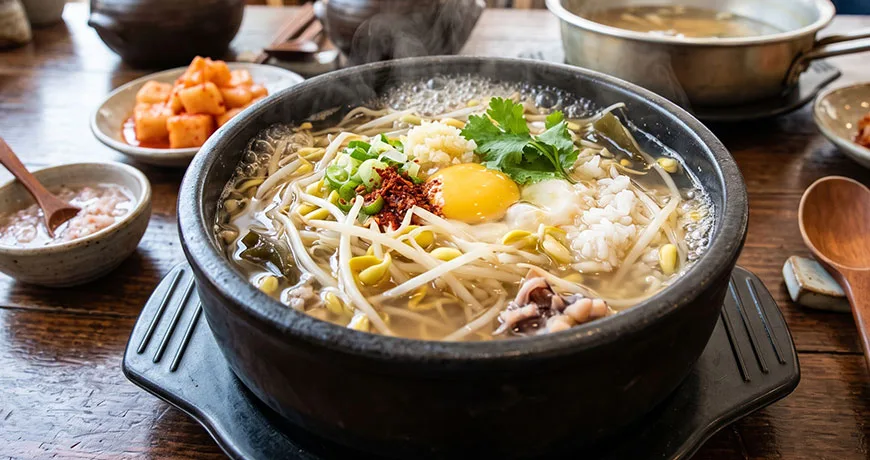
Kongnamulgukbap is the ultimate biochemical detox soup, engineered to extract aspartic acid from soybean sprouts—a key amino acid that accelerates the hepatic breakdown of acetaldehyde (the toxic byproduct of alcohol metabolism). The foundation is a highly concentrated umami solvent brewed from kelp and dried anchovies, packed with water-soluble glutamic and inosinic acids. Cooked rice is briefly boiled in this broth, meticulously timed to prevent the starch (amylopectin) from over-leaching and clouding the soup. Finally, seasoning the soup with Saeujeot (salted fermented shrimp) introduces a hypertonic blast of proteolytic amino acids, completing an explosive umami synergy and a perfectly balanced osmotic pressure that pure table salt could never achieve.
⏱️ Total: 30 mins | Prep: 10 mins | Cook: 20 mins | 🍳 Difficulty: Low (Requires enzymatic odor control and starch retrogradation management) | 🌶️ Profile: Bracingly Clean, Deeply Savory, and Refreshing | 🍚 Focus: Umami Extraction, Enzymatic Denaturation, & Biochemical Detoxification
Ingredients (2 servings)
- Detoxifying Matrix: 200g Kongnamul (Soybean sprouts – Do not remove the tails, as this is where the aspartic acid is concentrated)
- Umami Solvent: 1.2L water, 10 dried anchovies (for broth), 2 pieces of dried kelp (Dashima, 5x5cm), a few scallion roots
- Starch Matrix: 2 bowls of cold, cooked white rice (Retrograded starch prevents the broth from turning into mush)
- Osmotic Seasoning: 1–2 tbsp Saeujeot (salted fermented shrimp), 0.5 tbsp soup soy sauce (Guk-ganjang), 1 tbsp minced garlic
- Aromatic Volatiles: 1/2 scallion, 1 green chili pepper (sliced thinly)
Allergy Information Contains: Crustacean (Shrimp), Soy (from sprouts, soy sauce, and shrimp brine), Wheat (from soy sauce)
Equipment Ttukbaegi (Korean earthenware pot) or Saucepan, Fine Strainer, Knife, Cutting Board
Cooking Instructions
- Umami Extraction: In a pot, combine the water, anchovies, kelp, and scallion roots. Bring to a boil. Remove the kelp immediately as the water approaches 80°C to prevent its alginic acid from making the broth slimy. Simmer the anchovies for 10 more minutes to fully extract the inosinate, then strain the broth completely.
- Enzymatic Control: Pour the clear broth into a Ttukbaegi and bring to a boil. Add the thoroughly washed soybean sprouts and minced garlic. To thermodynamically control the volatile enzymes that cause a fishy “raw bean” smell, you must either cook the sprouts with the lid completely OFF or completely ON until they are tender.
- Starch Hydration: Once the pectin in the sprouts softens and turns slightly translucent, add the cold cooked rice to the boiling broth. (Using cold, retrograded rice is a physical necessity; warm, freshly cooked rice will instantly release amylopectin and turn your clear soup into a cloudy porridge.)
- Aromatic Finishing: As the rice grains swell and hydrate with the broth, top with the sliced scallions and green chilies just before turning off the heat.
- Osmotic Balancing (Saeujeot): Serve the soup boiling hot with the Saeujeot on the side. Do not boil the Saeujeot for a long time during cooking, as its delicate volatile aromas will burn off. Stir it directly into the residual heat of the bowl to chemically dial in the perfect salinity and amino acid depth.
💡 Professional Culinary Tips
- The Lipoxygenase Dilemma (The Bean Odor): The reason soybean sprouts smell fishy if you open and close the lid during cooking is due to an enzyme called lipoxygenase. When exposed to oxygen at unstable, mid-range temperatures (around 85°C), this enzyme violently oxidizes lipids, creating a foul-smelling compound called hexanal. You must either leave the lid OFF from the start to let these volatile compounds evaporate, or keep it tightly ON to rapidly flash-denature the enzyme at 100°C.
- The Biochemistry of Hangover Cures (Asparagine): Acetaldehyde is a Group 1 carcinogen produced when your liver breaks down alcohol, and it is the primary culprit behind hangovers. The tails of soybean sprouts are heavily loaded with aspartic acid (asparagine), which biochemically stimulates the synthesis of dehydrogenase enzymes in your body, actively destroying the toxic acetaldehyde.
- The Proteolysis of Saeujeot: Seasoning this soup with fermented shrimp instead of salt is a deliberate act of molecular gastronomy. During fermentation, the shrimp’s proteins are hydrolyzed by protease enzymes into free amino acids. When these amino acids meet the inosinic acid of the anchovy broth, they trigger an explosive “Umami Synergy,” multiplying the depth of flavor far beyond what standard sodium chloride could achieve.
Nutrition Facts (Estimated)
Total Content : Approx. 500g (1 serving, including rice)
Calories : 320 kcal
– Sodium : 850mg (Variable based on Saeujeot usage)
– Total Carbohydrate : 65.0g
– Sugar : 2.0g
– Total Fat : 2.0g
– Saturated Fat : 0.5g
– Cholesterol : 15.0mg
– Protein : 12.0g
– Dietary Fiber : 4.5g
*Daily Values are based on a 2,000 calorie diet and standard Korean nutritional reference values.
**Nutritional values are calculated based on original ingredients; substitutions may alter specific macronutrients.
Origins and Food Culture of Bean Sprout and Rice Soup (Kongnamulgukbap)
1. Heritage of Jeonju’s Pure Waters and Historic Nambu Market
- Centered in Jeonju, Jeollabuk-do—renowned for cultivating one of the “Eight Flavors of Jeonju” (Jeonju Palmi), utilizing the region’s clean, soft underground spring waters to grow exceptionally crisp and nutty soybean sprouts.
- Originating in the dawn markets outside the southern gates of historic Jeonju Fortress (today’s Jeonju Nambu Market), it served as an indispensable, affordable high-protein breakfast and restorative staple for bustling merchants and laborers.
2. The Culinary Science of Direct-Boiling vs. Toryeom Broth Infusion
- The dish has evolved into two distinct styles: the direct-boiling method (Gkkulhineun-sik), served piping hot with a raw egg cracked straight into the bubbling earthenware, and the traditional Toryeom method (Nambu Market style), where warm broth is ladled repeatedly over rice and sprouts.
- The Toryeom technique preserves the fresh, crunchiness of the bean sprouts at an optimal drinking temperature, uniquely served with diced tender squid toppings and a side bowl of soft-poached eggs (su-ran) tossed with savory seaweed flakes and hot broth.
3. Korea’s Ultimate Hangover Ritual and the Sweet Harmony of Moju
- Universally celebrated across South Korea as the definitive comfort cure for late-night exhaustion and morning-after recovery (haejang).
- The meal is traditionally paired with a warm glass of Moju—a sweet, low-alcohol folk beverage made by slow-simmering unrefined rice wine (makgeolli) with restorative medicinal herbs like cinnamon, dried ginger, jujubes, and licorice—soothing the digestive system and completing an iconic regional breakfast tradition.
The Crystalline Clarity of Coastal Seafood Broth and the Crisp Vitality of Bean Sprouts: A Refined Portrait of Kongnamul Gukbap
Kongnamul Gukbap (Bean Sprout and Rice Soup) stands as the pristine, revitalizing zenith of Korean tangban (soup-and-rice) gastronomy. A bed of cooked white rice is placed at the base of an earthenware vessel (ttukbaegi), layered generously with freshly blanched soybean sprouts, and bathed in a simmering, crystal-clear broth extracted from sea anchovies, dried kelp, smoked pollack (hwangtae), and littoral clams. Unlike heavy bone broths laden with animal lipids, this restorative soup celebrates maritime minerals and the clean, earthy sweetness of legume sprouts, utilizing either direct boiling or the delicate toryeom technique (repeatedly ladling hot broth over the ingredients) to ensure each grain of rice absorbs the deep savoriness of the sea.
Sipping a spoonful of the piping-hot broth seasoned with a pinch of fermented salted baby shrimp (saeujeot) introduces an exhilarating wave of clean, crystalline umami. Scooping a generous mouthful reveals an exceptional textural contrast: the snappy, auditory crunch of succulent bean sprout stems set against the yielding, velvety softness of broth-infused rice grains. Thinly sliced scallions, sharp cheongyang chilies, and tender bits of blanched squid provide bright bursts of heat and chew, while the accompanying soft-poached egg (suran)—gently enriched with spoonfuls of hot broth and crushed seaweed—delivers a luscious, golden creaminess that coats the throat and soothes the senses.
The enduring brilliance of Kongnamul Gukbap lies in its functional elegance—eschewing heavy oils to deliver amino-acid-rich hydration that gently stimulates liver metabolism and cleanses the digestive tract. Originating in the bustling dawn alleys of Jeonju’s Nambu Market, where dockworkers and vendors gathered for restorative warmth after long nights of labor, this iconic hangover tonic (haejang-guk) has become an indispensable nationwide morning ritual. A steaming bowl of bean sprout soup remains a comforting emblem of restorative care, culinary equilibrium, and heartwarming everyday sustenance.
Editor’s Review
1. A Dynamic Interplay of Crisp Sprout Snap, Velvety Broth-Infused Rice, and Silken Poached Egg Luxury
The sensory cadence of crisp vegetable shoots submerged in clear, hot broth sets an inviting standard. The juicy, snapping chew of the bean sprouts delivers an auditory freshness that contrasts with the tender, broth-swollen rice grains beneath. Savoring the soft-poached egg with a splash of broth coats the palate in rich, velvety yolk before diving back into the spicy, chili-flecked soup, creating a harmonious and refreshing culinary rhythm.
2. Asparagine-Driven Acetaldehyde Clearance, Umami Synergism, and Fermented Saeujeot Proteolytic Kinetics
Kongnamul Gukbap represents an exacting study in amino acid biochemistry and nucleic acid extraction. High concentrations of asparagine and arginine concentrated within the sprout roots directly accelerate the hepatic enzymatic breakdown of toxic acetaldehydes into inert acetate following alcohol consumption. Concurrently, nucleotide inosinates (IMP) from dried anchovy and pollack synergize with glutamates and succinic acid from kelp and clams to amplify perceived umami exponentially, while active proteases in fermented saeujeot ensure gentle, rapid gastrointestinal digestion.
3. The Dawn Market Heritage of Jeonju and the Rejuvenating Solace of Korean Hearthside Comfort
Rooted in the historic legume cultivation of the Jeonju river basin and perfected in the early morning stalls of Jeonju Nambu Market, bean sprout soup serves as an enduring cultural touchstone of revival and communal care. Gathering around bubbling earthenware bowls at sunrise to wash away physical exhaustion honors an authentic tradition of unpretentious nourishment, seasonal vitality, and heartfelt hospitality.