
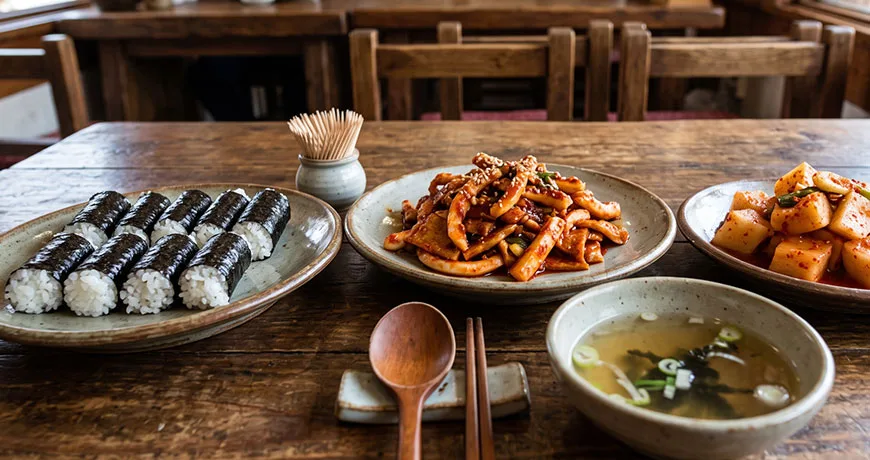
Chungmu Gimbap is a structural culinary adaptation designed to prevent starch retrogradation and microbial spoilage in the hot, humid maritime climate of Tongyeong. By wrapping unseasoned rice in hydrophobic roasted seaweed and completely isolating it from the hypertonic, acidic side dishes (radish and squid), it physically blocks osmotic moisture transfer. This structural separation prevents the seaweed from becoming soggy and exponentially slows bacterial growth. When eaten, the snappy viscoelasticity of the flash-blanched squid collagen and the crunchy turgor pressure of the osmotically dehydrated radish combine perfectly with the clean, neutral starch matrix of the bare rice rolls.
⏱️ Total: 40 mins (includes radish dehydration) | Prep: 30 mins | Cook: 10 mins | 🍳 Difficulty: Low (Requires osmotic control and rapid thermal blanching) | 🌶️ Profile: Spicy, Salty, Crunchy, and Snappy | 🍚 Focus: Osmotic Dehydration, Starch Insulation, & Moisture Separation
Ingredients (2 servings)
- Starch & Hydrophobic Membrane: 2 bowls of warm cooked white rice (strictly unseasoned), 2–3 sheets roasted seaweed for gimbap (cut into quarters)
- Protein & Fiber Matrix: 1 whole fresh Squid (cleaned), 200g Korean Radish (Mu, cut into thick, angled bites)
- Osmotic Agents: 1 tbsp salt, 1 tbsp sugar, 1 tbsp vinegar (for dehydrating the radish)
- Hypertonic Emulsion Marinade: 3 tbsp Gochugaru (chili flakes), 2 tbsp fish sauce, 1 tbsp soy sauce, 1 tbsp plum extract, 1 tbsp minced garlic, 1 tbsp corn syrup, 1 tbsp sesame oil
Allergy Information Contains: Squid, Soy, Wheat (from soy sauce)
Equipment Cutting Board, Knife, Mixing Bowls, Pot
Cooking Instructions
- Osmotic Dehydration (Radish): Toss the sliced radish with the salt, sugar, and vinegar. Let it sit for 30 minutes. The intense osmotic pressure draws excess water out of the cell walls, mechanically shrinking and firming the pectin matrix to maximize its crunchy turgor pressure. Squeeze out all excess liquid tightly.
- Thermal Coagulation Control (Squid): Drop the cleaned squid into boiling water and flash-blanch for exactly 40 seconds to 1 minute. The longer the squid’s collagen is exposed to high heat, the more it violently contracts into rubber. Remove immediately when opaque, shock in cold water to preserve its viscoelastic snap, and cut into bite-sized pieces.
- Emulsion Coating: In a bowl, mix all the marinade ingredients into a thick, sticky paste. Toss the dehydrated radish and blanched squid in the hypertonic paste until deeply coated.
- Starch Assembly: Place a small portion of warm, bare rice onto a quarter-sheet of seaweed and roll it tightly into a finger-sized cylinder. Do not season the rice with oil or salt; any added moisture or fat will break down the seaweed’s hydrophobic barrier and make it soggy.
- Structural Plating: Serve the bare rice rolls on one side of a plate, with the spicy radish and squid safely separated on the other side. Use a skewer to pierce a piece of each and consume them together, allowing the flavors to fuse in your mouth.
💡 Professional Culinary Tips
- The Thermodynamics of Separation: Standard gimbap mixes wet, seasoned vegetables tightly with rice, creating a highly hydrous environment that accelerates aerobic bacterial spoilage (especially critical for fishermen in warm weather). Chungmu Gimbap engineered around this by utilizing the organic acids in the side dishes as natural preservatives and physically isolating the moisture from the starch.
- Delaying Starch Retrogradation: Rice gets hard in the fridge because the amylose molecules crystallize (retrogradation). By rolling the rice while it is still warm and immediately sealing it in the seaweed membrane, you trap the residual kinetic moisture, keeping the gelatinized starch softer for a longer period at room temperature.
- The Chemistry of the Vinegar Bath: Adding vinegar to the radish salt-bath isn’t just for flavor. The slightly acidic environment chemically stabilizes the pectin in the radish walls, amplifying the crunch while preventing the natural anthocyanin pigments from oxidizing and turning an unappetizing color.
Nutrition Facts (Estimated)
Total Content : Approx. 300g (1 serving, including rice and side dishes)
Calories : 450 kcal
– Sodium : 890mg
– Total Carbohydrate : 75.0g
– Sugar : 8.0g
– Total Fat : 5.0g
– Saturated Fat : 0.5g
– Cholesterol : 180.0mg
– Protein : 22.0g
– Dietary Fiber : 4.0g
*Daily Values are based on a 2,000 calorie diet and standard Korean nutritional reference values.
**Nutritional values are calculated based on original ingredients; substitutions may alter specific macronutrients.
Origins and Food Culture of Chungmu Gimbap
1. Maritime Preservation Ingenuity: Designed for Tongyeong Seafarers
- Originating along the historic Gang-guan Harbor in Tongyeong (formerly Chungmu), where seaside wives packed lunches for fishermen spending long days under the scorching sun and humidity of the South Sea.
- To prevent traditional mixed gimbap from rapidly spoiling in maritime heat, local cooks innovatively separated the components: rolling pure, unseasoned rice in dried seaweed and packing spicy cured squid and salted radish on the side.
2. National Sensation via the 1981 “Gukpung 81” Cultural Festival
- The dish gained historic nationwide stardom in 1981 when local culinary matriarchs from the Tongyeong ferry terminal presented their signature fare at the massive “Gukpung 81” festival held in Seoul.
- Captivating the country with its unique separated format and addictive spicy-savory flavor profile, it transformed from a seaside ferry snack into one of Korea’s most celebrated national street food classics.
3. The Wooden Toothpick Ritual and the Harmonious Tripartite Meal
- Eaten traditionally with a wooden toothpick or small skewer instead of chopsticks, diners alternate between spearing a roll of plain seaweed rice, a bite of spicy squid, and a crisp chunk of radish.
- The meal is invariably accompanied by a warm bowl of rustic dried-radish-greens soybean soup (siraegi-doenjangguk), creating a comforting temperature balance that completes an iconic regional dining experience.
The Minimalist Fold of Roasted Seaweed and the Piquant Radiance of Coastal Pickles: A Refined Portrait of Chungmu Gimbap
Chungmu Gimbap stands as a brilliantly engineered, minimalist icon of Korean coastal gastronomy, originating from the historic southern port city of Tongyeong (formerly Chungmu). Rather than rolling seasoned rice together with diverse fillings inside a single cylinder, this regional specialty takes freshly steamed, unseasoned white rice, rolls it into finger-sized batons wrapped in pure roasted seaweed (gim), and serves it alongside separate platters of spicy seasoned squid (ojingeo-muchim) and crisp, lacto-fermented radish chunks (seokbakji). Decoupling the perishable fillings from the moisture-sensitive rice represents a stroke of food preservation wisdom, conceived so that meals would not spoil under the sweltering, humid marine climate of the southern sea.
Using a two-pronged wooden skewer to pierce a simple rice roll followed by a tender piece of crimson squid and a hefty cube of fermented radish delivers an immediate, captivating contrast. Sinking your teeth into the combination introduces the clean, comforting sweetness of plain rice and the gentle marine aroma of crisp seaweed. This neutral canvas is instantly electrified by the springy, toothsome chew of the squid bathed in fiery chili glaze, followed by the loud, refreshing auditory snap of the radish bursting with tangy, chilled brine. The unadorned rice tempers the bold heat of the seasonings, creating an addictive, harmonious rhythm where every bite cleanses and re-stimulates the palate.
The enduring brilliance of Chungmu Gimbap lies in its humble origins and functional elegance. Born from the devoted care of seaside wives who packed non-perishable provisions for fishermen embarking on long, unpredictable sea voyages, this dish has evolved from dockside passenger snacks into a celebrated national delicacy. Enjoyed along the breezy harbor of Tongyeong’s Gangguan port, a platter of Chungmu Gimbap offers an unpretentious yet deeply soulful encounter with maritime ingenuity and heartfelt hospitality.
Editor’s Review
1. A Textural Triad of Neutral Steamed Rice, Springy Spiced Squid, and Crisp Lacto-Fermented Radish
The conscious separation of neutral starch from intensely seasoned accompaniments creates a thrilling sensory dynamic. The pure, nutty fragrance of roasted seaweed and the tender chew of white rice provide a calming foundation, punctuated by the resilient elasticity of spiced squid and the bright, juicy crunch of aged radish. Skewering the elements together transforms each mouthful into an engaging, multi-layered culinary cadence.
2. Water Activity ( ) Compartmentalization, Microbial Inhibition, and Lactic Acid Biopreservation Kinetics
Chungmu Gimbap is an exacting study in moisture management and hurdle technology. In standard gimbap, moisture migration from high-water fillings into cooked rice increases overall water activity ( ), accelerating bacterial proliferation in warm weather; physically isolating the components prevents moisture equalization and dramatically extends shelf life. Furthermore, the low pH achieved through natural lactic acid fermentation in seokbakji, combined with the antimicrobial properties of capsaicin in the squid glaze, provides effective natural preservation against ambient spoilage.
3. The Maritime Ferry Heritage of Tongyeong Harbor and the Enduring Legacy of Coastal Provisioning
Originating as an indispensable dockside staple sold by vendors to ferry passengers and offshore fishermen in Tongyeong during the mid-20th century, Chungmu Gimbap captures the hardworking soul of Korea’s coastal culture. Elevating humble, everyday ingredients through practical preservation methods and deep domestic affection, this iconic dish remains an enduring emotional haven of seaside warmth and culinary resourcefulness.
3대할매김밥
#백년가게