
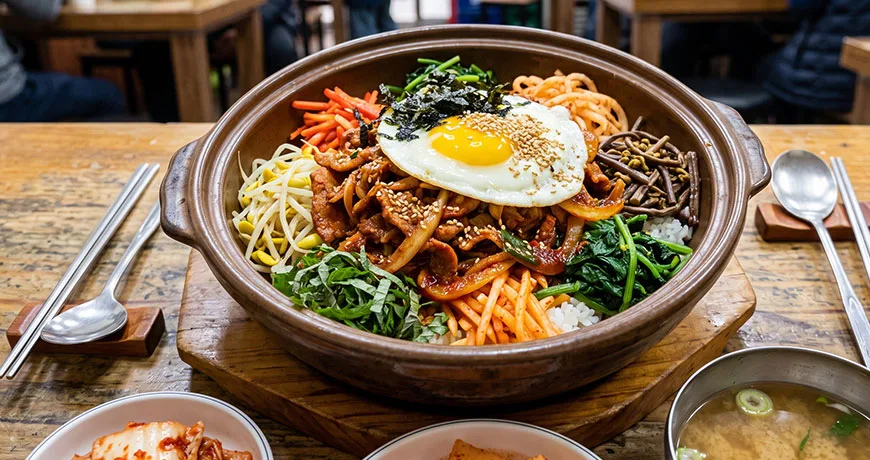
Jeyukbibimbap is a rheological masterpiece that utilizes the rendered lard and caramelized reducing sugars of spicy stir-fried pork as the primary binder for a carbohydrate matrix. Unlike Jeyuk-ssambap, which is cooked completely dry, the pork for bibimbap is engineered to retain a highly viscous hypertonic gochujang emulsion. Through mechanical mixing (agitation), this spicy lipid emulsion seamlessly coats the amylopectin starches of the rice grains. Accompanied by blanched, structurally denatured vegetables that have been aggressively dehydrated to prevent soggy over-gelatinization, the heavy animal proteins and crisp plant fibers interlock perfectly. This provides a unified, explosive umami balance without the need for any additional sauces.
⏱️ Total: 30 mins | Prep: 20 mins | Cook: 10 mins | 🍳 Difficulty: Moderate (Requires moisture control of vegetables and targeted lipid emulsification) | 🌶️ Profile: Fiery, Sweet, Savory, and Cohesive | 🍚 Focus: Lipid Emulsification, Moisture Control, & Rheological Integration
Ingredients (2 servings)
- Protein & Lipid Binder: 300g thinly sliced Pork (shoulder or picnic cut)
- Hypertonic Emulsion Marinade: 3 tbsp Gochujang, 1 tbsp Gochugaru (chili flakes), 2 tbsp soy sauce, 2 tbsp corn syrup, 1 tbsp sugar, 1.5 tbsp minced garlic, 1 tbsp sesame oil, a pinch of black pepper
- Starch Matrix: 2 bowls cooked white rice (cooked with 10% less water for firm grain structure)
- Structural Fiber Matrix: 50g bean sprouts, 50g spinach, 1/4 carrot (blanched or sautéed, with 80%+ of their water physically squeezed out)
- Aromatic Finish: Toasted sesame seeds, 1 tsp sesame oil
Allergy Information Contains: Pork, Soy, Wheat (from Gochujang and soy sauce)
Equipment Frying Pan or Wok, Mixing Bowls, Knife, Cutting Board, Wide Serving Bowls
Cooking Instructions
- Osmotic Marination: Vigorously toss the thinly sliced pork with the hypertonic marinade and let it rest for 10 minutes. The high-molecular-weight sugars (corn syrup) coat the muscle fibers, creating a primary barrier against kinetic moisture loss during the searing phase.
- Thermal Denaturation & Moisture Control: Flash-blanch the spinach and bean sprouts, and lightly sauté the julienned carrots. You must violently squeeze the water out of the blanched vegetables. If excess moisture remains, it will chemically dilute the viscosity and salinity of the pork sauce and turn the rice into a soggy paste.
- Rendering & Maillard Searing: Heat a wok over extreme high heat and add the marinated pork. Flash-evaporate the surface moisture and allow the rendering lard to fry with the gochujang and sugars. Stir-fry until it forms a thick, bubbling, caramelized emulsion, leaving a slightly saucy consistency.
- Assembly: Spread the warm rice in a wide bowl. Arrange the moisture-controlled vegetables around the edges. Mound the hot, sticky, fully thermo-coagulated spicy pork—along with all its viscous sauce—directly in the center.
- Rheological Integration: Drizzle with a touch of sesame oil and mix thoroughly. The pork’s liquid lipids and the gochujang seamlessly coat the rice grains, providing a smooth, perfectly integrated texture on the palate.
💡 Professional Culinary Tips
- The Rheology of Bibimbap Pork: If you are making Jeyuk for lettuce wraps (Ssambap), the goal is a dry, charred exterior. However, for Bibimbap, maintaining a highly viscous, sticky sauce is mechanically essential. This residual emulsion acts as the fundamental “glue” that binds the rice, meat, and vegetables together into a unified dish during the mixing phase.
- Thermodynamics of Vegetable Moisture: The most common failure in any bibimbap is poor moisture control of the namul (vegetables). When the plant cell walls (pectin) break down, they release water. If this water pools at the bottom of the bowl, it rapidly drops the temperature of the dish and causes the rice starches to over-gelatinize (turn to mush). Squeezing the vegetables to their absolute limit preserves the desired texture.
- The Gochujang & Lard Emulsion: When the saturated animal fats rendered from the pork shoulder mix with the soy proteins in the gochujang under high heat, they form a highly stable cream-like emulsion. This lipid barrier softens the sharp sting of the capsaicin on the tongue, creating a rounded, exponentially amplified umami synergy.
Nutrition Facts (Estimated)
Total Content : Approx. 450g (1 serving)
Calories : 560 kcal
– Sodium : 880mg
– Total Carbohydrate : 78.0g
– Sugar : 14.0g
– Total Fat : 16.0g
– Saturated Fat : 4.5g
– Cholesterol : 50.0mg
– Protein : 26.0g
– Dietary Fiber : 7.0g
*Daily Values are based on a 2,000 calorie diet and standard Korean nutritional reference values.
**Nutritional values are calculated based on original ingredients; substitutions may alter specific macronutrients.
Origins and Food Culture of Spicy Pork Bibimbap (Jeyukbibimbap)
1. Modern Evolution: Merging Traditional Bibimbap with Everyday Jeyuk-bokkeum
- Rooted in Korea’s centuries-old Goldongban mixed-rice heritage, this dish modernized tradition by incorporating spicy stir-fried pork (jeyuk-bokkeum), which rose to prominence as a definitive national household comfort food during the late 20th century.
- Combining what was historically served as separate side dishes into a unified, all-in-one bowl, it rapidly flourished across university food streets, office business districts, and casual diners as an affordable, high-protein staple.
2. The Culinary Science of High-Heat Wok Searing and Botanical Balance
- The hallmark of authentic preparation lies in flash-cooking marinated pork over intense heat with onions and scallions, imparting an appetizing sear and rich smoky aroma (bulhyang) while locking in natural meat juices.
- To complement the bold, piquant profile of the spicy pork, it is paired with moisture-rich, crunchy botanicals—such as crisp bean sprouts, refreshing radish salad, and shredded lettuce—achieving an effortless harmony of textures without overwhelming the palate.
3. The Ultimate Cost-Effective Comfort Classic and Quick-Service Hospitality
- Universally celebrated as an economical, nutritionally comprehensive one-bowl meal that provides balanced proteins, carbohydrates, and micronutrients without the need for an elaborate spread of side dishes.
- Typically crowned with a crispy sunny-side-up egg and toasted seaweed flakes, and paired with a warm bowl of soothing soybean paste broth or clear bean sprout soup, Jeyukbibimbap represents the energetic, generous, and efficient spirit of modern Korean everyday dining.
The Sizzling Fire of Wok-Charred Spicy Pork and the Harmonious Crisp of Seasonal Botanicals: A Refined Portrait of Jeyukbibimbap
Jeyukbibimbap (Spicy Pork Bibimbap) stands as a vibrant, flavor-forward pinnacle of modern Korean one-bowl gastronomy. Thinly sliced, tender cuts of pork shoulder or front leg are steeped in a robust crimson marinade of sun-dried red chili paste (gochujang), coarse chili flakes, minced garlic, naturally brewed soy sauce, and sweet onion puree, then flashed across a scorching wok to impart a deep, caramelized smoky char. Generously ladled over a steaming mound of perfectly fluffed white rice alongside a colorful kaleidoscope of seasoned seasonal greens (namul—such as soybean sprouts, zucchini, julienned carrots, mushrooms, and radish), this dish reimagines traditional mixed rice through the bold, energizing lens of Korea’s most beloved spicy stir-fried meat.
Folding the glossy spicy pork, colorful garden greens, and warm rice together with a spoon releases an intoxicating perfume of cold-pressed sesame oil intertwined with the smoky essence of wok-charred chili. Sinking your teeth into the first generous mouthful delivers an immediate textural revelation: the tender, springy ribbons of pork yield effortlessly, flooding the palate with concentrated amino acids and sweet-spicy savory juices. Simultaneously, the crisp snap of blanched bean sprouts and radishes bursts with cool, hydrating freshness, cutting cleanly through the fiery gochujang heat. The natural sweetness of the rice grains tempers the chili warmth, while the rich pork lipids emulsify the seasonings into a cohesive, velvety glaze that satisfies completely without lingering heaviness.
The enduring brilliance of Jeyukbibimbap lies in its functional completeness and accessible vitality—uniting complex carbohydrates, high-quality proteins, and vitamin-rich botanicals into a self-contained, nutrient-dense masterpiece that requires no separate side dishes. Originating in the bustling diner alleys, university backstreets, and roadside transport restaurants (gisa-sikdang) as a hearty, affordable fuel for hardworking commuters and students, a steaming bowl of spicy pork bibimbap remains a timeless emblem of generosity, restorative energy, and heartwarming culinary comfort.
Editor’s Review
1. A Dynamic Interplay of Springy Wok-Charred Pork Chew, Crisp Vegetable Snapping, and Broth-Enriched Starch Balance
The textural landscape inside the bowl offers exceptional contrast and harmony. High-heat wok searing lends the thin pork slices a satisfying, springy resilience that contrasts delightfully against the crisp, auditory snap of seasoned garden vegetables. The warm rice grains remain distinct and tender, absorbing the spicy meat juices and sesame oil to create a luscious, cohesive mouthfeel that finishes clean on the palate.
2. High-Heat Wok Maillard Kinetics, Porcine Lipid Capsaicin Emulsification, and Botanical Fiber Moisture Buffering
Jeyukbibimbap represents an exacting study in surface thermodynamics, lipid solubility, and plant cell mechanics. Flashing thinly sliced pork across intense wok heat drives rapid Maillard browning above 150°C, forming savory aromatic pyrazines while sealing intracellular juices within the protein fibers. Concurrently, natural porcine lipids and toasted sesame oil act as hydrophobic solvents that dissolve and emulsify fat-soluble capsaicin molecules, transforming harsh piquancy into a well-rounded, savory warmth. Meanwhile, the high intracellular turgor pressure of blanched root and shoot vegetables releases abundant moisture upon mastication, effectively buffering oral heat and aiding rapid digestion.
3. The Urban Transport Diner Heritage and the Grounding Solace of Everyday Korean Comfort Gastronomy
Evolving from the energetic transport cafeterias (gisa-sikdang) and casual student diners of the late 20th century to meet the demand for fast, wholesome, high-protein fuel, Jeyukbibimbap embodies the hardworking spirit of contemporary Korean dining. Delivering complete nutritional balance and restorative warmth within a single accessible vessel, this iconic staple remains an enduring haven of vitality, generous hospitality, and unpretentious culinary excellence.