
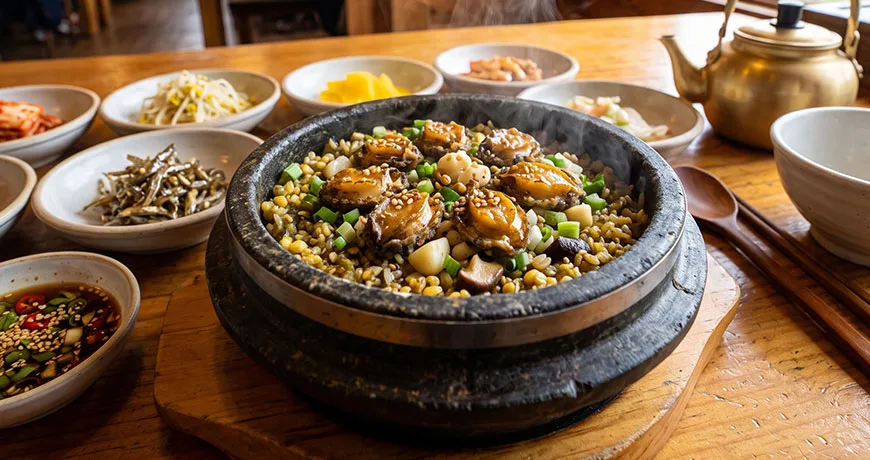
Obunjagidolsotbap is a fusion of culinary engineering that harnesses the extreme thermal mass of a traditional stone pot (Dolsot) to precisely control starch gelatinization and the thermal contraction of marine collagen. Unlike a standard metal pot, the immense specific heat capacity of the stone pot creates a micro-pressurized, high-temperature environment that forcefully drives the umami of the broth deep into the core of every rice grain. Obunjagi (a highly active, smaller relative of the abalone) possesses a much denser collagen matrix than standard abalone. As it cooks, water-soluble taurine and glycogen leach into the broth, binding seamlessly with the rice’s amylopectin. Simultaneously, the residual moisture at the bottom of the pot flash-evaporates, triggering aggressive Maillard browning to form a crispy starch crust (Nurungji), establishing a profound textural contrast with the uniquely chewy seafood.
⏱️ Total: 45 mins (includes rice soaking) | Prep: 35 mins | Cook: 10 mins | 🍳 Difficulty: High (Requires thermodynamic control of the stone pot and boiling point management) | 🌶️ Profile: Savory, Nutty, and Texturally Complex | 🍚 Focus: Thermal Mass, Gelatinization, & Collagen Viscoelasticity
Ingredients (2 servings)
- Starch Matrix: 2 bowls worth of short-grain white rice (thoroughly hydrated/soaked for at least 30 mins)
- Protein & Umami Matrix: 8–10 live Obunjagi (Small Abalone/Tokobushi – physically scrubbed clean with a brush)
- Solvent (Umami): 1.5 cups Kelp Broth (Dashima broth, 1:1 ratio with the rice)
- Lipid & Flavor Catalysts: 1.5 tbsp toasted sesame oil, 1 tbsp rice wine (Cheongju)
- Osmotic Binder (Sauce): 3 tbsp soy sauce, 2 tbsp minced wild chives (or regular chives), 1 tbsp sesame oil, 1 tbsp crushed sesame seeds
Allergy Information Contains: Shellfish (Abalone/Obunjagi), Soy, Wheat (from soy sauce)
Equipment Dolsot (Korean Hot Stone Pot) or Cast-Iron Dutch Oven, Kitchen Brush, Knife, Cutting Board
Cooking Instructions
- Mechanical Prep: Using a stiff kitchen brush, vigorously scrub the foot and the shell of the Obunjagi to remove any algal bio-film. Obunjagi differs from regular abalone by having a smoother shell with fewer respiratory pores (usually 3-4). They are cooked shell-on to allow the trace calcium carbonate to impart a subtle sweetness to the broth.
- Lipid Coating & Preheating: Add the sesame oil to the heated stone pot, followed by the drained, soaked rice. Sauté over medium heat. The unsaturated fatty acids of the sesame oil coat the starch grains, preventing them from fusing into a gummy paste (over-gelatinization) while generating roasted aromatics.
- Boiling & Collagen Coagulation: Pour in the kelp broth and rice wine. Arrange the cleaned Obunjagi on top of the rice. Cover and bring to a vigorous boil over high heat. The 100°C steam rapidly thermo-coagulates the dense collagen network of the Obunjagi, sealing in its chewy viscoelasticity.
- Evaporation & Maillard Crust: Once the boiling subsides into a crackling, sizzling sound (indicating water flash-evaporation at the base), reduce the heat to low. The amino acids and sugars at the bottom of the pot will now undergo rapid caramelization and Maillard browning, forging a thick, crispy crust (Nurungji).
- Thermodynamic Resting: Turn off the heat completely but leave the lid on for 5–10 minutes. The immense radiant heat retained by the stone pot redistributes the internal kinetic moisture perfectly. Serve with the soy sauce binder.
💡 Professional Culinary Tips
- Rheological Differences (Obunjagi vs. Abalone): Though often mistaken for baby abalone, Obunjagi is a distinct species. Because they thrive in the rough, shallow crevices of Jeju Island’s rocky shores, their muscular collagen density is significantly higher than that of farmed abalone. While standard abalone softens quickly under heat, Obunjagi retains a snappy, highly resistant viscoelasticity that provides an unparalleled chewing experience.
- The Physics of Thermal Mass (Dolsot): A thin aluminum pot loses heat rapidly when removed from the stove. Stone, however, boasts immense specific heat capacity, acting as a thermal battery. It pumps residual radiant heat well over 100°C into the food even during the resting phase, ensuring complete gelatinization of the resistant starches at the core of the rice grains.
- Umami Synergy: When the glutamic acid from the kelp broth meets the adenylate and inosinate compounds leached from the Obunjagi, they interact biochemically on your tongue’s receptors to trigger an exponential amplification of savory flavor (Umami Synergy), with the sesame lipids acting as a delivery mechanism that prolongs the finish.
Nutrition Facts (Estimated)
Total Content : Approx. 450g (1 serving)
Calories : 460 kcal
– Sodium : 680mg
– Total Carbohydrate : 72.0g
– Sugar : 1.5g
– Total Fat : 11.0g
– Saturated Fat : 1.5g
– Cholesterol : 95.0mg
– Protein : 18.0g
– Dietary Fiber : 3.0g
*Daily Values are based on a 2,000 calorie diet and standard Korean nutritional reference values.
**Nutritional values are calculated based on original ingredients; substitutions may alter specific macronutrients.
Origins and Food Culture of Small Abalone Hot Stone Pot Rice (Obunjagidolsotbap)
1. Maritime Heritage of Jeju Haenyeo and Volcanic Coastal Foraging
- Tracing its roots back to the historic diving culture of Jeju Island’s female divers (Haenyeo), who hand-harvested small abalone (Haliotis diversicolor, locally called tteokjogae) from shallow crevices along the basalt seabed.
- Distinguished by having seven or more respiratory pores (compared to larger abalones having four to five), small abalone is celebrated for its denser, firmer texture, historically serving as an indispensable high-protein nutrient source for islanders.
2. The Culinary Science of Ge-u (Viscera) Infusion and Gentle Stone-Steam Precision
- The hallmark of authentic preparation lies in blending the nutrient-dense abalone viscera (ge-u) with rice and seafood broth before cooking, imprinting an emerald hue and concentrated ocean umami into each grain of rice.
- Cooking inside a natural stone pot utilizes steady radiant heat to gently steam the shellfish without toughening its delicate muscle fibers, creating a sublime texture that is tossed at the table with a touch of butter and seasoned scallion soy sauce.
3. Tabletop Butter-Soy Dressing, Seafood Stews, and the Soothing Sungnyung Finale
- Diners traditionally scoop the hot seasoned rice into a separate bowl to mix with chive soy sauce and butter, savoring it alongside a boiling earthenware pot of Jeju seafood stew (haemul-ttukbaegi) or grilled tilefish (okdom-gui).
- Pouring hot barley tea into the residual toasted rice crust (nurungji) clinging to the stone bowl creates a fragrant, digestive-soothing broth (sungnyung) that gracefully concludes a quintessential Jeju dining experience.
The Concentrated Ocean Essence of Volcanic Reefs and the Radiance of Scorched Stone: A Refined Portrait of Obunjagi Dolsotbap
Obunjagi Dolsotbap (Small Abalone Hot Stone Pot Rice) stands as an exquisite, deeply comforting pinnacle of Jeju Island’s coastal hot-stone gastronomy. Wild small abalone (obunjagi—Haliotis diversicolor), hand-harvested from the rugged basalt intertidal reefs of volcanic Jeju, is cleaned, sliced, and cooked alongside short-grain rice and clear seafood broth directly inside a sizzling, heavy stone pot (dolsot). Distinct from standard Pacific abalones with its smaller stature and greater number of respiratory pores, the wild obunjagi possesses a remarkably dense, springy chew and concentrated sea-mineral savoriness that infuses every single grain of rice with pristine marine vitality.
Lifting the wooden lid releases an intoxicating billow of fragrant steam, carrying the nutty aroma of freshly steamed rice, cold-pressed sesame oil, and clean ocean breeze. Folding the rice and glistening abalone slices together with a pat of butter or a spoonful of seasoned soy sauce delivers an instant textural revelation. The rice grains, swollen with savory broth, coat the palate in a silken, glossy embrace. Sinking your teeth into the tender obunjagi slices yields a snappy, resilient chew that releases a concentrated burst of sweet glycine and energizing taurine, harmonizing with the buttery starch without a trace of fishiness. Pouring warm water over the golden, scorched rice crust (nurungji) clinging to the stone pot base produces a rich, comforting broth (sungnyung) that finishes the meal on an exceptionally soothing note.
The enduring brilliance of Obunjagi Dolsotbap lies in its culinary transparency—allowing the unadorned, dense texture of volcanic reef shellfish and the steady radiant heat of natural stone to perform pure gastronomic alchemy. Originating from the historic sustenance of Jeju’s iconic women divers (haenyeo), who drew immediate revitalizing warmth and stamina from their fresh catch after hours in the frigid sea, this steaming stone pot remains a timeless emblem of maritime resilience, wholesome nourishment, and heartfelt island hospitality.
Editor’s Review
1. A Dynamic Interplay of Snappy Small Abalone Chew, Savory Broth-Infused Grains, and Golden Scorched Rice Crispness
The sensory cadence within the heated stone vessel offers an exceptional harmony of textures. The dense, toothsome resilience of the sliced obunjagi provides an engaging bite that contrasts beautifully with the tender, broth-swollen rice grains beneath. Melting butter and savory soy sauce form a velvety emulsion across the mixture, while the toasted, crunchy nurungji scraped from the bottom of the pot delivers a deeply satisfying, nutty finish to the palate.
2. Paramyosin-Dense Molluscan Heat Kinetics, Free Amino Acid Extraction, and Radiant Starch Gelatinization
Obunjagi Dolsotbap represents an exacting study in marine invertebrate biophysics and radiant thermal dynamics. The dense foot muscle of small abalone contains high proportions of structural paramyosin proteins, which can toughen under aggressive boiling; however, the gentle convective steam and steady far-infrared radiation of the heavy stone pot preserve optimal myofibrillar elasticity. Concurrently, water-soluble sweet amino acids (glycine, betaine, glutamic acid) and taurine seep into the expanding amylose-amylopectin starch matrix during gelatinization, fundamentally locking natural seafood umami directly into the rice grain core.
3. The Diving Heritage of Jeju Haenyeo and the Grounding Sanctuary of Volcanic Island Gastronomy
Deeply rooted in the artisanal free-diving traditions of Jeju’s haenyeo, who have preserved the coastal ecosystems of the island for centuries, Obunjagi Dolsotbap serves as a cherished cultural touchstone. Gathering around a sizzling tabletop stone pot to savor the pristine gifts of the volcanic sea honors an enduring legacy of human endurance, unpretentious seasonal bounty, and heartwarming culinary craftsmanship.