
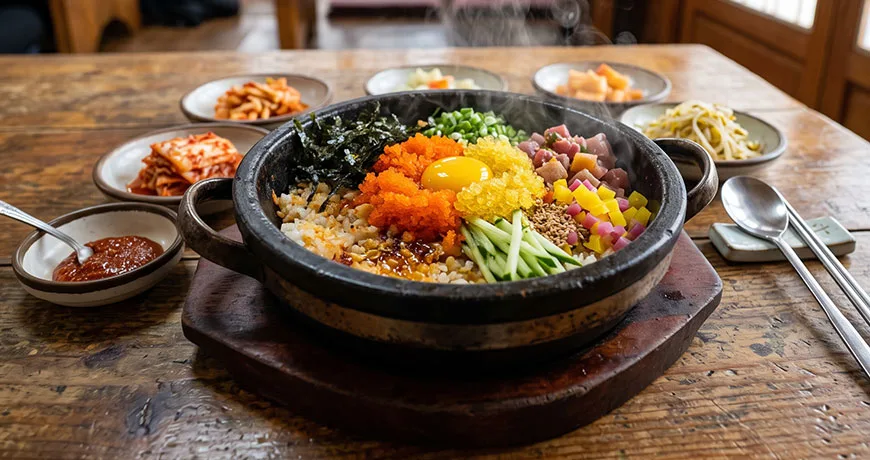
Fish Roe Rice (Albap), prepared by generously coating the base of a sizzling hot earthenware pot (ttukbaegi) with pure toasted sesame oil, layering fluffy steamed white rice, and crowning it with vibrant mounds of orange and yellow flying fish roe (tobiko / nalchial), a fresh egg yolk, crisp diced yellow pickled radish (danmuji), aged kimchi, cucumber, scallions, toasted nori flakes, and sesame seeds, is one of Korea’s premier modern fusion wellness masterworks celebrated for its delightful popping texture and refreshing savory-nutty brightness. Flying fish roe is a nutrient-dense, high-protein, and low-calorie marine delicacy extraordinarily rich in vital omega-3 polyunsaturated fatty acids (EPA and DHA), which actively enhance neurocognitive pathways, improve arterial elasticity, and optimize cardiovascular circulation. In addition, rich stores of bioavailable zinc, selenium, vitamin E, iron, and vitamin B12 (cobalamin) stimulate red blood cell synthesis to prevent anemia, accelerate cellular repair, swiftly dispel chronic physical fatigue, and replenish restorative physical stamina.
The functional synergy between the multi-colored toppings, the radiant heat of the earthenware vessel, and the aromatic sesame oil provides an impeccable nutritional balance with remarkable digestive ease. The gentle residual heat of the earthenware bowl gently warms the fish roe to neutralize any delicate marine brininess while toasting the bottom layer of rice into a crispy, golden crust (nurungji). Active lactic acid bacteria, organic acids, and capsaicin from the aged kimchi stimulate gastric enzyme secretions, accelerating the smooth gastrointestinal breakdown of rich marine proteins and complex starches. Fresh diced cucumber and pickled daikon deliver bioavailable potassium, dietary fiber, and hydration to facilitate smooth sodium clearance and nurture healthy gut microbiota, while the lecithin and choline from the egg yolk nourish brain health and smoothly emulsify fat-soluble vitamins. Furthermore, the sesamin and unsaturated fatty acids in sesame oil deliver potent antioxidant protection, completing an ideal metabolic balance.
The exhilarating sensory symphony—the auditory sizzle as the rice crisps against the hot stone base, the signature popping explosion of fish roe (tok-tok) dancing on the palate, and the sweet-tangy crunch of pickled radish and kimchi harmonizing with fragrant toasted sesame oil—effortlessly reawakens dormant appetites, delivering comforting satiety and cheerful revitalizing energy in every balanced spoonful. Accompanied by a soothing bowl of clear broth (such as light miso or udon broth), the meal refreshes the palate while warming the digestive core. Harmonizing the pristine vitality of ocean fish roe with the cozy thermal craft of Korean earthenware dining, Fish Roe Rice stands as an extraordinary all-season wellness masterpiece that nourishes both body and mind with authentic warmth, balance, and playful culinary vitality.
⏱️ Total: 15 mins | Prep: 10 mins | Cook: 5 mins | 🍳 Difficulty: Low (Requires preheating control and thermal crust management) | 🌶️ Profile: Savory, Nutty, and Explosively Crunchy | 🍚 Focus: Thermal Mass, Acoustic Protein Rupture, & Lipid Emulsification
Ingredients (1 serving)
- Acoustic Protein Matrix: 2 tbsp Orange Flying Fish Roe (Tobiko), 2 tbsp Yellow Flying Fish Roe (rinsed lightly in a dash of rice wine to remove TMA/fishiness, drained completely dry)
- Lipid Emulsifier: 1 fresh raw Egg Yolk
- Starch Matrix: 1 bowl of warm, cooked white rice
- Turgor & Acidity Modifiers: 2 tbsp minced cucumber, 2 tbsp minced pickled radish (Danmuji – yellow and pink mix), 2 tbsp finely chopped ripe Kimchi (liquid violently squeezed out)
- Lipid Coating & Aromatics: 1.5 tbsp toasted sesame oil (for coating the pot), 2 tbsp chopped scallions/chives, 1 handful crushed roasted seaweed (Gim), 1 tsp toasted sesame seeds
Allergy Information Contains: Fish (Roe), Egg, Soy, Wheat (from Kimchi/Sauce)
Equipment Dolsot (Korean Hot Stone Pot) or single-serving heavy Cast-Iron Bowl, Gas Stove (direct heat source), Cutting Board, Knife
Cooking Instructions
- Prep & Moisture Control: Finely dice the cucumber and pickled radish into uniform 0.3cm cubes to maximize structural turgor pressure (crunch). Squeeze the chopped kimchi aggressively to remove excess acidic brine; if left wet, it will drop the pot’s temperature and turn the rice into a soggy paste. Drain the flying fish roe completely.
- Thermodynamic Preheating: Generously brush the interior of the stone pot with 1.5 tbsp of sesame oil. Place it over high heat until the oil is just on the verge of smoking (polymerization phase). This maximizes the vessel’s thermal mass.
- Starch Crust Formation: Spread the warm white rice evenly across the bottom of the scorching pot. The residual moisture in the rice will immediately react with the hot oil, emitting a violent sizzling sound. Allow it to cook undisturbed for 1–2 minutes to trigger the Maillard reaction and forge a golden, crispy starch crust (Nurungji). Turn off the heat.
- Assembly: Replicating the distinct plating shown in 알밥.png, arrange the chopped kimchi, cucumber, pickled radish, scallions, and seaweed in a colorful ring around the edge of the rice. Mound the orange and yellow flying fish roe in the dead center, and carefully place the raw egg yolk directly on top of the roe.
- Emulsification & Mastication: Serve immediately while still sizzling. The diner must vigorously mix the bowl. The immense residual heat of the stone pot partially cooks the roe to tighten its membrane for a louder “pop,” while transforming the egg yolk into a thick, creamy emulsion that coats every grain of rice.
💡 Professional Culinary Tips
- The Physics of the “Pop”: Flying fish roe (Tobiko) provides a unique acoustic and tactile sensation. When exposed to the residual heat of the stone pot, the protein-based chorion (outer shell) of the egg slightly shrinks, increasing the internal pressure. This thermodynamic tightening is what causes the aggressive, satisfying rupture when bitten. If the pot isn’t screaming hot, the roe remains soft and the acoustic experience is muted.
- Egg Yolk Emulsification: The raw egg yolk placed in the center is not merely aesthetic. As it hits the hot rice and oil, the lecithin within the yolk acts as a powerful biochemical emulsifier. It prevents the dish from feeling dry, binding the popping roe, crunchy vegetables, and crispy rice together in a luxurious, creamy coating before the yolk has a chance to fully scramble.
- Hydrophobic Defense Mechanism: The generous coating of sesame oil acts as a physical release agent. At high temperatures, the sticky amylopectin in short-grain rice wants to fuse to the iron or stone and turn to carbon (burn). The oil acts as a hydrophobic barrier, ensuring the rice fries into a delectable crust rather than burning to ash.
Nutrition Facts (Estimated)
Total Content : Approx. 400g (1 serving)
Calories : 510 kcal
– Sodium : 750mg
– Total Carbohydrate : 68.0g
– Sugar : 4.0g
– Total Fat : 18.0g
– Saturated Fat : 3.5g
– Cholesterol : 240.0mg
– Protein : 18.0g
– Dietary Fiber : 3.5g
*Daily Values are based on a 2,000 calorie diet and standard Korean nutritional reference values.
**Nutritional values are calculated based on original ingredients; substitutions may alter specific macronutrients.
Origins and Food Culture of Fish Roe Rice (Albap)
1. Modern Culinary Evolution: From Japanese Course Finale to Standalone Korean Classic
- Tracing its roots to Korean-style Japanese dining and conveyor-belt sushi restaurants in the 1990s, where small portions of seasoned fish roe over rice were served to conclude multi-course raw seafood meals.
- Evolved into a prominent standalone main dish by merging with Korea’s traditional ttukbaegi and dolsot sizzling pot culture, rapidly spreading across casual diners, fusion restaurants, and contemporary food halls.
2. The Culinary Science of Sizzling Sesame Oil, Crispy Nurungji, and Five-Color Aesthetic
- The hallmark of authentic preparation lies in generously brushing the scorching-hot earthenware bowl with toasted sesame oil before adding the rice, triggering rapid starch roasting that yields a golden, aromatic rice crust (nurungji) at the base.
- Arranged meticulously with orange and yellow flying fish roe, green cucumber, vibrant yellow pickled radish, deep-red kimchi, and a centered egg yolk, it presents the traditional Korean five cosmic colors (obangsaek) while creating an exquisite balance of textures.
3. Multi-Sensory Tabletop Dining and the Joyful “Tok-Tok” Popping Experience
- Defined by its interactive tableside experience: listening to the lively crackle (tadak-tadak) of the earthenware pot, inhaling the aroma of toasted sesame oil, and savoring the iconic popping sensation (tok-tok) of the roe in every bite.
- Enjoyed alongside a comforting bowl of light broth and extra kimchi, Albap represents the energetic, colorful, and heartwarming spirit of modern Korean everyday comfort gastronomy.
The Sizzling Crescendo of Radiant Earthenware and the Playful Symphony of Popping Ocean Jewels: A Refined Portrait of Albap
Albap (Sizzling Flying Fish Roe Rice Bowl in Hot Earthenware) stands as a vibrant, visually arresting, and acoustically delightful zenith of modern Korean hot-pot (ttukbaegi) gastronomy. A heavy ceramic or stone vessel is generously slicked with fragrant cold-pressed toasted sesame oil, filled with fluffy white rice, and crowned with radiant mounds of ruby-orange and golden flying fish roe (nalchial). Centered with a rich raw egg yolk, the vessel is encircled by a brilliant mandala of finely diced sweet pickled daikon radish (danmuji), crisp julienned cucumbers, fresh scallions, crushed roasted sesame seeds, and savory seaweed flakes (gim). Rather than a cold, assembled rice salad, this dish harnesses the intense, simmering radiant heat of the earthenware pot to forge a golden, crackling scorched-rice crust (nurungji) at the base while preserving the fresh, bursting hydration of the chilled ocean roe and garden botanicals above.
As the sizzling vessel arrives at the table whispering a lively crackle through rising wisps of fragrant steam, breaking the central yolk and folding the roe, crunchy garnishes, and crisped grains together with a spoon releases an intoxicating perfume of toasted sesame oil and caramelized starch. Sinking your teeth into the first generous mouthful delivers an extraordinary, multi-dimensional textural cadence: the velvety yolk and sesame emulsion smoothly envelops each kernel of rice, instantly followed by the exhilarating sensation of thousands of miniature fish roe beads bursting (tok-tok) against the teeth to release a flood of clean, oceanic umami and delicate mineral salinity. The crisp, juicy snap of pickled radish and chilled cucumbers provides a vibrant sweet-tangy counterpoint, while the prized, toothsome crunch of golden scorched rice scraped from the bottom of the pot delivers a deeply satisfying, nutty finish.
The enduring brilliance of Albap lies in its interactive ergonomics—orchestrating temperature, color, sound, and varied cellular textures into an impeccably balanced, nutrient-dense feast within a single sizzling vessel. Originating in contemporary Korean raw fish establishments (hoetjip) as the celebratory, comforting finale to multi-course feasts and refined into a beloved fast-casual staple nationwide, a colorful bowl of sizzling flying fish roe rice remains a timeless monument of joyful dining, inventive culinary thermodynamics, and heartwarming comfort.
Editor’s Review
1. A Dynamic Quad-Part Textural Symphony: Resilient Roe Popping, Crisp Pickled Radish Snap, Scorched Rice Crackle, and Velvety Yolk Emulsion
The textural landscape inside the sizzling earthenware pot offers exceptional sensory variety and equilibrium. The bouncy, springy resistance of flying fish roe provides an unmistakable auditory popping chew that contrasts gracefully with the clean, watery snap of diced cucumbers and sweet pickled daikon. As you chew, the crunchy shards of bottom nurungji introduce a rich, toasted resistance, seamlessly knit together by the luscious, silken coat of melting egg yolk and sesame oil that ensures a clean, non-greasy mouthfeel from start to finish.
2. Teleost Chorion Protein Resilience, Hydrostatic Bursting Mechanics, Sesame Lipid-Mediated Dextrinization, and Lecithin Emulsification
Albap represents an exacting study in biomembrane biophysics and high-heat starch crystallization. The tough, proteinaceous chorion envelope of flying fish eggs exhibits high thermal stability, preventing premature rupture under the ambient heat of the pot and locking in intracellular water-soluble taurine and glutamates until masticated under oral hydrostatic pressure. Concurrently, the hydrophobic lipid film of toasted sesame oil on the pot base allows conductive heat transfer above 160°C to drive rapid pyrolytic dextrinization and Maillard browning across the bottom starch layer, generating savory alkylpyrazines in the scorched crust without burning. Meanwhile, phospholipid surfactants (lecithin) in the raw egg yolk instantly emulsify the rendered sesame lipids with botanical moisture, coating every grain in a velvety, protective sheen.
3. The Seafood Banquet Heritage and the Playful Modern Brilliance of Korean Sizzling Bowl Gastronomy
Emerging during the late 20th century as the signature closing meal of high-end Korean coastal sashimi dining and swiftly evolving into a beloved standalone comfort dish, Albap captures the dynamic, inventive spirit of modern Korean foodways. Engaging the diner’s eyes, ears, and palate across a kaleidoscope of textures and colors, this sizzling one-pot classic serves as an enduring haven of wholesome nourishment, playful culinary artistry, and heartwarming hospitality.