
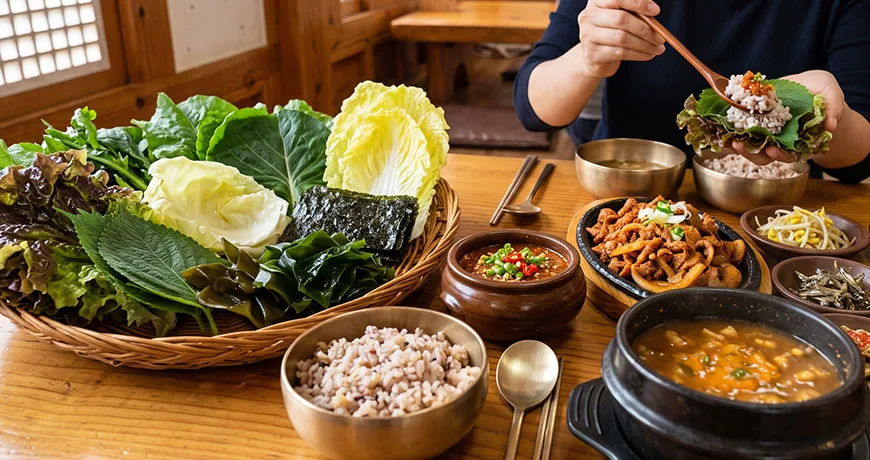
Ssambap is an exercise in structural culinary engineering, designed to construct multi-phase wrap matrices by precisely manipulating the turgor pressure of plant cells and the thermal degradation of pectin. Raw lettuce and perilla leaves are subjected to ice-water osmotic shocks, swelling their cells to maximum turgor pressure for an explosive, crunchy palate cleanse. Conversely, cabbage and pumpkin leaves are steamed to thermodynamically hydrolyze their rigid pectin networks, yielding a soft, viscoelastic membrane that gently cradles the rice. Marine alginate matrices like kelp (dashima) add yet another layer of rheological complexity. At the core of these diverse biological wrappers lies warm, sticky amylopectin starches (rice) bound tightly by a hypertonic, highly viscous fermented emulsion (Ssamjang). Consuming these encapsulated bites creates a dynamic, multi-textural explosion of salinity, hydration, and earthy umami in the mouth.
⏱️ Total: 20 mins | Prep: 10 mins | Cook: 10 mins | 🍳 Difficulty: Low (Requires turgor pressure maximization and precise pectin denaturation) | 🌶️ Profile: Earthy, Fresh, Salty-Savory, and Crisp | 🍚 Focus: Turgor Pressure, Pectin Hydrolysis, & Emulsion Binding
Ingredients (2 servings)
- High-Turgor Raw Matrix: 10 lettuce leaves, 10 perilla leaves (soaked in ice water to maximize hydration)
- Thermally Denatured Matrix: 1/8 head of cabbage, 5 pumpkin leaves (steamed until pliable)
- Marine Alginate Matrix: 100g raw edible kelp (Dashima), 100g sea mustard (Miyeok) (flash-blanched and ice-shocked)
- Hypertonic Fermented Binder (Ssamjang): 2 tbsp Doenjang (soybean paste), 1 tbsp Gochujang (chili paste), 1 tbsp minced garlic, 1 tbsp crushed mixed nuts, 1 tbsp sesame oil, 1 tbsp plum extract
- Starch Matrix: 2 bowls of warm, cooked white rice
Allergy Information Contains: Soy, Wheat (from Doenjang and Gochujang), Tree Nuts (in Ssamjang)
Equipment Steamer, Multiple Mixing Bowls, Colander, Knife, Cutting Board
Cooking Instructions
- Osmotic Hydration (Turgor Maximization): Wash the raw lettuce and perilla leaves, then completely submerge them in an ice-water bath (below 2°C) for 5–10 minutes. The osmotic pressure forces water molecules directly into the plant vacuoles, inflating the cellular walls to their maximum turgor limit. This ensures the leaves deliver a crisp, loud snap upon mastication.
- Thermal Denaturation of Pectin (Steaming): Place the cabbage and pumpkin leaves in a steamer and expose them to 100°C steam for 5–8 minutes. Steam relies on the latent heat of vaporization to rapidly break down the rigid pectin holding the plant cells together, rendering the leaves soft and pliable while entirely preventing the leaching of water-soluble vitamins into the cooking liquid.
- Alginate Stabilization: Drop the raw kelp and sea mustard into boiling water for exactly 10 seconds (flash-blanching), then instantly plunge them into ice water. This severe thermodynamic shock sets the slimy alginic acid on the surface and forces the chlorophyll into a vibrant, brilliant green.
- Emulsion Assembly (Ssamjang): In a mixing bowl, combine the Doenjang, Gochujang, garlic, crushed nuts, sesame oil, and plum extract. The proteins and unsaturated fats from the crushed nuts act as a physical buffer against the intense sodium of the fermented pastes, thickening the mixture into a highly viscous emulsion that binds perfectly to the rice grains.
- Rheological Integration (Eating): To consume, lay a selected matrix leaf flat. Place a spoonful of warm rice in the center and top with a dab of the hypertonic Ssamjang. Wrap it into a tight sphere and eat it in one bite. The diner experiences a rapid succession of contrasting rheological states: the crisp snap or soft chew of the leaf, the sticky starch, and the deep, salty-savory emulsion.
💡 Professional Culinary Tips
- The Physics of Turgor Pressure: Wilting leaves are suffering from cellular dehydration. Plunging them into ice water isn’t just about cleaning; it’s a biological restoration process. The cold temperature closes the stomata (preventing water escape) while osmosis forcibly pumps water back into the cells. Maximized turgor pressure translates mechanically to the auditory and textural “crunch” that is critical for palate cleansing.
- Steaming vs. Boiling (Thermodynamics): If you boil cabbage directly in water, its water-soluble amino acids and natural sugars (reducing sugars) leach out via osmosis, leaving the leaves watery and bland. Steaming utilizes 100°C vapor to efficiently transfer heat energy into the cellular structure, hydrolyzing the pectin to soften the leaf while sealing all the nutritional and flavor compounds inside.
- Biochemical Masking in Ssamjang: Raw vegetables provide essential potassium but lack sodium, demanding a salty binder. However, straight Doenjang is overwhelmingly hypertonic. By incorporating crushed nuts and sesame oil, the plant lipids physically coat the tongue’s taste receptors. This biochemical masking smooths out the sharp, stinging edge of the salt, replacing it with a rich, rounded, and nutty finish.
Nutrition Facts (Estimated)
Total Content : Approx. 400g (1 serving)
Calories : 390 kcal
– Sodium : 850mg
– Total Carbohydrate : 72.0g
– Sugar : 6.0g
– Total Fat : 7.0g
– Saturated Fat : 1.0g
– Cholesterol : 0.0mg
– Protein : 12.0g
– Dietary Fiber : 14.0g
*Daily Values are based on a 2,000 calorie diet and standard Korean nutritional reference values.
**Nutritional values are calculated based on original ingredients; substitutions may alter specific macronutrients.
Origins and Food Culture of Leaf Wraps and Rice (Ssambap)
1. Historical Lineage: From Ancient Goryeo Ssam to Joseon “Bokssam” (Wrapping Fortune)
- Rooted in Korea’s centuries-old custom of wrapping rice in fresh leaves, historical Yuan Dynasty texts such as poet Yang Yunfu’s Yuangongci record that court ladies taken from the Goryeo Dynasty wrapped rice in fresh lettuce (Goryeo-ssam) as an emotional connection to their homeland.
- During the Joseon Dynasty, the dish evolved into the festive Bokssam (“wrapping fortune”) tradition documented in the Dongguksesigi (Record of Seasonal Customs in the Eastern Kingdom), where families wrapped rice in cabbage leaves, dried wild greens, or laver on the First Full Moon of the Lunar New Year (Jeongwol Daeboreum) to invite health, abundance, and auspicious blessings.
2. The Culinary Science of Raw Greens, Steamed Leaves (Sukssam), and Marine Algae
- The hallmark of authentic preparation lies in curating three distinct textures: crisp raw greens (red leaf lettuce, fragrant perilla, young cabbage), gently steamed sweet leaves (tender pumpkin leaves and green cabbage), and nutrient-dense marine seaweeds (sun-dried gim, tender miyeok, and thick dasima).
- Each wrap is paired with specialized traditional seasonings—including thick-simmered soybean paste stew (gangdoenjang), nut-infused ssamjang, and umami-rich fermented hairtail fish sauce (galchi-sokjeot)—to elevate the natural flavors of the botanicals without requiring heavy cooking.
3. The Auspicious “Full-Mouth” Wrap Ritual and Eco-Friendly Slow Food Culture
- Cradling an oversized leafy parcel in hand, placing rice and rich paste inside, and eating the package whole—filling the mouth completely (bol-i mieojige)—embodies the generous, unpretentious spirit of Korean communal hospitality.
- Celebrating a whole-food, plant-forward lifestyle rich in bioavailable vitamins, minerals, and digestive probiotics, Ssambap stands as an enduring global icon of Korea’s eco-friendly, detoxifying slow-food heritage.
The Verdant Tapestry of Earth and Ocean Botanicals and the Tactile Art of Wrapping Fortune: A Refined Portrait of Ssambap
Ssambap (Korean Rice and Savory Paste Wrapped in Garden Greens and Marine Algae) stands as an elemental, holistic, and deeply communal zenith of plant-forward Korean gastronomy. A lush, vibrant spectrum of freshly washed raw botanicals (crisp green-leaf lettuce, peppery perilla leaves, tender sweet cabbage), gently steamed foliage (velvety pumpkin leaves and sweet cabbage), and mineral-dense marine seaweeds (roasted gim laver, sea mustard, and broad kelp) is spread wide across the tabletop. Diners fold spoonfuls of warm, plump white or multi-grain rice and robust artisanal seasonings—such as fermented soybean paste (ssamjang), reduced earthenware bean stew (gangdoenjang), or spicy cured fish roe and seafood (jeotgal)—into broad, emerald parcels. Eschewing heavy industrial processing, this dish celebrates the unadorned structural crunch, natural hydration, and terroir of seasonal harvests, allowing each guest to orchestrate their own sensory harmony in a single bite.
Laying a broad perilla leaf, a tender steamed pumpkin leaf, or a glossy ribbon of kelp across your palm, adding a mound of steaming rice, and crowning it with a dollop of fragrant paste creates a magnificent culinary parcel (ssam). Folding the bundle and placing it whole into the mouth delivers an immediate explosion of cool, cellular moisture bursting from the crisp greens. Sinking your teeth into the bite yields a dynamic textural interplay: raw greens deliver an auditory crunch, steamed leaves dissolve with melting botanical sweetness, and marine seaweeds offer a slippery, toothsome elasticity rich in oceanic minerals. The soft, sweet starch of the rice grains effortlessly balances the deep, fermented salinity of the pastes, leaving the entire palate completely refreshed, clean, and energized.
The enduring brilliance of Ssambap lies in its functional balance—uniting bioavailable vitamins, dietary fibers, and minerals from diverse leafy greens and seaweeds with the sustained energy of complex carbohydrates and the deep umami of fermented soy proteins. Originating from the historic Goryeo-ssam cherished across ancient East Asia and the auspicious Lunar New Year tradition of Bokssam (eating wraps to invite good fortune), gathering around a colorful spread of leaves, kelp, and savory pastes remains a timeless monument of ecological mindfulness, restorative wellness, and heartwarming Korean hospitality.
Editor’s Review
1. A Dynamic Cadence of Raw Crisp Leaf Turgor, Steamed Botanical Tenderness, Slippery Seaweed Elasticity, and Starch Balance
The textural variety inside a single wrap offers an extraordinary sensory journey. The auditory snap and cool cellular hydration of fresh lettuce and perilla contrast gracefully against the velvety softness of par-steamed cabbage and pumpkin leaves. Ribbons of kelp and sea mustard introduce a dense, toothsome bite, while the warm rice grains absorb the savory paste to create a luscious, cohesive mouthfeel that satisfies completely without lingering heaviness or grease.
2. Plant Turgor Mechanics, Protopectin Thermal Hydrolysis, Alginate Mucosal Shielding, and Glutamate Osmotic Buffering
Ssambap represents an exacting study in plant cell mechanics, algal polysaccharide rheology, and fermentation biochemistry. Fresh, unheated leaves utilize intact intracellular turgor pressure to release instant cellular water upon mastication, naturally diluting the paste’s high salinity and buffering oral receptors. Conversely, gently steaming pumpkin leaves and cabbage drives the thermal breakdown of insoluble protopectin into water-soluble pectin, yielding a tender, easily digestible texture and concentrated simple sugars. Seaweeds like kelp supply viscous structural alginates and fucoidans that form a soothing mucosal protective film across the digestive tract, while free glutamic acids from fermented doenjang merge with nucleic acids from cured seafood seasonings to elevate umami perception across the palate.
3. The Ancient Lineage of Goryeo-ssam, the Auspicious Heritage of Bokssam, and the Soul of Korean Eco-Gastronomy
Documented since the Goryeo Dynasty and integrated into festive folk traditions as Bokssam—where wrapping grains in broad leaves symbolized enveloping wealth and health for the household—Ssambap captures the sustainable soul of Korean dining. Folding the wholesome gifts of land and sea into an interactive, personalized feast transforms an unpretentious meal into an invigorating ritual of communal gratitude, dietary harmony, and timeless culinary craftsmanship.