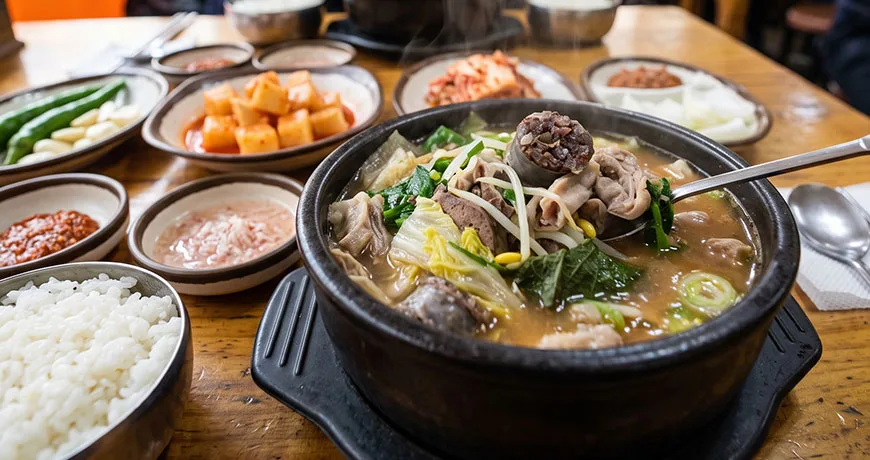
Sundaegukbap is a macromolecular culinary construct built upon a rich, colloidal pork bone emulsion heavily saturated with thermally hydrolyzed collagen and elastin from pork offal. The centerpiece of the dish, Sundae (Korean blood sausage), is a complex matrix of coagulated porphyrin proteins (from pork blood) and amylopectin starches (from glass noodles), all encased tightly in a natural viscoelastic membrane (pig intestines). Cooking this dish requires precise thermodynamic timing; if boiled too long, the expanding starches will violently rupture the contracting collagen casing. During consumption, the biochemical addition of Saeujeot (fermented salted shrimp) introduces powerful proteolytic enzymes that actively aid in digesting the heavy animal lipids while triggering an immense umami synergy. Finally, perilla powder is integrated to dramatically alter the rheological viscosity of the soup, transforming it into a thick, nutty emulsion.
⏱️ Total: 30 mins (using pre-made broth) | Prep: 15 mins | Cook: 15 mins | 🍳 Difficulty: Moderate (Requires casing thermodynamics and emulsion viscosity control) | 🌶️ Profile: Deeply Savory, Earthy, and Richly Textured | 🍚 Focus: Colloidal Emulsion, Thermal Expansion Control, & Biochemical Proteolysis
Ingredients (2 servings)
- Colloidal Solvent: 1.2L rich Pork bone broth (milky and emulsified)
- Complex Protein & Starch Matrix: 200g Sundae (Blood sausage, sliced), 200g boiled pork head meat and offal (stomach, heart, etc., thinly sliced)
- Biochemical Catalyst & Osmotic Agent: 2 tbsp Saeujeot (Salted fermented shrimp)
- Viscosity & Aromatic Lipids: 2 tbsp Perilla seed powder (Deulkkae-garu), 50g fresh garlic chives (Buchu), 2 tbsp minced scallions
- Hypertonic Spice Paste (Dadaegi): 2 tbsp Gochugaru (chili flakes), 1 tbsp broth, 1 tbsp soup soy sauce, 1 tbsp minced garlic, a pinch of black pepper (mixed into a paste)
- Starch Matrix: 2 bowls of warm, cooked white rice
Allergy Information Contains: Pork, Crustacean (Shrimp), Soy, Wheat (from soy sauce)
Equipment 2 Ttukbaegi (Korean earthenware pots) or Heavy Saucepans, Knife, Cutting Board
Cooking Instructions
- Colloidal Heating & Gelatin Softening: Divide the pork bone broth, sliced head meat, and offal into the two Ttukbaegi pots. Bring to a violent boil over high heat. The kinetic energy from the boiling liquid transfers into the chilled offal, melting its stiff gelatinized tissues back into a tender, viscoelastic state.
- Thermodynamic Expansion Control (Sundae): Once the soup reaches a rolling boil, add the sliced Sundae. Do not boil the Sundae from the beginning. The noodles inside absorb water and expand rapidly, while the natural casing shrinks under high heat. If left to boil, they will undergo an osmotic explosion, turning your clear soup into muddy porridge. Boil for a maximum of 2 to 3 minutes just to heat the core.
- Aromatic Volatilization: Add the minced scallions into the boiling liquid and immediately remove the pots from the heat.
- Rheological & Biochemical Balancing (Tableside): Garnish the top with fresh chives and a generous spoonful of perilla powder. The raw chives will slightly wilt in the residual heat, releasing sharp allicin compounds. The diner must season the soup exclusively with the Saeujeot (fermented shrimp) for salinity, adding the Dadaegi spice paste if a fiery capsaicin kick is desired.
- Integration: Submerge the warm rice into the soup. The starches will drink in the thick, perilla-infused colloidal broth, creating a perfectly unified and hearty spoonful.
💡 Professional Culinary Tips
- The Thermodynamics of the Casing: A natural intestine casing shrinks when exposed to heat, while the starchy glass noodles stuffed inside it swell as they absorb kinetic moisture. The moment these two opposing physical forces surpass the tensile strength of the casing, the sausage bursts. Limiting the Sundae’s exposure strictly to residual heat or a very brief boil is the scientific secret to maintaining its structural integrity.
- The Proteolysis of Saeujeot: Seasoning pork soups with fermented salted shrimp is a stroke of biochemical genius. Saeujeot contains exceedingly high levels of protease and lipase—enzymes that break down proteins and fats. When introduced to the soup, these enzymes not only dramatically amplify the umami through free amino acids but actively pre-digest the heavy pork lipids, preventing indigestion.
- Emulsion Stabilization via Perilla: Perilla seed powder does not just add a nutty flavor; it fundamentally alters the physics of the soup. The plant proteins and unsaturated fats in the crushed seeds act as emulsifiers, binding the free-floating pork fats with the water molecules. This transforms a thin, watery broth into a thick, creamy, and highly viscous gravy-like suspension.
Nutrition Facts (Estimated)
Total Content : Approx. 650g (1 serving, including rice)
Calories : 680 kcal
– Sodium : 1,050mg (Variable based on Saeujeot usage)
– Total Carbohydrate : 82.0g
– Sugar : 2.0g
– Total Fat : 22.0g (Pork lipids and unsaturated perilla fats)
– Saturated Fat : 7.0g
– Cholesterol : 130.0mg
– Protein : 35.0g
– Dietary Fiber : 4.5g
*Daily Values are based on a 2,000 calorie diet and standard Korean nutritional reference values.
**Nutritional values are calculated based on original ingredients; substitutions may alter specific macronutrients.
Origins and Food Culture of Blood Sausage and Rice Soup (Sundaegukbap)
1. Historical Heritage: From 19th-Century Texts to Five-Day Rural Markets
- Tracing its roots back to historic late-Joseon culinary manuscripts such as Siuijeonseo, which detailed doyaji-sundae (pork intestines stuffed with blood, buckwheat, and aromatics) as a cherished winter delicacy.
- During the post-war industrial era of the 1950s and 1960s, rural five-day periodic markets (oil-jang) near traditional butchery hubs—such as Byeongcheon in Cheonan, Baekam in Yongin, and Changpyeong in Damyang—refined large-cauldron bone brewing into a definitive working-class comfort meal.
2. The Culinary Science of Cauldron Simmering and Tabletop Customization
- The hallmark of authentic preparation lies in boiling pork leg bones and head meat over rolling flames for dozens of hours to eliminate gamey notes, yielding an intensely savory, opaque white bone broth (don-gol yuksu).
- Served piping hot in heat-retaining earthenware pots or infused via the classic broth-ladling toryeom technique, it invites diners to personalize their soup at the table by adding salted shrimp for seasoning, ground perilla for richness, spicy paste for heat, and fresh chives for vitality.
3. The Quintessential Soul Comfort Food and Everyday Hangover Cure
- An enduring centerpiece of Korean working-class culture, it serves as both an affordable late-night accompaniment to a shot of soju after a long workday and an indispensable restorative cure (haejang) for morning-after recovery.
- Enjoyed by ladling the scalding broth over rice and savoring it alongside crunchy kkakdugi and raw onions dipped in ssamjang, Sundaegukbap represents the purest, most generous spirit of everyday Korean culinary resilience and warmth.
The Silken Opulence of Slow-Simmered Pork Bone Broth and the Earthy Resilence of Artisan Blood Sausage: A Refined Portrait of Sundaegukbap
Sundaegukbap (Korean Blood Sausage and Pork Offal Soup with Rice) stands as the dynamic, full-bodied, and deeply democratic pinnacle of Korean tangban (soup-and-rice) gastronomy. Rich pork marrow bones and head bones are simmered in deep cauldrons for hours to extract an unctuous, milky-white broth, which is then ladled boiling-hot over an earthenware vessel (ttukbaegi) packed with artisan blood sausage (sundae—pork casing packed with pork blood, glass noodles, glutinous rice, and botanicals), tender head meat, and toothsome offal cuts such as stomach (osorigamtu), heart, and small intestines. Diverging from the restrained clarity of beef broths, this dish embraces the rustic weight and collagen-rich depth of pork, inviting diners to orchestrate their own sensory profile at the table with crushed roasted perilla seeds, fermented salted shrimp (saeujeot), spicy seasoning paste (dadaegi), and crisp garlic chives.
Receiving a bubbling earthenware pot, seasoning it with a spoonful of perilla powder and salted shrimp, and scooping a generous mouthful of broth-steeped rice awakens the palate immediately. The fragrant, nutty aroma of roasted perilla seeds mingles with the deep, savory steam of slow-cooked pork broth. The initial contact reveals rice grains swollen with velvety, gelatinous stock that glide across the tongue in a comforting embrace. Sinking your teeth into the thick slice of sundae triggers a lively snap of the casing, releasing an explosion of rich, mineral-laden blood pudding and springy starch noodles. The melt-in-the-mouth tenderness of sliced head meat contrasts gracefully against the chewy resilience of pork stomach, while the sharp, fermented salinity of salted shrimp and the fiery kick of chili paste cleanly cut through the rich lipids, delivering an exhilarating, restorative wave of full-body nourishment. The enduring majesty of Sundaegukbap lies in its nose-to-tail culinary philosophy—transforming every bone, organ, and drop of broth into a concentrated elixir of energy that sustains hardworking individuals through demanding days. Born around the boiling cauldrons of historic five-day markets (oiljang) and post-war transport alleys, where merchants and laborers sought immediate physical restoration, a steaming bowl of blood sausage soup remains an irreplaceable cultural monument of generous hospitality, culinary ingenuity, and heartwarming comfort.
Editor’s Review
1. A Dynamic Interplay of Snappy Sausage Casing, Velvety Blood Filling, Tender Head Meat, and Perilla-Thickened Broth
The textural progression inside the earthenware vessel offers exceptional variety and balance. The firm, elastic chew of the sausage casing yields to reveal a moist, velvety filling, which pairs delightfully with the tender flaking of slow-braised head meat and the snappy resistance of sliced pork stomach. Finely ground roasted perilla seeds disperse across the soup, creating a creamy, rounded mouthfeel that suspends the savory broth smoothly across the palate without grease, punctuated by the crisp crunch of cold radish kimchi.
2. Porcine Collagen Thermal Hydrolysis Gelatinization, Lipid Colloidal Emulsification, and Inosinate-Glutamate Umami Synergism
Sundaegukbap represents an exacting study in connective tissue biophysics, colloid chemistry, and nucleotide-amino acid synergy. Prolonged boiling of pork bones and cartilage drives irreversible thermal hydrolysis of Type-I and Type-II collagen into water-soluble gelatin, significantly increasing broth viscosity. Vigorous convective boiling suspends rendered marrow lipids into micro-droplets, forming a stable, opaque oil-in-water (O/W) colloidal emulsion. Concurrently, muscle-bound inosinate (IMP) from the pork meat interacts synergistically with free glutamates from the fermented salted shrimp (saeujeot), multiplying perceived umami across oral receptors. Furthermore, alpha-linolenic fatty acids and volatile terpenes in the perilla seed powder chemically capture and mask short-chain volatile porcine fatty acids, yielding a clean, rounded aroma.
3. The Five-Day Traditional Marketplace Heritage and the Grounding Solace of Korean Working-Class Gastronomy
Originating from the communal market cauldrons of the late Joseon Dynasty and the vibrant post-war industrial hubs where nourishing every part of the animal was an essential virtue, Sundaegukbap captures the resilient soul of Korean dining. Serving an abundant, boiling vessel of meat, offal, and rice to restore depleted energy honors an authentic heritage of generous care, egalitarian sustenance, and heartwarming culinary craftsmanship.
거목순대국밥
#백년가게
농민백암순대 본점
#백년가게
산수갑산
#모닝와이드 #생방송투데이 #생활의달인 #수요미식회
신포순대
#백년가게
제일식당
#생방송오늘아침 #생방송오늘저녁 #생방송투데이 #식객허영만의백반기행 #수요미식회 #파워매거진 #한국인의밥상