
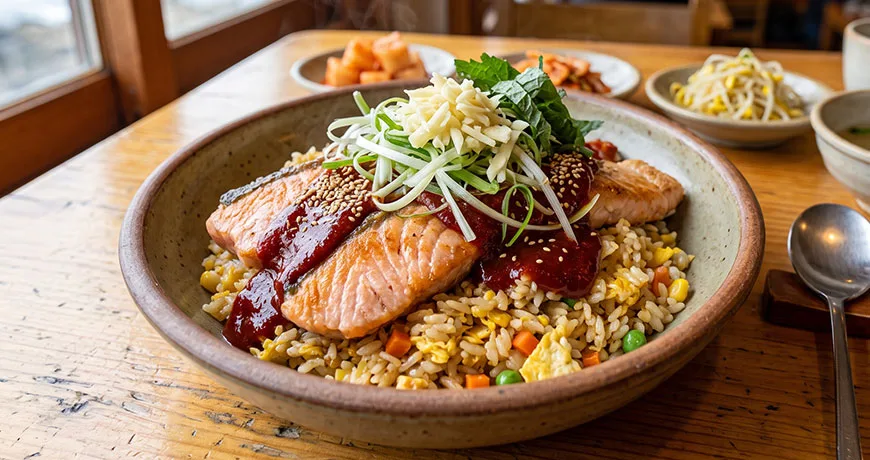
Songeodeopbap is a highly thermodynamic bowl dish requiring precise control over the exceptionally low thermal coagulation point of trout myosin. By pan-searing the trout, you trigger a flash-evaporation and aggressive Maillard reaction on the skin while meticulously controlling heat conduction to prevent the delicate flesh from drying out and expelling its albumin. Instead of standard steamed rice, which becomes soggy when combined with heavy fish oils, this dish utilizes lipid-coated fried rice (where retrograded starch acts as a moisture barrier) to establish a firm textural foundation. The rich, omega-3 heavy lipids of the trout are biochemically balanced by an acidic gochujang sauce and raw, julienned garlic and scallions. The volatile sulfur compounds (allicin) from these aromatics physically and chemically slice through the lipid film on your palate, providing a sharp, refreshing cleanse with every bite.
⏱️ Total: 30 mins | Prep: 15 mins | Cook: 15 mins | 🍳 Difficulty: Moderate (Requires trout thermal coagulation and starch flash-evaporation control) | 🌶️ Profile: Savory, Rich, Zesty, and Pungent | 🍚 Focus: Thermal Coagulation, Starch Lipid Coating, & Allicin Palate Cleansing
Ingredients (2 servings)
- High-Lipid Protein Matrix: 300g fresh boneless Trout fillets (seasoned with salt and pepper via osmotic pressure, surface moisture strictly patted dry)
- Starch & Lipid Matrix: 2 bowls of cold, cooked white rice, 2 eggs, 2 tbsp minced scallions, 2 tbsp cooking oil (for the fried rice base)
- Chemical Cleansers & Aromatics: 4 cloves garlic (julienned extremely fine), 1 stalk green onion (white part only, julienned into threads and soaked in cold water)
- Hypertonic Emulsion (Sauce): 2 tbsp Gochujang, 1 tbsp vinegar, 1 tbsp plum extract, 0.5 tsp minced garlic, 1 tsp sesame oil
Allergy Information Contains: Fish (Trout), Egg, Soy, Wheat (from Gochujang)
Equipment High Thermal Mass Frying Pan or Wok, Cutting Board, Knife, Fish Spatula
Cooking Instructions
- Aromatic Activation: Submerge the julienned garlic and scallions in cold water for 5 minutes. This draws out excess harshness while hydrating the cell walls, ensuring maximum turgor pressure (crunch). When chewed, these ruptured cells will release allicin. Drain well.
- Starch Lipid Coating (Fried Rice): Heat oil in a pan, bloom the minced scallions, then add the eggs and cold rice. Stir-fry aggressively over high heat (flash evaporation). This physically coats the retrograded starch grains in lipids, preventing moisture penetration and yielding a firm, separate grain structure. Plate the rice.
- Thermal Coagulation Control (Searing): Oil a hot pan and place the trout fillets skin-side down. Dedicate 70% of the cooking time to this side to form a crispy Maillard crust without overcooking the flesh. When the heat conducts upward and the white albumin just begins to coagulate at the edges, flip the fillet for a mere 30 seconds, then remove it from the heat.
- Sauce Assembly: Whisk the Gochujang, vinegar, plum extract, garlic, and sesame oil. This acidic, hypertonic sauce acts as a biochemical catalyst to neutralize the heavy fish fats.
- Assembly & Rheological Integration: Carefully place the pan-seared trout over the bed of fried rice. Garnish generously with the dried garlic and scallion threads. Serve with the spicy gochujang sauce, encouraging the diner to consume the tender fish, firm rice, and pungent aromatics simultaneously for optimal textural and chemical contrast.
💡 Professional Culinary Tips
- Thermodynamics of Trout Protein: Cold-water fish like trout and salmon coagulate at a very low temperature (around 45–50°C/113–122°F). Prolonged heat on both sides causes the muscle fibers to contract violently, squeezing out all kinetic moisture and white albumin, leaving the fish dry and chalky. By searing the skin at high heat to create a thermal shield and letting residual heat gently cook the core, you lock in the juices perfectly.
- Rheology of the Fried Rice Base: Placing oily, pan-seared trout directly onto wet, steamed white rice causes the starches to absorb the fish oils and turn into a soggy, unappealing paste. Frying the rice first envelops each grain in a microscopic lipid barrier. This maintains the structural integrity of the rice, providing a beautiful, chewy contrast to the soft fish.
- The Allicin Cleansing Mechanism: The heavy omega-3 fats of the trout will quickly coat the oral mucosa, leading to taste fatigue. The volatile sulfur compounds (allicin) released when chewing the raw garlic and scallions powerfully stimulate the TRPA1 receptors on the tongue. This acts as a chemical astringent, instantly stripping away the fat and resetting the palate for the next bite.
Nutrition Facts (Estimated)
Total Content : Approx. 450g (1 serving)
Calories : 620 kcal
– Sodium : 750mg
– Total Carbohydrate : 68.0g
– Sugar : 8.0g
– Total Fat : 22.0g (Primarily EPA/DHA polyunsaturated fats)
– Saturated Fat : 4.5g
– Cholesterol : 180.0mg
– Protein : 36.0g
– Dietary Fiber : 3.5g
*Daily Values are based on a 2,000 calorie diet and standard Korean nutritional reference values.
**Nutritional values are calculated based on original ingredients; substitutions may alter specific macronutrients.
Origins and Food Culture of Stir-fried Trout with Rice (Songeodeopbap)
1. Historical Heritage: From the Nanhomokji Treatise to Pristine Cold-Water Fisheries
- Tracing its roots back to historic Joseon Dynasty texts such as Seo Yu-gu’s fishery encyclopedia Nanhomokji, which noted that trout (songeo) earned its name because its vivid crimson flesh and delicate marbled grain resemble the resinous texture of pine wood (song).
- Historically harvested from pristine cold rivers and coastal inlets opening into the East Sea, it has long been revered as a prized regional stamina tonic during seasonal transitions.
2. The Culinary Art of Gentle Pan-Seared Flakiness and Fresh Allium Balance
- Evolving beyond traditional raw sashimi (hoe) or fiery stews (maeuntang), this preparation gently pan-sears the seasoned fish over steady heat to render delicate surface fats while locking in succulent juices.
- Layered over light fried rice and crowned with finely shredded raw scallions, slivered garlic, and gochujang, it achieves a harmonious balance where the pungent crispness of fresh aromatics cuts through the rich oils of the fish.
3. Modern Restorative Bowl Dining and Clean Tabletop Hospitality
- Reflecting contemporary preferences for convenient, nutritionally comprehensive one-bowl meals, it presents a complete spectrum of marine omega-3s, clean carbohydrates, and protective antioxidants without requiring multi-course spreads.
- Traditionally served alongside a soothing bowl of clear clam broth (jaecheop-guk) or light soybean paste soup, Songeodeopbap exemplifies the refined, energizing spirit of modern Korean coastal gastronomy.
The Coral-Hued Splendor of Cold-Water Trout and the Fragrant Luster of Wok-Tossed Grains: A Refined Portrait of Songeodeopbap
Songeodeopbap (Pan-Seared Trout over Fried Rice with Spicy Chili Glaze) stands as a vibrant, sophisticated pinnacle of modern Korean cold-water fish gastronomy. Fresh native trout (songeo—Salmonidae family), nurtured in the crystalline, icy streams of the Baekdudaegan mountain range and the pristine coastal currents of the East Sea, boasts a striking coral-pink hue and dense, delicate musculature. Gently pan-seared to achieve a golden, lightly crisped exterior while keeping the flaky interior meltingly tender, the fish is plated over a bed of savory fried rice, crowned with gossamer threads of crisp scallions, slivered raw garlic, and a bold drizzle of sweet-spicy gochujang glaze. Expanding beyond traditional raw sashimi preparations, this dish elevates delicate trout into a comforting, hot gourmet bowl that masterfully balances savory lipids with vibrant, aromatic sharpness.
Lifting a generous spoonful brimming with seasoned fried rice, a thick flake of golden-seared trout, and a tangle of crisp scallions and garlic unlocks an intoxicating perfume of toasted wok aromatics and the clean, sweet aroma of caramelized fish protein. The first bite reveals a remarkably delicate textural cadence: the tender pink trout flaking effortlessly across the tongue with a buttery softness, releasing a rush of rich omega-3 fatty acids and clean marine savoriness. The individually glazed rice grains provide a comforting, chewy foundation, while the sharp auditory crunch of raw alliums bursts with cooling, piquant juices. The rich chili-sesame glaze knits the delicate fish and toasted grains into an impeccably balanced harmony, leaving the palate entirely refreshed without lingering oiliness.
The enduring brilliance of Songeodeopbap lies in its functional equilibrium—capturing the powerful stamina-restoring antioxidants (astaxanthin) and lean proteins of cold-water fish and balancing them through precise thermal searing and the invigorating clarity of pungent garden botanicals. Translating the prized seasonal bounty of Korea’s pristine streams and coastal waters into an accessible, elevated one-bowl format, a steaming platter of pan-seared trout over rice remains a timeless monument of mindful wellness, inventive culinary craftsmanship, and heartwarming comfort.
Editor’s Review
1. A Dynamic Harmony of Flaking Coral Trout Tenderness, Wok-Glazed Fried Rice Elasticity, and Sharp Allium Crispness
The sensory progression within the bowl achieves an exquisite equilibrium of contrasting textures. Gentle pan-searing preserves the delicate moisture within the fish muscle, allowing the tender flakes to yield with silken softness against the firm, separate grains of savory fried rice. The crisp, lively crunch of julienned scallions and garlic provides an essential tactile counterpoint, while the viscous gochujang glaze coats every element, ensuring a vibrant, grease-free finish from the first spoonful to the last.
2. Astaxanthin Thermal Preservation, Low-Temperature Actomyosin Denaturation Control, and Allicin-Lipid Flavor Masking
Songeodeopbap represents an exacting study in aquatic muscle biophysics and lipid-allium synergy. The trout’s signature coral pigmentation, derived from fat-soluble astaxanthin, alongside high concentrations of EPA and DHA polyunsaturated fatty acids, is preserved through controlled pan-searing below excessive smoke points. This restrained thermal profile prevents the aggressive contraction of actomyosin filaments, preventing moisture expulsion and ensuring structural flakiness. Concurrently, allicin from freshly slivered garlic and scallions naturally dissolves into the rendered fish lipids and capsaicin-rich chili glaze, forming a stable aromatic emulsion that chemically masks volatile amine compounds while stimulating digestive motility.
3. The Cold-Water Coastal Fishery Heritage and the Modern Elegance of Korean Bowl Gastronomy
Rooted in the pristine cold-water aquaculture and deep-sea currents of the East Sea, Songeodeopbap transforms a treasured regional delicacy into a contemporary gastronomic staple. Bringing together the vibrant vitality of cold-water fish and the comforting warmth of fire-tossed rice within a unified vessel, this dish serves as an enduring sanctuary of restorative nutrition, culinary ingenuity, and heartwarming hospitality.