
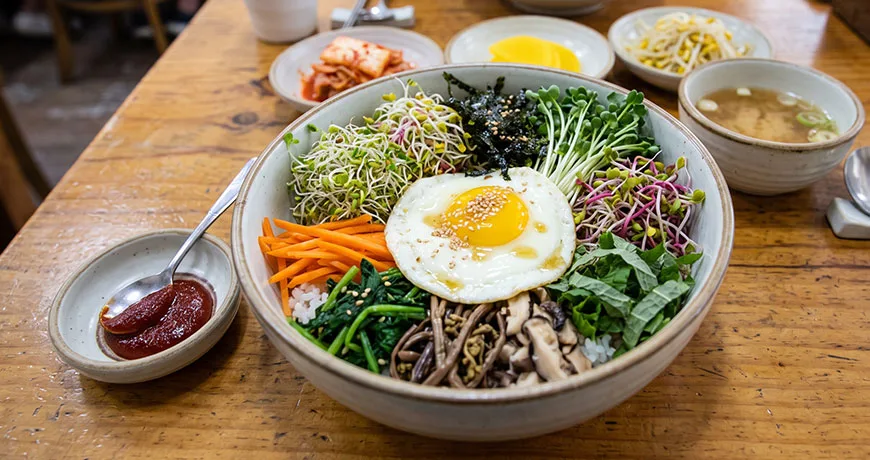
Saessakbibimbap is a highly biochemical dish that harnesses the explosive cellular energy and enzymes of embryonic plant tissues (germinated sprouts) alongside the rendered, savory lipids of cooked animal protein. Unlike traditional bibimbap, which uses cooked vegetables with hydrolyzed pectin, this dish relies on a raw vegetable matrix whose cells have been maximally inflated via ice-water osmotic shock. This ensures a high turgor pressure that bursts mechanically upon mastication. Crucially, sprouts (especially radish sprouts) are packed with diastase—a powerful natural digestive enzyme that acts as a biochemical catalyst to break down the complex carbohydrates in the rice. When these crisp, hyper-hydrated sprouts are paired with the deep Maillard crust of dry-seared minced beef and a hypertonic, acidic gochujang emulsion, they create a masterclass in rheological and temperature contrast.
⏱️ Total: 20 mins | Prep: 10 mins | Cook: 10 mins | 🍳 Difficulty: Low (Requires turgor pressure maximization and strict moisture control) | 🌶️ Profile: Fresh, Zesty, Peppery, and Deeply Savory | 🍚 Focus: Embryonic Plant Turgor, Enzymatic Digestion, & Maillard Searing
Ingredients (2 servings)
- Embryonic Plant & Enzyme Matrix: 150g mixed young Sprouts (radish, alfalfa, broccoli, red cabbage)
- Lipid & Protein Matrix: 150g minced Beef (round or chuck)
- Searing Marinade: 1 tbsp soy sauce, 0.5 tbsp sugar, 1 tsp sesame oil, 0.5 tsp minced garlic
- Hypertonic Acidic Emulsion (Sauce): 3 tbsp Gochujang, 1 tbsp vinegar, 2 tbsp plum extract (Maesil-cheong), a pinch of toasted sesame seeds
- Starch Matrix: 2 bowls of warm, cooked white rice (cooled slightly to prevent wilting the delicate sprouts)
Allergy Information Contains: Beef, Soy, Wheat (from Gochujang and soy sauce)
Equipment Frying Pan, Mixing Bowls, Colander or Salad Spinner, Cutting Board, Knife
Cooking Instructions
- Osmotic Hydration (Turgor Maximization): Gently rinse the mixed sprouts and submerge them in an ice-water bath (under 2°C/35°F) for 5 minutes. Osmosis violently forces water molecules into the thin plant cell walls, inflating them to their maximum turgor limit for the ultimate crunch. Drain completely using a salad spinner—removing 100% of the external moisture is critical.
- Flash Evaporation & Maillard Searing: Mix the minced beef with the soy sauce marinade. Heat a pan until screaming hot, add a light coat of oil, and spread the beef thinly. Flash-evaporate all expelled moisture and dry-fry the meat until a deep, dark brown Maillard crust forms (creating a crunchy beef crumble).
- Acidic Emulsion Assembly: Whisk the Gochujang, vinegar, and plum extract to form a smooth emulsion. Using an acidic base (Cho-gochujang) biochemically masks the natural, slightly bitter saponins present in raw sprouts, providing a bright, refreshing balance.
- Thermodynamic Assembly: Place the cooked rice in a serving bowl. Allow it to cool to around body temperature (40–50°C). Top the rice with the dry-seared minced beef, then generously crown the bowl with the meticulously dried, ice-cold sprouts.
- Emulsification & Mastication: Drizzle the hypertonic acidic sauce over the top immediately before consumption. Mix thoroughly. The diner will experience a dynamic mechanical contrast: the chewy, fat-coated rice, the crispy savory beef particles, and the cold, watery explosion of the turgid sprouts.
💡 Professional Culinary Tips
- Temperature Gradient vs. Pectin Collapse: The most common mistake is placing delicate raw sprouts directly onto steaming hot (100°C) rice. The conductive heat instantly melts the plant pectin, causing the sprouts to wilt, turn translucent, and release an unpleasant grassy odor. Cooling the rice to a lukewarm temperature guarantees the raw cellular structure remains intact throughout the meal.
- The Biochemistry of Diastase: Sprouted seeds (especially radish sprouts) are biological factories for enzymes like diastase (a type of amylase). As you chew, these enzymes physically mix with the rice and actively begin breaking down the starches into maltose before they even reach your stomach. This makes Saessakbibimbap functionally self-digesting, preventing any heavy or bloated feeling after the meal.
- The Rheology of Moisture Control: The primary reason this dish fails and turns into a watery, unappealing soup is residual water clinging to the outside of the sprouts. External water physically dilutes the viscosity of the Gochujang emulsion, preventing it from binding to the rice. Using a salad spinner to remove every drop of surface moisture ensures the sauce clings perfectly to the starch and protein matrices.
Nutrition Facts (Estimated)
Total Content : Approx. 400g (1 serving)
Calories : 460 kcal
– Sodium : 720mg
– Total Carbohydrate : 68.0g
– Sugar : 8.0g
– Total Fat : 12.0g
– Saturated Fat : 3.5g
– Cholesterol : 45.0mg
– Protein : 24.0g
– Dietary Fiber : 6.0g
*Daily Values are based on a 2,000 calorie diet and standard Korean nutritional reference values.
**Nutritional values are calculated based on original ingredients; substitutions may alter specific macronutrients.
Origins and Food Culture of Sprout Bibimbap (Saessakbibimbap)
1. The 2000s Well-Being Movement and the Rise of Raw Microgreen Dining
- Modernizing Korea’s centuries-old Goldongban (traditional mixed rice) tradition—which historically relied upon blanched, sautéed, and seasoned mature botanicals (sukchae)—this dish emerged during the nationwide “Well-Being” and LOHAS (Lifestyles of Health and Sustainability) movement of the early 2000s.
- Driven by advancements in hygienic, pesticide-free indoor hydroponic farming that made crisp sprouts accessible year-round, it rapidly became an indispensable clean-eating staple across contemporary wellness restaurants and urban cafes.
2. The Culinary Science of Raw Enzyme Preservation and Delicate Balancing
- The hallmark of authentic preparation lies in presenting completely uncooked microgreens directly over warm rice, preventing heat-induced degradation of delicate ascorbic acid, digestive enzymes, and fragile sulforaphane compounds.
- Balanced with subtly seasoned, oil-drained minced beef and a light plum-infused red chili sauce (maesil-chogochujang) or low-sodium wild chive soy vinaigrette, it respects and elevates the natural, earthy peppery aromas of the tender sprouts without overwhelming them.
3. A Visual Garden of Spring Vitality and Global Clean-Eating Hospitality
- Layering vivid emerald radish greens, crimson cabbage filaments, and sunny buckwheat shoots across the bowl mimics a garden in full bloom, delivering joyful visual elegance alongside holistic nutrition.
- Widely embraced by modern health enthusiasts as an ideal low-calorie, enzyme-rich detox meal, Sprout Bibimbap remains an enduring ambassador of modern Korean plant-forward cuisine that unites convenience, vivid freshness, and deep nutritional care.
The Pristine Vitality of Germinated Microgreens and the Comforting Warmth of Savory Beef: A Refined Portrait of Saessakbibimbap
Saessakbibimbap (Sprout Bibimbap with Seasoned Beef) stands as a radiant, chlorophyll-rich, and revitalizing pinnacle of modern Korean wellness gastronomy. A verdant nest of nutrient-dense young sprouts—including peppery radish sprouts, sweet tatsoi, ruby-veined red cabbage sprouts, delicate alfalfa, and broccoli microgreens—is arranged over a bed of steaming white rice. Crowned with savory minced beef gently stir-fried in a soy-garlic glaze and accompanied by artisanal seasoning sauce (herb-infused chili paste or seasoned soy dressing) and cold-pressed toasted sesame oil, this dish reimagines mixed rice through the pure, unheated vitality of germinating botanical life. Bypassing the heavy blanching and oil-seasoning of traditional wild mountain herbs (namul), it presents living microgreens in their natural, turgid glory like a blooming edible meadow.
Gently loosening the delicate shoots, warm beef, and rice together with chopsticks releases an invigorating perfume of toasted sesame oil intertwined with the clean, dewy aroma of fresh plant chlorophyll and the pungent sparkle of radish greens. Sinking your teeth into the first generous mouthful delivers an exhilarating textural cadence: hundreds of tender micro-stems yield with a delicate, crisp snap, flooding the palate with pure, hydrating cellular moisture. Sinking deeper reveals the savory chew of seasoned minced beef, which imparts essential depth and animal protein to support the light botanicals. The sharp, peppery kick of radish microgreens cuts cleanly through the richness of the meat, while the warm, gentle sweetness of the rice grains binds the ingredients into an impeccably balanced, profoundly refreshing finish.
The enduring brilliance of Saessakbibimbap lies in its functional vitality—harnessing the explosive surge of vitamins, antioxidants, and bio-enzymes that occur at the precise moment of seed germination to cleanse the digestive system and restore physical energy. Emerging alongside Korea’s eco-friendly culinary movement in the early 2000s as an indispensable healing tonic for weary urbanites, a colorful bowl of fresh sprout bibimbap remains a timeless monument of mindful wellness, botanical purity, and heartwarming culinary comfort.
Editor’s Review
1. A Dynamic Harmony of Gossamer Microgreen Snap, Savory Minced Beef Chew, and Gentle Starch Equilibrium
The textural landscape inside the bowl delivers immediate sensory revitalization. The light, airy crunch of unheated sprout stems provides an auditory and tactile crispness that contrasts gracefully against the tender, springy chew of savory stir-fried beef. The ambient steam of the warm rice grains softens the fragile foliage just enough to integrate smoothly across the palate, while the viscous chili-sesame emulsion coats every ingredient without bruising the delicate greens, ensuring a pristine, grease-free finish from the first bite to the last.
2. Germination Plant Biochemistry, Glucosinolate-Myrosinase Activation, Endogenous Digestive Enzymes, and Nucleotide Umami Synergism
Saessakbibimbap represents an exacting study in plant developmental biochemistry and digestive enzymology. During germination, seeds dramatically multiply their endogenous nutrient reserves; the glucosinolates concentrated in cruciferous microgreens (radish and broccoli sprouts) are hydrolyzed upon mastication by the plant enzyme myrosinase into active isothiocyanates and sulforaphane, providing potent cellular protection. Furthermore, active endogenous amylases and proteases synthesized during sprouting accelerate the breakdown of cooked rice starches and beef proteins, significantly enhancing gastric emptying and metabolic comfort. Concurrently, nucleotide inosinates (IMP) from the beef harmonize with free glutamates in the fermented seasoning paste to multiply umami perception, while the unsaturated lipids of toasted sesame oil maximize the intestinal bioavailability of fat-soluble vitamins A and E.
3. The Eco-Conscious Evolution of Classical Bibimbap and the Modern Sanctuary of Korean Healing Gastronomy
Transforming the centuries-old tradition of dried and blanched herb bibimbap into a contemporary celebration of living, hydro-cultivated microgreens, Saessakbibimbap exemplifies the agile innovation of modern Korean foodways. Presenting the raw, unadorned beginnings of plant life within a single balanced vessel honors an authentic heritage of holistic wellness, dietary rejuvenation, and heartfelt culinary craftsmanship.