
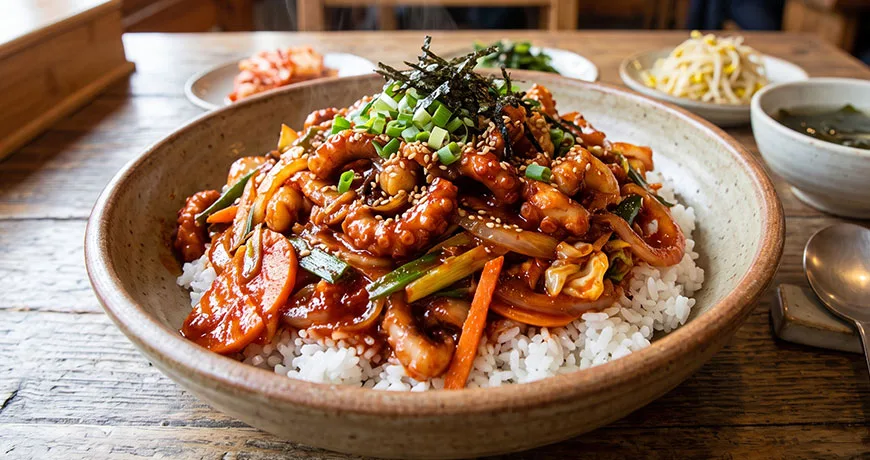
Nakjideopbap is a high-thermodynamic stir-fry that relies on the rapid thermal coagulation of cephalopod proteins to lock in moisture, followed by an explosive evaporative coating of a hypertonic capsaicin emulsion in a wok exceeding 200°C (400°F). Standing before a roaring open flame, the artisan repeatedly tosses the heavy cast-iron wok into the air (a technique known as Wok-hei). This intense mechanical labor aerosolizes the animal lipids, igniting them briefly to blanket the octopus in fierce, smoky volatile aromatics. The tough cellulose of the cabbage maintains its cellular turgor pressure despite the intense heat, while the sweet and fiercely spicy Gochujang gel forms a flawless hydrophobic coating around the viscoelastic octopus. When this fiery, smoky matrix is piled over soft, warm amylopectin starches (rice), the resulting clash of extreme spice, sweetness, and explosive textural crunch pushes the human taste receptors to their absolute limits.
⏱️ Total: 20 mins | Prep: 15 mins | Cook: 5 mins (Flash Wok-Frying) | 🍳 Difficulty: High (Requires Wok-hei mechanics and critical cephalopod thermal control) | 🌶️ Profile: Piercingly Spicy, Smoky (Wok-hei), and Viscoelastic | 🍚 Focus: Thermal Coagulation Shield, Wok-hei Aerosols, & Turgor Preservation | 🍶 Pairing: Chilled, pear and ginger-infused traditional distilled Igangju
Ingredients (2 servings)
- Biokinetic Taurine Matrix: 2–3 Fresh Octopuses (Nakji – aggressively massaged with flour and coarse salt to forcefully strip away the mucin layer)
- Turgor & Reducing Sugar Matrix: 1.5 handfuls Cabbage (chopped large), 1/2 Onion (sliced), 1 stalk Green Onion (chopped), a small piece of Carrot (sliced)
- Hypertonic Capsaicin Emulsion (Sauce): 3 tbsp Gochugaru (chili flakes), 1 tbsp Gochujang (chili paste), 2 tbsp Brewed Soy Sauce, 1.5 tbsp Starch Syrup (or Oligosaccharide), 1 tbsp Sugar, 1.5 tbsp minced garlic, 0.3 tsp minced ginger
- Lipid & Amylopectin: 3 tbsp Cooking Oil, 2 bowls warm cooked White Rice, 1 tbsp Toasted Sesame Oil, 1 tbsp Toasted Sesame Seeds
Allergy Information Contains: Molluscan Shellfish (Octopus), Soy, Wheat (from soy sauce and Gochujang)
Equipment Cast-Iron Wok (or high thermal mass frying pan), Mixing Bowl, Pot for boiling water (Blanching), Cutting Board, Knife
Cooking Instructions
- Physical Mucin Depletion: Dump flour and coarse salt over the raw octopus and knead it violently by hand. This extreme physical friction strips away the muddy, viscous mucin proteins attached to the suction cups. Rinse thoroughly under cold water.
- Critical Thermal Coagulation (Blanching): Drop the cleaned octopus into boiling water for exactly 10 seconds. Extract immediately and chop into 5cm pieces. This ultra-fast blanching creates a thin layer of coagulated protein on the surface, acting as a physical shield that prevents the octopus from leaking water (weeping) when exposed to the osmotic pressure of the spicy sauce later.
- Lipid Aromatic Extraction: Heat the wok until it smokes. Add the cooking oil, followed by the chopped green onions and garlic. The extreme heat instantly extracts their volatile sulfur compounds into the oil, establishing a highly aromatic lipid base.
- Wok-hei & Emulsion Coating: Add the cabbage and onions, sautéing over a roaring flame. Add the blanched octopus and the hypertonic capsaicin sauce. Employing the artisan technique of Wok-hei—tossing the ingredients high into the air above the flame—evaporates the moisture from the sauce violently and coats the octopus in a sticky, smoky capsaicin gel. The total frying time must absolutely not exceed 2 minutes.
- Structural Finish: Turn off the heat and drizzle with toasted sesame oil. Serve the fiery octopus matrix over the warm rice and garnish with toasted sesame seeds.
💡 Professional Culinary Tips
- Physics of the Blanching Osmotic Shield: If raw octopus is stir-fried directly with the spicy sauce, the immense osmotic pressure of the salt and sugar will instantly suck the water out of the cephalopod’s cells. This water floods the wok, instantly dropping the temperature and ruining the dish by boiling the meat instead of frying it. The 10-second pre-blanch is mandatory physics to build a denatured protein barrier that locks the moisture inside.
- Aerosolized Maillard (Wok-hei): Tossing the heavy wok above an open flame is not for show. It shears the cooking oil into microscopic aerosol droplets that collide with the flames. This split-second partial combustion condenses smoky, volatile aromatic compounds directly onto the hypertonic capsaicin gel—creating an extreme depth of “fire taste” that artificial smoke powders can never replicate.
- Turgor Preservation of Cabbage: Flash-frying over a roaring fire not only saves the octopus from turning into irreversible rubber, but it also rescues the cellular turgor of the cabbage. By violently blasting away surface moisture via Wok-hei, the cabbage remains explosively crunchy, providing a crucial mechanical textural contrast to the bouncy, viscoelastic chew of the octopus.
🍶 Gastronomic Pairing
- Biochemical Palate Cleansing: When the hypertonic capsaicin emulsion and smoky Wok-hei aerosols push your pain receptors to their absolute limits, pair this dish with a highly chilled, traditional Igangju (Pear and Ginger Distilled Spirit). The sharp gingerol compounds and refined ethanol molecules act as a chemical solvent, slicing cleanly through the thick capsaicin and lipid chains coating your tongue, offering a freezing, crisp reset to your scorched mucosal membranes.
Nutrition Facts (Estimated)
Total Content : Approx. 500g (1 serving)
Calories : 540 kcal
– Sodium : 1,150mg (Variable depending on Gochujang and soy sauce)
– Total Carbohydrate : 82.0g (Complex carbs from rice and starch syrup)
– Sugar : 12.0g
– Total Fat : 14.0g (Primarily unsaturated lipids from cooking and sesame oil)
– Saturated Fat : 2.0g
– Cholesterol : 180.0mg (From octopus)
– Protein : 24.0g (Rich in bioavailable taurine)
– Dietary Fiber : 6.0g
*Daily Values are based on a 2,000 calorie diet and standard Korean nutritional reference values.
**Nutritional values are calculated based on original ingredients; substitutions may alter specific macronutrients.
Origins and Food Culture of Stir-fried Octopus with Rice (Nakjideopbap)
1. Historical Lineage: Mugyo-dong Octopus Alley and the Evolution of the Deopbap Format
- Rooted in the bustling tavern culture of Mugyo-dong in downtown Seoul during the mid-1960s, where modest roadside establishments (silbijip) served searingly spicy wok-fried whole octopus as an affordable accompaniment (anju) to makgeolli and soju.
- Originally enjoyed as a communal drinking plate, patrons seeking to soothe their burning palates and satisfy evening hunger began requesting large bowls of warm rice, cold-pressed sesame oil, and plain bean sprouts to toss with the spicy octopus, organically establishing Nakjideopbap as an independent, single-bowl comfort staple (deopbap / tangban).
2. The Culinary Science of Flash Blanching and Wok Moisture Management
- Because fresh octopus muscle is composed of over 80% water, tossing raw octopus directly into a pan results in excessive fluid release that waters down seasoning and toughens the meat. The culinary secret lies in flash-blanching the cut octopus in boiling water with a dash of rice wine for 10 to 20 seconds, followed by an immediate cold shock to set the surface proteins.
- The seasoned aromatics are then blistered in a searing wok to achieve high-heat caramelization and wok hei (breath of the wok); the blanched octopus is added in the final sixty seconds, preserving an exquisitely tender, juicy texture without pooling liquid.
3. The Culture of “Tear-Inducing Spice” and the Balancing Grace of Mild Garnishes
- Reflecting modern Korea’s unique culinary catharsis, where hardworking city laborers and office workers sought out blistering, sweat-inducing spicy dishes as a physiological release valve to clear workplace stress and emotional exhaustion.
- To counterbalance the intense, fiery profile of the spicy chili glaze, traditional eateries always serve Nakjideopbap with unseasoned blanched soybean sprouts, steamed egg custard (gyeran-jjim), or icy radish/seaweed cold broths, showcasing the thoughtful culinary equilibrium of Korean dining where intense fire is harmoniously tempered by cooling, alkaline comfort.
The Incandescent Fury of Wok-Seared Cephalopods and the Crimson Euphoria of Sweet-and-Fiery Capsaicin: A Refined Portrait of Nakjideopbap
Nakjideopbap (Spicy Stir-Fried Octopus with Steamed Rice) stands as the dynamic, palate-igniting, and fiercely invigorating summit of Korea’s modern wok-fired and single-bowl (deopbap) gastronomy. Small-octopus (nakji—Octopus minor), celebrated for the indomitable life force it draws from nutrient-dense coastal mudflats, is thoroughly cleaned with coarse salt and flour to strip away residual silt and surface mucin. Plunged into a screaming-hot cast-iron wok, it is subjected to an explosive flash-sear alongside a vibrant spice paste crafted from coarse red pepper flakes (gochugaru), fermented chili paste (gochujang), aged soy sauce, minced garlic, and ginger. Tossed rapidly with sweet yellow onions, crisp cabbage, scallions, and carrots to prevent excessive liquid syneresis, the glossy, scarlet-lacquered stir-fry is ladled generously over a bed of warm, dry-steamed white rice and crowned with toasted sesame oil and roasted sesame seeds. Transforming the leisurely simmer of traditional soups into an agile display of convective fire and conductive iron, this dish unites tender marine proteins, fiery chili oils, and the soothing buffer of cereal starches in an unforgettable burst of culinary energy.
Lifting a deep spoon loaded with crimson sauce, a glistening, curled octopus tentacle, and pristine white rice releases an immediate, intoxicating sensory charge: the smoky, wok-charred perfume of caramelized sugars and scorched chili mingles with the pungent sharpness of fresh garlic and the nutty, warm aroma of cold-pressed sesame oil. The first mouthful delivers an electric shock to the palate: vibrant capsaicin heat surges across the tongue, awakening dormant nerves and prompting immediate, restorative perspiration. Sinking your teeth into the octopus reveals an extraordinary structural tenderness; spared from prolonged heat, the meat yields with a supple, springy bounce (yadeul-yadeul), bursting with sweet, clear marine juices without a trace of rubbery resistance. The flash-wilted cabbage and onions contribute an auditory, water-dense crunch that tempers the sauce’s fiery intensity, while the soft grains of steamed rice absorb the savory chili oil like micro-sponges, providing a comforting, starch-rich foundation that balances every bite. Accompanied by crisp, cold soybean sprouts to cool the palate, each subsequent spoonful builds toward a state of pure, stress-banishing gastronomic catharsis.
The enduring brilliance of Nakjideopbap lies in its urban heritage—crystallizing in the legendary Mugyo-dong alleyways of downtown Seoul during the rapid industrialization of the 1960s and 70s. Serving as an affordable, cathartic sanctuary where weary office workers and laborers could dissolve the crushing pressures of the corporate grind through sweat-inducing spice, this combination of mudflat vitality and urban quick-service dining remains an irreplaceable cultural monument of working-class resilience, restorative adrenaline, and dazzling Korean culinary craftsmanship.
Editor’s Review
1. A Dynamic Harmony of Flash-Seared Cephalopod Tenderness, Wok-Blanched Botanical Snap, and Starch-Buffering Grain Matrix
The structural landscape across the palate delivers an exhilarating interplay between tender invertebrate muscle, crisp plant tissues, and gelatinized cereal starches. The flash-cooking technique preserves the octopus’s natural moisture, yielding a supple, plump elasticity that fractures cleanly under tooth pressure without tough, fibrous resistance. This resilient bite is framed by the crisp, auditory snap of flash-charred cabbage and onions, which retain their structural turgor. Simultaneously, the steamed white rice grains, lightly coated by the hydrophobic film of sesame oil and spicy lipid emulsions, maintain their plump, individual structure, preventing the bowl from turning into a soggy paste and ensuring an invigorating, non-fatiguing mouthfeel from the first bite to the last.
2. Cephalopod Actomyosin Syneresis Mitigation (High-Heat Flash Wok Dynamics), Capsaicin-TRPV1 Endorphin Neurochemistry, and Taurine-Glutamate Umami Synergism
Nakjideopbap represents an exacting study in aquatic muscle thermodynamics, neurochemical pain pathways, and high-heat lipid kinetics. The dense muscular tissue of Octopus minor is interwoven with dense collagen fibers and heat-sensitive actomyosin complexes; sustained exposure to temperatures above 80°C causes drastic myofibrillar shrinkage and severe moisture expulsion (syneresis), resulting in a tough, rubbery texture. Executing a rapid stir-fry in a cast-iron wok exceeding 200°C for under two minutes creates rapid surface protein coagulation while leaving the core tender, locking intracellular fluids securely within the muscle bundles. The lipophilic alkaloid capsaicin binds specifically to the oral mucosal TRPV1 vanilloid receptors, transmitting intense thermal-pain impulses that prompt the central nervous system to release beta-endorphins and dopamine, generating a physiological state of clear-headed euphoria. Concurrently, the octopus’s native reserves of taurine, betaine, and cellular glycogen interface with the free glutamic acid of aged fermented soybean and pepper pastes, triggering an exponential synergy across human T1R1/T1R3 umami receptors. The unsaturated triglycerides in cold-pressed sesame oil form a boundary-layer lipid film that coats the tongue, modulating the rate of capsaicin absorption and extending aromatic longevity.
3. The Mugyo-Dong Urban Labor Heritage and the Living Summit of Korean Fiery Wok Gastronomy
Evolving from coastal fishing village drinking snacks into an indispensable daily restorative for the builders of modern Seoul, Nakjideopbap exemplifies the dynamic adaptability of Korean cuisine. Harnessing intense wok heat to transform humble mudflat cephalopods into an explosive, mood-elevating masterwork of spice and starch, this iconic dish stands as an enduring sanctuary of urban resilience, psychological catharsis, and brilliant culinary mastery.