
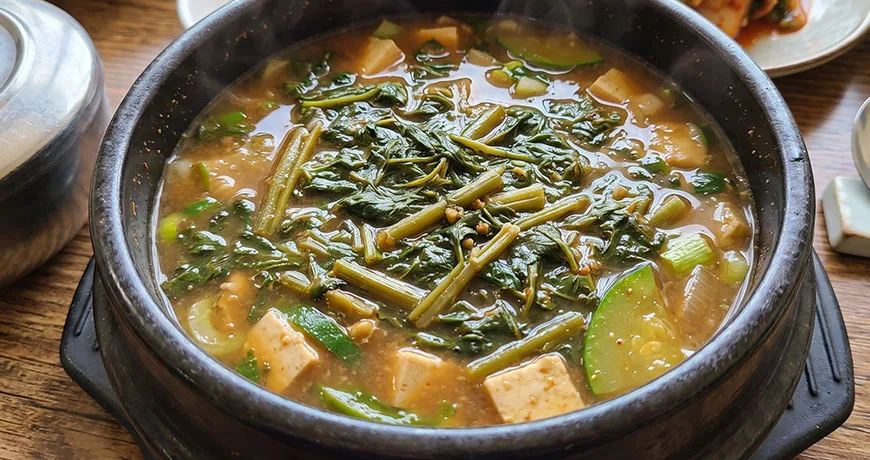
Ssuk-doenjang-guk is a botanical and biochemical soup that captures the highly volatile aromatic terpenes (specifically cineole) of young spring mugwort within a rich colloidal suspension of fermented soybean paste (doenjang). By dissolving the paste in a synergistic umami broth of anchovy and kelp, the soup builds a profound savory base. The mugwort is flash-boiled at the very last moment to preserve its medicinal, herbaceous fragrance and vivid green color. Rich in vitamins, minerals, and flavonoids, this soup is a traditional dietary remedy proven to stimulate metabolism and combat the lethargy commonly known as “spring fatigue.”
⏱️ Total: 25 mins | Prep: 10 mins | Cook: 15 mins | 🍳 Difficulty: Easy (Requires thermal timing to preserve volatile aromas) | 🌶️ Profile: Earthy, Savory, and Intensely Herbaceous | 🍚 Focus: Cineole (Aromatics), Umami Synergy, & Metabolism Boost
Ingredients (2–3 servings)
- Main Ingredient: 100g young spring mugwort (ssuk)
- Colloidal Broth Base: 5–6 cups rice water (water collected from rinsing white rice), 10 dried soup anchovies (gutted), 1 piece dried kelp (dashima, 5x5cm)
- Seasoning & Hearty Additions: 2.5–3 tbsp traditional soybean paste (doenjang), 1/2 block tofu (cubed), 1/2 scallion (sliced), 0.5 tbsp minced garlic
- (Optional: 1 Cheongyang chili for heat, 100g littleneck clams for oceanic umami)
Allergy Information Contains: Soy, Wheat (from doenjang), Fish (Anchovy)
Equipment Mixing Bowls, Fine Mesh Strainer, Medium Pot, Cutting Board, Knife
Cooking Instructions
- Physical Prep & Bitterness Control: Pick through the mugwort to remove any discolored leaves or tough stems. Wash vigorously in multiple changes of cold water to remove fine sand and dirt. (Young spring mugwort is tender and mild enough to use raw; if using older, tougher mugwort, it must be blanched briefly in boiling water to leach out bitter alkaloids.)
- Umami Synergy Extraction: In a pot, bring the rice water, anchovies, and kelp to a boil. After 5 minutes, remove the kelp to prevent the broth from becoming slimy (due to alginic acid). Boil for another 10 minutes, then remove the anchovies to yield a clear, highly savory stock.
- Colloidal Suspension: Place a fine mesh strainer over the boiling broth and press the doenjang through it. This ensures the fermented soy proteins and starches disperse evenly, creating a smooth, full-bodied colloidal suspension.
- Protein Hydration: Add the cubed tofu and minced garlic to the boiling broth. Let it simmer for 2–3 minutes, allowing the tofu to absorb the savory liquid and expand slightly.
- Aromatic Preservation (Flash-Boil): Add the thoroughly washed mugwort and sliced scallions to the pot. Because the herbaceous essential oils in mugwort are highly volatile, you must boil it for only 1 to 2 minutes. Turn off the heat immediately to trap the medicinal fragrance in the broth before it evaporates into the air.
💡 Professional Culinary Tips
- Chemical Masking via Rice Water: Using the starchy water left over from rinsing rice (ssalddeumul) rather than plain water is a strategic biochemical technique. The suspended starch molecules physically bind to the astringent and bitter compounds of the mugwort, masking them effectively. It also acts as an emulsifier, rounding out the sharp salinity of the doenjang.
- Thermodynamics of Volatile Cineole: The signature spring aroma of mugwort is driven by terpenes like cineole. These compounds evaporate rapidly when exposed to prolonged heat. If the mugwort is boiled for too long, the soup loses its entire aromatic profile, leaving behind a dull, bitter vegetable mass. Adding it at the absolute end (just-in-time) is mandatory for this dish.
- Umami Synergy Equation: The combination of glutamate from the fermented soybeans and kelp, paired with inosinate from the dried anchovies, triggers an exponential reaction on the palate’s umami receptors. This biochemical synergy provides a profound, meaty depth of flavor without requiring any actual meat in the dish.
Nutrition Facts (Estimated)
Total Content : Approx. 350g (1 serving, including broth)
Calories : 120 kcal
– Sodium : 850mg
– Total Carbohydrate : 12.0g
– Sugar : 2.0g
– Total Fat : 3.5g
– Saturated Fat : 0.5g
– Cholesterol : 5.0mg (from anchovy broth)
– Protein : 10.0g
– Dietary Fiber : 6.0g
*Daily Values are based on a 2,000 calorie diet and standard Korean nutritional reference values
**Nutritional values are calculated based on original ingredients; substitutions may alter specific macronutrients.
The Emerald Awakening of Spring Soil and the Earthy Embraces of Fermented Doenjang: A Lyrical Masterpiece of Ssuk Doenjang-guk and Vernal Solace
Ssuk Doenjang-guk (Mugwort Soybean Paste Soup) stands as the pure, verdant, and deeply restorative pinnacle of Korean rustic soup gastronomy, where tender young mugwort (ssuk)—freshly sprouted through the thawing winter earth—is gently simmered alongside rich, umami-laden fermented soybean paste (doenjang) in an anchovy-kelp stock or silky rice-washing water. Free from heavy spices or artificial enhancers, this beloved vernal classic relies solely on the herbaceous vibrancy of early spring greens and the time-honored depth of traditional fermented paste, filling the dining space with an intoxicating aroma of waking soil and soothing warmth from the moment it begins to simmer.
The moment a steaming spoonful of the earthen broth touches the palate, an immediate wave of mellow, savory soybean umami envelops the senses with effortless grace. This comforting warmth is swiftly followed by the delicate, refreshing botanical aroma of young mugwort, which releases subtle herbal undertones across the palate and gently dispels seasonal lethargy (chungonjeung). The soft, melting texture of the simmered leaves marries beautifully with warm white rice, offering an unpretentious, soul-warming solace that reawakens the entire body.
True gastronomy does not rely exclusively on intricate culinary artifice; it flourishes in the ancestral wisdom of welcoming nature’s very first shoots to re-energize depleted vitality and restore internal equilibrium. Savoring an aromatic bowl of steaming mugwort soybean paste soup today is an elegant and sacred ritual—clearing away winter fatigue through a wave of crisp green vitality and filling the spirit with unpretentious warmth, countryside nostalgia, and timeless solace.
Editor’s Review
1. An Exhilarating Cadence of Verdant Mugwort Aroma, Earthy Doenjang Umami, and Soothing Broth Harmony
The moment a piping-hot spoonful of Ssuk Doenjang-guk coats the palate, an immediate wave of mellow, savory soybean paste depth awakens the taste buds with comforting richness. This earthy baseline is swiftly elevated by the fragrant, pine-like aroma of tender mugwort shoots and their soft, melting texture, effortlessly cutting through palate fatigue and orchestrating an endlessly refreshing, multi-layered sensory thrill that revitalizes the senses.
2. Mugwort Cineole-Choline Metabolic Stimulation Kinetics and Doenjang Fermented Peptide Bioavailability
Ssuk Doenjang-guk represents an exacting study in seasonal botanical pharmacology and fermented food biochemistry. The essential terpene cineole, along with beta-carotene and choline abundant in young spring mugwort, stimulates gastric enzyme secretion and supports hepatic function to combat seasonal spring lethargy (chungonjeung). Concurrently, bioactive peptides and free amino acids yielded through extended soybean fermentation enhance metabolic bioavailability and digestive ease, establishing an optimal biochemical equilibrium for springtime recovery.
3. The Vernal Hearth Heritage and the Grounding Sanctuary of Spring Vitality Renewal
Found gracing family breakfast tables across the nation as the undisputed harbinger of spring and renewed vitality, a modest bowl of mugwort soybean paste soup serves as an enduring emotional haven against daily weariness. Revered for generations as an essential comfort staple that thaws lingering winter chills and awakens the spirit through honest, earth-rooted nourishment, enjoying this restorative delicacy washes away modern stress, granting a timeless sanctuary of stillness, countryside heritage, and grounded culinary happiness.