
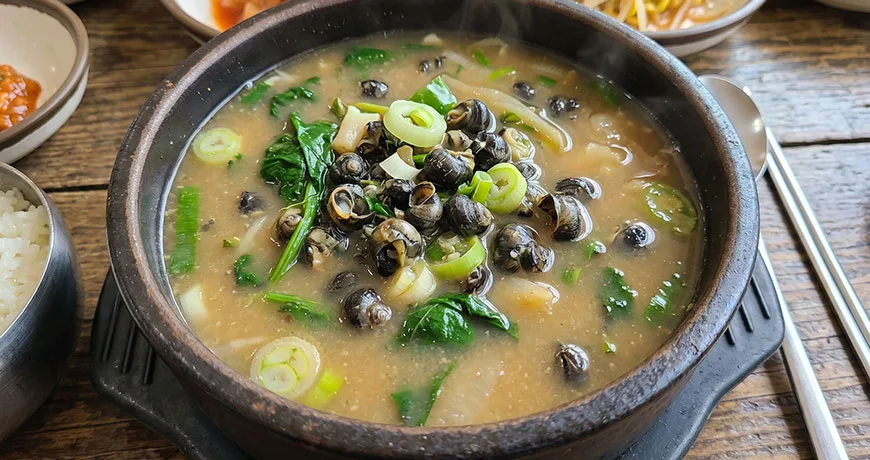
A masterclass in aqueous extraction and structural tenderization. This liver-detoxifying Korean soup harnesses the profound umami and taurine of marsh snails (olgaengi). By combining the snail stock with starchy rice water, a stable colloidal suspension is formed, perfectly carrying the fermented notes of doenjang. The meticulous physical preparation of mallow leaves removes astringency, resulting in a deeply restorative and balanced broth.
⏱️ Total: 30 mins | Prep: 15 mins | Cook: 15 mins | 🍳 Difficulty: Moderate | 🌶️ Profile: Earthy, Savory, and Refreshing | 🍚 Focus: Taurine Extraction & Liver Detoxification
Ingredients (2 servings)
- Main Ingredients: 100g boiled marsh snail meat (olgaengi), 150g mallow leaves (auk), 50g garlic chives (buchu), 1 tbsp wheat flour (for coating)
- Broth & Seasoning: 3 cups snail boiling stock, 3 cups rice water, 2.5 tbsp doenjang (Korean soybean paste), 1 tbsp soup soy sauce (or 1 tbsp tuna extract), 1 tbsp gochugaru (Korean chili flakes), 2 tbsp minced scallion, 1 tbsp minced garlic
Allergy Information Contains: Mollusks (Marsh Snail), Soy, Wheat (from doenjang, soup soy sauce, flour)
Equipment Cutting Board, Knife, Mixing Bowl, Deep Pot, Ladle, Fine Strainer
Cooking Instructions
- Ingredient Preparation: Snap the tough stems off the mallow leaves and peel away the fibrous outer strings. Vigorously massage and crush the leaves with coarse salt under running water to extract the bitter green juices and mucilage. Rinse thoroughly and squeeze out the water. Cut the garlic chives into 4–5cm lengths.
- Snail Coating (Moisture Retention): Toss the boiled marsh snail meat lightly in wheat flour. This coating prevents the proteins from shrinking and toughening during boiling while keeping their natural savory juices intact.
- Colloidal Broth Formulation: In a deep pot, combine the snail stock and rice water. Bring to a boil over high heat. Using a strainer, dissolve the doenjang smoothly into the boiling liquid.
- Mallow Tenderization: Once the broth boils, add the prepared mallow leaves, minced garlic, and gochugaru. Reduce to medium heat and simmer for at least 10 minutes to thoroughly tenderize the tough cellulose of the greens.
- Snail Integration & Thermal Control: Once the mallow is tender, add the flour-coated snails and minced scallion. Boil for only 2–3 minutes (just enough to cook the flour and warm the snails without turning them rubbery).
- Residual Heat Finishing: Right before turning off the heat, add the garlic chives. Use the residual thermal energy to activate their volatile aromatics. Adjust final salinity with soup soy sauce.
💡 Professional Culinary Tips
- Physical Tenderization of Mallow: Vigorously massaging the mallow leaves with salt breaks down the rigid cell walls, purging the plant of its bitter astringency and slimy mucilage. Skipping this crucial mechanical step results in a murky, bitter broth.
- Protein Coating Mechanism: Coating the snail meat with flour triggers a rapid gelatinization when introduced to the boiling broth. This thin starch barrier protects the delicate meat from intense heat, preventing rubberiness and locking the amino acids inside.
- Broth Synergy: Blending the mineral-rich, taurine-heavy snail stock with starchy rice water creates a stable emulsion. The starch acts as a colloidal binder, thickening the broth slightly and mellowing the sharp salinity of the fermented soybean paste.
Nutrition Facts (Estimated)
Total Content : Approx. 400g (1 serving)
Calories : 140 kcal
– Sodium : 890mg
– Total Carbohydrate : 16.0g
– Sugar : 2.0g
– Total Fat : 3.0g
– Saturated Fat : 0.5g
– Cholesterol : 45.0mg
– Protein : 14.0g
– Calcium : 180.0mg
*Daily Values are based on a 2,000 calorie diet and standard Korean nutritional reference values
**Nutritional values are calculated based on original ingredients; substitutions may alter specific macronutrients.
The Verdant Breath of Clear Streams: A Lyrical Masterpiece of Liver Restoration and Riverine Umami
Olgaengitguk (Freshwater Snail Soup) stands as the pristine, restorative zenith of traditional Korean regional soup gastronomy, where mineral-rich freshwater snails (olgaengiji / dasulgi)—harvested from the pristine, rushing currents of rocky mountain streams—simmer patiently alongside rice-washing water, earthy doenjang (fermented soybean paste), tender mallow leaves (auk), and fragrant chives. Infused with the emerald vitality of garden greens and the deep, restorative umami of shelled snails, this vibrant green broth is nature’s most sophisticated and comforting elixir for hepatic recovery.
As the soup simmers gently in the earthenware pot, the rustic, nutty aroma of aged soybeans blends with the fresh, herbal scent of chives and mallow, calming the mind and clearing the senses. The moment the first warm spoonful graces the palate, the subtle, earthy bitterness and rich umami of the snails melt seamlessly into the clean, savory broth—instantly washing away the heavy fatigue of alcohol metabolism and infusing the entire body with a wave of crystalline clarity.
True gastronomy does not rely on artificial artifice; it flourishes in the ancestral wisdom of extracting pristine botanical and riverine medicine from humble ingredients to restore inner equilibrium. Savoring a steaming bowl of emerald freshwater snail soup today is an honest and grounding ritual—clearing away the lingering toxins of exhaustion and filling the spirit with unadulterated vitality, clean stream-side warmth, and timeless solace.
Editor’s Review
1. A Grounded Cadence of Earthy Doenjang Depth, Rich Snail Umami, and Verdant Leaf Freshness
The moment a warm spoonful of the savory, emerald broth touches the palate, an immediate wave of deep doenjang umami and clean riverine umami envelops the senses with comforting warmth. This is swiftly followed by the tender, springy bite of the simmered snails and the fresh, grassy sweetness of mallow and chives, orchestrating an endlessly soothing, multi-layered culinary experience that brings absolute clarity to the senses.
2. Taurine-Driven Hepatic Detoxification Kinetics and Rice-Washing Water Emulsion Mechanics
Olgaengitguk represents an exacting study in traditional culinary physics and nutritional biochemistry. High concentrations of bioavailable taurine, methionine, and tryptophan naturally concentrated within the freshwater snails actively accelerate hepatocyte regeneration and alcohol metabolite clearance, establishing a peerless hangover-relief mechanism. Concurrently, the fine starches suspended in the rice-washing water gently emulsify the savory proteins, creating a smooth, cohesive broth body that neutralizes any earthy notes, while chlorophyll and vitamins from the greens promote metabolic circulation.
3. The Clear Stream’s Nostalgia and the Ultimate Hangover Sanctuary
Found gracing regional dining tables across the nation as a cherished morning restorative to soothe the stomach and clear the head after a long evening, a modest bowl of freshwater snail soup serves as an enduring emotional haven against daily weariness. Revered for generations as an essential restorative anchor to protect liver health and warm the core, enjoying this honest, reliable soup washes away modern stress, granting a timeless sanctuary of stillness, maternal care, and grounded culinary happiness.