
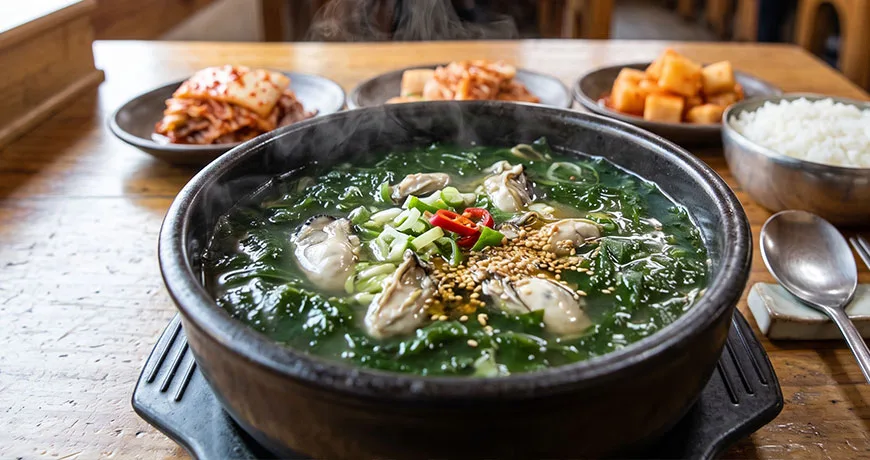
Maesaengi-gul-guk is a winter delicacy famous for its deceptive thermodynamics. The microscopic, densely packed capillary strands of the Maesaengi seaweed physically trap steam and suppress convection, keeping the boiling liquid underneath scalding hot while appearing calm and steamless on the surface. When paired with plump oysters sautéed in sesame oil, the alginic acid mucilage from the seaweed emulsifies with the oyster’s taurine and lipids. This creates an incredibly smooth, slippery, and profoundly oceanic soup that glides effortlessly down the throat, coating and soothing the stomach.
⏱️ Total: 20 mins | Prep: 15 mins | Cook: 5 mins | 🍳 Difficulty: Easy (Requires extremely short cooking time to prevent structural collapse) | 🌶️ Profile: Deeply Oceanic, Nutty, and Silky | 🍚 Focus: Alginic Acid, Heat Retention, & Lipid Extraction
Ingredients (2–3 servings)
- Main Ingredients: 200g fresh Maesaengi (Capsosiphon fulvescens, a highly fine green seaweed), 150g fresh shucked oysters
- Lipid & Aromatic Base: 1.5 tbsp sesame oil, 0.5 tbsp minced garlic
- Umami Broth Medium: 3–4 cups anchovy-kelp stock (or water), 1 tbsp soup soy sauce (guk-ganjang), 1 tbsp Korean fish sauce (anchovy or sand lance), coarse sea salt (to taste)
Allergy Information Contains: Seafood (Oysters, Fish Sauce), Soy, Wheat (from soy sauce)
Equipment Fine Mesh Strainer (standard colanders will let the seaweed slip through), Mixing Bowls, Medium Pot
Cooking Instructions
- Micro-filtration of Maesaengi: Because Maesaengi strands are finer than human hair, you must use a very fine mesh strainer. Submerge the seaweed in a large bowl of water and swirl it with chopsticks to separate any debris. Lift it out using the fine strainer, rinse lightly under running water, and gently squeeze out excess water.
- Osmotic Washing of Oysters: Gently wash the shucked oysters in mildly salted water. (Washing them in plain tap water triggers an osmotic imbalance, causing the cells to absorb too much water, bloat, and lose their concentrated savory juices.) Remove any stray shell fragments and drain.
- Lipid Sautéing (Flavor Extraction): Heat a pot over low heat. Add the sesame oil, minced garlic, and oysters. Sauté for 1–2 minutes. The heat forces the oysters to release their milky, protein-rich juices, which immediately emulsify with the nutty sesame oil.
- Broth Addition: As the oysters plump up and turn opaque, pour in the stock (or water). Turn the heat to high. Season the broth with soup soy sauce and fish sauce.
- Thermodynamic Flash-Boil: Once the broth reaches a rolling boil, add the washed Maesaengi. Gently tease it apart with chopsticks. Maesaengi cooks instantly. Boil it for no more than 2 to 3 minutes. Once it turns a vibrant, dark green, turn off the heat immediately to preserve its texture.
💡 Professional Culinary Tips
- The “Hated Son-in-Law” Thermodynamics: A famous Korean proverb says, “Give Maesaengi soup to a hated son-in-law.” Because the extremely fine, web-like structure of the seaweed traps the steam, the soup does not emit visible vapor even when it is boiling hot. This thermodynamic heat retention will cause severe burns to the palate if eaten hastily. Consume with extreme caution.
- Preserving Alginic Acid: The signature slippery, velvety mouthfeel of this soup comes from alginic acid, a water-soluble fiber. If you boil Maesaengi for over 5 minutes, the thermal energy permanently destroys the gel structure of this acid. The seaweed will melt into a mushy paste, turning the entire soup unappetizingly cloudy and viscous. Flash-boiling is mandatory.
- Amino Acid Synergy via Fish Sauce: Rather than relying purely on salt, adding a tablespoon of fermented fish sauce introduces a high concentration of free glutamates. These amino acids bond with the taurine in the oysters, triggering a massive umami synergy that deepens the oceanic profile of the broth.
Nutrition Facts (Estimated)
Total Content : Approx. 350g (1 serving, including broth)
Calories : 110 kcal
– Sodium : 850mg
– Total Carbohydrate : 6.0g
– Sugar : 1.0g
– Total Fat : 4.0g
– Saturated Fat : 0.6g
– Cholesterol : 25.0mg (from oysters)
– Protein : 8.0g
– Calcium : 90.0mg (Maesaengi has a higher calcium density than milk)
– Iron : 4.5mg
*Daily Values are based on a 2,000 calorie diet and standard Korean nutritional reference values
**Nutritional values are calculated based on original ingredients; substitutions may alter specific macronutrients.
The Emerald Silk of Pristine Southern Tides and the Briny Cream of Winter Oysters: A Lyrical Masterpiece of Maesaengi Gulguk and Hidden Coastal Warmth
Maesaengi Gulguk (Silken Seaweed and Oyster Soup) stands as the exceptionally graceful, velvet-smooth, and deeply comforting pinnacle of Korean winter soup gastronomy, where fine, hair-like emerald sea tangle (maesaengi)—harvested exclusively during the cold winter months from the unpolluted mudflats of the Southern Coast—is gently simmered alongside fresh, plump sea oysters. Sautéed lightly with crushed garlic and toasted sesame oil to coax out the deep essence of the sea before receiving fresh water, this seasonal specialty unites the whisper-thin, silken threads of coastal algae with the concentrated, milky umami of winter oysters, filling the dining space with a gentle, fragrant steam and soul-soothing warmth.
The moment a warm spoonful of the emerald broth touches the lips, an enchanting wave of gossamer-soft seaweed glides effortlessly across the tongue like liquid velvet, swiftly followed by the luscious burst of plump oysters releasing their briny, nutrient-rich juices. Famous in Korean folklore for appearing deceptively cool on the surface while trapping intense heat within its dense matrix of fibers, each sip delivers a warming embrace. The subtle nuttiness of sesame oil and the sweet, clean finish of garlic cut through any lingering seafood gaminess, soothing the body and reviving depleted vitality.
True gastronomy does not rely exclusively on heavy, assertive seasonings; it flourishes in the transformative wisdom of respecting pure, seasonal ingredients nurtured by unblemished waters to restore internal balance. Savoring an aromatic bowl of steaming emerald seaweed and oyster soup today is an elegant and sacred ritual—clearing away winter chill and everyday exhaustion through a wave of pristine oceanic warmth and filling the spirit with unpretentious comfort, southern coastal heritage, and timeless solace.
Editor’s Review
1. An Exhilarating Cadence of Silken Gossamer Seaweed Glide, Plump Oyster Marine Umami, and Toasted Sesame Aromatics
The moment a spoonful of Maesaengi Gulguk coats the palate, an immediate wave of ultra-delicate, slippery emerald seaweed awakens the senses with its luxurious mouthfeel. This velvety baseline is swiftly elevated by the plump, creamy pop of fresh winter oysters bursting with concentrated sea umami, seamlessly harmonized by the nutty warmth of sesame oil and sharp garlic, orchestrating an endlessly soothing, multi-layered sensory thrill that comforts from the first sip to the last.
2. Micro-Algal Vapor-Blocking Thermal Trap Dynamics, Oyster Zinc-Taurine Synergy, and Chlorophyll Bioavailability
Maesaengi Gulguk represents an exacting study in biomaterial thermal physics and coastal nutritional biochemistry. The dense, micro-fine fiber network of maesaengi acts as an effective thermal insulator, suppressing surface vapor evaporation and trapping latent heat deep within the broth. Concurrently, high concentrations of bioavailable zinc, glycogen, and taurine from fresh oysters enhance metabolic recovery and hepatic clearance, while the seaweed’s rich reserves of iron, calcium, chlorophyll, and water-soluble alginate stimulate blood oxygenation and gastrointestinal health, establishing an optimal biochemical equilibrium.
3. The Southern Tideline Heritage of Wando and Jangheung and the Grounding Sanctuary of Gentle Winter Solace
Celebrated in coastal lore through the humorous tale of the “soup served to a disliked son-in-law” due to its hidden inner heat, this winter delicacy born from the quiet coves of Wando and Jangheung serves as an enduring emotional haven against daily exhaustion. Revered for generations as an essential restorative staple that thaws frozen mornings through pure, easily digestible coastal nourishment, enjoying this honest, nutrient-dense soup washes away modern stress, granting a timeless sanctuary of stillness, maritime heritage, and grounded culinary happiness.