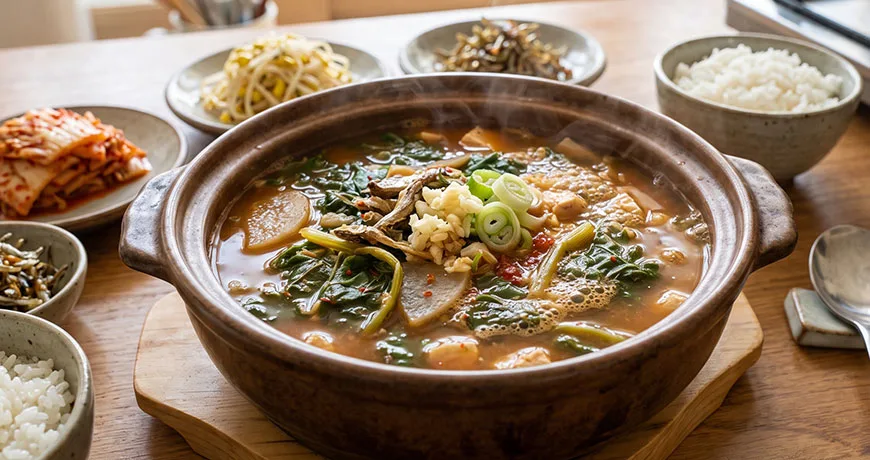
Geundaetguk is a biochemical soup engineered to force the thermal hydrolysis of tough pectin and cellulose in Swiss chard (leaf beet) while maximizing rheological stability through a colloidal starch suspension (rice water). Swiss chard naturally contains oxalic acid, which imparts an astringent, earthy bitterness. To counteract this, starch-rich rice water is strictly utilized as the solvent. The suspended amylose and amylopectin particles physically adsorb the harsh organic acids and act as a natural emulsifier, evenly dispersing the hypertonic fermented soybean paste (Doenjang) and smoothing the broth’s viscosity. The introduction of dried shrimp at high temperatures initiates the aqueous extraction of glycine and inosinate. When these marine amino acids collide with the glutamates of the fermented soy, they generate an explosive umami synergy that perfectly balances the fibrous plant matrix.
⏱️ Total: 25 mins | Prep: 10 mins | Cook: 15 mins | 🍳 Difficulty: Low (Requires oxalic acid volatilization and starch emulsification control) | 🌶️ Profile: Earthy, Savory, Mildly Sweet, and Comforting | 🍚 Focus: Pectin Hydrolysis, Colloidal Starch Suspension, & Oxalic Acid Evaporation
Ingredients (2 servings)
- Pectin & Cellulose Matrix: 200g Fresh Leaf Beet / Swiss chard (Geundae – tough lower stems peeled of outer fibers, then mechanically cleaved into 5cm pieces)
- Starch Colloidal Solvent: 1L Rice Water (Ssaltteumul – the starchy water from the 3rd washing of white rice)
- Colloidal Umami Binder: 2.5 tbsp Doenjang (Korean fermented soybean paste), 0.5 tbsp Gochujang (optional for a slight kick)
- Amino Acid & Color Matrix: 1 handful (approx. 15g) Dried Shrimp (head removed)
- Aromatic Catalyst: 1/2 stalk Green Onion (sliced diagonally), 1 tsp minced garlic
- Starch Matrix: 2 bowls of warm, cooked white rice
Allergy Information Contains: Soy, Wheat (from Doenjang/Gochujang), Crustacean (Dried Shrimp)
Equipment High Thermal Mass Pot or Ttukbaegi, Fine Mesh Strainer (for dissolving paste), Cutting Board, Knife
Cooking Instructions
- Solvent Heating & Colloidal Suspension: Pour the starchy rice water into the pot and heat over high heat. Use a fine mesh strainer to dissolve the Doenjang and Gochujang into the liquid. The starch particles from the rice water encapsulate the fermented soy proteins, preventing them from sinking and creating a remarkably smooth, stable colloidal suspension.
- Cleavage & Thermal Hydrolysis: Once the broth boils vigorously, add the cut Swiss chard. Boil uncovered for the first 2–3 minutes. This critical thermodynamic step allows the volatile organic acids and the earthy smell associated with oxalic acid to escape directly into the atmosphere via flash evaporation.
- Aqueous Extraction: As the chard wilts and loses its raw structure, add the dried shrimp and minced garlic. Reduce the heat to medium. The kinetic heat pulls the water-soluble umami (inosinate) and the sweet amino acid (glycine) from the shrimp’s chitin shells into the broth.
- Complete Pectin Degradation: Cover the pot and simmer for at least 10 minutes. The sustained thermal energy completely degrades the rigid cellulose and pectin bonds of the chard, transforming the tough leaves into a silky, yielding texture that offers zero resistance during mastication.
- Rheological Finish: Add the sliced green onions in the final minute to bloom their volatile sulfur compounds. Serve alongside warm white rice. The highly emulsified, starchy Doenjang broth will perfectly coat the rice grains, providing a luxurious mouthfeel.
💡 Professional Culinary Tips
- The Physicochemical Value of Rice Water: Using the starchy runoff from washed rice instead of plain water is advanced food chemistry. The microscopic starch granules and water-soluble proteins increase the fluid viscosity of the broth, acting as a natural emulsifier. More importantly, these starches physically bind to the bitter alkaloid molecules in the chard, masking them and resulting in a profoundly rounded, mellow flavor profile.
- Thermodynamic Control of Oxalic Acid: Leafy greens like spinach and Swiss chard contain oxalic acid, which can cause an unpleasant astringency on the teeth and inhibit calcium absorption. Because oxalic acid is highly volatile when heated in an aqueous solution, boiling the soup uncovered for the first few minutes is a mandatory chemical process to vaporize and eliminate these compounds.
- Biochemical Synergy of Dried Shrimp: Substituting beef or anchovies with dried shrimp is the optimal structural match for Swiss chard. Dried shrimp are densely packed with glycine, an amino acid that provides a distinct natural sweetness. This sweetness biochemically neutralizes the heavy salinity of the Doenjang and masks any residual grassy notes from the chard, constructing a multidimensional sweet-umami matrix.
Nutrition Facts (Estimated)
Total Content : Approx. 500g (1 serving, excluding rice)
Calories : 110 kcal
– Sodium : 850mg (Variable depending on Doenjang salinity)
– Total Carbohydrate : 16.0g
– Sugar : 4.0g
– Total Fat : 2.0g
– Saturated Fat : 0.5g
– Cholesterol : 35.0mg
– Protein : 8.0g
– Dietary Fiber : 5.5g
*Daily Values are based on a 2,000 calorie diet and standard Korean nutritional reference values.
**Nutritional values are calculated based on original ingredients; substitutions may alter specific macronutrients.
Origins and Food Culture of Leaf Beet Soup (Geundaetguk)
1. Historical Lineage: Agrarian Records and the Legendary “Locked Door” Lore
- Chronicled across classic Joseon agricultural and encyclopedic treatises—including Sallim Gyeongje, Jeungbo Sallim Gyeongje, and Gyuhap Chongseo—under the classical names Cheomchae (sweet vegetable) or Gongmaek, chard has been cultivated in Korean kitchen gardens since ancient times.
- Valued for its hardiness in cold or dry climates, it yielded lush, sweet leaves well into the late autumn, giving rise to the famous Korean folk proverb: “Autumn chard soup is so delicious you eat it behind locked doors so your son-in-law won’t get a taste.”
2. The Culinary Science of Oxalic Acid Removal and Dried Shrimp Chemistry
- The hallmark of authentic preparation lies in hand-rubbing (barak-barak) the chard with coarse salt or briefly par-blanching it in boiling water to expel astringent oxalic acid and raw chlorophyll bitterness before adding it to the pot.
- Unlike other rustic bean-paste soups, Geundaetguk is traditionally paired with dried baby shrimp (bori-saeu), whose concentrated sweet amino acids cut through the mineral earthiness of the greens to generate a silky, amber-hued broth with zero greasy residue.
3. The Pinnacle of Gentle Korean “Tojangguk” and Home Comfort Dining
- Renowned for its supreme digestibility, it remains an indispensable home-cooked remedy for recovering convalescents, young children, and elderly family members seeking effortless, non-irritating nutrition.
Savored as a restorative breakfast soup over warm rice, Geundaetguk represents the essence of Korean domestic comfort cooking: turning humble, garden-grown greens into a deeply restorative bowl through the patient alchemy of traditional fermentation
The Silken Nectar of Garden-Fresh Chard and the Rustic Depth of Fermented Soybean Paste: A Refined Portrait of Geundaetguk
Geundaetguk (Leaf Beet / Swiss Chard Soybean Paste Soup) stands as the unpretentious, deeply nourishing, and soothingly restorative summit of Korea’s rustic leafy-green (tangban) gastronomy. Broad, tender leaves and succulent pale-green stems of Swiss chard (geundae—Beta vulgaris subsp. vulgaris) are harvested fresh, gently peeled along the fibrous ribs to ensure optimal tenderness, and torn by hand. Simmered in a grounding stock made from rice-washing water (tteumul) or dried anchovy and kelp, gently seasoned with aged fermented soybean paste (doenjang), and accented with sweet dried glass shrimp (bori-saeu) or tender fresh clams, this dish embodies culinary minimalism at its most serene. Honoring the centuries-old folk proverb—”In autumn, lock the wooden door before eating your bowl of chard soup”—it bypasses heavy animal fats and fiery spices, drawing forth the gentle sugars of green botanicals and the rich plant proteins of fermented legumes in absolute harmony.
Lifting a ceramic spoon brimming with shimmering broth, emerald ribbons of chard, and rosy dried shrimp awakens the senses with an immediate, comforting perfume: the deep, earthy bouquet of aged doenjang mingles effortlessly with the sweet, mineral scent of slow-simmered garden greens and the marine warmth of toasted shrimp. The first sip glides across the tongue with zero friction, its smooth, bioavailable amino acid matrix comforting a weary digestive system. Sinking your teeth into the chard stem reveals a delightfully tender, juicy yield (salkang), releasing a flood of sweet, cooling cellular moisture. The gossamer leafy fronds dissolve across the palate like silk, while the crisp, chewy snap of whole dried shrimp introduces an engaging textural rhythm. The clean, unhurried salinity of the fermented soy broth grounds the entire palate, leaving an enduring, heartwarming finish of pure culinary clarity.
The enduring majesty of Geundaetguk lies in its therapeutic functionalism—harnessing the abundant beta-carotene, iron, calcium, and dietary fiber stored within leafy beet greens to cleanse the gastrointestinal tract and restore vital fluids. Tracing its lineage to the self-sustaining backyard vegetable gardens of historic agrarian homesteads, where a morning harvest transformed simple pantry staples into a revitalizing breakfast feast, a warm bowl of leaf beet soup remains an irreplaceable monument of agrarian wisdom, maternal tenderness, and comforting culinary integrity.
Editor’s Review
1. A Dynamic Harmony of Yielding Stem Turgor, Gossamer Leaf Dissolution, and Toasted Marine Crispness
The textural landscape inside the bowl delivers extraordinary comfort, lightness, and effortless digestion. Gentle simmering completely tenderizes the fibrous vascular bundles of the chard stems, allowing them to yield softly upon mastication while releasing stored hydration. The thin leaf blades soften into an ultra-smooth, lubricated glide that melts against the palate without stringiness. Whole dried shrimp contribute a delicate, chitinous crunch and chewy elasticity that punctuates the soft greens, ensuring a balanced, non-fatiguing mouthfeel from the first sip to the last.
2. Protopectin Hydrolysis Kinetics, Oxalic Acid Extraction, and Threefold Glutamate-Betaine-Inosinate Umami Synergism
Geundaetguk represents an exacting study in plant histochemistry, mineral bioavailability, and multi-compound umami thermodynamics. Insoluble protopectin cementing the chard’s middle lamella undergoes irreversible thermal cleavage into water-soluble pectin at sustained temperatures between 85–95°C, allowing the cellular matrix to soften without collapsing into mush. The soluble oxalic acid naturally present in raw chard is successfully leached out into the rolling broth and bound by rice starches, eliminating astringency and optimizing intestinal calcium absorption. Concurrently, natural free glutamates generated by Bacillus subtilis during long-term soybean paste fermentation converge with sweet glycine, trimethylglycine (betaine), and nucleotide inosinate (IMP) concentrated within the dried glass shrimp, triggering an exponential synergy across oral umami receptors (T1R1/T1R3) that yields profound savory depth without artificial additives.
3. The Agrarian Folk Ethos of Autumn Greens and the Living Soul of Korean Hearthside Gastronomy
Celebrated across historical rural folklore for its restorative density when late-season cool air concentrates natural sucrose within leafy greens, Geundaetguk exemplifies the seasonal harmony of Korean foodways. Translating everyday garden chard and pantry-aged soybean paste into a deeply dignifying, life-affirming morning tonic through patient thermal and biological control, this pristine classic serves as an enduring sanctuary of restorative wellness, maternal care, and brilliant agrarian craftsmanship.