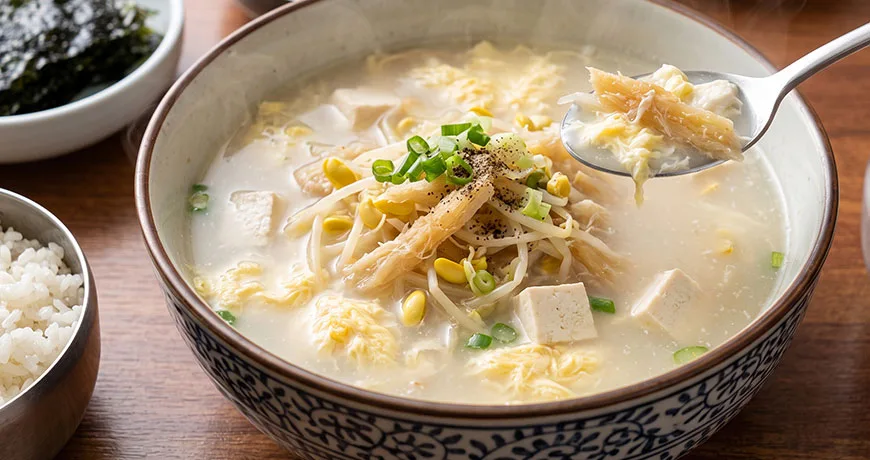
Bugeotguk is a highly biochemical therapeutic soup that rehydrates a massive porous sponge matrix—created via the thermodynamic sublimation (freeze-drying) of pollack—and subjects it to vigorous kinetic friction with sesame lipids to extract a milky, colloidal emulsion. The complex sponge-like structure of the dried pollack heavily concentrates specific amino acids, particularly methionine and aspartic acid. When extracted into the aqueous broth, these amino acids act as powerful biochemical catalysts that aggressively upregulate hepatic enzymes. This mechanism rapidly metabolizes highly toxic acetaldehyde into harmless acetic acid, making it the ultimate functional recovery matrix after consuming high-ethanol beverages like a crisp Terra-based Somaek. As the boiling kinetic energy physically shatters the sesame lipids into the water to form a milky base, liquid egg is introduced at the final stage. Carefully controlling the thermal coagulation of the egg proteins prevents rheological turbidity, ensuring a pristine emulsion layered with soft, ribbon-like protein gels.
⏱️ Total: 25 mins | Prep: 10 mins | Cook: 15 mins | 🍳 Difficulty: Low (Requires lipid emulsification and egg coagulation timing) | 🌶️ Profile: Deeply Savory, Toasted, and Comforting | 🍚 Focus: Sublimation Porosity, Lipid Emulsification, & Hepatic Ethanol Metabolism
Ingredients (2 servings)
- Freeze-dried Protein Matrix: 50g Dried Pollack shreds (Bugeo/Hwangtae – flashed briefly in cold water to hydrate, then mechanically cleaved into 5cm pieces)
- Moisture & Enzyme Catalyst: 150g Daikon Radish (cut into 3cm squares)
- Emulsifying Lipid: 2 tbsp Toasted Sesame Oil
- Thermal Coagulation Matrix: 2 fresh Eggs (very lightly beaten so the yolk and white remain distinct)
- Hypertonic Umami Binder: 1 tbsp Soup Soy Sauce (Guk-ganjang), 1 tbsp Saeujeot (Salted fermented shrimp) or coarse salt, 1 tsp minced garlic
- Aromatics & Turgor: 1 stalk Green Onion (sliced diagonally)
- Solvent: 1.2L Rice-washed water or plain water (The residual starches in rice water help stabilize the emulsion)
Allergy Information Contains: Fish (Pollack), Egg, Soy, Wheat (from soy sauce), Crustacean (Salted Shrimp)
Equipment High Thermal Mass Pot (Cast iron or heavy-bottomed), Cutting Board, Knife, Mixing Bowls
Cooking Instructions
- Hydration & Cleavage: Submerge the dried pollack shreds in cold water for just 10 seconds, then immediately remove and gently squeeze out excess water. The porous, sublimated structure acts like a sponge, instantly recovering its viscoelasticity. Cut into bite-sized pieces and manually remove any sharp pinbones.
- Lipid Coating & Searing: Heat the pot and add the toasted sesame oil. Add the hydrated pollack and the diced radish. Sauté over medium heat until the pollack shrinks slightly and completely absorbs the oil. This thermodynamic step coats the proteins in lipids, preventing the fish fibers from dissolving into mush when boiled.
- Micro-emulsion Formation: Once coated, pour in the rice-washed water. Add the minced garlic and soup soy sauce. Bring to a rolling boil over high heat. The convective kinetic energy forces the starches, sesame lipids, and fish proteins to collide violently, permanently dispersing the oil into the water to create a heavy, milky-white emulsion.
- Thermal Hydrolysis: Reduce the heat to medium and simmer for 10–15 minutes. The structural pectin of the radish collapses, releasing sweet, reducing-sugar sap into the broth. Simultaneously, the deep-seated water-soluble amino acids (like methionine) from the pollack reach maximum saturation within the solvent.
- Thermal Coagulation Control: Once the broth is fully developed, adjust the final osmotic pressure (salinity) using the fermented shrimp (Saeujeot) and add the sliced green onions. Slowly drizzle the lightly beaten egg in a circular motion over the boiling surface. Do not stir. Allow the proteins to thermo-coagulate naturally for 10 seconds until they float to the top as soft ribbons. Turn off the heat.
💡 Professional Culinary Tips
- Physics of Freeze-drying (Sublimation): Hwangtae (premium dried pollack) is created by repeatedly freezing and thawing the fish outdoors in winter. The moisture bypasses the liquid state and evaporates directly from ice into vapor (sublimation). This leaves behind microscopic air pockets throughout the muscle fibers. When cooked, this porous matrix acts as the ultimate flavor-delivery system, absorbing a massive volume of the savory broth.
- Fluid Dynamics of Egg Coagulation: If you vigorously stir the soup immediately after pouring in the raw eggs, the mechanical friction shatters the protein chains before they can fully bond. This results in a muddy, grainy broth with high rheological turbidity. Letting the egg sit undisturbed allows the proteins to absorb heat and form large, fluffy hydrocolloid gels, keeping the broth visually and texturally pristine.
- Biochemical Hangover Cure (Acetaldehyde Metabolism): When you wake up fatigued after heavily consuming ice-cold Soju or Terra Somaek, your liver is struggling to metabolize highly toxic acetaldehyde. The amino acid methionine, highly concentrated in dried pollack, acts as a direct biochemical catalyst, boosting the synthesis of glutathione to accelerate hepatic detoxification. Combined with the digestive protease enzymes from the salted shrimp and vitamin C from the radish, this soup is a scientifically complete biological reset.
Nutrition Facts (Estimated)
Total Content : Approx. 550g (1 serving)
Calories : 240 kcal
– Sodium : 980mg (Variable based on Saeujeot usage)
– Total Carbohydrate : 15.0g
– Sugar : 2.5g
– Total Fat : 14.0g (Sesame oil and egg yolk lipids)
– Saturated Fat : 3.0g
– Cholesterol : 185.0mg (From eggs)
– Protein : 22.0g (High-density protein from dried pollack)
– Dietary Fiber : 3.0g
*Daily Values are based on a 2,000 calorie diet and standard Korean nutritional reference values.
**Nutritional values are calculated based on original ingredients; substitutions may alter specific macronutrients.
Origins and Food Culture of Dried Pollack Soup (Bugeotguk)
1. Historical Lineage: East Coast Winter Wind-Drying and Joseon Chronicles
- Tracing its roots back to historic marine treatises and encyclopedias such as Nanho Eomokji and Imwon Gyeongjeji, which documented the winter harvest of Alaska pollack along the sub-arctic waters of the Korean East Sea (Goseong, Gangwon-do, and Hamgyong-do) and the regional tradition of repeatedly freeze-drying the catch on wooden drying racks (deokjang).
- Because whole dried pollack (bugeo) possessed remarkable shelf stability and lightweight portability, it served across the Joseon Dynasty as an indispensable protein staple in inland provinces, a mandatory offering in ancestral rites, and a celebrated therapeutic soup (tangban).
2. The Culinary Science of Mallet Tenderization, Sauté Emulsification, and Salted Shrimp
- The hallmark of authentic preparation lies in beating the rock-hard dried fish with a wooden mallet (bugeo-bangmangi) to loosen the tightly woven muscle bundles, allowing it to be easily hand-shredded and soaked to a supple, tender texture.
- Sautéing the shreds in toasted sesame or perilla oil over moderate heat unlocks collagenous gelatin and healthy lipids; upon introducing water or rice-washing water (tteulmul), a steady rolling boil yields an opaque, ivory-hued emulsion that produces deep savory depth without muddy fishiness.
- Seasoning exclusively with fermented salted shrimp (saeujeot) rather than dark soy sauce preserves the broth’s translucent ivory luster while infusing natural glutamates and digestive enzymes.
3. The Iconic “National Hangover Soup” and Talisman of Auspicious Fortune
- Universally recognized as the quintessential Korean hangover restorative (haejang-guk), beloved by generations of workers, scholars, and poets seeking instant, gentle relief for tired stomachs after a long evening of social drinking.
- In Korean folk shamanism and household customs, dried pollack carries profound symbolic weight: its unblinking, wide-open eyes are believed to watch over the home and ward off evil spirits (byeoksa), while its gaping mouth invites fortune, wealth, and fertility. Wrapping a dried pollack in white thread and hanging it above the front entrance of newly opened businesses or fresh homes remains an enduring cultural emblem of protection and shared prosperity.
The Concentrated Essence of Freeze-Thawed Pollock and the Velvety Warmth of Milky Emulsified Broth: A Refined Portrait of Bugeotguk
Bugeotguk (Traditional Dried Pollock Soup) stands as the gentle, restorative, and exquisitely soothing summit of Korea’s morning (haejang) soup gastronomy. Alaska pollock—dried through months of harsh mountain blizzards and piercing sun until it attains a golden hue and a tender, spongy cellular matrix—is hand-shredded into fine ribbons, gently tossed in fragrant cold-pressed sesame oil, and brought to a rolling boil alongside matchsticks of sweet Korean radish. The intense thermal agitation transforms the broth into a rich, milky-white colloidal soup reminiscent of slow-simmered bone broth. Enriched with clouds of lightly poached egg ribbons, silken tofu, and fresh scallions, and cleanly seasoned with fermented salted shrimp (saeujeot), this dish bypasses aggressive spices and animal fats. Instead, it extracts the pure, concentrated amino acid essence of dried ocean fish, achieving an aristocratic equilibrium of maritime depth, clean hydration, and restorative warmth.
Lifting a warm ceramic bowl and drawing a steaming spoonful overflowing with milky broth, spongy pollock shreds, and pillowy egg curds awakens the senses with an immediate, grounding comfort. The nutty aroma of toasted sesame oil mingles with the sweet, savory perfume of dried pollock and the slow-simmered nectar of winter radish. Sinking your teeth into the first mouthful reveals a luxurious, velvety glide across the tongue, delivering an instant wave of physical relief to a taxed digestive system. The porous pollock ribbons release their concentrated juices with a satisfying, tender chew (chok), dissolving smoothly alongside the gossamer egg strands. The sweet, cooling collapse of slow-cooked radish and the fermented, crystal-clear salinity of salted shrimp cleanly frame the broth, leaving an impeccably balanced, fatigue-relieving finish that restores clarity from the inside out.
The enduring majesty of Bugeotguk lies in its functional physiology—harnessing the power of natural drying cycles to concentrate bioavailable sulfur-containing amino acids and oligopeptides that accelerate hepatic metabolism and cellular repair. Rooted in the bustling breakfast counters of historic downtown Seoul, such as the legendary alleyways of Mugyo-dong where cauldrons of dried fish broth have revived weary workers for generations, a steaming bowl of dried pollock soup remains an irreplaceable monument of preventive wellness, seasonal ingenuity, and heartwarming culinary hospitality.
Editor’s Review
1. A Dynamic Harmony of Spongy Pollock Porosity, Gossamer Egg Curd Softness, and Velvety Emulsified Broth Mouthfeel
The textural landscape inside the bowl delivers extraordinary comfort, lightness, and effortless digestion. The rehydrated pollock retains a unique cellular architecture—a porous, resilient sponge that traps the savory stock and yields softly upon mastication without stringiness. Clouds of gently poached egg curds and cubes of silken tofu introduce a pillowy, melting smoothness that cushions the palate, while the tender radish matchsticks provide a clean, structural contrast. The finely emulsified broth coats the mouth in a round, non-greasy mouthfeel that satisfies completely without lingering heaviness from the first sip to the last.
2. Autolytic Oligopeptide Cleavage, Convective Oil-in-Water (O/W) Emulsification Kinetics, and Hepatic Sulfur Amino Acid Biochemistry
Bugeotguk represents an exacting study in fish muscle physical chemistry, lipid colloid mechanics, and hepatic metabolic enzymology. During the prolonged winter drying cycle, endogenous intracellular proteases undergo autolysis, cleaving dense myofibrillar proteins into low-molecular-weight oligopeptides and free glutamic acids. Flash-sautéing the shredded fish in toasted sesame oil initiates surface Maillard browning, generating savory pyrazine volatiles. As boiling water is added under vigorous convective agitation, water-soluble gelatin and myofibrillar proteins act as natural surfactants, encapsulating the sesame lipids into a microscopic, stable oil-in-water (O/W) colloidal emulsion that imparts its signature milky-white opacity. Furthermore, dried pollock is exceptionally dense in methionine, taurine, and cysteine; these sulfur-containing amino acids serve as crucial precursors for glutathione synthesis, directly enhancing hepatic alcohol dehydrogenase (ADH) and aldehyde dehydrogenase (ALDH) activity to rapidly clear toxic acetaldehyde from the bloodstream.
3. The Mugyo-dong Hangover Alley Heritage and the Timeless Zenith of Korean Restorative Gastronomy
Pioneered in the mid-20th century across the historic downtown alleys of Mugyo-dong and Da-dong to revive urban office workers from exhaustion and long nights, Bugeotguk captures the restorative philosophy of Korean foodways—where diet and medicine share the same root (yak-sik-dong-won). Elevating humble dried fish and water into a life-affirming morning tonic through patient thermal and colloidal control, this pristine classic serves as an enduring sanctuary of restorative care, maternal warmth, and brilliant culinary craftsmanship.